
Call for written evidence
Link: Rating (Property in Common Occupation) and Council Tax (Empty Dwellings) Bill: call for evidence
Source: Parliamentary News
Call for written evidence
Link: Rating (Property in Common Occupation) and Council Tax (Empty Dwellings) Bill: call for evidence
Source: Parliamentary News
‘Do we need the House of Lords?’ Lord Speaker addresses the Oxford Union
Link: Lord Speaker discusses role of second chamber
Source: Parliamentary News
Digital, Culture, Media and Sport Committee explores Global Science Research – Cambridge Analytica relationship
Link: Dr Aleksandr Kogan questioned by Committee
Source: Parliamentary News
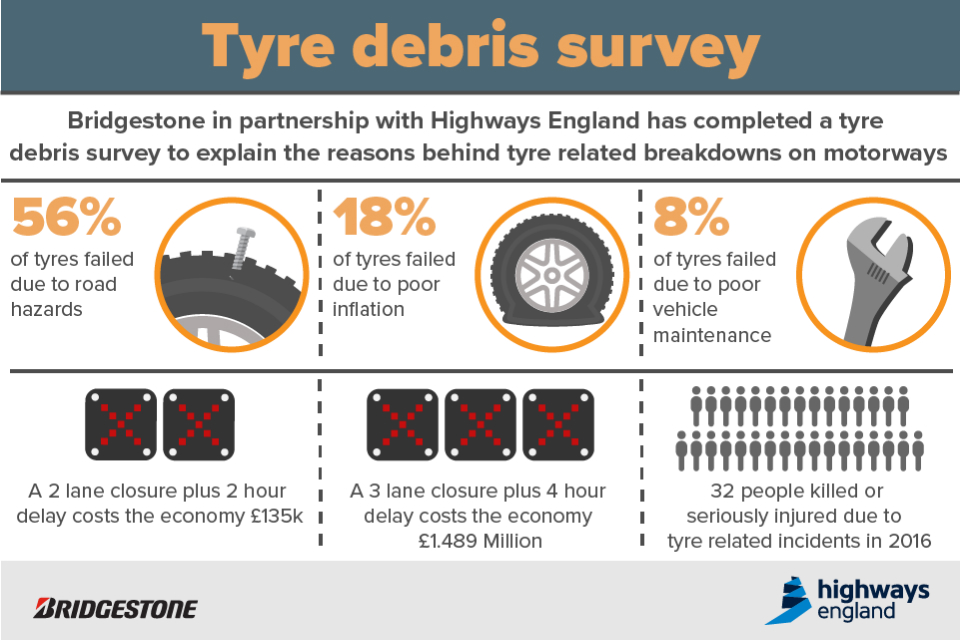
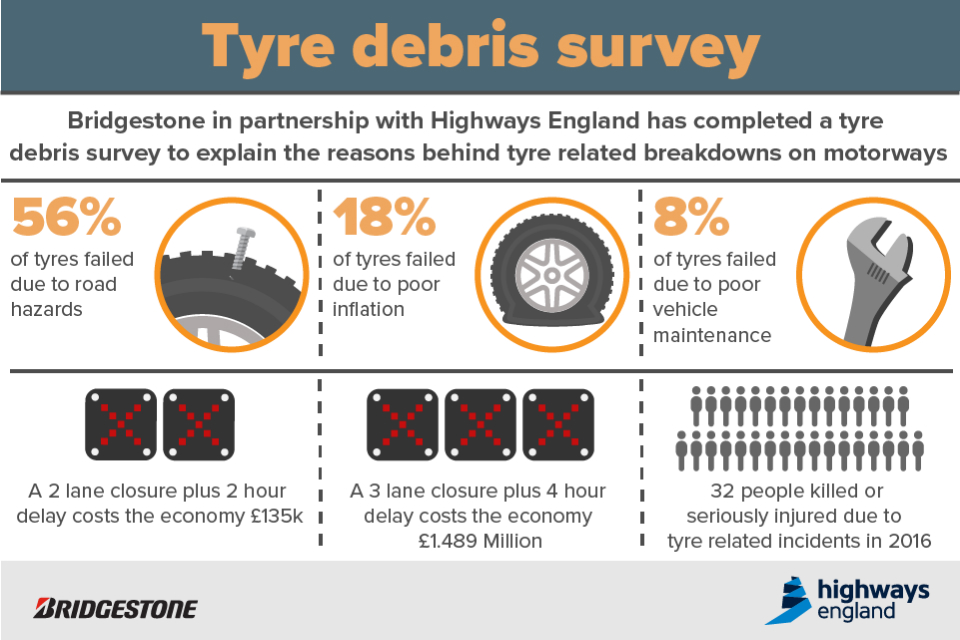
More than 30 people were killed or seriously injured in motorway accidents in 2016 due to illegal or faulty tyres.
But an 18-month study says commuters, commercial drivers and other road users can do a lot more to help reduce accidents through regular checking.
To see Bridgestone’s tyre debris study brought to life, visit:
Richard Leonard, Highways England’s head of road safety, said:
England’s motorways are the safest in the world but we’re determined to reduce the number of people killed and seriously injured on them.
This important research confirms our view that road users must play a bigger role and get into the habit of checking tyre pressures and tread depths and looking out for nails and other debris stuck in tyres before setting out on journeys. These simple checks could save lives.
Unveiled today at the annual Commercial Vehicle Show at Birmingham’s NEC, the research reveals that almost three quarters of tyre failure samples analysed by Bridgestone involved poor inflation or debris penetration issues – problems which could be potentially avoided with better tyre husbandry.
Both Bridgestone and Highways England, the government company for operating, maintaining and improving the country’s motorways and major A roads, are partners in the multi-agency road safety charity Tyresafe. They worked together to carry out the research over 18 months between the beginning of 2016 and last summer.
During the project, staff working for Highways England at depots across the West Midlands provided more than 1,000 pieces of tyre debris from motorways to a technical engineering team from Bridgestone to analyse.
The findings from 1035 tyre segments retrieved from the M1, M6, M40, M5 and M42 revealed:
The tyre debris was taken from cars, vans, commercial vehicles and motorbikes, with under-inflation of tyres a key theme, along with poor vehicle maintenance, both of which accounted for 26% of the entire sample. When considering that 32 people were killed or seriously injured in motorway road traffic accidents in 2016 due to ‘illegal, defective or underinflated tyres’ Bridgestone and Highways England say simple tyre checks save lives.
In addition, the cost to the economy from a 2-hour delay on a busy stretch of motorway following a 2-lane closure stands at £135,360 and a massive £1,488,960 for a 3-lane closure lasting up to four hours .
Some of the samples were particularly alarming, with a temporary ‘space-saver’ spare tyre being run to destruction, while a number of potentially lethal and illegal ‘string’ repairs were also found on car tyres, which are completely unsuitable at any speed, let alone 70mph speeds on motorways.
Bridgestone technical manager Gary Powell, who oversaw the analysis of the debris with field engineer Peter Moulding and the rest of the firm’s technical department, said:
This report has taken a great deal of time and effort, involving a painstaking process of collecting tyre debris over 18 months and analysing it in depth thereafter. In conclusion, some simple tyre checks can save lives, not to mention reduce the risk of a stressful breakdown on a motorway.
With proper vehicle inspection and maintenance programs, many of the failure methods noted should be detectable and preventable. In light of these results, we would also advise that tyre pressure monitoring systems (TPMS) are fitted to vehicles which don’t benefit from this technology already. It will assist with the detection of penetrations and deflations.
Members of the public should contact the Highways England customer contact centre on 0300 123 5000.
Journalists should contact the Highways England press office on 0844 693 1448 and use the menu to speak to the most appropriate press officer.
Link: Press release: Tyre-related deaths and injuries preventable say Highways England and Bridgestone
Source: Gov Press Releases
The existing flood defences consist of a flood wall that has a strong concrete core. The work being carried out is replacing the sandstone cladding that covers the main part of the wall, that helps protect homes and businesses from flooding.
Locals will know that the sandstone has recently been showing signs of wear and tear. So, the Environment Agency is pleased to replace the cladding, to make sure the flood wall is well maintained and is in keeping with the surrounding area.
While this work is happening there is no change to the standard of protection offered by the flood defence and the repairs taking place are mainly for aesthetic and public safety purposes. In the event that the demountable flood barriers at Frankwell are required, the repair works will not affect any aspect of the deployment and the flood defence will still continue to perform normally and effectively at times of flood.
The work is expected to take approximately 3 weeks to complete, and throughout the works, access for the public around the work and to the life buoys will be maintained.
Toby Whitehouse from the Environment Agency said:
We’re pleased to be able to carry out this work. While it is largely cosmetic as no work is needed on the main concrete core of the flood wall, we’re keen to make sure flood defences remain in keeping with the area.
We would like to thank Shropshire Council for arranging the path to be temporarily diverted and for allowing us access to the Theatre Severn car park to store equipment during the work.
The Frankwell flood alleviation scheme reduces the risk of flooding from the River Severn. The scheme consists of a series of permanent flood walls (700m) and demountable slats (155m) along the north bank of the Severn as it flows to the north of Shrewsbury Town Centre.
Link: Press release: Maintenance work starts on Shrewsbury flood defence
Source: Gov Press Releases
Public Administration and Constitutional Affairs Committee discusses procurement following the collapse of Carillion
Link: Auditor General discusses public sector outsourcing
Source: Parliamentary News
Scottish Affairs Committee examines operators’ plans to improve digital connectivity
Link: EE, O2, Three and Vodafone questioned on Scotland mobile coverage
Source: Parliamentary News
To protect public health, the Medicines and Healthcare products Regulatory Agency (MHRA) has changed the licence for valproate medicines (Epilim, Depakote and generic brands). Valproate must no longer be prescribed to women or girls of childbearing potential unless they are on the pregnancy prevention programme (PPP).
Valproate is a treatment for epilepsy and bipolar disorder. Children born to women who take valproate during pregnancy are at significant risk of birth defects and persistent developmental disorders. If valproate is taken during pregnancy, up to 4 in 10 babies are at risk of developmental disorders, and approximately 1 in 10 are at risk of birth defects.
Healthcare professionals who seek to prescribe valproate to their female patients must make sure they are enrolled in the PPP. This includes the completion of a signed risk acknowledgement form when their treatment is reviewed by a specialist, at least annually.
All women and girls who are prescribed valproate should contact their GP and arrange to have their treatment reviewed. No woman or girl should stop taking valproate without medical advice.
These regulatory changes will be further supported in the upcoming months by:
These new regulatory measures are being supported across the NHS with other authorities also making changes – such as new GP system computer alerts – to make sure changes in prescribing behaviour take place promptly. NHS Digital has worked with GP systems suppliers to provide a search and audit function to identify women and girls on valproate as well as updating valproate prescribing alerts. A letter will be sent to all relevant healthcare professionals in the coming weeks outlining the new requirements and providing updated educational materials.
In parallel, the National Institute for Health and Care Excellence (NICE) is amending its guidelines where valproate is mentioned, to reflect the new regulatory position. NICE has also begun work on a full update of its guideline on epilepsy. This will specifically focus on areas where valproate is currently regarded as the drug of choice and where this conflicts with the new position.
Working together, across the health sector, these measures will help reduce the number of pregnancies exposed to valproate medicines to an absolute minimum and will make sure all women and girls of childbearing potential are aware of the risks.
Since it was introduced in 1974, the information provided with valproate included a warning about the possible risk of birth defects. As with all medicines, the safety of valproate has been kept under constant review and as new data have become available, and the magnitude and the nature of the risks were better understood, warnings were updated – resulting in this most recent regulatory change.
Dr June Raine, director of MHRA’s Vigilance and Risk Management of Medicines Division said:
Patient safety is our highest priority. We are committed to making sure women and girls are aware of the very real risks of taking valproate during pregnancy. However, we also know it is vitally important women don’t stop taking valproate without first discussing it with their doctor.
This regulatory position has been developed through close collaboration with professional bodies, health system organisations, and patient and campaign groups.
I would like to particularly thank the families involved in the Valproate Stakeholder Network who have shared their experiences and expertise with us. Their support will help keep future generations of children safe.
Health Minister Lord O’Shaughnessy said:
Our priority is always patients’ safety, so I welcome this decision to take strong actions to protect women and children.
The focus will now be on explaining these changes to GPs and clinicians so they in turn can advise patients.
Professor Mark Baker, director of the Centre for Guidelines at NICE, said:
NICE welcomes restricting the use of valproate in women of childbearing potential.
It’s important that everyone affected by these changes is made aware of them as soon as possible. We have therefore taken immediate steps to amend our guidelines on the diagnosis and management of epilepsies, the assessment and management of bipolar disorder, depression in adults, and antenatal and postnatal mental health to reflect this important change to the drug’s licence.
We will use our communications networks to highlight the changes, both to healthcare professionals and to patients, to help ensure that the number of children exposed to valproate through their mother during pregnancy is kept to an absolute minimum.
Nic Fox, director of Primary and Social Care Technology at NHS Digital said:
This is a good example of how IT systems can support important issues affecting public health. We have been working closely with the MHRA and GP system suppliers to ensure clinicians in primary care are informed of the risks of prescribing sodium valproate to certain patients.
All GP systems have alerts applied and we are continuing to work with some of the suppliers to ensure these high visibility alerts are consistent across primary care. These alerts ensure that GPs are prompted at the time of prescribing.
We have also worked with community pharmacy dispensing system suppliers to ensure that the alerts are also shown when prescriptions are dispensed. This includes changes to prescription labels so that patients are made aware of the risks and the need for reliable contraceptive precautions. We will continue to work with supplier partners in evolving system to maximise safety and minimise burden on clinicians and patients as guidance evolves.
Matthew Jolly, National Clinical Director for maternity and women’s health at NHS England, said:
Stronger regulation over the use of valproate is welcome and will help ensure women get the advice and care they need. It is important pregnant women discuss their medication with their doctor and crucially do not stop taking it before seeking advice.
Mr Edward Morris, vice president for clinical quality at the Royal College of Obstetricians and Gynaecologists, said:
We welcome this action to reduce the risk of physical and developmental problems in children born to mothers who have taken valproate during pregnancy. Our clinical guideline on the management of epilepsy in pregnancy recommends that exposure to sodium valproate and other anti-epileptic drugs should be minimised by changing the medication prior to conception, as recommended by an epilepsy specialist after a careful evaluation of the potential risks and benefits.
It’s important to note that stopping medication for long-term conditions completely or altering the dose can pose a serious risk to both mother and baby. Women are advised to seek advice from their GP and/or specialist team before conception or as soon as they are aware that they are pregnant. For women with epilepsy, the lowest effective dose of the most appropriate anti-epileptic drug should be prescribed and they should be looked after by a specialist team throughout pregnancy.
Professor Helen Stokes-Lampard, chair of the Royal College of GPs, said:
GPs are acutely aware of the risks associated with prescribing sodium valproate to women of childbearing age and we welcome this change in legislation as a logical way forward to help ensure our patients’ safety. However, any patients currently taking sodium valproate should not stop doing so without seeking expert medical advice.
As a general rule, it is important that patients read and take heed of warnings on the packets of any medication they are taking – and that any woman on long-term medication speaks to their GP if they are planning to have a baby.
Carol Long, chief executive of Young Epilepsy, said:
Young Epilepsy welcomes the MHRA’s strengthened regulatory position for women of childbearing potential, who are diagnosed with epilepsy and prescribed sodium valproate. In ensuring such women receiving a Pregnancy Protection Plan (PPP), they will have greater knowledge in realising the potential risks taking the drug has to the unborn child.
It is vital that women who may be planning to have a family receive the right advice at the right time; to prevent their unborn babies being put at risk.
Sodium valproate can provide life-changing support for many young people with epilepsy. It is the third most-prescribed anti-epilepsy medication, however, the percentage of women who do not know the risks of taking the drug during pregnancy is far too high. That information must be made clearer, and medical professionals must be given more support to understand and be proactive in flagging the risks. Women must feel more empowered to discuss the issue with their epilepsy specialist, so that they can make a more informed decision about their future.
Simon Wigglesworth, deputy chief executive of Epilepsy Action, said:
We welcome the revised measures which reflect the seriousness of the risks to the unborn children of women with epilepsy during pregnancy. Despite previous interventions, we know there are still far too many women who haven’t been made aware of the potential risks of taking sodium valproate in pregnancy.
It is vitally important that healthcare professionals ensure that all women with epilepsy taking sodium valproate are reviewed in line with the new guidelines. We are working closely with the MHRA on the implementation of these new guidelines and will be looking to see if meaningful progress will be made in avoiding life-changing harm to children born to women with epilepsy.
Clare Pelham, chief executive of Epilepsy Society, said:
The most important change today is that every woman and girl of childbearing age who has been prescribed sodium valproate will be able to see her doctor every year to discuss the risks of this drug to an unborn baby. She will leave the discussion with an important written reminder of the risks if sodium valproate is taken during pregnancy. This means that she will be able to make informed choices about whether to plan a pregnancy and her future medical treatment.
It has taken many years to achieve these simple, straightforward and inexpensive healthcare improvements that will prevent babies being born with avoidable disabilities. All credit to the brave women who have campaigned for decades. And to Jeremy Hunt for acting on that campaign and insisting the NHS must now learn from its failure to listen and act sooner in response to the concerns raised over many years and during many governments. At Epilepsy Society we shall be diligently monitoring the implementation on the ground in order to confirm that it is robust and effective.
Stephen Buckley, head of Information at Mind, the mental health charity, said:
We welcome the new rules around prescribing valproate to women of childbearing age. It is essential the information about the changes reaches both the public and professionals, and that any women taking valproate are properly supported to come off the medication safely. Mind’s website has updated information about what these changes mean – visit mind.org.uk for details.
Emma Friedmann, campaign director of #FACSaware, said:
FACSaware are absolutely delighted with the new measures as this will enable women to have an informed choice.
We look forward to continuing our work with the MHRA to promote the importance of the Central Alerting System and the Yellow Card ADR reporting scheme.
We are confident that fewer children will be born with this avoidable syndrome. By working with stakeholders we are definitely achieving our objectives.
Carol Lapidge & Susan Cole, OACS (Organisation for Anti-Convulsant Syndrome) Charity, said:
OACS Charity welcomes the prevention measures agreed by MHRA who have consulted with us alongside other campaign groups over the past two years. Since January 2016 OACS Charity has attended every meeting of the Valproate Stakeholder’s Network and we are appreciative that the MHRA has developed this progressive forum for discussion.
Next year OACS will be celebrating 20 years supporting and representing families affected by fetal valproate syndrome and we are pleased that the MHRA has developed this progressive forum for discussion.
Their work with stakeholders has resulted in inclusive and constructive engagement with groups across the UK health, science and digital sectors alongside patient groups. This has been a difficult but hugely constructive journey.
We believe that this process, led by June Raine, will pave the way for other groups who have been adversely affected by medicines in the past.
If you have been affected by sodium valproate please see our website oacscharity.org.
Janet Williams & Emma Murphy, INFACT, said:
INFACT welcome the changes made to the licence for Valproate and are pleased and very proud to have instigated and helped drive this forward following 6 years campaigning at Parliament for those changes.
It is important that all women prescribed Valproate are made aware of the risks when taken in pregnancy in order to safeguard their future children from disabilities, and INFACT applaud the decision made by the MHRA to ensure that risk is minimal.
Karen Keely, chairperson of OACS Ireland, said:
OACS Ireland welcomes the new regulatory measures by MHRA Epilim (Valproate) UK Toolkit. Women and men were prescribed this drug as far back as 1973 in the UK with many children harmed worldwide.
OACS Ireland welcomes the MHRA efforts to make changes to the way valproate is prescribed to prevent further harm. They brought their concerns to the attention of the EMA and therefore to all EU Nations including Ireland. By ensuring that the Epilim (Valproate) toolkit is securely put in place alongside Pregnancy Prevention Program (PPP) we hope to ensure this is followed by all.
We have been working with MHRA for many years now and hope to assist them with their work as much as possible by ensuring the valproate toolkit is followed. We hope that the new guidance will be followed by all. As part of the stakeholder’s network group run by the MHRA which has resulted in inclusive and constructive engagement with groups across the UK and Ireland’s health, science and digital sectors alongside patient groups. Although this process has been a difficult it has been hugely constructive.
Without the UK MHRA contributions to the EMA many mothers would not have known the risks of this drug.
On behalf of the Association of British Neurologists (ABN) by Professor Mary M Reilly, President, and Professor Sanjay Sisodiya, Chair of the ABN Epilepsy Advisory Group, said:
The ABN welcomes these important new measures. It is vital that all neurologists are aware of the changes to the licensing of valproate. We will disseminate information around the new measures to our membership through our publications, website and bulletins. We will also include links to a variety of resources and organisations, including support groups, and remind our membership about the Epilepsy and Pregnancy Register.
It cannot be stressed enough that no women should stop taking this medication without medical advice.
Dr Angelika Wieck, Royal College of Psychiatrists Perinatal Faculty and Consultant Psychiatrist, Central Manchester University Hospital, said:
Valproate can cause harm to unborn children so banning its use in women with mental disorder who are pregnant, or could get pregnant, is welcome. It cannot be stressed enough that no women should stop taking this medication without medical advice.
Managing mental health is particularly important for women who are pregnant or plan to get pregnant. It is essential that all women are better informed about the risks of Valproate to unborn children and that any use of this drug in pregnancy will be monitored.
RCPsych will work with the MHRA and other Government bodies, the Royal Colleges of General Practitioners, Physicians, Obstetricians and Gynaecologists and the Royal Pharmaceutical Society to implement changes in clinical practice and support affected women.
Rachel Scanlan, professional advisor at the Royal College of Midwives, said:
These are very welcome measures that will enable midwives to advise and support women about this issue. We are actively putting this information out to our members including on social media and via the RCM’s website so that our members are informed about this important update. We have also updated our online learning package on epilepsy and pregnancy to reflect these changes.
Professor Ash Soni, president of the Royal Pharmaceutical Society, said:
The Royal Pharmaceutical Society fully supports these new measures to ensure women understand the risks of taking sodium valproate during pregnancy. They must get the right information from health professionals in order to make informed choices about their health and parenting options. Valproate is an effective medicine and women should never suddenly stop taking it without talking to a health professional. Pharmacists are ideally placed to give information and support when providing sodium valproate and are committed to reducing harm from medicines, enabling women to make the choices that are right for them.
Dr Asha Kasliwal, president of the Faculty of Sexual and Reproductive Healthcare (FSRH), said:
FSRH welcomes the new regulatory measures on sodium valproate medicines introduced by the MHRA. Evidence is clear that children born to women who take valproate during pregnancy are at a significant risk of birth defects and developmental disorders.
Some of these drugs can affect how well some contraceptive methods work. However, women and girls who need these life-changing medications do not have to be left at risk for unplanned pregnancies. Our 2017 clinical guidance on drug interactions with hormonal contraception recommends that women and girls taking sodium valproate use highly-effective methods of contraception to avoid an unplanned pregnancy, both during treatment and for the recommended timeframe after discontinuation.
Methods of contraception which are considered highly effective in this context include long-acting reversible contraceptives (LARCs) such as the copper IUD, levonorgestrel intrauterine system (LNG-IUS), the progestogen-only implant (IMP) and sterilisation. Women should seek advice from a specialist, who will carry out a pregnancy risk assessment and provide evidence-based advice on the most suitable method for them.
In February this year, FSRH issued a clinical statement on contraception for women using known teratogenic drugs such as valproate, which is intended to support clinicians in providing high quality and consistent contraceptive advice. FSRH will keep working with its members to ensure they are aware of the MHRA decision and can advise women accordingly.
Ends
News centre
MHRA
151 Buckingham Palace Road
Victoria
London
SW1W 9SZ
Email
newscentre@mhra.gov.uk
During office hours:
020 3080 7651 (08:30 – 17:00)
Out of office hours:
07770 446 189 (17:00 – 08:30)
Office hours are Monday to Friday, 8:30am to 5pm. For real-time updates including the latest press releases and news statements, see our Twitter channel at https://www.twitter.com/mhrapress
Link: Press release: Valproate banned without the pregnancy prevention programme
Source: Gov Press Releases
Business, Energy and Industrial Strategy Committee
Link: Andrew Tyrie questioned on the Competition and Markets Authority
Source: Parliamentary News
Environmental Audit Committee questions members the Committee on Climate Change and the Met Office Hadley Centre for Climate Science and Services
Link: UK’s resilience to heatwaves examined
Source: Parliamentary News