
Women and Equalities Committee examines both of its inquiries on sexual harassment
Link: Human rights experts and Ministers questioned on sexual harassment
Source: Parliamentary News
Women and Equalities Committee examines both of its inquiries on sexual harassment
Link: Human rights experts and Ministers questioned on sexual harassment
Source: Parliamentary News
Northern Ireland Affairs Committee explores challenges and opportunities for growers after Brexit
Link: NI horticulture and arable farming sector examined
Source: Parliamentary News
Committee examines Government’s strategy for UK engagement in the Western Balkans through and beyond Brexit
Link: Minister of State questioned on Western Balkans
Source: Parliamentary News
Nick Hurd MP questioned on disclosure of evidence in criminal cases
Link: Justice Committee questions Home Office Minister
Source: Parliamentary News
Committee questions Richard Harrington MP on the Government’s approach to supporting the development of the market and infrastructure for electric vehicles
Link: Business and Industry Minister questioned on electric vehicles
Source: Parliamentary News
New tech hubs to connect businesses in the UK with those in emerging digital markets will be launched in Brazil and South Africa, DCMS Secretary of State Matt Hancock announced during London Tech Week.
The Brazil and South African tech hubs will be formed of locally-engaged teams based in the respective British Embassy and High Commission. They will facilitate the sharing of UK expertise and best practice for digital tech with those countries, supporting local entrepreneurs, start-ups and established tech companies through training and mentoring. The hubs will help to develop digital skills in Brazil and South Africa as well as strengthening partnerships on research and innovation and trade. They will also act as a link for businesses looking to scale up in or export to the UK.
The hub model is based on a successful world first tech partnership between the UK and Israel which has already led to 175 business partnerships, with a potential impact of over £800 million for the UK economy since 2011. It has also supported jobs growth by building a better skilled digital workforce in Israel. The model will be taken to the each country and tailored to the local market.
The announcement comes a week after new statistics published by DCMS showed that UK tech and digital firms have seen their international trade grow by more than 20 per cent. The UK digital and tech sectors exported more than £39 billion in services in 2016, up from £32 billion in 2015.
Secretary of State for Digital, Culture, Media and Sport Matt Hancock said:
Britain is a nation of digital dynamos and we want the UK to be the best place in the world to start and grow a digital business, but we can go further. We are spearheading the global digital transformation and our network of tech hubs will connect us with some of the best emerging technology hotspots across the world.
International Tech Hubs will create positive change locally by supporting job creation, improving skills and boosting innovation partnerships, whilst strengthening our own booming digital economy even further.
Nigel Casey, British High Commissioner in South Africa said:
We’re delighted to be launching a tech hub in South Africa. South Africa is cementing itself as one of the world’s most exciting destinations for technology. The tech hub will help to position the UK as the go-to destination for South African tech startups looking to expand abroad. The skills training and other support that the hub will provide will also help to ensure that more people are able to benefit from South Africa’s surging tech scene.
This will broaden our already strong economic partnership with Africa’s most sophisticated and developed economy, and help South Africa ensure growth in the tech sector is more inclusive. The UK is invested in South Africa for the long term, and this new tech hub is one of the many ways that we are demonstrating that.
South Africa has one of the largest technology sectors in Africa and over a quarter of new startups in South Africa now list themselves as being in the technology sector. It has received the highest amount of investment in technology of any African country.
Brazil is the biggest economy in Latin America and accounts for over half of spend in the region on tech. The Department for International Trade has identified significant opportunities for UK companies in areas such as smart cities and Agritech. The Brazilian IT market is the 7th biggest in the world and the country has the 5th largest number of mobile phone and internet users in the world.
The two new tech hubs will join a global network which DCMS is rolling out. This includes the existing Israel tech hub and new UK-India tech hub announced earlier this year. They will work closely with DfID and FCO to realise the opportunities for Brazil and South Africa, and with DIT’s network of Trade Commissioners, to ensure the full range of opportunities are realised for UK companies.
Over the next three years DCMS aims to expand the network of international tech hubs to more countries.
The initiative is funded by the Prosperity Fund, aimed at removing barriers to sustainable and inclusive growth in middle income countries, where 70% of the world’s poor live. The Fund will also help to harness the potential of developing markets, boosting prosperity internationally, including for the UK through increased trade and investment.
The hubs will focus on three key areas; skills and capability development, digital ecosystem building, and facilitating links with UK businesses. This will help to build skilled, entrepreneurial and networked populations which will create jobs and address digital inequality.
The Hub model is based on the highly successful UK-Israel Tech Hub, which has generated £85 million worth of deals over the past five years, with a potential impact of over £800 million for the UK economy. The Israel Tech Hub was not ODA-funded but its model will be taken to the each country and tailored to the local market in these developing countries. Originally part-funded by DIT, the UK-Israel Tech Hub is now part-funded by DCMS.
For more information please call Dan Palmer in the DCMS Press Office on 02072112210
Link: Press release: Brazil and South Africa tech hubs launched to drive international growth
Source: Gov Press Releases
The plans are part of a package to boost the UK’s data capability being unveiled by the Department for Digital, Culture, Media and Sport, which also includes:
The work follows the Government’s £1 billion artificial intelligence sector deal, announcement of its modern Industrial Strategy, and new figures published this week by Dealroom and Tech Nation showing the UK’s track record of producing successful tech companies. Forty per cent of Europe’s unicorns – $1 billion-plus tech companies – are based here.
Digital Secretary Matt Hancock said:
We’re already recognised as the number one country in the developed world in readiness for AI and we are working flat out to keep hold of that crown.
With Roger Taylor at the helm of our new Centre for Data Ethics and Innovation, plans to train the top-tier tech experts of tomorrow and a commitment to develop a new National Data Strategy, we will continue to be Europe’s digital dynamo and the place to start and grow a digital business.
Julian David, CEO of techUK, said:
Today’s announcement is more evidence of the Government’s commitment to keep the UK at the forefront of innovation in AI. In building a world-leading framework for digital and data governance, the UK can be a pioneer in the development of responsible AI.
We are pleased to see the Centre for Data Ethics and Innovation start to take shape. Industry stands ready to support Roger Taylor in his new role and the consultation process announced today. The Centre has a crucial role to play in creating the right environment for industry, academia, civil society, regulators and policy makers to consider how best to ensure ethical decision making is at the core of all implementations of AI.
techUK also welcomes the investment and commitment made by industry and Government in the new industrial masters programme. Building the next generation of UK AI talent is vital to securing the UK’s AI future.
These announcements come as the Government also confirms:
The new industrial masters programme for artificial intelligence will see the British Computer Society and Alan Turing Institute partner with universities and major corporations to boost the numbers of highly qualified experts and help give the UK’s tech industry the talent it needs to thrive in the future.
The scheme responds to recommendations made by Professor Dame Wendy Hall and Jérôme Pesenti in their independent review into growing the UK’s AI industry as part of the Government’s Digital Strategy.
Hall and Pesenti called for top-tier programmes developed with industry to meet the needs of employers and conversion masters degrees for students not studying computing or data science.
Work to develop the programme will begin in July with an ambition for it to launch in 2019.
Doug Gurr, UK Country Manager, Amazon, said:
For 20 years, we have been in the UK thanks to the great talent and strong culture of innovation across the country. So we welcome the new AI Masters Programme as an important commitment to developing and enhancing the skills needed to boost productivity and maintain the UK’s competitiveness on the global stage.
Nicolaus Henke, senior partner and head of McKinsey Analytics and Chairman of QuantumBlack, said:
We depend on a diverse, global talent pool to power our ability to deliver impact to our clients. We grow where we can find the best talent, and we are committed to helping develop talent in the markets where we operate.
We’re excited to support the AI Masters Programme in their efforts to enable distinctive candidates in the fields of medicine, business, law, and social sciences to develop and apply the critical skills needed to bring AI to their fields. We believe strongly that by developing a cadre of “translators” we will enable these fields to harness the full potential of analytics and artificial intelligence in the pursuit of their missions.
Thomas Lee-Warren, chief technology officer, R2 Data Labs, Rolls-Royce, said:
The opportunities and developments in Artificial Intelligence are moving ultra-fast. At Rolls-Royce we believe that collaborating with the UK Govt, leading universities & the Alan Turing Institute, to establish an AI Masters Programme that drives diversity and inclusiveness, will further strengthen our reputation as a world-leading adopter of AI technologies and the UK as a global centre of excellence for data science and AI.
Paul Clarke, Chief Technology Officer, Ocado, said:
When it comes to disruptive technologies, AI really is the “one to rule them all”. That’s why the government’s AI Sector Deal is so important for the UK’s future competitiveness, productivity and prosperity.
Realising this opportunity means feeding and maintaining the digital literacy and skills pipeline that stretches from primary school, through tertiary education and on to lifelong learning; the new AI Masters programme is an important new section of this pipeline.
Roger Taylor will lead the new Centre, which is core to the Government’s Digital Charter and desire for the UK to lead the world in innovation-friendly regulation that boosts the tech sector and provides stability for businesses.
The centre will promote safe, ethical and innovative use of data. It will put the UK at the forefront of global efforts to seize the opportunities of artificial intelligence.
A consultation on the Centre’s role, objectives and activities has been launched today alongside a search for the team with the skills and expertise to run it.
Roger Taylor, new chair of the Centre for Data Ethics and Innovation, said:
I am delighted to be appointed as the first Chair of the Centre for Data Ethics and Innovation. I’m looking forward to setting up the Centre and working with the board to ensure that powerful data-driven technologies are deployed in the interests of society. The Centre has an ambitious and important role to play in making sure we harness the full benefits of data and artificial intelligence and I am pleased to play a central role in shaping its work during this early and critical phase.
The Prime Minister has also today asked the Digital Secretary Matt Hancock to produce a National Data Strategy to unlock the power of data in the UK economy and government, while building public confidence in its use.
The UK has a strong record on data and this move will build on the UK Digital Strategy, Digital Charter, Industrial Strategy and Grand Challenges to break new ground on data.
Government work in this area includes leading the global debate on how data should be used in the public sector. Following the recent expansion of data policy in the Department for Digital, Culture, Media and Sport, a new Data Ethics Framework has been launched to make sure the UK Government sets the highest global standards for how public servants should use data appropriately and provide first-rate evidence for policy and service design.
The scheme is the only effort by a national government to discuss the considerations public servants should make when using data to inform policy and service design.
Luciano Floridi, professor of Philosophy and Ethics of Information at from the Oxford Internet Institute, said:
The Data Ethics Framework is a timely and very helpful step forward in how government and the public sector can use data in ways that are ethically preferable. It is grounded in actual practices and in the core values of the Civil Service Code: integrity, honesty, objectivity and impartiality. And it provides clear advice about how to deliver data-based solutions for social good. DCMS should be commended for such an excellent initiative.
Michael Veale, researcher in responsible public sector machine learning at University College London, said:
Aligning advanced government data science with public values can’t be done with a simple recipe or static “best practice”. It needs a creative, inclusive and rigorous process. To my knowledge, the UK Government Data Ethics Framework is the first document in the world which places this at its heart, drawing together design principles, core questions and caveats, and the key social, legal and technical dimensions—all within the realistic contexts of those designing, maintaining and overseeing systems on-the-ground.
Data science needs and priorities within the public sector are so different than other domains that knowledge of how to do this well has to be invented in-house, not imported. The framework connects issues ranging from procurement and reproducibility to algorithmic fairness and accountability, and is the document all government data scientists should be given on day one.
DCMS is also providing £350,000 funding to the Digital Catapult’s work to help Internet of Things (IoT) innovators and the emerging sector. The investment will link up IoT projects in the UK, helping people benefit from connected devices and technology safely. It will showcase the UK as an international leader in these fields.
Link: Press release: Huge boost to UK’s data capability as big business backs world-first AI talent scheme and chair of data ethics and innovation centre is confirmed
Source: Gov Press Releases
MPs put questions to the Prime Minister in the House of Commons
Link: Prime Minister's Questions: 13 June 2018
Source: Parliamentary News
Ms Catriona Laing CB has been appointed British High Commissioner to the Federal Republic of Nigeria in succession to Mr Paul Arkwright who will be transferring to another Diplomatic Service appointment. Ms Laing will take up her appointment in November 2018.
Full name: Catriona Wendy Campbell Laing
Married to: Clive David Nicholas Bates
Children: One daughter
| 2014 to present | Harare, Her Majesty’s Ambassador |
| 2013 to 2014 | FCO, various specialised projects including in Crisis Management Department, and as additional Deputy Head of Mission in Moscow |
| 2012 to 2013 | Helmand, Head of Mission and NATO and UK senior civilian representative |
| 2009 to 2012 | Ministry of Justice, Director, Human Rights and International |
| 2006 to 2009 | Khartoum, Head, Department for International Development (DFID) |
| 2005 to 2006 | DFID, Head, International Division Advisory Department |
| 2001 to 2005 | Cabinet Office, Deputy Director, Prime Minister’s Strategy Unit |
| 2000 | DFID, Globalisation White paper team |
| 1999 to 2000 | DFID, Head, Eastern Europe, Western Hemisphere Policy Department |
| 1996 to 1998 | DFID, Team Leader, European Union and International Economics Policy Department |
| 1995 to 1996 | Cranfield University, MBA Course |
| 1994 to 1995 | DFID, Economic Adviser, Latin America, Caribbean and Atlantic Department |
| 1993 to 1994 | UN Mission in Somalia, Head, UN Development Office |
| 1992 to 1993 | Overseas Development Administration (ODA), Economic Adviser, Aid Policy Department |
| 1990 to 1991 | ODA, Assistant Economist, British Development Division East Africa |
| 1989 to 1990 | ODA, Assistant Economist, West Africa Department |
| 1986 to 1989 | Botswana, Planning Office in Ministry of Works, Transport and Communications |
For journalists
Email
newsdesk@fco.gov.uk
Newsdesk
020 7008 3100
Link: Press release: Change of Her Majesty’s High Commissioner to the Federal Republic of Nigeria
Source: Gov Press Releases

Engineers went back to school to give youngsters in Teesside a tour of new multi-million pound flood defences which protect their community from flooding.
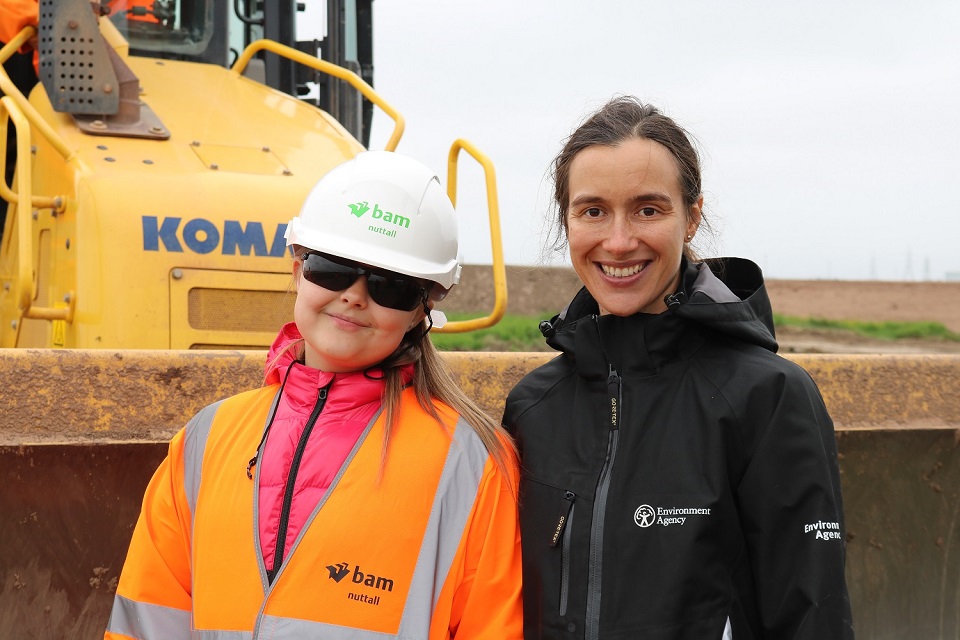
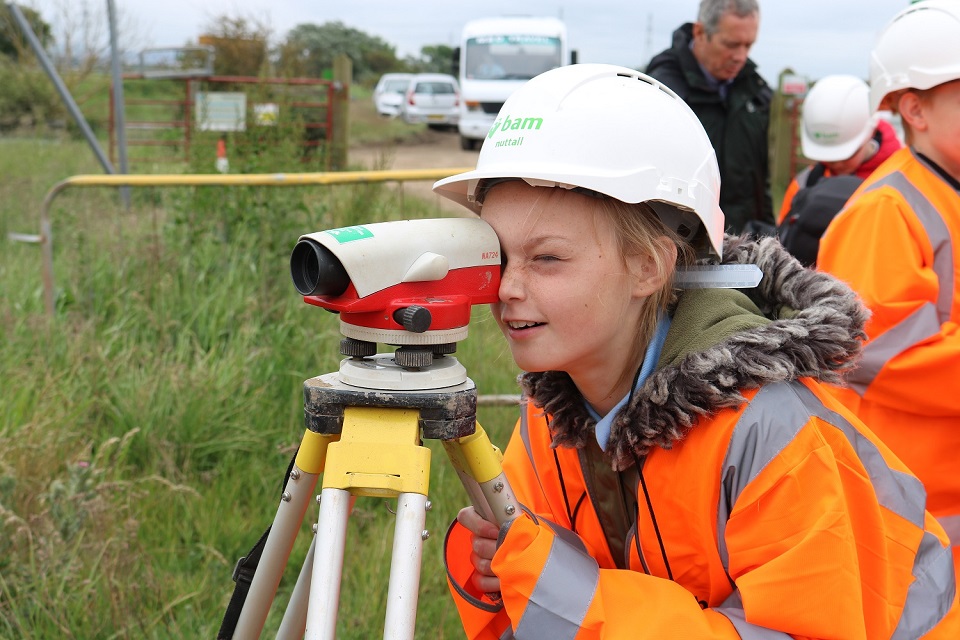
Pupils at High Clarence Primary School were shown around the state-of-the-art £4.5million flood defences at Port Clarence which reduce the risk of flooding from the River Tees.
And they saw first-hand the £11million scheme, currently under construction, which reduces the risk of flooding from Greatham Creek and will create 30 hectares of new habitat for wildlife to thrive.
Together the projects protect 350 homes and 32 businesses at Port Clarence from flooding.
Pupils travelled on the Transporter Bridge across the River Tees to get a bird’s eye view of the flood defences, while at Greatham they got to see workers in action building new flood embankments – and even got to see the popular seals!
The event, which took place last week (Friday, 8 June), also gave local residents the opportunity to find out more about the scheme, while MP Alex Cunningham was also given an insight into how the defences work to protect his constituency.

Phil Marshall, the Environment Agency’s Senior Advisor on the project, said:
It’s really important the community understands how the flood defences at Port Clarence work together with the scheme at Greatham Creek to reduce their risk of flooding.
It’s a great project with lots of innovative features and the added benefit of creating extra habitat for wildlife in a vital conservation area.
Our future generations will play an important role in ensuring our communities are resilient as we deal with the impacts of climate change and it was great to show the school pupils this great engineering and habitat creation project. Hopefully it will inspire them to want to make a difference!
The first phase of the project was completed in December 2015 and saw new flood defences built in Port Clarence, consisting of a mixture of earth embankments, flood walls, and a raised section of the road on the approach to the Transporter Bridge.
In addition, the Environment Agency worked together with local business Wilton Engineering to install removable steel flood defences along the River Tees. This improves flood protection while still allowing Wilton to operate from the river.
Work started on the second phase in summer 2017 and involves raising existing flood embankments along Greatham Creek.
There is also a managed realignment of part of the current flood defences. This means a new embankment to the north of the RSPB Saltholme Nature Reserve has been built around a larger area of land, and then the existing flood embankment will be breached later this year.
This results in the creation of around 30 hectares of intertidal habitat to the north of the nature reserve. It’s a popular area frequented by seals, and a variety of bird species including shelduck, knot and redshank.
The Environment Agency is working with local businesses in the area, with SABIC UK providing funding towards the scheme and INOVYN ChlorVinyls providing some of their land for the additional habitat creation. Phil added:
Work is progressing well and is expected to be completed this autumn. The local businesses in the area know only too well how devastating it is to be flooded having been affected by the tidal surge in December 2013.
By working together with industry we’re vastly improving existing defences to protect residents and businesses and reduce the risk of flooding now and into the future as sea levels start to rise. This has been quite a unique partnership and I can’t emphasise enough the benefits this will bring for the area.
The Environment Agency has also been working closely with partners at RSPB and Natural England to design and build a scheme which maximises benefits for the internationally designated habitat, and to ensure disruption to wildlife and visitors to the local area is kept to a minimum.
Contractors BAM Nuttall and Mott MacDonald Joint Venture (BMMJV), are carrying out the work on behalf of the Environment Agency.
If you would like to know more about your risk of flooding and how to be prepared call Floodline on 0345 988 1188, or visit the Floods Destroy website
Link: Press release: School children flood in for new defences tour
Source: Gov Press Releases