
Foreign Affairs Committee holds evidence on the FCO’s promotion of human rights at the UN
Link: FCO Human rights work examined
Source: Parliamentary News
Foreign Affairs Committee holds evidence on the FCO’s promotion of human rights at the UN
Link: FCO Human rights work examined
Source: Parliamentary News

A waste removal businessman who blighted Devon countryside with 2,000 tons of rubbish – then set fire to it – has narrowly avoided jail.
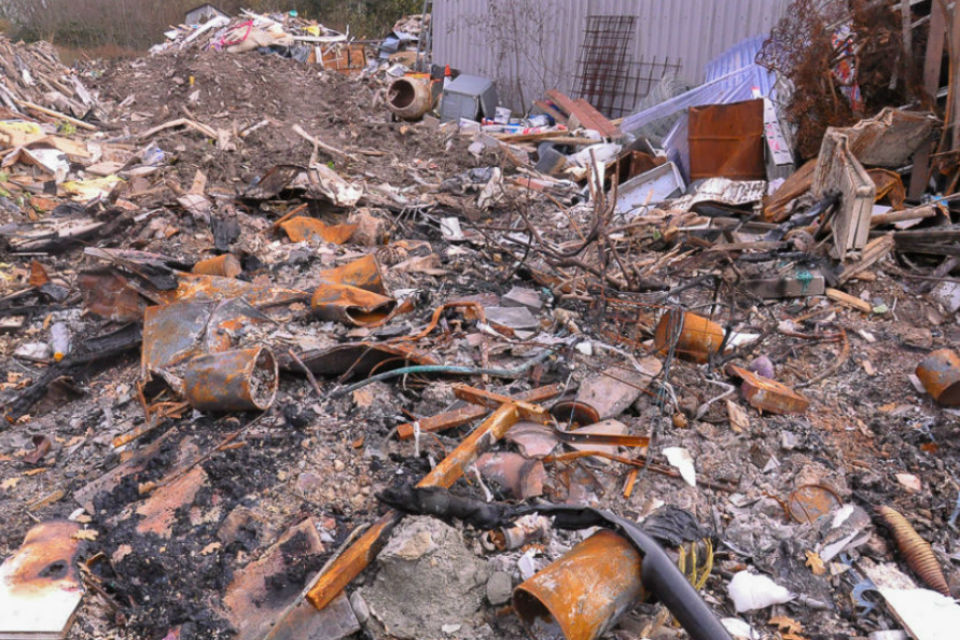
The Environment Agency prosecuted Edward Donovan, of Churchill Drive, Crediton, for a range of offences after he turned part of an elderly land owners’ farm at Spreyton into an illegal waste site. It was here he dumped waste he collected from commercial businesses across central and east Devon as EDS (Ed Donovan Services).
Donovan pleaded guilty to charges under the Environmental Protection Act at Exeter Magistrates Court, which included running a waste site on land owned by a couple in their 70s without a permit, causing pollution and setting fire to waste. He was given a jail sentence of 18 weeks, suspended for two years, and banned from the waste trade for five years.
He was also ordered to pay Devon & Somerset Fire & Rescue Service £1,232 – the amount it cost the service to attend a large waste fire he set at the location last year. Donovan also has to pay £4,252 costs to the Environment Agency.

Adrian Evans, of the Environment Agency, said:
This is one of the worst incidents of illegal waste management I have come across for some time.
The defendant showed a complete disregard for the environment, health and safety and for the owners of the land and their neighbours.
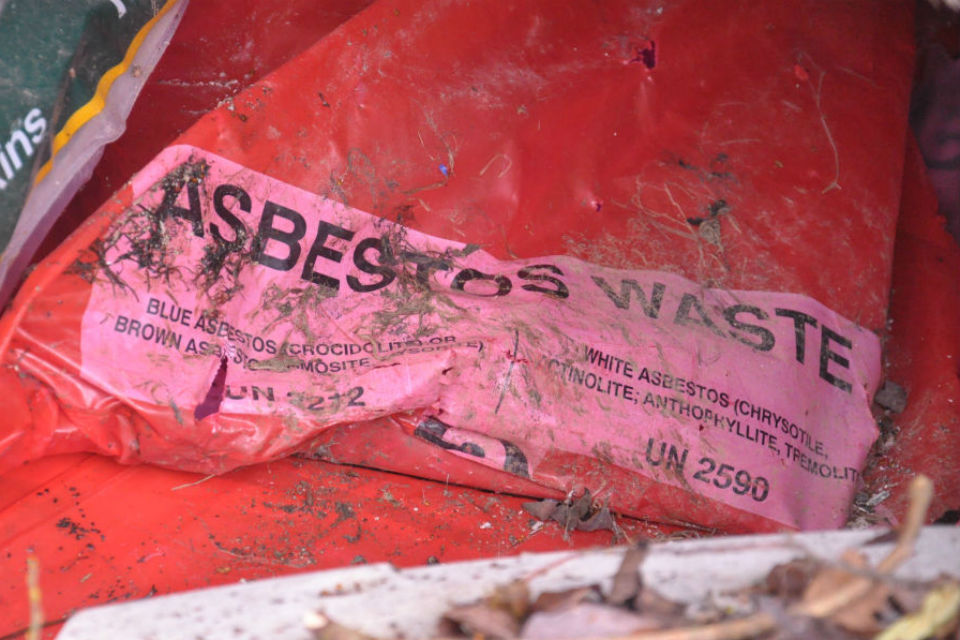
As well as furniture, plastics, plasterboard and other vast quantities of waste which were strewn across a large area, we found materials containing asbestos.
The land owners were unaware of Donovan’s activity, who had been allowed to use the site from May 2017 in lieu of payment for dismantling and removing three caravans. When they found out, they were horrified and their son told Donovan to tidy up the site in November 2017. Instead, the defendant set waste alight.
Adrian Evans, of the Environment Agency, said:
This case serves as an important reminder to businesses and the public to be vigilant about who they allow to remove their waste.
Waste producers should always insist on seeing evidence that waste being removed will be taken to suitably licensed or exempt facilities to be properly disposed of or recycled.
The Environment Agency has some simple steps for all householders and businesses to think about when giving your waste items to someone else to dispose of, whether you have paid them or not:
Taking these steps will help us all work together to deter waste criminals and reduce illegal fly-tipping and dumping that blights communities and costs thousands of pounds to clear and make safe.
Donovan pleaded guilty and received an 18-week prison sentence, suspended for two years, for each of the following offences, to be served consecutively:
Donovan was also given a five-year Criminal Behaviour Order preventing him from working in the waste industry.
Link: Press release: Edward Donovan nearly jailed for trashing Devon countryside
Source: Gov Press Releases
Plans to construct flood walls at an industrial estate in Mytholmroyd to provide better protection for both businesses and residents have been approved by Calderdale Flood Recovery and Resilience Partnership Board.
They have given the go ahead for walled defences at Greenhill Industrial Estate as part of the £30m Mytholmroyd Flood Alleviation Scheme which will substantially increase the standard of protection for local businesses, including Vale Upholstery and the whole village.
Members of the board were updated at their meeting on 15th June about the investigations into a range of options for the Greenhill site including widening the channel and constructing different types of walls.
Approval was given to build concrete walls on both the right and left banks, install flood gates at each end of the bridge and remove security fencing which obstructs the flow of the river.
This option was recommended as providing the best standard of protection for the whole village, within the resources available and timescales of the current construction programme. However, it was also agreed by the board to continue to seek opportunities to carry out widening the channel at Greenhill Industrial Estate in the future, as well as other measures such as reservoir management and natural flood management.
The scheme, with walled defences at Greenhill Industrial Estate will provide a one in 50 year standard of protection (two percent chance of flooding occurring in any given year) for 400 homes and businesses in the village. This is a substantial increase from the current one in 5 years standard of protection (20 percent chance of flooding).
Helen Batt, Calder catchment director for the Environment Agency said:
We are committed to providing the best possible protection to the Mytholmroyd community as quickly as we can within the funds we have available.
The Greenhill industrial estate is an essential part of the flood defence scheme and we have developed our plans in consultation with local businesses at that site.
We will progress with the next phase of the Mytholmroyd Flood Alleviation Scheme without delay – but continue to explore funding opportunities for further ways to improve the protection for people living and working in the village and the rest of the Calder Valley from flooding in the future.
Cllr Tim Swift, Leader of Calderdale Council and Chair of the Calderdale Flood Recovery and Resilience Partnership Board said:
We are committed to protecting communities like Mytholmroyd to help them thrive so that people want to live, work, visit and invest there.
Given Mytholmroyd’s vulnerability to flooding and the damage caused by recent incidents, it was important to find a solution that would enable the works to continue in a timely way and provide a high standard of protection until further potential works can be progressed.
The approved option will ensure the best possible use of our resources, enabling us to continue to approach funding bodies without delaying this essential scheme and putting residents and businesses at unnecessary risk.
Plans for the Mytholmroyd flood defence scheme have been developed by the Environment Agency in partnership with Calderdale Council. It is expected to be completed Winter 2019 / 2020. Design and construction of the scheme is being carried out by main contractor VBA, a joint venture comprising VolkerStevin, Boskalis Westminster and SNC-Lavalin’s Atkins business.
Vital works to be completed as part of the scheme include construction of new, raised and improved flood walls, the relocation of Caldene Bridge, widening of the river channel at Caldene Bridge and on the right bank in front of St Michael’s Church and flood proofing of the buildings next to the river. Work will also be carried out to reduce flooding from the canal, culverts and Burnley Road.
For the latest news about the scheme, sign up for regular news bulletins by emailing: mytholmroydFAS@environment-agency.gov.uk. You can also follow #MytholmroydFAS @EnvAgencyYNE on Twitter or visit https://www.eyeoncalderdale.com
The Environment Agency is investing £475m in Yorkshire to better protect 66,000 homes across the county as part of our current six year programme to 2021.
Link: Press release: Vital part of Mytholmroyd flood defence scheme gets green light
Source: Gov Press Releases
These Regulations amend the Private Water Supplies (England) Regulations 2016 (S.I 2016/618). The amendments principally implement the requirements of Commission Directive (EU) 2015/1787 (OJ L 260, 7.10.2015, p.6) which amended Council Directive 98/83/EC on the quality of water intended for human consumption (OJ L 330, 5.12.1998, p.32). The purpose of those amendments is to align the principles applying in the EU in respect of risk based sampling and analysis of drinking water with those of the World Health Organisation.
Link: The Private Water Supplies (England) (Amendment) Regulations 2018
Source: Legislation .gov.uk
A ban on the sale of products containing microbeads has come into force today as part of the Government’s world-leading efforts to prevent these harmful pieces of plastic entering the marine environment.
From today, retailers across England and Scotland will no longer be able to sell rinse-off cosmetics and personal care products that contain microbeads – the tiny pieces of plastic often added to products such as face scrubs, soaps, toothpaste and shower gels.
Just one shower alone is thought to send 100,000 microbeads down the drain and into the ocean, causing serious harm to marine life. The Government’s ban – praised by campaigners as one of the toughest in the world – will now prevent billions of microbeads ending up in the ocean every year.
Environment Secretary, Michael Gove, said:
Microbeads might be tiny, but they are lethal to sea creatures and entirely unnecessary.
We have led the way in banning these toxic pieces of plastic, but this is by no means the end in our fight. We will now press ahead with our proposals for a deposit return scheme and ban other damaging plastic such as straws”.
Today’s announcement follows January’s ban on the manufacture of products containing microbeads.
It sits alongside the Government’s 5p plastic bag charge – which has taken nine billion bags out of circulation – and recent proposals for a deposit return scheme for plastic bottles and a ban on the sale of plastic straws, stirrers and plastic-stemmed cotton buds.
It also forms part of the 25 Year Environment Plan commitment to eliminate avoidable plastic waste and sits alongside the Treasury’s call for evidence on how changes to the tax system could be used to reduce single use plastics.
With the microbeads ban now in place, the Government is exploring how other microplastic sources enter our marine environment. Last month £200,000 was pledged by the Government for scientists at the University of Plymouth to explore how tiny plastic particles from tyres, synthetic materials like polyester, and fishing gear – such as nets, ropes and lines – enter our waterways and oceans.
The Government also launched the Commonwealth Clean Oceans Alliance earlier this year to help eliminate single use plastic and address marine plastic pollution across the Commonwealth. As part of this member states have pledged to take action on plastics, be this by a ban on microbeads or committing to eliminate avoidable plastic waste.
Dilyana Mihaylova, Marine Plastics Projects Manager at Fauna & Flora International, said:
We are absolutely delighted to see the final stage of the microbeads ban that Fauna & Flora International recommended two years ago coming into force today. The robust definition of microbeads used in this ban is world-leading and should finally put an end to the sale of rinse-off products containing microbeads in UK shops and online.
Obviously this is just the beginning in the fight against plastic pollution, but the government’s strong action on this specific issue has put a spotlight on the threat the oceans face. We hope the Government will apply the same ambition to dealing with other plastics that threaten our seas and ocean life, and meet their commitment to achieve cleaner and healthier oceans”.
Dr Sue Kinsey, Senior Pollution Policy Officer at the Marine Conservation Society, said:
We are delighted that this robust microbead ban has come into force. This is the strongest and most comprehensive ban to be enacted in the world so far and will help to stem the flow of microplastics into our oceans. We believe that this signals a real commitment on the part of this Government to clean up our seas and beaches and we look forward to seeing further actions to combat plastic waste”.
Link: Press release: World leading microbeads ban comes into force
Source: Gov Press Releases
Cameras
Pick-up attachments (agriculture)
Agricultural equipment
Linkages
Agricultural tractors
Link: BS ISO 20112-1:2018 Tractors and machinery for agriculture and forestry. Camera interface between tractor and implement Analogue camera interface
Source: BSI Standards
Data processing
Terminology
Vocabulary
Information
Data
Information exchange
Geography
Link: BS EN ISO 19146:2018 Geographic information. Cross-domain vocabularies
Source: BSI Standards
Data processing
Telecommunication systems
Interfaces (data processing)
Mobile communication systems
Road transport
Computer networks
Data transmission
Communication networks
Open systems interconnection
Radiocommunication
Traffic control
Road vehicles
Link: BS EN ISO 17419:2018 Intelligent transport systems. Cooperative systems. Globally unique identification Part 1: Globally unique identification
Source: BSI Standards
Coded representation
Numbers
Data transfer
Traffic control
Telecommunication systems
Telemetry
Data layout
Information exchange
Road vehicles
Road transport
Number representation
Automatic
Vehicles
Mobile communication systems
Data structures
Identification methods
Traffic
Traffic flow
Viscometers
Test equipment
Bitumens
Cut-back bitumens
Binding agents
Viscosity measurement
Petroleum products
Emulsions
Bituminous products
Rotating parts
Dynamic viscosity
Fluxed bitumens
Link: BS EN 13302:2018 Bitumen and bituminous binders. Determination of dynamic viscosity of bituminous binder using a rotating spindle apparatus
Source: BSI Standards