Press release: Further consultation on proposed changes to A303 Stonehenge upgrade

Taking on feedback from a consultation earlier this year Highways England has adjusted some of the design detail of the planned £1.6 billion scheme which will improve journeys on the busy route and create a much-needed bypass for Winterbourne Stoke while preserving the Outstanding Universal Value of the World Heritage Site.

The changes, which seek to further enhance the famous landscape and reconnect the two halves of the 6,500-acre World Heritage site (WHS), include:

  • removing the previously proposed link between Byways 11 and 12 in the Stonehenge WHS to avoid affecting the setting of the Normanton Down barrow group and tranquillity of the site in this area
  • widening the green bridge proposed near the existing Longbarrow roundabout to improve the physical and visual connection between the northern and southern parts of the WHS
  • moving the proposed modification of Rollestone crossroads to provide a more compact layout

Derek Parody, Highways England Project Director for the A303 Stonehenge scheme, said:

We had a great response to our earlier consultation and have acted on the feedback. We now want to get people’s views on our proposed changes to our original consultation.

The further feedback we get will allow us to make sure we have got the best scheme before we make our application later this year to build the scheme.

Meanwhile we continue to work with heritage groups including Historic England, English Heritage, the National Trust, and experts in the field, including the Stonehenge Scientific Committee – a body of leading independent archaeologists – to ensure a new route is built sensitively to the World Heritage site.

Highways England received more than 5,000 responses to consultation on improving the A303 route past Stonehenge, between Amesbury and Berwick Down, which includes a tunnel at least 1.8 miles long, a free-flowing dual carriageway and a much-needed bypass north of Winterbourne Stoke.

As part of its £15 billion road strategy – the biggest investment in roads in a generation – the Government is committed to upgrading all remaining single carriageway sections of the A303/A358 between the M3 and M5 to dual carriageway standard.

The A303 at Stonehenge, the A303 between Sparkford and Ilchester, and the A358 between the M5 Taunton and the Southfields Roundabout on the A303 are the first three schemes in that strategy.

The A303 Stonehenge upgrade will deliver major benefits to the World Heritage Site by reuniting the landscape and restoring tranquillity to the setting of one of our most famous cultural icons. At the heart of many of Highways England’s proposed refinements to the scheme is the protection of the WHS and its Outstanding Universal Value.

The scheme will also support a major boost to the South West economy, currently lagging 24% behind the national economy, by providing an effective transport link, and reducing the traffic blight on local communities.

Further details of the proposed changes will be available during the supplementary consultation and in the meantime, anyone wanting further information on the scheme or anyone who wants to respond to the consultation can visit the scheme web page.

General enquiries

Members of the public should contact the Highways England customer contact centre on 0300 123 5000.

Media enquiries

Journalists should contact the Highways England press office on 0844 693 1448 and use the menu to speak to the most appropriate press officer.

Link: Press release: Further consultation on proposed changes to A303 Stonehenge upgrade
Source: Gov Press Releases
Press release: 1,000 young people to be trained as Democracy Ambassadors

Today during National Democracy Week, the Minister for the Constitution, Chloe Smith, will be unveiling a new programme aimed at inspiring school-age young people in full time education to engage with democracy from an earlier stage.

The Democracy Ambassador’s scheme has been launched to tackle an imbalance in democratic engagement between the UK’s older and younger generations.

Research revealed by the most recent Hansard Society Audit of Political Engagement indicates that 18 to 34 year olds are much less likely to feel confident in their knowledge of politics than those who are 35 and above.

Only 39% of 18-24 year olds and 35% of 25-34 year olds claim to know at least a ‘fair amount’ on the subject.

The Democracy Ambassadors programme, will see 1,000 13-16 year olds recruited across the UK to inform their peers about our country’s democratic processes and promote participation. It is intended to increase school-age young people’s confidence on the subject, ahead of reaching voting age at 18. People can apply to register to vote at 16, with registration a first, vital step on the path to full democratic engagement. The programme will complement activity aimed at the same age group delivered in schools.

The scheme will be delivered in partnership with Young Citizens and target those who are less likely to be registered to vote when able, including those from disadvantaged and marginalised backgrounds. It is being announced as we celebrate the 90th anniversary of the 1928 Equal Franchise Act this week, which gave women equal voting rights.

Ambassadors training will include:

  • educating them on how democracy works in England at both a national and local level
  • equipping them with the skills to share this knowledge further
  • a challenge to reach out to 100 of their peers and encourage

Young Citizens hosted a pilot session for Democracy Ambassadors yesterday to trial key components of the training scheme with a host of 13-16 year olds. Feedback will prove vital in making sure that the final programme meets the needs of the target audience when it’s rolled out across England later this year.

Minister for the Constitution, Chloe Smith said:

National Democracy Week is about inspiring, empowering and engaging people in democracy. School students in particular have told me they want the information and skills to be able to cast their votes when they become adults.

The Democracy Ambassadors scheme has been designed for this age-group as they head towards voting age, to build a legacy of engaged future citizens.

CEO of Young Citizens, Tom Franklin, said:

For nearly thirty years Young Citizens has been championing the importance of young people’s democratic participation. Young people are not apathetic to politics, they just need to be given opportunities and encouragement to get involved.

Through Democracy Ambassadors we hope some of our youngest citizens can boost their understanding of how our democracy works and give their peers the confidence to get informed and involved locally on the issues they feel passionately about.

Link: Press release: 1,000 young people to be trained as Democracy Ambassadors
Source: Gov Press Releases

Press release: Cooperation the key to tackling pennywort

The Environment Agency has called on Thames river users to keep working together to control floating pennywort. More than 63 tonnes of the invasive water plant has been removed from the Thames over the winter and spring but there is still more to do.

Because of the efforts of the Environment Agency and some local groups, where there were large rafts of the plant in some areas, there are now only a few small traces of regrowth. The Environment Agency continues to monitor and remove new growth of this very invasive and destructive plant. However, the summer is the peak season for floating pennywort growth which can have detrimental impacts on watercourses. Large blooms of the plant affect the oxygen content of rivers, reduce biodiversity, can damage important habitats and potentially increase flood risk.

As part of the annual maintenance programme, the Environment Agency has been managing floating pennywort for several years in locations such as the River Wey and the Foudry Brook. But more help and support is needed from the public and river users if we are to succeed in controlling the spread of this destructive plant.

Daryl Buck, from the Environment Agency, said:

We actively monitor more than 200km of the River Thames. Our aim is to eradicate floating pennywort from the main River Thames completely, but we can only achieve this with the continued cooperation of key members of the community.

Early intervention is the most efficient way to keep on top of this damaging plant as it can grow up to 20cm per day! We are urging riverside owners to keep an eye on their watercourse and report any new growth to us. We also would like to hear from river users such as anglers, boaters and canoeists who may come across the plant when out and about enjoying the river.

One success story so far has been the work undertaken earlier this year in the Abbey River near Chertsey. Floating pennywort established itself last season in the popular watercourse, causing all kinds of issues for river users like anglers and kayakers as well as landowners.

Ian Penny, secretary of a local angling club, said:

This non-native plant is very aggressive and plays havoc for fish and plant life. The Environment Agency did an absolutely fantastic job of totally removing the floating pennywort from over a mile stretch of the river. Everyone who enjoys the river has a responsibility to help the situation by reporting any new sightings via www.planttracker.org.uk.

Richard Atkinson, Policy Officer for British Canoeing, said:

British Canoeing takes its environmental responsibility very seriously and wants all water users to have fun and enjoy the natural environment. Non-native invasive species like pennywort have a significant impact on biodiversity, the environment and paddling.

We will be encouraging our members to report any sightings via the app and by reinforcing the importance of the check, clean, dry procedure after paddling.

People can visit www.planttracker.org.uk or download the Plant Tracker app co-developed by the Environment Agency to enable river users to record sightings of floating pennywort to help concentrate removal efforts where they are most needed.

Floating pennywort was introduced into the UK as an ornamental plant. For more information pond owners are encouraged to go to the plantwise campaign at http://www.nonnativespecies.org/beplantwise/pondowner/index.cfm

Ends

Notes to Editors

Photographs available on request

Floating pennywort is an aggressive invasive non-native species of plant, introduced to this country as an ornamental aquatic plant. It tends to favour slower moving watercourses. It is now widespread in southern and eastern England, including parts of the River Thames and it’s backwaters between Reading and Kingston and the River Wey.
The Environment Agency is under no obligation to remove floating pennywort, however we do have discretion to remove it under our statutory powers. Riparian owners are also not obliged to remove it, unless it can be shown that they planted it, though if it is on their land they do have a duty to take reasonable action to ensure it does not cause damage to neighbouring properties.
What you can do to help
Please continue to help us. If you see floating pennywort in the river Thames or its tributaries please report its location by:

• Emailing us: enquiries_THM@environment-agency.gov.uk

Not sure if it is floating pennywort?

• Look at the plant tracker website or download the app at www.planttracker.org.uk
• You can also report sightings using the plant tracker app.
Are you a boater?
• Don’t pass though through clumps of the plant. It can break off and spread downstream or carry it upstream.
• Visually check your craft regularly and, if safe to do so, remove any visible weed, placing it well away from any river or other water body.

All media enquiries: 0800 141 2743. Or e-mail us at southeastpressoffice1@environment-agency.gov.uk
Follow us on Twitter at @EnvAgencySE

Link: Press release: Cooperation the key to tackling pennywort
Source: Environment Agency

Rail Passenger (Compensation)

A Bill to make provision for a single compensation scheme for passengers across train operators; to require train operators to pay automatic compensation to season ticket holders and certain other passengers where certain standards of service are not met; to allow train operators to recover compensation paid to passengers from Network Rail in certain circumstances; to establish a body to administer rail compensation; and for connected purposes.

Link: Rail Passenger (Compensation)
Source: Public Bills

Press release: Recall – SAM XT Extremity Tourniquet

First responders and people who participate in outdoor activities, such as mountaineering and hiking, should check if they have a SAM XT Extremity Tourniquet and return it to their distributor for a new one.

A problem in the sewing operations has been identified which could cause the seam holding the buckle to the belt to fail when used on a patient to stop blood flow. Although not widely used in the UK, tourniquets are used for critical, emergency situations, and so it’s important people are aware if they own an affected product.

Only a small number of lots are being recalled. This product has been sold worldwide since March 2017. No other types of tourniquets are affected.

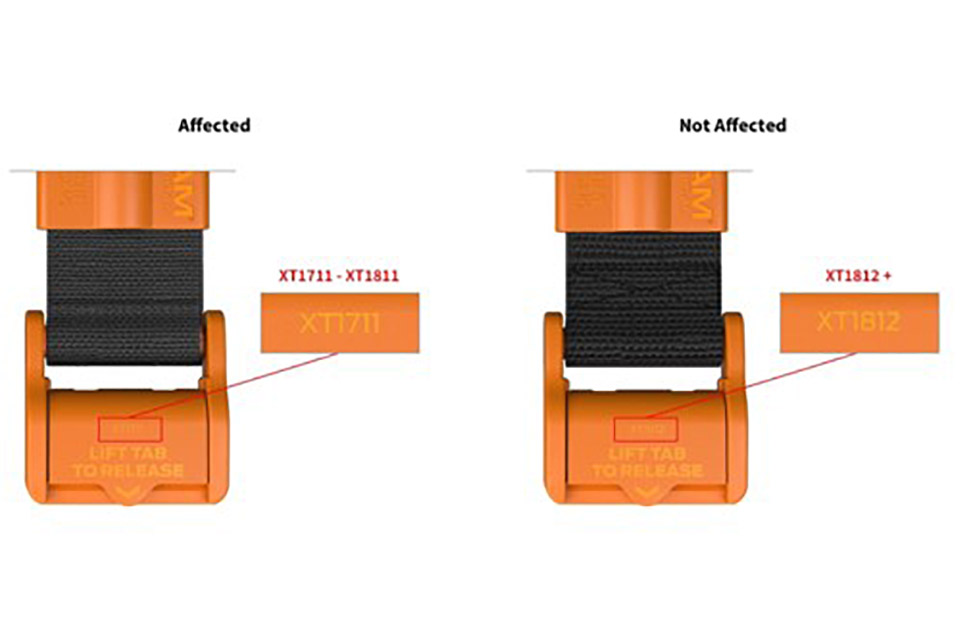
The SAM XT devices affected by the recall can be identified by:

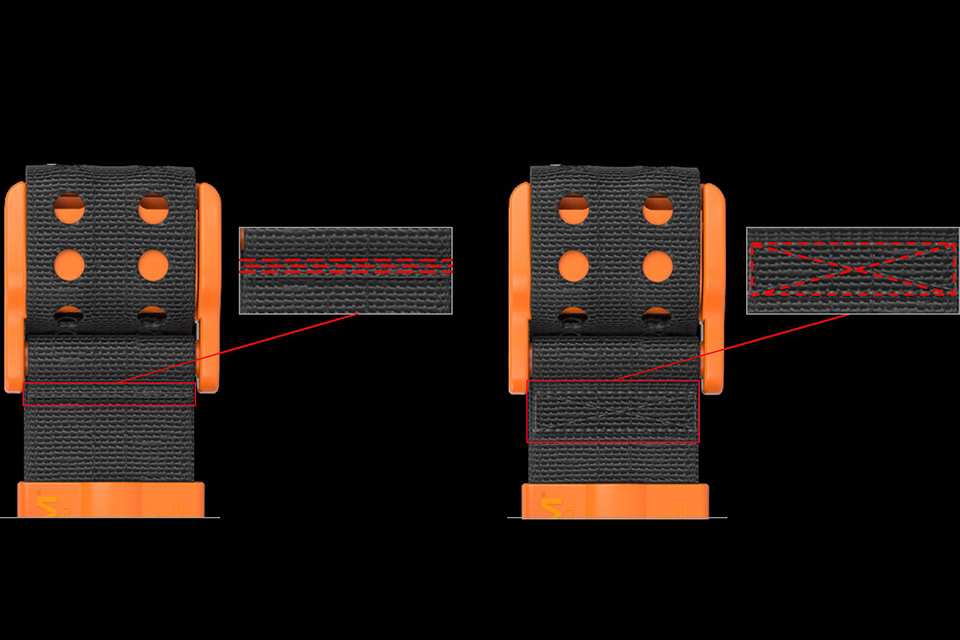
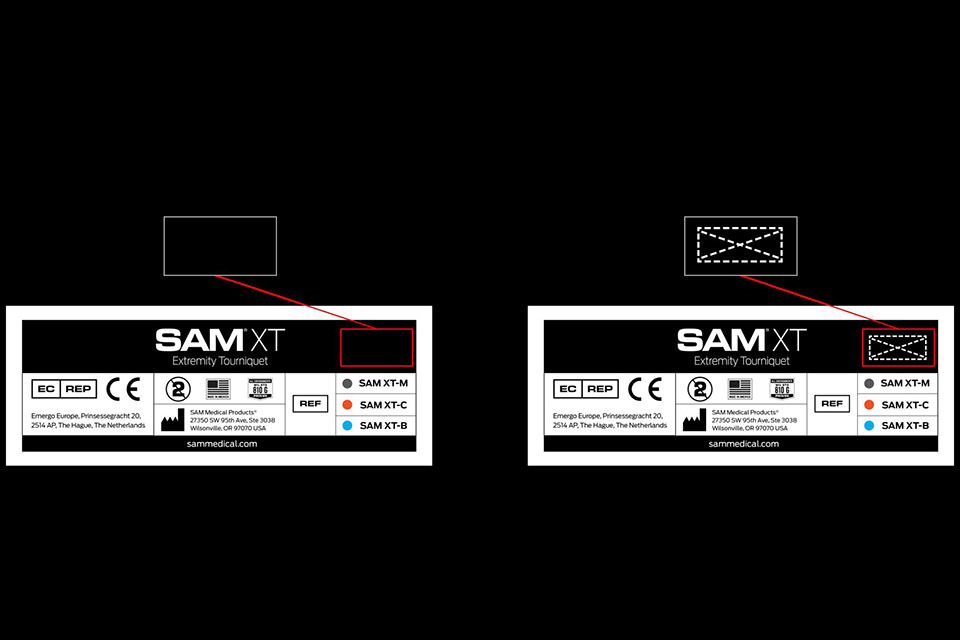
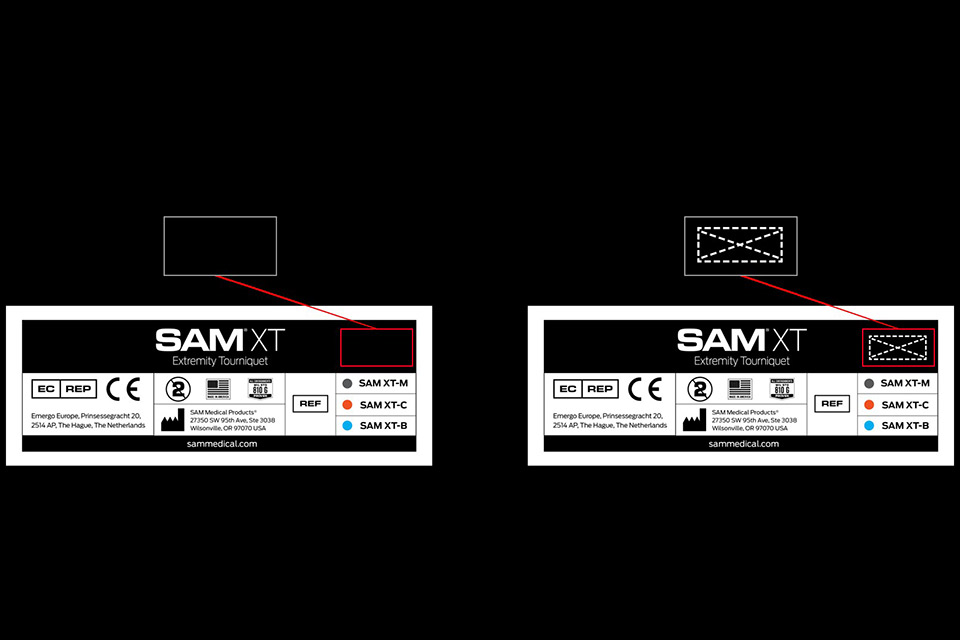
  • The absence of a “Box X Stitch” on the Instructions For Use (IFU)
Identification marks
  • The absence of a “Box X Stitch” on the device
Identification marks
  • Any Lot Number with XT1812 or higher
Identification marks

John Wilkinson, the Medicines and Healthcare products Regulatory Agency’s (MHRA) Director of Medical Devices, said:

Check if you have the listed tourniquet and if you do so, please separate the device from your pack and take them back to where you bought them from.

Our highest priority is making sure medical devices are safe. This is why we are supporting the company to carry out this recall and why we want people to check their inventory.

As with any medical device, we strongly encourage anyone to report any suspected manufacturing faults to us via our Yellow Card Scheme.

Notes to Editor

  1. MHRA is responsible for regulating all medicines and medical devices in the UK. All our work is underpinned by robust and fact-based judgments to ensure that the benefits justify any risks. MHRA is a centre of the Medicines and Healthcare products Regulatory Agency which also includes the National Institute for Biological Standards and Control (NIBSC) and the Clinical Practice Research Datalink (CPRD). The Agency is an executive agency of the Department of Health. www.mhra.gov.uk
  2. Link to Yellow Card Scheme
  3. Medical Device Alert
  4. SAM Medical company website recall

Media enquiries

News centre
MHRA

10 South Colonnade
London
E14 4PU

Office hours are Monday to Friday, 8:30am to 5pm. For real-time updates including the latest press releases and news statements, see our Twitter channel at https://www.twitter.com/mhrapress


Link: Press release: Recall – SAM XT Extremity Tourniquet
Source: Gov Press Releases