
MP debate the Taxation (Cross-border Trade) Bill
Link: Taxation (Cross-border Trade) Bill: Commons remaining stages
Source: Parliamentary News
MP debate the Taxation (Cross-border Trade) Bill
Link: Taxation (Cross-border Trade) Bill: Commons remaining stages
Source: Parliamentary News
Regenerating Seaside Towns Committee takes evidence on Tuesday 17 July at 3.25pm
Link: Local government representatives give evidence to Committee
Source: Parliamentary News
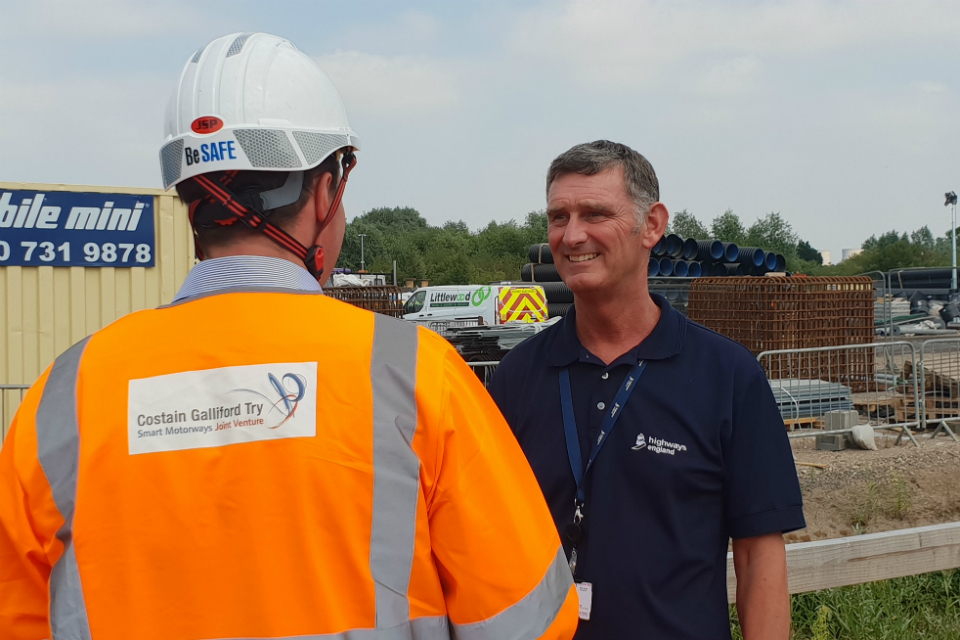
Nick Robinson, a former Artificer Telecommunications with the Royal Electrical and Mechanical Engineers (REME), even had a spell with the US Army as part of his three decades in the armed forces.
Back in ‘civvy street’ he has landed a role project managing a scheme to turn part of the M1 in the Midlands into a smart motorway.
He is now urging anyone leaving the armed forces to follow his lead and consider a career with Highways England, the Government company responsible for the country’s motorways and major A roads.
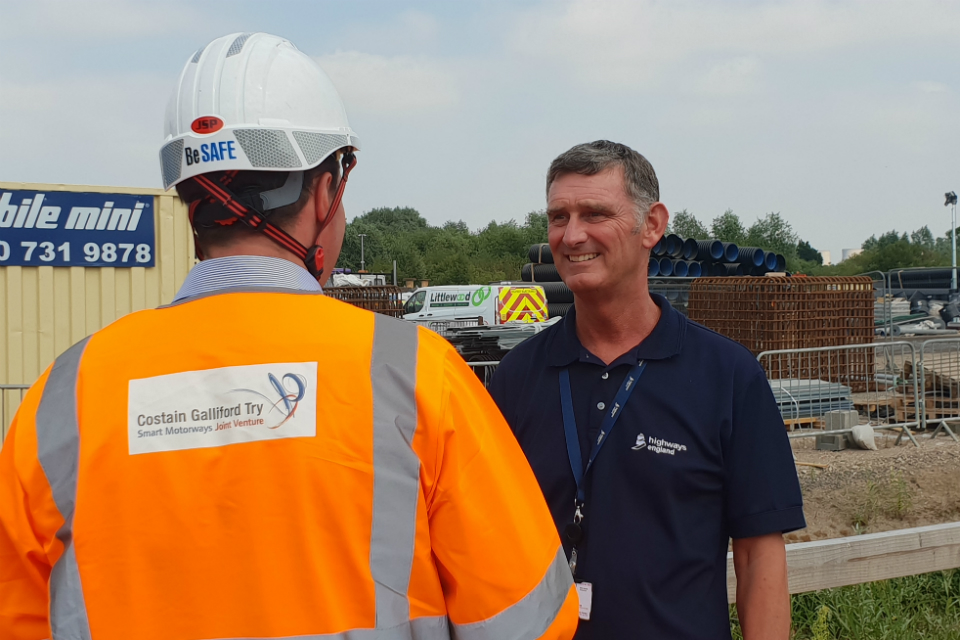
Nick said:
The armed forces is a great place to work and it can seem a daunting task when thinking about leaving.
But I can honestly say I am finding life at Highways England similar to working in the Army – I’m proud of what I do, making a difference and helping others.
Two working days here are never the same, as was the case in the Army and as highly skilled ex-service personnel we can make an immediate contribution to the company’s work improving the country’s motorways and major roads.
I would urge anyone looking for a career change or a new challenge to give this company a go.
Nick recently spoke of his transition from the military to motorways at the Raja REME careers and employment event at the REME museum in Chippenham, where he provided inspiration for those looking for a career change or a new challenge following retirement from service.
Since proudly signing an Armed Forces Covenant in June 2017, Highways England has actively been supporting all leavers from the military through their reintegration into civilian careers, helping operate, maintain and improve the spine of the country.
New recruits to Highways England from the Armed Forces are all assigned a buddy who is also ex-military to support the new starter into the company and help smoothly integrate into the civilian work place.
Leading mental health charity, Combat Stress, who works with veterans helping them tackle the past and plan for the future, welcomed this recruitment campaign.
Speaking on the initiative, Chief Executive of Combat Stress, Sue Freeth said:
Former servicemen and women bring enormous value to the workplace. Most service personnel make a successful transition to civilian life but a significant minority can struggle after leaving the military. At Combat Stress, veterans tell us that with the support of their employer, they’re able to engage in mental health treatment alongside full time work and have a rewarding career applying the skills and knowledge they developed in the military.
I’m delighted to see this campaign from Highways England to recruit more veterans into the company. The buddy initiative to help veterans transition to a civilian job is a fantastic example of how a company has created an effective support programme in the workplace.
Most of Highways England’s roles are suitable for the ex-forces with many of the skills being transferable. Popular roles include operations and project management, through to support functions such as commercial and procurement and IT roles.
You can search and apply for jobs at Highways England via the careers webpage.
Funnily enough, there isn’t. I left school in the 70’s and went on to be an apprentice heavy engineer. Let’s put it this way, I didn’t have a good relationship with my boss, so one day I left for the day and went into town and applied to join The Army. I did and completed 31 and a half years in service.
I left the Army and spent some time transitioning and moving home with my wife to the North West. I soon realised that my CV was too specialised and needed to move to a place where there was more opportunity.
I ended up returning to the Midlands, where I am originally from, working for a company called Force Protection Europe, a military vehicle that can withstand explosions and provides specialised protection against roadside bombs and improvised explosive devices (IEDs).
Following this, I travelled around the world and became a qualified diver. On my return home, I attended the engineering construction fair at the NEC. Contacts there helped me to construct my CV and advised me to consider companies like Network Rail or The National Grid. After searching specialist websites I came across the project manager role at Highways England, and I’m really pleased I did.
I just took it in my stride. Everyone has a different way of coping with returning to civilian life, and I have my way that works for me.
Rolling with the punches. Two working days at Highways England are never the same, as was the case in the Army.
Similar to working in the Army – I’m proud of what I do, making a difference and helping others. I am the assistant project manager for a scheme to convert the M1 between junctions 23a to 25 into a smart motorway, smart , so I am helping to improve people’s journeys; no two days are the same and I cover all aspects of project management including leading from the front.
I go out at least twice a week on to my scheme, and it’s great to actually see the difference and changes as it develops.
Go for it! If you’re thinking of doing it – don’t think about it, just go for it!
Research, research, research. Research where you are going, research the qualifications you have and how you can convert them into something a company is looking for, and then research how you will approach the company – do you have a connection that can make an introduction? How will you write your covering letter?
Members of the public should contact the Highways England customer contact centre on 0300 123 5000.
Journalists should contact the Highways England press office on 0844 693 1448 and use the menu to speak to the most appropriate press officer.
Link: Press release: From military to motorways – what would you do in a second life?
Source: Gov Press Releases
Statement from International Trade Secretary expected at 4.30pm.
Link: Statement on UK trade policy: 16 July 2018
Source: Parliamentary News
Statement expected in the House of Commons at 3.30pm
Link: Statement: NATO Brussels Summit 2018
Source: Parliamentary News
These Regulations amend the National Health Service (General Medical Services Contracts) Regulations 2015 (S.I. 2015/1862) (“the GMS Contracts Regulations”) and the National Health Service (Personal Medical Services Agreements) Regulations 2015 (S.I. 2015/1879) (“the PMS Agreements Regulations”) which make provision in respect of the services provided under a general medical services contract and a personal medical services agreement made pursuant to Part 4 of the National Health Service Act 2006 (c.41) (medical services). They apply to England only.
Link: The National Health Service (General Medical Services Contracts and Personal Medical Services Agreements) (Amendment) Regulations 2018
Source: Legislation .gov.uk
The report acknowledges that there has been limited progress in the human rights situation in Sri Lanka. Particular concerns highlighted include attacks on minority communities and the slow delivery of key human rights and reconciliation commitments.
The UK remains concerned by the lack of progress on introducing legislation that protects women and LGBT people from discrimination.
The UK works with the government of Sri Lanka to support reconciliation and human rights. This continued engagement aims to strengthen democracy and the rule of law through support for police reform, demining, inter-faith dialogue and mediation and the UN’s Peacebuilding Priority Plan.
The Report underlines the UK’s desire to work positively with countries to help them improve their human rights performance.
The 30 HRPCs are: Afghanistan, Bahrain, Bangladesh, Burma, Burundi, Central African Republic, China, Colombia, Democratic People’s Republic of Korea, Democratic Republic of Congo, Egypt, Eritrea, Iran, Iraq, Israel and the Occupied Territories, Libya, Maldives, Pakistan, Russia, Saudi Arabia, Somalia, South Sudan, Sri Lanka, Sudan, Syria, Turkmenistan, Uzbekistan, Venezuela, Yemen, and Zimbabwe.
The FCO began publishing the Annual Human Rights Report in 1998 and it is now also published online.
Link: Press release: Sri Lanka remains UK ‘Human Rights Priority Country’
Source: Gov Press Releases
The Report notes with concern that in 2017, the human rights situation in Maldives continued to deteriorate with the erosion of political and civic freedoms and an increase in the intimidation of human rights defenders and journalists.
The UK is concerned by the lack of judicial independence in cases brought against opposition parliamentarians and also by the Government of Maldives stated intention to reintroduce the death penalty after a moratorium of more than 60 years.
The UK works bilaterally and with international partners to draw attention to human rights concerns and support human rights defenders in Maldives. UK funding supports civil society work on gender equality and a transparent and robust electoral process.
The Report underlines the UK’s desire to work positively with countries to help them improve their human rights performance.
The 30 HRPCs are: Afghanistan, Bahrain, Bangladesh, Burma, Burundi, Central African Republic, China, Colombia, Democratic People’s Republic of Korea, Democratic Republic of Congo, Egypt, Eritrea, Iran, Iraq, Israel and the Occupied Territories, Libya, Maldives, Pakistan, Russia, Saudi Arabia, Somalia, South Sudan, Sri Lanka, Sudan, Syria, Turkmenistan, Uzbekistan, Venezuela, Yemen, and Zimbabwe.
The FCO began publishing the Annual Human Rights Report in 1998 and it is now also published online.
Link: Press release: Maldives remains UK ‘Human Rights Priority Country’
Source: Gov Press Releases
The UK’s world-leading aerospace sector will be propelled into a new era of cleaner, greener flight through industry and government investment, the Business and Energy Secretary announced today at the 2018 Farnborough International Airshow.
From the total investment, £255 million – supported by the Aerospace Technology Institute (ATI) and UK Research & Innovation (UKRI) – will go towards 18 new research and technology projects, including the development of cleaner and greener hybrid aircraft. To support small and medium-sized companies, £68 million of the funding will be made available to increase research and development opportunities, with £20 million to drive improvements in long-term productivity across the sector.
The projects will not only help maintain the UK’s existing strengths in aerospace but also position the UK as a world leader for some of the most technologically advanced aircraft that will transform the face of aviation including electric aircraft, hybrid-electric propulsion systems, and future materials for aircraft manufacturing.
A major beneficiary of the latest research and development funding is the revolutionary E-Fan X project. The project brings together Airbus, Rolls-Royce and Siemens to develop a flying electrical demonstrator which will form the foundation for future electrical aircraft and help the aerospace sector to manufacture cleaner, quieter aircraft and grow the industry sustainably. Rolls-Royce’s ACCEL project will also lead a UK programme to accelerate the electrification of flight which will contribute to the UK’s aim to cut emissions through its Clean Growth Strategy.
Business and Energy Secretary Greg Clark said:
The UK has a rich heritage in civil aviation as the home of the jet engine and the wings factory of the world. Technology is driving revolutionary changes in aviation that have not been seen since the 1970s and today’s investment is foundational to the future of commercial aviation and ensuring the UK remains at the cutting-edge of the sector. This revolution in civil aerospace will bring significant benefits to UK industry, passengers and the environment.
Through our modern Industrial Strategy, we are working with industry to lead the world as we embark on this journey into the new age of air travel.
This funding will also support a number of projects on the next generation UltraFan® aero engine, led by Rolls-Royce, which will contribute to their biggest shift in engine architecture since the 1970s. It will transform flight, setting new benchmarks in fuel efficiency, CO2 reductions and significant cut backs in engine noise.
Aviation Minister Baroness Sugg said:
The development of quicker, quieter and cleaner aircraft will transform the UK’s transport market and open up new and more sustainable ways for passengers to travel between our cities and regions and across the globe. Developing innovation, technology and skills is a core part of the government’s Aviation Strategy and this funding will help us to ensure that the UK aviation sector continues to be a world leader in this area.
Backing our world-leading aerospace sector, the Business and Energy Secretary also announced the start of formal negotiations for an Industrial Strategy sector deal that will further increase business investment in the UK, with discussions expected to conclude before the end of the year. The deal will:
The latest wave of projects to win the competitive funding underlines the significant importance of the £3.9 billion joint research and development funding commitment in the sector as part of the Industrial Strategy.
The government also welcomed the completion of Bombardier and Airbus’ Joint Venture; a partnership that will support the development and manufacture of structures for the A220 jet at the Bombardier facility in Belfast.
Further information about BEIS’ Farnborough commitments.
Projects supported by joint government and industry investment include:
A partnership between Airbus, Rolls-Royce and Siemens to develop a flight demonstrator for hybrid-electric propulsion for commercial aircraft. Hybrid-electric technology will deliver improved environmental performance that is cleaner, quieter and introduce re-evaluations of the entire design of aircraft.
4 projects on engine technologies for UltraFan involving multiple partners including universities and smaller companies. A new generation of aircraft engine that aims to transform flight, setting new benchmarks in efficiency, environmental performance and precision engineering. ACCEL is intended to accelerate the adoption of electrical technology in aviation through the design build and flight test of a high performance electric powertrain.
3 research projects exploring more efficient manufacturing processes, new technology for engine covers (nacelles) and the application of composite material to large aerospace structures, such as wings and fuselage. All 3 projects will be led by Bombardier Belfast (Shorts).
This project will help GKN develop new aerostructure components for aircraft upgrade opportunities and new programmes.
This project aims to reduce cash operating costs by 2% through increased efficiency and reduced turn-around times.
3 projects with National Composite Centre, part of High Value Manufacturing Catapult, to develop new, more efficient ways of producing large composite aerostructures. The research will explore the use of new composite materials as well as the manufacturing process.
Infrastructure for the University of Oxford Osney Thermo-fluids Laboratory (OSNEY Upgrade). The Oxford Thermofluids Institute is part of Oxford University’s strategic investment in the UK’s science base. The laboratory is a global centre of excellence for turbomachinery research which has made significant contributions to the technology of jet engines over the last 3 decades. This grant will be used to achieve a step change in capability to measure and research the cooling performance and hot stage technologies essential for the operation of high pressure (HP) turbine stages of Large Civil Engines.
PERFORM (Disruptive Textile Technology for Aerospace Applications): Perform is a project with the University of Sheffield’s Advanced Manufacturing Research Centre (AMRC), part of the High Value Manufacturing Catapult. The research will develop new composite material and efficient manufacturing processes.
OAAM (Open Architecture Additive Manufacturing): the Welding Institute, an engineering research and technology organisation, is taking the lead in the Open Architecture Additive Manufacturing (OAAM) project to demonstrate the ability to manufacture large metallic components via Additive Manufacturing (AM) (also known as 3D printing) for the benefit of UK Aerospace.
£68 million joint industry and government investment for new research and development opportunities targeted to support small and medium-sized businesses. An open competition supported by UKRI will back SMEs to carry out new research on high risk, high reward solutions that will help UK companies grow their capability for the long-term.
There will also be further rounds of the successful National Aerospace Technology Exploitation Programme to help SMEs develop new technologies. SMEs will also be able to increase their productivity through a new improvement programme that will increase their ability to win new work with new and existing customers. A new partnership between the UK and Sweden will also see the 2 countries collaborate on technological research.
The Defence Enterprise Export Partnership (DEEP) is a joint government, industry and academic initiative led by the Defence Growth Partnership (DGP) to ensure that the UK generates the skilled personnel able to lead successful international defence export campaigns. The initiative will support the Industrial Strategy by driving export-led growth and ensuring that the UK retains vital skills.
Link: Press release: Lift off for electric planes – new funding for green revolution in UK civil aerospace
Source: Gov Press Releases
A panel of experts appointed to diagnose issues that currently affect the health of our high streets and advise on the best practical measures to help them thrive now and in the future, has been announced today (16 July 2018) by High Streets Minister Jake Berry MP.
Chaired by Sir John Timpson, Chairman of Timpson, the multiple service retailer, the panel will focus on what consumers and local communities want from their high streets. Their review will look at the current challenges and work out options to ensure our town centres remain vibrant.
The panel of experts have a wealth of experience and include representatives from the retail, property and design sectors.
Welcoming the establishment of the expert advisory panel, High Streets Minister Jake Berry MP said:
High streets and small businesses are the backbone of our economy and we want to see them thrive now and in the future.
People care about their local high streets because they are the centres of their community. But our high streets are changing, and the government is committed to helping communities adapt.
High streets of the future will still be commercial centres but consumers now look for a wider range of experiences, from leisure to health services. Our future high streets may well feature more homes, childcare centres and gyms to bring people back and ensure that they keep returning.
I want to thank Sir John who is bringing 50 years of direct retail experience to the review.
Sir John Timpson said:
Throughout my career, high streets and city centres have continually changed to fulfill the needs of society, but the recent shift towards more out of town and online shopping threatens the future of many high streets.
The panel cannot offer an instant, quick fix, solution but we hope to identify practical and common sense decisions that will help the government provide the support that local communities and businesses need to provide the leisure and shopping facilities people will want 25 years from now.
Later this summer the expert panel in conjunction with the Ministry of Housing, Communities and Local Government (MHCLG) will put out a call for evidence seeking what members of the public and young people in particular want from the high streets of the future.
The announcement comes at the start of Great British High Street Week, a week of celebratory activity to promote The Great British High Street Awards 2018. The awards, run by MHCLG, and sponsored by Visa, are currently open for nominations.
The deadline for entries is 22 August 2018.
The awards not only celebrate the best high streets across the nation, but will also champion ‘Rising Stars’ – the most ambitious high streets which are taking a lead and working together to revive, adapt and diversify.
By shining a light on great examples of how high streets can meet the challenges of changing consumer behaviour and a changing retail environment, the awards will provide all communities with top tips for success.
There will be 26 short-listed entries in the ‘Champion High Street ‘category, 13 for England, 6 for Scotland, 4 for Wales and 3 for Northern Ireland, and 12 short-listed entries for the ‘Rising Star’ category. The Shortlisted entries will be announced in September, and the winners announced in November 2018.
Members of the Expert Advisory Panel on High Streets:
Chairman of Timpson, the UK retail service chain with over 2,000 shops.
Vidhya Alakeson is Chief Executive of Power to Change, the independent trust dedicated to supporting community businesses to create better places across England. Vidhya was formerly Deputy CEO at the independent think-tank, the Resolution Foundation.
Gi Fernando is an engineer, social impact entrepreneur and investor, who founded Freeformers in 2012. Freeformers is a workforce technology and transformation company.
Graham Galpin has been a councillor in Ashford since 2011 and a Cabinet member since 2013. He has had responsibility for the town centre’s economic vitality for almost all of that time.
NewRiver is a property investor, asset manager and developer specialising in the UK retail and leisure sector. Emma MacKenzie is a member of the Executive Committee sits on the NewRiver REIT (UK) Limited Board and is principally responsible for NewRiver’s Scotland and Northern Ireland Portfolio which includes acquisition, asset management, development and disposal.
Eric Reynolds established and ran some of the most significant regeneration projects in London since the early 1970’s including Camden Lock Market, Merton Abbey Mills, Spitalfields Market, Gabriels’ Wharf, Bishopsgate Goodsyard and Trinity Buoy Wharf. He won the Regeneration & Renewal “Lifetime Achievement Award” for Regeneration in 2012.
Stephen Robertson has spent most of his working life in retailing, including roles at B&Q and Screwfix, before becoming Director General of the British Retail Consortium. He is now a non-executive director of a number of companies including Hargreaves Lansdown plc. and Timpson Group.
Sophia de Sousa is Chief Executive at The Glass-House Community Led Design, a national charity that supports communities, organisations and networks to work collaboratively on the design of buildings, open spaces, homes and neighbourhoods.
The government is taking measures to support high streets and reduce the burden of business rates – including introducing over £10 billion worth of business rate support by 2023.
In addition to providing business rate support, we’ve taken further action including:
We’re supporting small businesses by:
To find out more, visit Great British High Street and follow on social media #myhighstreet.
2 Marsham Street
London
SW1P 4DF
Contact form
http://forms.communiti…
General enquiries: please use this number if you are a member of the public
030 3444 0000
Email
newsdesk@communities.gsi.gov.uk
Please use this number if you are a journalist wishing to speak to Press Office
0303 444 1209
Twitter – https://twitter.com/mhclg
Flickr – http://www.flickr.com/photos/mhclg
LinkedIn – http://www.linkedin.com/company/mhclg
Link: Press release: Expert panel appointed to advise on the future of the high street
Source: Gov Press Releases