
A manufacturing firm in Worcestershire has been fined after a worker suffered crush injuries when wooden panels fell onto him.
Link: West Midlands manufacturing company fined after worker crushed
Source: Health and Safety
A manufacturing firm in Worcestershire has been fined after a worker suffered crush injuries when wooden panels fell onto him.
Link: West Midlands manufacturing company fined after worker crushed
Source: Health and Safety
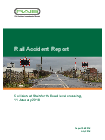
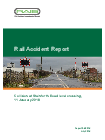
At around 05:50 hrs on 11 January 2018, a car collided with the rear-most wagon of a stationary freight train at Stainforth Road Automatic Half-Barrier level crossing, near Doncaster. The crossing’s warning equipment was not operating and its half- barriers were raised when the car approached and entered the crossing. As a result of the accident, the driver of the car suffered scratches and bruises but their car was damaged beyond economic repair.
The train was at a stand because its brakes had been applied by the locomotive’s vigilance device. This occurred because the driver of the train did not respond to the device’s audible alarm in the time period permitted, probably due to the high level of ambient noise in the locomotive’s cab.
The car driver was not alerted to the presence of the train by the crossing’s warning devices because the design of the level crossing’s control circuits had permitted it to re-open to road traffic while it was still occupied by the train. The car driver did not see the wagon with enough time to take effective avoiding action, given her speed of approach. This was because the train was unlit and unreflective and also because there was no ambient light near the crossing.
The crossing’s control circuits dated back to its original installation in 1974. The control circuits had not been modified to incorporate later features which prove that trains are clear of a crossing before it re-opens. This was because a retrospective modification of this type was not mandated by relevant standards and guidance and also because the crossing’s circuits had not required modification during the life of the crossing for other reasons. The crossing had not been renewed or replaced prior to the accident, because Network Rail had assessed it as still having useful working life left. The level crossing risk assessment process used by Network Rail did not identify and address the risk of the original design of control circuit remaining in service without it having later design features intended to improve safety.
The RAIB has made two recommendations, both addressed to Network Rail. The first recommendation relates to an assessment of the risk at other level crossings where there is the possibility of it re-opening to road users with a train still present on the crossing and the development and implementation of mitigation measures, where appropriate, to address this risk. The second recommendation concerns the revision of the current standard relating to the design of new remotely monitored level crossings so that this requires them not to open to road users while a train is present.
No motorist wants to encounter an obstruction on an unlit road after dark. Large animals or fallen trees are to some extent a normal part of rural life. But to find part of a freight train, stationary and with no visible lights, looming out of the darkness on a level crossing in the early hours of the morning, must have been a truly terrifying experience. There was no warning. The level crossing barriers had risen, and the road lights had stopped flashing, over a minute before the car approached the crossing. The driver of the car that hit this train was lucky to escape with her life.
This is not the first time in recent years that a motorist has encountered a train on a level crossing without any prior warning. At Moreton-on-Lugg in 2010, the signaller was able to raise the barriers with a train approaching because an old-fashioned design permitted it. The resulting collision cost the life of a passenger in a car. The situation was similar at Stainforth Road: the level crossing equipment was over forty years old and the way it was configured meant that the automatic barriers would rise even though the rear end of a train was still standing on the crossing.
RAIB’s report on the Moreton-on-Lugg accident recommended that Network Rail should enhance its level crossing management processes so that the risk posed by such historical designs could be better understood and more effectively managed. Six years later, this is another example of a latent condition in an old design which presented a risk to the safety of the public. I urge Network Rail to redouble its efforts to identify such conditions, to assess the risk they create and to consider ways of reducing risk to road users.
Link: Press release: Report 08/2018: Collision at Stainforth Road level crossing
Source: Gov Press Releases
A man who repeatedly sexually abused a child over a number of years has had his sentence increased today after the Attorney General’s Office referred it for being too low.
Ansar Mahmood, now 37, began sexually assaulting his victim when she was only 7 years old, giving gifts of money to secure her silence. Mahmood first raped the victim when she was 8 or 9, and by the time she was 11 was doing so regularly.
Mahmood was originally sentenced at Bradford Crown Court in March, where he was given a sentence of 15 years imprisonment with a 1 year extended licence period. Today, after the Attorney General’s reference, the Court of Appeal increased his sentence to 20 years with a 1 year extended licence.
Commenting on the sentence increase, Attorney General Geoffrey Cox QC MP said:
Mahmood subjected a young child to a horrific ordeal over a number of years. His original sentence did not fully reflect the seriousness of this crime, and I am satisfied that justice has now been done and seen to be done by those who have suffered at his hands.
Link: Press release: Bradford child rapist has sentence increased
Source: Gov Press Releases
Urgent question from Shadow Minister for Work and Pensions is expected at 10.30am
Link: Urgent question on ESA underpayments
Source: Parliamentary News
Steps to boost confidence in our democratic process and safeguard elections against fraud have been set out under plans to extend the requirement to show ID when voting.
The decision builds on a manifesto commitment to improve the security and resilience of the electoral system and follows successful pilots by five councils during the local elections in May, which found people were supportive of having to show ID before voting.
Minister for the Constitution, Chloe Smith MP, said:
The success of the voter ID pilots proves that this is a reasonable and proportionate measure and voters were fully aware of the changes on polling day.
We plan to continue to pilot ID at next year’s local elections so we can explore further what works best for voters. I encourage councils to get involved and work with us to pilot in their area to help us promote greater confidence in our democratic processes.
Our evaluation shows that the overwhelming majority of electors who turned up to vote did so with the right documents and had confidence in knowing how to cast their vote.
An evaluation of the pilots, published by the government today (Thursday, 19 July), found turnout was unaffected, and the main reason for not voting was that people were too busy or had other commitments.
Instead confidence in knowing how to cast a vote increased post election day in Woking, which asked voters to bring photographic ID, and in Watford where a poll card had to be shown.
Satisfaction with the process of voting also increased in Woking and in Gosport where electors could bring photographic or non-photographic ID.
When surveyed, polling station staff across the pilot authorities agreed or strongly agreed that they had successfully delivered the ID requirements in their polling stations (99% of cases in Woking, Bromley, Gosport, and Swindon, 97% of cases in Watford).
Together these findings confirm the government’s assessment that the current situation of people simply pointing out their name without having to prove who they are during elections is out of date as it remains harder to take out a library book or collect a parcel at a post office than it is to vote in someone’s name.
Link: Press release: Government commits to new round of voter ID pilots at next local elections
Source: Gov Press Releases
Public Administration and Constitutional Affairs Committee hears from the Civil Service Chief Executive and the Acting Cabinet Secretary
Link: Work of the Cabinet Secretary examined
Source: Parliamentary News
Environmental Audit Committee explore whether the UK should be doing more to protect this vulnerable region
Link: Ministers questioned on the Government’s Arctic policy
Source: Parliamentary News
This Order appoints 8th August 2018 as the day on which the Code of Practice for the Welfare of Laying Hens and Pullets comes into force in England.
Link: The Code of Practice for the Welfare of Laying Hens and Pullets (Appointed Day and Revocation) (England) Order 2018
Source: Legislation .gov.uk