The Higher Education (Fee Limits and Fee Limit Condition) (England) Regulations 2018

Section 10 of the Higher Education and Research Act 2017 (c. 29) (“HERA”) requires the Office for Students to ensure that the ongoing registration conditions of each registered higher education provider of a description prescribed by regulations made by the Secretary of State must include a fee limit condition. Such a condition requires the governing body of a provider to secure that “regulated course fees” do not exceed a fee limit. Schedule 2 to the Act sets out how fee limits are determined. The “regulated course fees” to which fee limits apply are fees which are paid by a “qualifying person” where that person undertakes a “qualifying course”.

Link: The Higher Education (Fee Limits and Fee Limit Condition) (England) Regulations 2018
Source: Legislation .gov.uk

Press release: Joint Communiqué of the British-Irish Intergovernmental Conference 25 July 2018

A meeting of the British-Irish Intergovernmental Conference (BIIGC) took place at the Cabinet Office in London on 25 July 2018.

The Government of the United Kingdom of Great Britain and Northern Ireland was represented by the Chancellor of the Duchy of Lancaster, Rt Hon David Lidington MP, and the Secretary of State for Northern Ireland, Rt Hon Karen Bradley MP. The Government of Ireland was represented by Tánaiste and Minister for Foreign Affairs and Trade, Mr Simon Coveney TD, and the Minister for Justice and Equality, Mr Charles Flanagan TD.

The Conference was established under Strand Three of the 1998 Belfast/Good Friday Agreement “to promote bilateral co-operation at all levels on all matters of mutual interest within the competence of both Governments”.

The Conference discussed the following:

Legacy

The Conference reviewed the overall progress towards implementation of the Stormont House Agreement legacy framework.

Both the Irish and UK Governments re-asserted their commitment to the legacy bodies set out in the 2014 Stormont House Agreement as the best means of addressing the legacy of Northern Ireland’s past. The UK Government updated the Conference on the consultation currently being held on the Stormont House institutions which runs to 10 September. The Irish Government updated the Conference on the legislative measures being brought forward within its jurisdiction to implement and support the Stormont House Agreement legacy framework and raised other legacy issues.

Security co-operation

The Conference reviewed the current security situation, and discussed the continuing threat posed by Northern Ireland Related Terrorism in the United Kingdom and in Ireland.

The Conference expressed its rejection of all paramilitary violence and all other forms of paramilitary activity. The Conference reiterated its strong support for the efforts of the Police Service of Northern Ireland and An Garda Síochána, along with other agencies, in keeping people safe and secure across both jurisdictions.

Both the UK and Irish Governments recalled commitments in the 2015 Fresh Start Agreement to ending paramilitarism and looked forward to the first report of the Independent Reporting Commission established under that Agreement.

East-West matters

The Conference considered the strength of the bilateral relationship between the United Kingdom and Ireland and welcomed the high levels of bilateral cooperation across a range of important policy areas.

The Conference agreed that this level of bilateral co-operation needed to be maintained and, where possible, strengthened following the departure of the United Kingdom from the European Union.

Officials were asked to take forward work in this area with a view to coming forward with proposals for future East-West cooperation, including at Cabinet and Ministerial level, for consideration by the Irish and UK Governments at a future meeting of the Conference.

Political stability

Both the UK and Irish Governments reiterated their strong support for the Belfast/Good Friday Agreement and subsequent agreements which have underpinned the progress made in Northern Ireland over the past two decades and which provide the framework for the political process in Northern Ireland.

The Irish and UK Governments re-affirmed their shared commitment to all of the political institutions established by the Agreement and to securing the effective operation of power-sharing, devolved government in Northern Ireland and the consequent resumption of the North/South Ministerial Council and Northern Ireland participation in the British Irish Council at the earliest opportunity.

Both the UK and Irish Governments agreed to continue working closely together in accordance with the three-stranded approach as set out in the Belfast/Good Friday Agreement.

Future meetings

It was agreed that the Conference would meet again in the autumn.

Link: Press release: Joint Communiqué of the British-Irish Intergovernmental Conference 25 July 2018
Source: Gov Press Releases

Press release: Fake vehicle parts are on the rise

The Intellectual Property Office (IPO) has issued new guidance as part of a cross-government and industry campaign. The campaign warns consumers of the serious dangers of fake car parts.

The amount of fake vehicle parts available on the market is on the rise. The European Union Intellectual Property Office (EUIPO) estimated that more than €2 billion is lost every year due to counterfeit tyres and batteries alone.

The most common fake vehicle parts worldwide include filters, brake pads, lights, wheel rims and air bags. As shown by BMW many of these parts have direct safety implications and, if they fail, can lead to serious accidents.

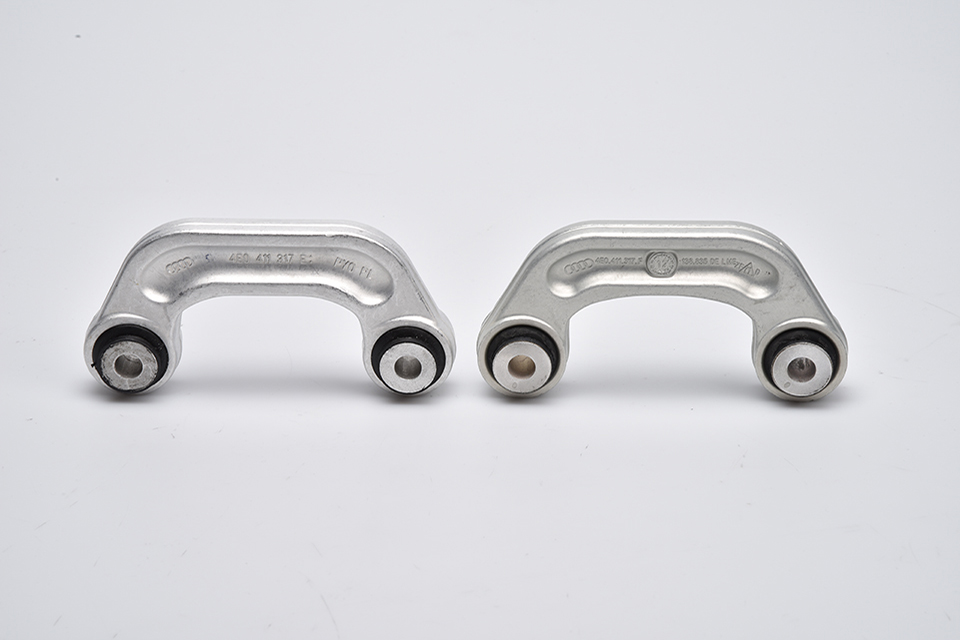
Spotting fakes isn’t easy. Here, on the right Audi shows a genuine coupling rod and on the left, is the fake product. Fake coupling rods can affect the steering capability of the vehicle.

Car parts (metal shaped brackets)

To help combat this problem the IPO joined forces with the auto industry and trading platforms and other parts of government. Together they have launched a campaign to warn consumers about the dangers of fake vehicle parts. The collaboration has led to the Intellectual Property Office issuing new guidance. The guidance gives tips on how to avoid buying fake parts when shopping online and on the high street.

The collaboration is the most extensive of its kind to tackle fakes and includes:

  • Audi
  • BMW
  • Independent Automotive Aftermarket Federation (IAAF)
  • Manufacturers Against Product Piracy (MAPP)
  • TecAlliance
  • Independent Garage Association (IGA)
  • Amazon
  • eBay
  • Trading Standards
  • the Police Intellectual Property Crime Unit (PIPCU)
  • M-Sport
  • Motor Sport Association UK (MSA)
  • International Automobile Federation (FIA)
  • NGK Spark Plugs
  • TMD Friction and Phillips.

PIPCU, which is run by the City of London Police, fights against these types of crimes. In February 2018 Robert Czernik was investigated and sentenced to two counts under Section 92 of the Trade Marks Act for selling fake airbags. He received five months in prison for each count to run concurrently, suspended for 12 months.

The Audi Brand Protection Team said:

Identifying counterfeits has proven to be a real challenge. The sellers’ websites are becoming more and more professional, appearing legitimate to many buyers at first glance. But there are some clues that give counterfeiters away​ and should put buyers on alert, such as a comparatively cheap price or a typo appearing on the spare part or in the description. ​

The counterfeiters aren’t choosy when it comes to selecting fakes. According to our investigations, a large number of spare parts are counterfeited in the automotive business. These include service-relevant components, such as oil filters or air filters , crash-relevant components such as bumpers, radiator grille or bodywork, but also safety-relevant parts such as suspension arms, exhaust systems or brake linings.

Spare parts produced using inferior materials clearly pose high risks for Audi consumers. We are pleased to be part of this campaign to warn and protect our customers.

Dr Ros Lynch, Director of Copyright and Enforcement at the Intellectual Property Office said:

It’s clear counterfeit vehicle parts can pose a serious risk to drivers, passengers and other road users, with potentially life-threatening results. Criminals who produce counterfeit vehicle parts have no concerns about public safety and they use this as an opportunity to profit at the expense of others.

We are committed to protecting the public from these dangers. This collaboration between government, industry and law enforcement offers us an opportunity to raise awareness, change consumer behaviour and remove these dangerous products from the market.

Temporary Detective Chief Inspector Nick Court of the City of London Police’s Intellectual Property Crime Unit (PIPCU) said:

Counterfeit car parts increase the risk of people experiencing a serious injury. It’s essential that car owners and those who work in this industry are made aware of the signs to look out for and the risks.

The City of London Police is at forefront of fighting this type of crime and offering the public advice on how to avoid falling victim.

Notes to editors

  1. The UK Intellectual Property Office is responsible for Intellectual Property (IP) rights in the United Kingdom, including patents, designs, trade marks and copyright.
  2. The European Intellectual Property Office (EUIPO) study that estimated more than €2 billion is lost every year due to counterfeit tyres and batteries is available on the EUIPO website.
  3. The new guidance available on fake vehicle parts.
  4. The Police Intellectual Property Crime Unit is a department of the City of London Police. It was established in 2013 with the responsibility to investigate and deter serious and organised intellectual property crime in the UK. The unit is funded by the UK Intellectual Property Office.
  5. A press release by the Police Intellectual Property Crime Unit gives details about the investigation of Robert Czernik under Section 92 of the Trade Marks Act for selling fake airbags.


Link: Press release: Fake vehicle parts are on the rise
Source: Gov Press Releases

Civil Aviation (Accessibility)

A Bill to make provision about the accessibility of air travel for people with disabilities; to establish requirements about parking at airports for people with disabilities; to require airports and airlines to report steps taken to improve accessibility; to require a named person to be responsible for air passengers with disabilities; to make provision about the design and adaptation of aircraft to meet the needs of passengers with disabilities; and for connected purposes.

Link: Civil Aviation (Accessibility)
Source: Public Bills

Press release: UK aid helps end Ebola outbreak in Democratic Republic of the Congo – potentially preventing it “reaching our shores”

The Department for International Development (DFID), Public Health England (PHE) and London School of Hygiene & Tropical Medicine have worked alongside the Democratic Republic of Congo (DRC) Ministry of Health, the World Health Organisation (WHO), the UN mission MONUSCO, the Wellcome Trust, GAVI (the Vaccine Alliance) and others to halt the disease’s spread.

Today, the DRC’s Ministry of Health declared the end of the most recent outbreak of Ebola, while insisting it would remain on the alert and continue to prepare for future outbreaks.

DFID has provided funding to tackle the outbreak, including supplying vaccines, in the DRC.

UK aid also funded the UK Public Health Rapid Support Team, made up of three health experts who flew to the DRC to work as part of an international team fighting Ebola.

International Development Secretary, Penny Mordaunt said:

The UK’s swift and robust response to the Ebola outbreak in the Democratic Republic of the Congo helped to stop it spreading to neighbouring countries, and ultimately to the UK. Our response shows how seriously we take such health threats around the world.

UK aid support and expertise were key to containing this deadly outbreak, helping to prevent a repeat of the widespread death toll from the 2014-15 West Africa epidemic. We have learned from this epidemic which resulted in Britons infected with the disease returning to the UK.

Our contributions are helping to limit the spread of Ebola and other deadly diseases, making the world – including the UK – a safer place.

In May, DFID provided £1m (in addition to £2m provided by the Wellcome Trust) to support key science and research elements of the Ebola response. This included support for the roll-out of an experimental Ebola vaccine, which was developed with support from UK aid funding following the 2014-15 West Africa Ebola outbreak.
Later in the month DFID provided a package of support to the WHO to aid their response plan. This helped WHO and the DRC Ministry of Health to monitor the spread of the disease, identify and diagnose cases, trace people at risk of infection, support its vaccination campaign, and treat the sick.

In July, DFID provided fresh support to WHO to ensure Ebola did not spread to any of DRC’s neighbouring countries.

The UK Public Health Rapid Support Team, made up of two epidemiologists and a data scientist was sent to DRC in late May. Jointly delivered by Public Health England and London School of Hygiene & Tropical Medicine, the team worked under difficult conditions in a remote rainforest area. They helped develop an alert system for early warning of possible cases, assisted in the training and supervision of field teams, and tracked the spread of Ebola.

Dr Olivier le Polain, epidemiologist and member of the team, said:

Community surveillance strategies were put in place in remote villages, which were bolstered by teams undertaking active case finding. These teams were travelling to remote areas by motorbike, to ensure that suspect cases were identified, tested, and appropriately managed. Early identification and isolation of cases of Ebola Virus Disease are critical measures that limit onward community spread, and help contain the outbreak.

The focus of UK aid will now move towards preventing future outbreaks. Investing in health systems is important and good value for money, because it enhances the world’s ability to prevent epidemics, rather than reacting to future crises. Evidence suggests that, for every £1 invested in preparation, a £2 return can be achieved in terms of savings on future spending and investments.

Notes to editors

Summary of DFID’s funding contribution to tackling Ebola in DRC

  • On May 18, 2018, DFID announced it had provided £1 million, alongside £2 million to the Wellcome Trust from its joint research initiative on epidemic preparedness. This supported the science and research elements of the response, including evaluating the safety and effectiveness of the Ebola vaccine
  • On May 23, DFID announced £5 million in funding from its Crisis Reserve Fund for the joint WHO-DRC Government Ebola response plan
  • On July 3, DFID announced £1.5 million in support for the WHO’s Regional Preparedness Plan, to support countries neighbouring DRC in preparing for and managing the risk of of Ebola spreading into their territory

Key statistics

  • There were a total of 54 cases in this outbreak (38 confirmed and 16 probable). In total, 33 people died. (source Government of DRC Ministry of Health)
  • 3,330 people were vaccinated by MSF and WHO teams
  • 1,706 contacts of infected people were identified, registered, and followed-up with for a 21-day period following their possible exposure (Ebola has a 21-day incubation period)

Calculating the end of the outbreak

  • The DRC’s Ministry of Health officially declared the Ebola outbreak over today, following technical guidance from WHO. This states that if no other cases are confirmed, the outbreak is over after two full incubation periods (21 days each) have passed, starting from the day after the last Ebola patient was released from care
  • The last patient was released after having tested negative for the virus twice, on June 12. The 42-day period ended on July

General media queries

Follow the DFID Media office on Twitter – @DFID_Press

Link: Press release: UK aid helps end Ebola outbreak in Democratic Republic of the Congo – potentially preventing it “reaching our shores”
Source: Gov Press Releases

Press release: 12-year ban for Manchester spare parts boss who spent company funds

Modussur Khan, 32, from Oldham, was the sole director of Manchester Autospares Limited (MAL) throughout the life of the company. The company was incorporated in December 2011 and sold scrap parts for the motor industry from premises in Failsworth, Manchester.

The company ceased trading on 3 May 2016 and went into liquidation on 18 May 2016, owing creditors £61,374.

An Insolvency Service investigation, which followed the company’s liquidation, found that MAL operated a merchant services account whereby it received card payments from customers.

But the company took unauthorised payments from customers’ cards between 5 April and 25 April 2016 totalling at least £72,887. These payments were not related to genuine purchases and led to increased receipts into the company’s bank account.

And then between 8 April and 22 April 2016, the company made payments totalling at least £71,816 from its bank account using the fraudulently obtained funds, which Modussur Khan used to make personal purchases, a bureau de change withdrawal and other cash withdrawals.

Furthermore, MAL’s customers applied for refunds to the merchant services provider as they had not authorised payments to MAL. This led the merchant services provider to suffer a total loss of £56,791.

On 31 May 2018, the Secretary of State accepted a disqualification undertaking from Modussur Khan, in which he did not dispute making payments of £71,816 from the company’s bank account when he knew or ought to have known that at least some of these funds were obtained fraudulently.

His disqualification became effective from 21 June 2018 and lasts for 12 years, where he is banned from directly or indirectly becoming involved in the management of a company without the permission of the court.

Robert Clarke, Group Leader of Insolvent Investigations North at The Insolvency Service said:

This is a serious case of misconduct by the director. The disqualification of Modussur Khan sends out a clear message that where a corporate vehicle is used to facilitate actual or potential fraudulent activity, action will be taken to remove the directors from the corporate arena for a lengthy period of time.

Notes to editors

Modussur Khan resides in Oldham and his date of birth is March 1986;

Manchester Autospares Limited (Company Reg no. 07892144) was incorporated in December 2011. The company went into liquidation on 18 May 2016, with a deficiency as regards creditors of £61,374.

A disqualification order has the effect that without specific permission of a court, a person with a disqualification cannot:

  • act as a director of a company
  • take part, directly or indirectly, in the promotion, formation or management of a company or limited liability partnership
  • be a receiver of a company’s property

Disqualification undertakings are the administrative equivalent of a disqualification order but do not involve court proceedings.

Persons subject to a disqualification order are bound by a range of other restrictions.

The Insolvency Service administers the insolvency regime, investigating all compulsory liquidations and individual insolvencies (bankruptcies) through the Official Receiver to establish why they became insolvent. It may also use powers under the Companies Act 1985 to conduct confidential fact-finding investigations into the activities of live limited companies in the UK. In addition, the agency deals with disqualification of directors in corporate failures, assesses and pays statutory entitlement to redundancy payments when an employer cannot or will not pay employees, provides banking and investment services for bankruptcy and liquidation estate funds and advises ministers and other government departments on insolvency law and practice.

Further information about the work of the Insolvency Service, and how to complain about financial misconduct, is available.

Contact Press Office

Media enquiries for this press release – 020 7674 6910 or 020 7596 6187

Press Office

The Insolvency Service


4 Abbey Orchard Street
London
SW1P 2HT

This service is for journalists only. For any other queries, please contact the Insolvency Enquiry line on 0300 678 0015.

For all media enquiries outside normal working hours, please contact the Department for Business, Energy and Industrial Strategy Press Office on 020 7215 1000.

You can also follow the Insolvency Service on:

Link: Press release: 12-year ban for Manchester spare parts boss who spent company funds
Source: Gov Press Releases

Press release: Water company fined for pollution incidents

Northumbrian Water Ltd (NWL) has been ordered to pay over £33,600 in fines and costs for three separate pollution incidents, including pollution of a Tyne Valley burn with untreated sewage effluent, which bypassed the local sewage treatment works.

The company was sentenced on Monday 23 July at South Tyneside Magistrates’ Court after admitting one charge of causing a discharge of untreated sewage into Smithy Burn at Broomley on 19 August 2016.

Two other similar offences were taken into consideration as part of this case following unpermitted discharges of sewage effluent on 26 June 2015 at both Summerhouse & Killerby Sewage Treatment Works (STW), both near Darlington.

The pollution at Broomley originated from a storm overflow channel. These allow rainwater and sewage effluent to bypass a sewage treatment works in times of heavy rainfall, to avoid the works’ capacity being exceeded. To be lawful, storm overflows should be incorporated into the works’ environmental permit.

According to the Environment Agency, this was not the case at Broomley, since Northumbrian Water’s environmental permit clearly states that discharges to Smithy Burn should consist only of treated sewage effluent.

Silt build-up

Chris Bunting, prosecuting for the Environment Agency, told the court that investigations found a build-up of silt had prevented flow from reaching the works, and instead diverted it to the storm overflow. Northumbrian Water’s maintenance inspections hadn’t included a requirement to check a manhole chamber where the blockage would likely have been discovered.

Formal samples were taken from the burn and an ecological survey revealed a thick sewage fungus affecting the watercourse for 100m downstream of the outfall, which had starved the water of oxygen and resulted in the death of freshwater shrimp and midge larvae.

At Summerhouse & Killerby STW’s, the Environment Agency’s inspections found both to be in a poor state of repair with faulty equipment. Rather than discharging treated sewage effluent, at Killerby sampling showed effluent leaving the works was more polluted than where it arrived.

Malcolm Galloway, appearing for NWL told the court that staff were to blame for the faults as they hadn’t followed the company’s inspection procedures, and that NWL has a good compliance record. He also maintained that the storm overflow at Broomley had been permitted because it was included in the permit application made back in 1989.

In sentencing, District Judge Roger Elsey ruled that the company’s culpability was low, but that the additional offences meant the fine had to be increased.

Environment Agency Area Environment Manager, Fiona Morris said:

The incident at Broomley had a significant impact on the ecology of Smithy Burn. This case demonstrates how important it is that water companies and wider regulated industries understand and comply with the conditions by which they are permitted to operate.

Link: Press release: Water company fined for pollution incidents
Source: Environment Agency