
Press release: 9-year ban for logistics boss after submitting £1m worth of false claims

Neil Avery Hughes (51), from Water Orton, Birmingham, was a director of Contact Transport Limited (Contact Transport). Incorporated in February 1980, the company traded from premises in Garrets Green and provided haulage and parcel delivery services.

In 2011, Contact Transport was acquired by another company, Keelek 369 Limited, before it entered into a Company Voluntary Arrangement (CVA) in the same year to help manage its debts, which completed in July 2015.

While the company returned to profit between 2012 and 2014, Contact Transport entered into a difficult trading period and fell behind in repaying its debts to their creditors.

As a result, a winding up petition was filed against Contact Transport in March 2017 before the company became insolvent, with administrators appointed in April 2017.

Further investigations found that Contact Transport had entered into an Invoice Discounting Agreement (IDA) with an external lender, allowing the company to get advances on cash they were owed from customers rather than waiting for them to pay.

But during an audit in April 2017 the lender became aware of discrepancies between what Contact Transport had claimed and what they were actually owed from their clients.

Investigators found that Neil Hughes caused Contact Transport to claim funds for work that were higher in value than the work completed. This resulted in the company securing increased levels of funding and cash flow to the value of just over £1 million.

Neil Hughes resigned as a director of Contact Transport in June 2018 before he provided a disqualification undertaking to the Secretary of State on 25 July 2018 where he did not dispute he falsified claims to the lender.

Effective from 15 August 2018, Neil Hughes is now banned for 9 years from directly or indirectly becoming involved, without the permission of the court, in the promotion, formation or management of a company.

Martin Gitner, Deputy Head of Insolvent Investigations for the Insolvency Service, said:

Securing advanced payments is a legitimate method of sourcing working capital finance. However, Neil Hughes submitted false documents to wrongfully and deceptively claim more money than was actually owed to Contact Transport.

9 years is a significant ban and this should serve as a warning to other directors that the Insolvency Service has strong enforcement powers to remove dishonest or reckless directors from operating a business for a considerable amount of time.

Notes to editors

Mr Neil Avery Hughes was director of Contact Transport Limited (Company no. 01478943).

In his disqualification undertaking, Neil Hughes did not dispute that:

  • between at least November 2016 and April 2017, I caused Contact Transport Limited to notify the company with which it operated a confidential invoice discount facility of invoice values which were of higher value than the work actually completed during that period
  • as a result Contact Transport had access to funds of at least £1,030,115 to which it was not entitled. This resulted in a loss of at least £1,030,155 to the invoice discount facility provider

A disqualification order has the effect that without specific permission of a court, a person with a disqualification cannot:

  • act as a director of a company
  • take part, directly or indirectly, in the promotion, formation or management of a company or limited liability partnership
  • be a receiver of a company’s property

Disqualification undertakings are the administrative equivalent of a disqualification order but do not involve court proceedings. Persons subject to a disqualification order are bound by a range of other restrictions.

The Insolvency Service administers the insolvency regime, investigating all compulsory liquidations and individual insolvencies (bankruptcies) through the Official Receiver to establish why they became insolvent. It may also use powers under the Companies Act 1985 to conduct confidential fact-finding investigations into the activities of live limited companies in the UK. In addition, the agency authorises and regulates the insolvency profession, deals with disqualification of directors in corporate failures, assesses and pays statutory entitlement to redundancy payments when an employer cannot or will not pay employees, provides banking and investment services for bankruptcy and liquidation estate funds and advises ministers and other government departments on insolvency law and practice.

Further information about the work of the Insolvency Service, and how to complain about financial misconduct, is available.

Contact Press Office

Media enquiries for this press release – 020 7674 6910 or 020 7596 6187

Press Office

The Insolvency Service


4 Abbey Orchard Street
London
SW1P 2HT

This service is for journalists only. For any other queries, please contact the Insolvency Enquiry line on 0300 678 0015.

For all media enquiries outside normal working hours, please contact the Department for Business, Energy and Industrial Strategy Press Office on 020 7215 1000.

You can also follow the Insolvency Service on:

Link: Press release: 9-year ban for logistics boss after submitting £1m worth of false claims
Source: Gov Press Releases
Press release: Need for speed drives superfast broadband boost for Wales

  • New research shows a £9 billion increase for local businesses, delivering a welcome boost to the UK economy and creating new jobs
  • Government rollout of superfast broadband has now reached almost 5 million homes and businesses who would otherwise have missed out
  • Suppliers will now return more than half a billion pounds for reinvestment in extending rollout to the rest of the UK, due to high take up rate
  • In Wales, the current coverage level is at 94.7%, with 700,364 Welsh homes and businesses now able to get a superfast broadband service as a result of the Government’s rollout
  • The figures also show a 42.51% take up rate of superfast broadband in areas reached by the Government’s rollout in Wales

Local businesses in areas covered by the Government’s rollout of superfast broadband have seen a combined £9 billion increase in turnover since the boost to their broadband speed, new figures have revealed.

The “The Evaluation of the Economic Impact and Public Value of the Superfast Broadband Programme” is an independent assessment of the impact the rollout has had in its first years (2012-2016). Key findings from the report include:

  • £9 billion surge in turnover for businesses benefitting from the faster connections now available
  • £690 million net increase in Gross Value Added to the UK economy
  • A reduction of almost 9000 individuals claiming jobseekers allowance, as well as a reduction in long term claimants by 2,500 in programme areas, accompanied by the creation of 49,000 local jobs.
  • Programme has delivered £12.28 benefit for businesses for every £1 invested by the Government and local authorities
  • Strong indication that high take up rates of Government’s superfast programme have encouraged telecommunications industry to expand their own commercial broadband projects.

Secretary of State for Wales Alun Cairns said:

The UK Government is delivering on its promise to speed up service for thousands of residents and businesses across Wales. While it is often challenging to reach some of the most rural parts of the country, today’s figures demonstrate a real increase in service coverage, which together with the Universal Service Commitment by 2020 will ensure residents can legally expect a minimum level of service from their providers, wherever they are in Wales.

By making sure everyone has access to reliable, high speed broadband we can not only support our rural communities and businesses in Wales, but also provide a boost for the rapidly expanding digital sector, which is quickly becoming a central part of the Welsh economy.

Minister for Digital, Margot James said:

Our rollout of superfast broadband across the UK has been the most challenging infrastructure project in a generation but is one of our greatest successes. We are reaching thousands more homes and businesses every week, that can now reap the clear and tangible benefits that superfast broadband provides. We are helping to ensure the downfall of the digital divide.

New figures out today also show that around 5 million homes and businesses who would have been stuck in the digital slow lane now have access to superfast broadband. The Government’s rollout of superfast broadband to those areas deemed “commercially un-viable” has helped take nationwide coverage to 95.39%.

Take-up of the new technology in areas benefiting from the Government programme is now running at 45% – more than double the expected rate. As a result of the contracts put in place by Government, those companies rolling out superfast broadband will now return more than £500 million in subsidies to the public purse to be used to reach those locations not yet covered by existing plans.

It is estimated that more than 1 million extra UK homes and businesses will gain access to superfast speeds, taking superfast coverage to 98% of the nation over the next few years.

Government is introducing a Universal Service Obligation that will mean everyone in the UK has access to fast and affordable broadband by 2020, and has recently set out plans to deliver nationwide gigabit capable (1000Mbps) connectivity by 2033 as part of its modern industrial strategy.

Openreach CEO Clive Selley, said:

It is great to see businesses across the UK reaping the benefits of faster broadband speeds and I’m proud of the leading role that Openreach has played in helping to deliver the Government’s rollout of superfast broadband – one of Britain’s great engineering achievements. We’ve also recently introduced a raft of lower wholesale prices to help drive higher take-up of faster fibre services which will help to further fuel the boost to the UK economy.

The Government’s rollout of superfast technology is an important part of the ongoing digital transformation work designed to make it quicker and easier for citizens to interact with Government online.

ENDS

Link: Press release: Need for speed drives superfast broadband boost for Wales
Source: Gov Press Releases

Press release: Minister of State for Asia and the Pacific highlights UK-Brunei relationship, EU exit and the UK’s future relationship with ASEAN

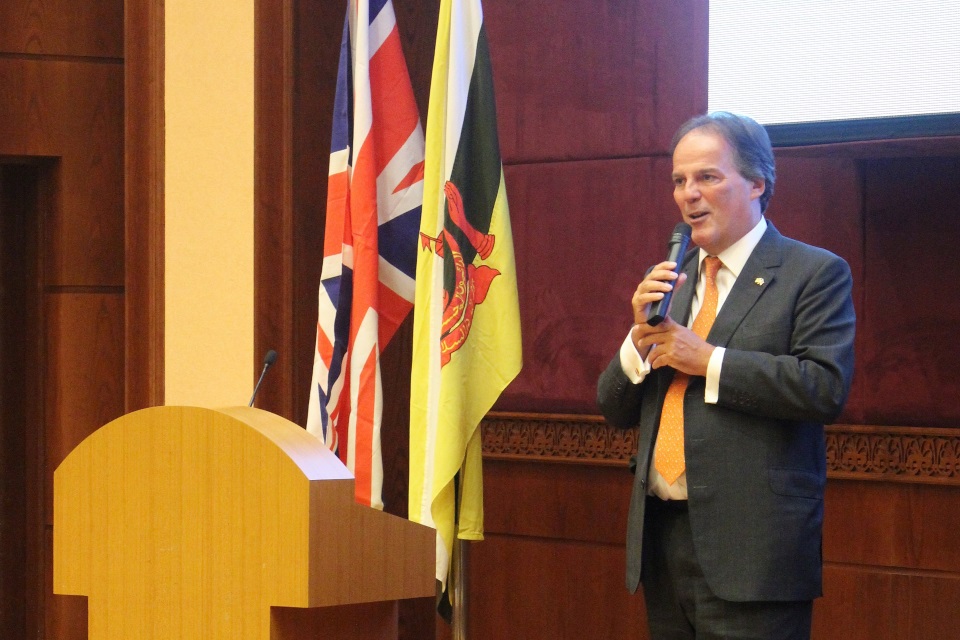
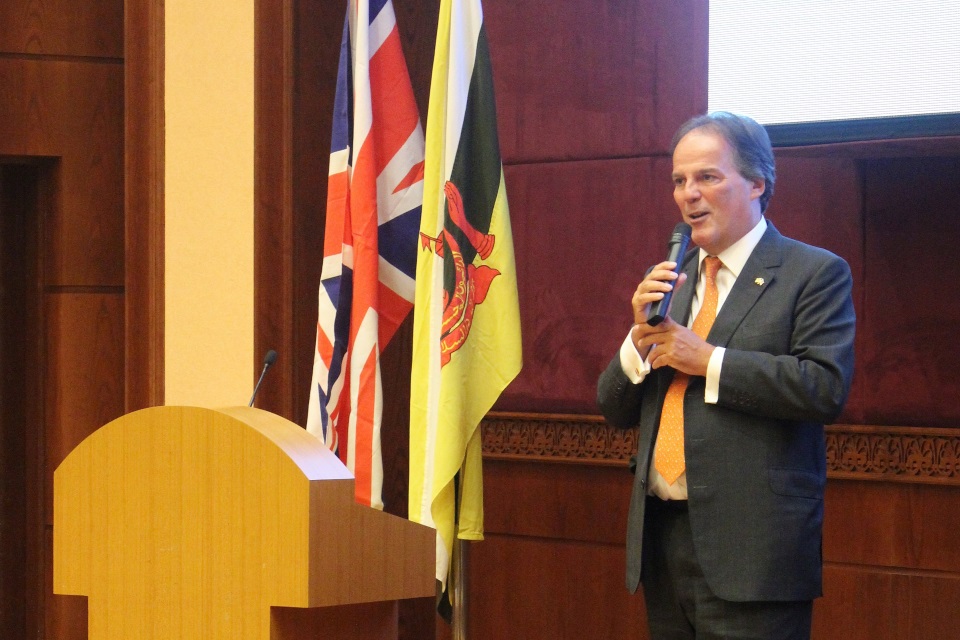
The British Minister of State for Asia and the Pacific, Mark Field MP, delivered a powerful speech at the Ministry of Foreign Affairs and Trade on his second day in Brunei. The Minister highlighted the depth of the UK and Brunei’s longstanding and close relationship, he gave his vision for the EU Exit and opportunities for trade and investment and the UK’s relationship with ASEAN. Hajah Siti Norishan binti Haji Abdul Ghafor, Permanent Secretary (Political) at the Ministry of Foreign Affairs and Trade introduced Minister Field to the audience. After his speech, Mr Field had the opportunity to engage in a lively discussion with policy makers and officials from the Ministry of Foreign Affairs and Trade.

Minister Field is currently on a two-week, six-country tour of South East Asia highlighting the UK’s commitment to this increasingly important region. He described an ‘All of Asia’ policy, through which the UK engages actively with all countries in the region, regardless of size – working together to promote regional security, to build prosperity, and to strengthen the values which underpin the people to people links. Since Mr Field’s appointment as Minister for Asia and the Pacific, he has travelled all across the region, visiting some twenty countries. By the end of his current tour, Mr Field will have visited all ten ASEAN Member States in just over a year, demonstrating emphatically that the UK’s All of Asia policy is broad, ambitious and focussed on the future.

Minister Field highlighted the depth of the UK and Brunei’s longstanding and close relationship, he gave his vision for the EU Exit and opportunities for trade and investment and the UK’s relationship with ASEAN

Minister Field elaborated on the UK’s exit from the European Union, and the new partnership which is being negotiated. Once outside the EU, he said that the UK will be able to developing closer, more tailored relationships with countries around the world.

Minister Field emphasised the importance of the UK’s existing close relationship with ASEAN, and the UK’s intention to develop that relationship further as it leaves the EU. He said that there was real scope to do more with ASEAN, including right here in Brunei, on issues such as Islamic banking and finance; the exciting new world of FinTech; or supporting capital market development.

Minister Field noted how many key interlocutors across Asia were speaking enthusiastically of new opportunities for bilateral co-operation with the UK, including on free trade agreements. The UK is a long-standing champion of free trade as a proven means of lifting millions of people out of poverty, particularly in Asia. Mr Field said that the UK would continue to challenge protectionism which it saw as a real danger to global growth. Minister Field praised the “Comprehensive and Progressive Agreement for Trans Pacific Partnership” that Brunei and 10 other nations signed earlier this year. After it leaves the EU, the UK will be free to consider joining such free trade agreements.

Mr Field said that the UK’s bilateral relationship with Brunei was in excellent shape, and he was excited to learn about new opportunities to develop it further.

Further information

Follow Foreign Office Minister Mark Field @MarkFieldUK.

Follow the Foreign Office on Twitter @foreignoffice and Facebook.


Link: Press release: Minister of State for Asia and the Pacific highlights UK-Brunei relationship, EU exit and the UK’s future relationship with ASEAN
Source: Gov Press Releases

Press release: Need for speed drives £9 billion superfast broadband boost

Local businesses in areas covered by the Government’s rollout of superfast broadband have seen a combined £9 billion increase in turnover since the boost to their broadband speed, new figures have revealed.

“The Evaluation of the Economic Impact and Public Value of the Superfast Broadband Programme” is an independent assessment of the impact the rollout has had in its first years (2012-2016). Key findings from the report include:

  • £9 billion surge in turnover for businesses benefitting from the faster connections now available
  • £690 million net increase in Gross Value Added to the UK economy
  • A reduction of almost 9000 individuals claiming jobseekers allowance, as well as a reduction in long term claimants by 2,500 in programme areas, accompanied by the creation of 49,000 local jobs
  • Programme has delivered £12.28 benefit for businesses for every £1 invested by the Government and local authorities
  • Strong indication that high take up rates of Government’s superfast programme have encouraged telecommunications industry to expand their own commercial broadband projects.

Minister for Digital, Margot James said:

Our rollout of superfast broadband across the UK has been the most challenging infrastructure project in a generation but is one of our greatest successes. We are reaching thousands more homes and businesses every week, that can now reap the clear and tangible benefits that superfast broadband provides. We are helping to ensure the downfall of the digital divide.

New figures out today also show that around 5 million homes and businesses who would have been stuck in the digital slow lane now have access to superfast broadband. The Government’s rollout of superfast broadband to those areas deemed “commercially un-viable” has helped take nationwide coverage to 95.39%.

Take-up of the new technology in areas benefiting from the Government programme is now running at 45% – more than double the expected rate. As a result of the contracts put in place by Government, those companies rolling out superfast broadband will now return more than £500 million in subsidies to the public purse to be used to reach those locations not yet covered by existing plans.

It is estimated that more than 1 million extra UK homes and businesses will gain access to superfast speeds, taking superfast coverage to 98% of the nation over the next few years.

Government is introducing a Universal Service Obligation that will mean everyone in the UK has access to fast and affordable broadband by 2020, and has recently set out plans to deliver nationwide gigabit capable (1000Mbps) connectivity by 2033 as part of its modern industrial strategy.

Openreach CEO Clive Selley, said:

It is great to see businesses across the UK reaping the benefits of faster broadband speeds and I’m proud of the leading role that Openreach has played in helping to deliver the Government’s rollout of superfast broadband – one of Britain’s great engineering achievements. We’ve also recently introduced a raft of lower wholesale prices to help drive higher take-up of faster fibre services which will help to further fuel the boost to the UK economy.

The Government’s rollout of superfast technology is an important part of the ongoing digital transformation work designed to make it quicker and easier for citizens to interact with Government online.

NOTES TO EDITORS

  1. The #SmarterGov campaign has been launched to drive innovation, savings and public service improvement across the public sector.
  2. Superfast connections of 24Mbps and above allow families to watch TV on multiple devices at the same time, or let children do homework while parents do online banking and shopping. The technology is ideal for many small businesses too, allowing bosses to run websites and buy and sell online.

Link: Press release: Need for speed drives £9 billion superfast broadband boost
Source: Gov Press Releases

Press release: Ministry of Justice takes over running of HMP Birmingham

  • “Step-in” process will stabilise prison, inject fresh leadership and bolster existing staff
  • There will be no additional cost to the taxpayer and conditions at the prison are expected to quickly improve
  • Forceful action follows intensive period of Ministry of Justice measures to compel improvements

The Ministry of Justice (MoJ) has today (20 August) taken over the running of HMP Birmingham for an initial six-month period at no additional cost to the taxpayer.

This follows an extended period during which HM Prison and Probation Service (HMPPS) has worked with the operator, G4S, in an attempt to drive up standards at the prison amid serious concerns over safety, security and decency.

It is clear, however, that without additional support the prison will not be able to make sufficient progress on these pressing issues which have again been highlighted following the recent HMIP inspection. G4S accept that this is the case.

From today, the running of the establishment will be taken over by HMPPS in accordance with the Criminal Justice Act 1991 and as part of the contract with G4S. However, HMPPS will work closely with G4S to ensure minimal disruption and to reassure staff of our mutual commitment to stabilising the prison and putting it on a sustainable footing.

The immediate steps that will be taken include:

  • putting in place one of the prison service’s best governors to lead the prison, as well as a strong senior management team
  • allocating experienced HMPPS officers to bolster existing staffing at the prison; an initial 30 extra officers will be deployed
  • reducing the prison’s capacity by 300 places while improvement action is underway

While HMPPS will run Birmingham for an initial six-month period, this may be extended and the prison will not be handed back until ministers are satisfied that sufficient progress has been made.

Justice Secretary David Gauke and the Prisons Minister have recently visited the prison and concluded that ‘stepping in’ is the best way to make immediate impact and begin the necessary improvements.

Prisons Minister Rory Stewart said:

What we have seen at Birmingham is unacceptable and it has become clear that drastic action is required to bring about the improvements we require.

This ‘step in’ means that we can provide additional resources to the prison while insulating the taxpayer from the inevitable cost this entails.

We have good, privately-run prisons across the country and while Birmingham faces its own particular set of challenges, I am absolutely clear that it must start to live up to the standards seen elsewhere.

Link: Press release: Ministry of Justice takes over running of HMP Birmingham
Source: Gov Press Releases

Press release: Support for ethnic minority entrepreneurs helps 11,000 businesses get off the ground

  • Around 11,000 start-up companies have benefited from loans of up to £25,000 since 2012 according to figures published today
  • government is tackling inequality by helping ensure all entrepreneurs can access the finance they need regardless of their background

More than 11,000 black, Asian and ethnic minority (BAME) entrepreneurs have received government-backed Start Up Loans since 2012 according to research published today.

Start Up Loans were introduced to tackle inequality in society by ensuring that people from all backgrounds can access the money they need to start a business.

Since the scheme began in 2012, more than 55,000 businesses have been supported – equivalent to around 25 every day. More than £400 million of finance has been provided and helped create more than 66,000 jobs. 1 in 5 of the loans have gone to BAME recipients.

The findings underpin the value which BAME citizens add to the UK’s economy. They also highlight how the government is working to create a strong entrepreneurial business environment and a fairer society.

Business Minister Richard Harrington said:

Through our efforts to create a fairer society, we are ensuring that entrepreneurs from all backgrounds can access the finance they need to make their businesses grow and succeed.

The government is continuing to look at new ways to tackle racial inequality in our society and make sure that everyone has the same opportunities to progress.

The Prime Minister has previously made clear as part of the Race Disparity Audit launched in 2016 that if an ethnic disparity cannot be explained then there must be a change and we, as a society, must take action to tackle injustices.

In 2017, nearly 8% of the ethnic minority population were involved in starting or running a new business – compared to 14.5% of the white population.

According to data published last year, 15% of workers in the UK were self-employed in 2018. While Pakistani and Bangladeshi workers were most likely to be self-employed, black workers were least likely to be.

While there are less black and ethnic minority entrepreneurs in the UK, the new data shows that from 2013 to 2017, ethnic minority entrepreneurs received start-up loans at a higher rate. Last year, 5.7 black entrepreneurs per 10,000 people received a start-up loan, compared with 2.4 white entrepreneurs per 10,000 people.

This data shows that the government is taking action to support BAME entrepreneurs as it works to build a society that works for everyone, regardless of their background.

Research reveals 5% of the UK’s small businesses were majority-led by someone from an ethnic minority group with 90% being led by someone from a white group. 13% of the UK population belong to a black, Asian, mixed or other ethnic group, according to government data.

The World Bank ranks the UK one of the best places in the world to start and grow a business with 1,100 businesses starting every day in Britain – or 1 every 75 seconds. Small and medium size businesses support more than 13 million jobs across the UK.

Notes to editors

  1. Research forms part of Race Disparity Audit to tackle injustices and inequality in society.
  2. Statistics correct as of June 2018.

Link: Press release: Support for ethnic minority entrepreneurs helps 11,000 businesses get off the ground
Source: Gov Press Releases

BS ISO 20975-2:2018 Fibre-reinforced plastic compositess. Determination of laminate through-thickness properties Determination of the elastic modulus, the strength and the Weibull size effects by flexural test of unidirectional laminate, for carbon-fibre based systems

Laminates
Thickness
Plastics
Measurement
Test methods

Link: BS ISO 20975-2:2018 Fibre-reinforced plastic compositess. Determination of laminate through-thickness properties Determination of the elastic modulus, the strength and the Weibull size effects by flexural test of unidirectional laminate, for carbon-fibre based systems
Source: BSI Standards