
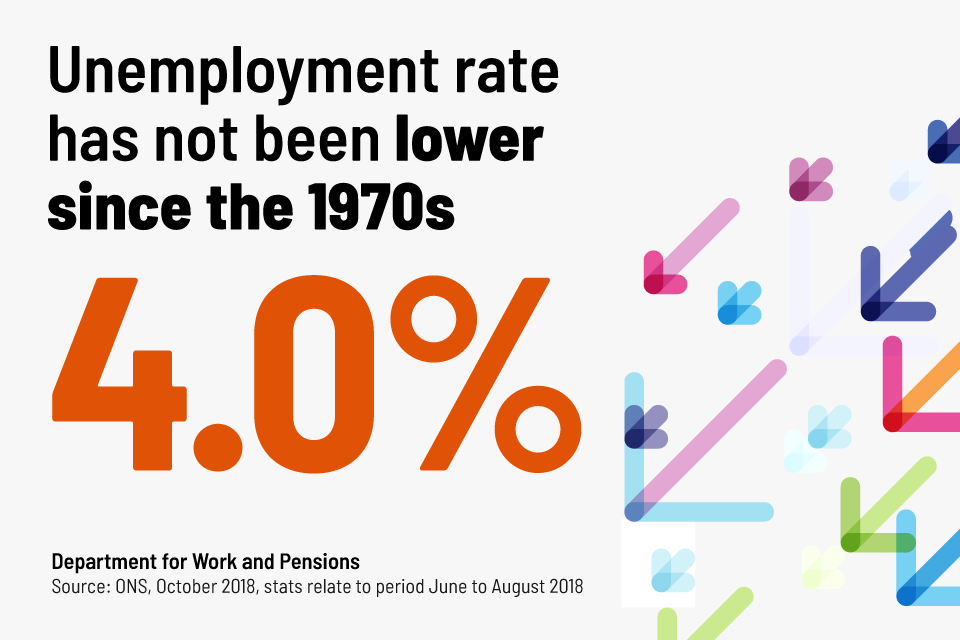
The figures also show that the unemployment rate of 4.0% has not been lower since 1975. Real wages are up for the seventh month in a row, rising by 0.7% above inflation and employment remained high at 75.5%, up 0.4% points on the year.
The proportion of young people who are unemployed is at a new record low, as more than 120,000 more young people have a job than in 2010. At the same time, fewer children are now growing up in a home without any adults in work than ever before. There are 637,000 fewer children in this position than in 2010, helping inspire more young people into work themselves.
It comes as over 3.3 million more people have entered work since 2010, meaning an average of 1,000 more people in work every day.
The UK saw a seventh month of real terms pay increases, with regular wages up by 3.1% in August, or 0.7% against CPIH inflation.
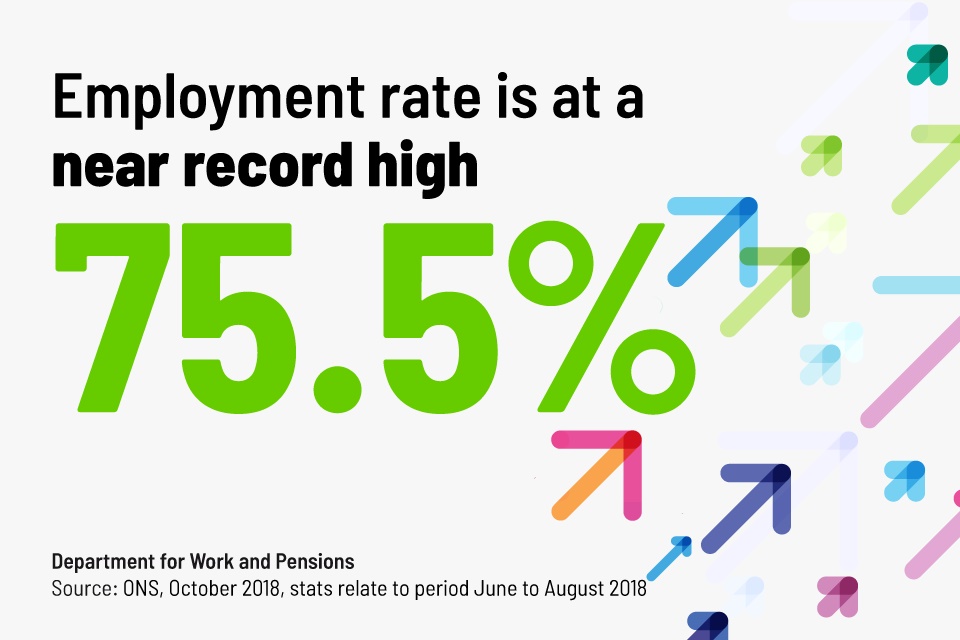
The latest figures from the Office for National Statistics also revealed the employment rate remains high, at 75.5%, with over 3.3 million more people in work since 2010.
On top of this, figures show the majority of jobs created since 2010 are full time, permanent roles that are in higher skilled occupations, which typically bring higher earnings – all ambitions of the government’s Industrial Strategy which seeks to create better, well-paying jobs fit for the future.
Unemployment has fallen across all regions of the UK since 2010, with today’s figures showing that the West Midlands, London and Wales in particular have seen the largest employment growth in work in the last year.
Work and Pensions Secretary Esther McVey said:
This month’s figures show youth unemployment has fallen by 50 percent since 2010, down to a new record low, showing our welfare reforms are working and giving young people a better future.
We want to empower young people; open up new career opportunities – deliver a brighter future for them.
Minister of State for Employment Alok Sharma said:
I am particularly encouraged that wages continue to be on the up, outpacing inflation for the seventh month in a row with regular pay up 3.1% on the year – the fastest growth in almost a decade.
And with unemployment at its lowest since the 1970s, since 2010 there are more people with the security of a job, more people with a regular salary, and more people able to support their families – and that is thanks to action this government has taken to build an economy that works for everyone.
The government is helping even more people benefit from a well-paid job by:
- backing businesses to create good jobs with our modern Industrial Strategy, while ensuring they play by the rules, so we are closing tax loopholes, strengthening workers’ rights, and tightening the rules big businesses must follow
- investing in the infrastructure, training and apprenticeships we need for our future, with public investment at the highest sustained level in 40 years
- introducing Universal Credit which is helping people move into work faster and stay in it longer (separate figures out today show that 430,000 people are now receiving Universal Credit)
- helping people stay in work longer with our Fuller Working Lives strategy, which supports employers to recruit, re-train and retain older workers
- tackling inequalities in employment highlighted by the Race Disparity Audit, through targeted support in 20 areas around the country and £90 million announced by the Prime Minister to help young people
We are also arranging work experience sessions for students through Jobcentre Plus, in over 1,400 schools. The scheme is being rolled out across the country, to ensure young disadvantaged kids aged 12 to 18 get opportunities, including work experience, to learn about the world of work and consider future career options. So far, the partnership between Jobcentre Plus and local schools has resulted in around 12,000 sessions for pupils, parents and teachers helping to prepare pupils for the world of work.
Contact Press Office
Media enquiries for this press release – 020 3267 5162
Press Office
Caxton House
Tothill Street
London
SW1H 9NA
London Press Office (national media and London area enquiries only – not questions about personal claims)
020 3267 5144
Out-of-hours (journalists only)
07623 928 975
England and Wales (local media enquiries)
029 20 586 then 097 or 098 or 099
Scotland (local media enquiries)
0131 310 1122
Follow DWP on:
- Twitter – www.twitter.com/dwppressoffice
- Facebook – www.facebook.com/dwp
- LinkedIn – www.linkedin.com/company/dwp
- YouTube – www.youtube.com/dwp
Link: Press release: Youth unemployment down 50% since 2010
Source: Gov Press Releases