
Press release: Volunteers pitch in to help Cornwall villagers with recreation ground project

The Highways England team behind a proposed A30 upgrade in Cornwall are not only concentrating their efforts on improving lives with their dualling scheme – they have also been busy helping a local village near Truro with their community project.

Highways England is working hard on the final design details of the A30 Chiverton to Carland Cross improvement scheme, but members of the team took time out to help Chacewater villagers transform their recreation ground.

A group of 10 Highways England and project team staff pitched in to join villagers in clearing their neglected recreation area into a tranquil community space.

The combined two-day effort saw dead trees and branches felled, ivy, brambles and nettles cleared away, re-planting and wooden crates repurposed into benches to restore a tranquil haven for the whole community to enjoy.
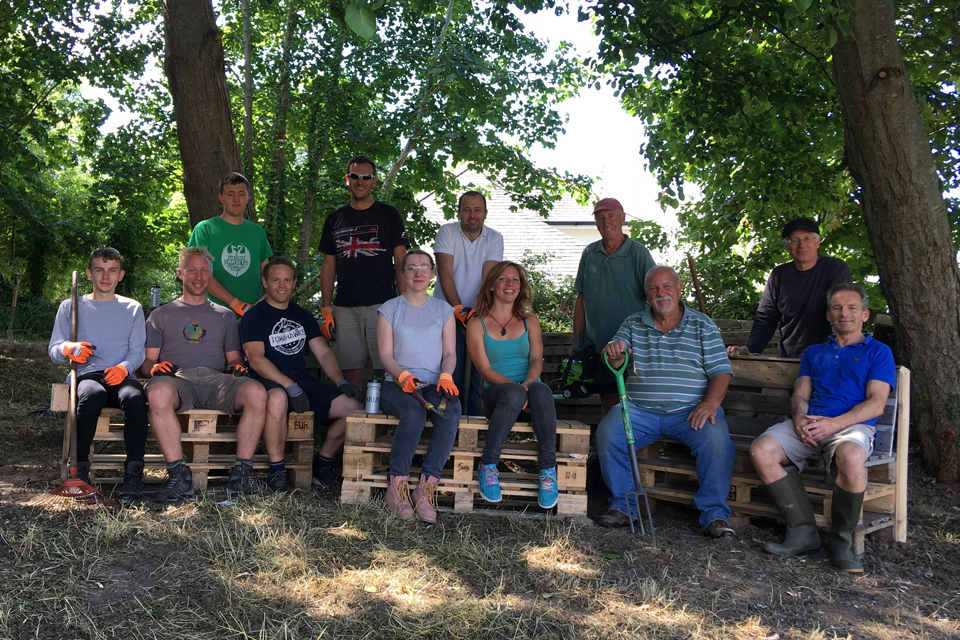
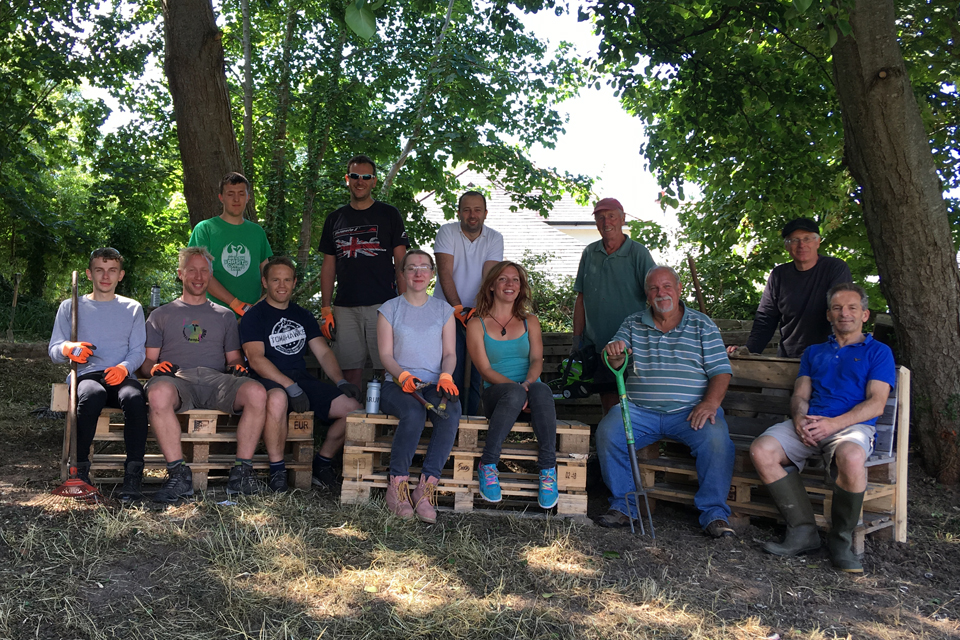
Image showing Highways England team and volunteers
The Highways England team, including assistant project manager Karl Sullivan fourth left, and Chacewater villagers, with Rob Knill third from right, and the team busy clearing vegetation

Chacewater Parish Council spokesman Rob Knill said:

This is a project we’ve been dreaming up for the last 10 to 15 years, to refurbish and recover a lot of the recreation ground here – and the work that’s been done by the Highways England team has been fantastic.

Josh Hodder, Highways England Project Manager for the A30 Chiverton to Carland Cross scheme, added:

As a company, we undertake a lot of voluntary work and it was good to be involved with a community project within the area of our scheme – it was an amazing team effort and the transformation is going to make a real difference for the village.

The team have also attended a number of community events in the region – the Golowan Festival and Royal Cornwall, Stithians and Camborne shows – and will also be taking part in this week’s Falmouth Festival and the Cornish Steam and County Fair (16-19 August).

Highways England will be submitting a Development Consent Order later this summer to begin the planning process for the scheme.

And Mr Hodder added:

Since consultation earlier this year, we have been progressing with details of the design, working to reduce impact on the environment, and continuing our engagement and discussions with local communities.

We’re continuing that engagement over the next two weeks and I’d urge anyone with an interest to come and chat with us to find out more and answer any questions they might have.

Following the opening of Cornwall Council’s A30 Temple to Higher Carblake dualling scheme last year, the project proposes to dual eight miles of single carriageway between the Chiverton Cross and Carland Cross roundabouts, unlocking one of the last bottlenecks in Cornwall and improving journey times and safety for residents, businesses and visitors.

The cost of developing the scheme is being partly funded by an £8 million contribution from the European Regional Development Fund, with an additional £12 million for the construction phase. The remainder of the cost of developing and delivering the scheme will be funded by central Government.

Subject to statutory approval, construction is planned to start in spring 2020.

In the meantime, anyone wanting further information can go to the scheme website.

General enquiries

Members of the public should contact the Highways England customer contact centre on 0300 123 5000.

Media enquiries

Journalists should contact the Highways England press office on 0844 693 1448 and use the menu to speak to the most appropriate press officer.

Link: Press release: Volunteers pitch in to help Cornwall villagers with recreation ground project
Source: Gov Press Releases
Press release: Ash dieback found on three new host species of tree in the UK

The Forestry Commission is urging industry to be vigilant for signs of ash dieback and report suspected sightings through its Tree Alert reporting system.

The call comes after three new tree and shrub species in the same family as ash (Oleaceae) tested positive for ash dieback (Hymenoscyphus fraxineus) infection at the Westonbirt Arboretum, Gloucestershire.

The findings are unlikely to have a significant impact on the environment as the newly infected species are ornamental and are not widespread or native to the UK.

The infection was identified by staff at the arboretum on mock privet, narrow-leaved mock privet and white fringetree – ornamental trees and shrubs from the Mediterranean and North America. The species were found in close proximity to infected ash trees.

Forest Research, Great Britain’s principal organisation for forestry and tree related research, is conducting further tests on the nature of the infection. This includes monitoring other species in the Oleaceae family for susceptibility to H. fraxineus infection. A number of these species have already been tested including Osmanthus and Lilac, but were found to be negative.

UK Chief Plant Health Officer, Professor Nicola Spence, said:

Since 2012, the Government has invested more than £6 million into ash dieback research. These findings highlight the importance of the Forestry Commission’s reporting system, Tree Alert, and of arboreta and other plant collections, which play crucial roles in supporting the UK’s world-leading plant health sector.

Landscapers, gardeners and tree practitioners should be vigilant for signs of ash dieback on these new host species, and report suspicious findings through Tree Alert.

Over the last five years the Government has invested in world-leading research to advance understanding of the biology and pathology of the disease, including sequencing the ash genome and the ash dieback fungus. It has also funded the world’s largest screening trial for tolerant trees, raising the possibility of an ash breeding programme in the future.

In May the Environment Secretary launched the first Tree Health Resilience Strategy – the first major publication to come out of the 25-Year Environment Plan. The strategy sets out a new proactive approach to tree health, with landowners, charities, the public and government working together to take actions to build resilience against pests and diseases to protect the nation’s trees.

As part of this approach, a new senior cross-industry Plant Health Alliance to strengthen biosecurity practices across industry has been established.

Arboreta also continue to play a critical role in supporting work on ash dieback. Research by Forest Research has identified over 30 different ash species being grown in the main arboreta of Britain which will be used in trials to assess tolerance of these species to ash dieback.

Defra and the Forestry Commission continue to work with landowners and local councils, as well as the plant health sector internationally, to share experiences, identify solutions and develop action plans to deal with the impacts of ash dieback.

To report a suspected case of ash dieback in any of these newly identified host species, visit the Tree Alert portal.

Link: Press release: Ash dieback found on three new host species of tree in the UK
Source: Gov Press Releases

Press release: Statement on post-elections human rights situation in Zimbabwe

The European Union Delegation, the Heads of Mission of EU Member States present in Harare (France, Germany, Greece, Italy, The Netherlands, Portugal, Romania, Spain, Sweden, and the United Kingdom) and the Heads of Mission of Canada, Switzerland and the United States of America issued the following statement in Harare on 7 August 2018:

The Heads of Mission of the EU, Canada, Switzerland and the United States of America note with grave concern the eruption of violence and occurrence of serious human rights violations following the peaceful election on 30 July 2018. These tragic events stand in sharp contrast to the high hopes and expectations for a peaceful, inclusive, transparent and credible election in Zimbabwe.

The Heads of Mission express their condolences to the families of the victims.

The Heads of Mission condemn the violence, attacks, and acts of intimidation targeted at opposition leaders and supporters. These human rights violations have no place in a democratic society and contravene the fundamental tenets of international human rights standards.

The Heads of Mission urge the government to respect the rights of the Zimbabwean people as enshrined in the Constitution. All allegations of incitement to violence or violent acts, as well as vandalism and destruction of property, should be investigated in accordance with the rule of law, and perpetrators held legally responsible.

The Heads of Mission welcome the President’s commitment to establish an independent commission to investigate the violence against civilians and look forward to the commission starting its work as soon as possible and reporting its findings in a transparent manner.

The Heads of Mission call on the Government to ensure that the Zimbabwean Defence Forces act with restraint, in full respect of international human rights norms and their constitutional role.

The Heads of Mission call on all stakeholders to act responsibly, to adhere to the principles of the Peace Pledge, to pursue peaceful and legal resolution of their grievances and to uphold the integrity of the political and electoral process.

Media enquiries

For journalists

Further information

Follow the Foreign Office on Twitter @foreignoffice and Facebook

Link: Press release: Statement on post-elections human rights situation in Zimbabwe
Source: Gov Press Releases

Press release: Threatened sand dunes given a new lease of LIFE

Sand dunes across England are set for a golden future following £4.3 million worth of funding to help restore and protect these at risk habitats.

The funding – awarded to a partnership led by Natural England as part of the European Union’s LIFE programme – will help deliver a major conservation project to explore how to re-establish the natural movement within dunes and create the conditions that some of our rarest wildlife relies upon.

Healthy sand dunes with moving sand are a sanctuary for endangered plants and animals like the natterjack toad, dune gentian and sand lizard. However these habitats are currently being smothered and fixed by a tide of invasive non-native plants turning it into scrubland. Sand dunes are now one of the most at risk habitats in Europe. Only 20,000 hectares remain across England and Wales – an area around half the size of the Isle of Wight.

The DuneLIFE project will help Natural England improve the condition of key sand dune sites in Lincolnshire, Dorset, Cornwall, Devon, Merseyside and Cumbria by tackling the root causes of decline. The scheme will:

  • Deliver a programme of removal of invasive species to rebalance the natural processes of dune colonisation
  • Restore sand dunes and dune slacks
  • Create bare sand patches by turf stripping and sand scraping
  • Encourage more people to access and enjoy dunes and take part in their conservation

Natural England are working in partnership with Plantlife, National Trust and the Wildlife Trusts to deliver this ambitious and innovative project.

Chairman of Natural England, Andrew Sells, said:

This is a wonderful project to help save our sand dunes and promote a better understanding of this fascinating landscape.

Sand dunes are a familiar backdrop to a day at the beach, but few people realise the serious threat they face across Europe. I am delighted that we have this exciting opportunity to work with our partners to safeguard these wildlife-rich habitats for future generations.

Marian Spain, Plantlife Chief Executive, said:

Nestling often undetected in the dunes are a treasure chest of wildflowers and wealth of wildlife jewels.

Re-enlivening sand dunes – much of them now suffocated under a blanket of thick grass and scrub – is urgent if we are to save dune flowers such as the plucky little fen orchid from extinction. Purple milk-vetch and dune gentian, two other rare dune gems, face an increasingly uncertain future without the help of this exciting project. And the really great news is that everybody who visits the dunes can make a difference: we know now that trampling feet is a great way to free up space for rare plants.

While millions either live in coastal communities or visit the seaside every year it is sadly little-known that dunes are listed as the habitat most at risk in Europe. This project can transform their future by inspiring and promoting a better understanding of their value to wildflowers, wildlife and people.

David Bullock, Head of Nature Conservation at the National Trust, said:

Sand dunes are amongst the most threatened landscapes in Europe because we have sought to stabilise them and also they have been invaded by non-native vegetation.

The windblown sand spaces that the special animals and plants need to survive are no longer there.

This project will create new open blown patches of sand and we hope not to just connect nature with nature; but people with nature and sand dunes as well.

Stephanie Hilborne OBE, CEO of The Wildlife Trusts, said:

Everyone should have the opportunity to experience the joy of standing amidst a sand dune. These are wild places and when you stand amongst the marram grass and sea holly, listening to the sound of the surf and the call of the stonechats you may look up to see a raven wheeling above.

Our sand dunes don’t just provide wildlife with a home, and us with such experiences but they act as a natural flood defence. So this partnership is an exciting new development given that so many of our dunes are in trouble.

We are looking forward to helping people breathe new life in to our dunes from Cumbria to Cornwall and across to Lincolnshire. Thanks to funding from the EU LIFE programme there is a great chance to help many people work together to change the natural world for the better.

This successful LIFE bid marks an important step towards a larger programme of sand dune conservation work around the coast of England and Wales which has already gained initial support for over £4 milllion of National Lottery funding from the Heritage Lottery Fund (HLF).

Natural England are working in partnership with Natural Resources Wales, Plantlife, National Trust, and The Wildlife Trusts, to deliver this ambitious project.

Link: Press release: Threatened sand dunes given a new lease of LIFE
Source: Gov Press Releases

Press release: Independent chemical weapons experts invited to the UK to continue assistance with Amesbury case

The UK has invited independent technical experts from the international chemical weapons watchdog to travel to the UK to collect further samples.

The experts, from the Organisation for the Prohibition of Chemical Weapons (OPCW), will return to the UK to continue their work to independently confirm the identity of the nerve agent, which resulted in the death of one British national in Amesbury, and left another seriously ill.

The UK Deputy Permanent Representative to the OPCW has written to the Organisation’s Director General, inviting them to assist the work already taking place – in accordance with Article VIII 38 (e) of the Chemical Weapons Convention.

During their visit, the OPCW’s experts will collect more samples to inform their work following their visit in July.

The samples will be analysed at highly reputable international laboratories designated by the OPCW.

The use of chemical weapons is unacceptable and contravenes international law. The UK remains committed to upholding the integrity of the OPCW as the implementing body for the Chemical Weapons Convention overseeing the global ban on their use.

Further information

Media enquiries

For journalists

Link: Press release: Independent chemical weapons experts invited to the UK to continue assistance with Amesbury case
Source: Gov Press Releases

Press release: Fake 5-star hygiene rating results in ban for restaurant boss

Rushan Ahmed, 31 of Walsall, was the sole director of the company Four Brothers (Derby) Ltd and ran Moza Derby, an Indian Restaurant located on the Nottingham Road in Derby.

Following a visit from Derby City Council Food Safety Inspectors in February 2015, the restaurant was given a food hygiene rating of 1 and in July 2015 this was amended to zero as no action was taken to put things right.

Despite the low hygiene rating awarded to the restaurant, in the same year Rushan Ahmed placed three adverts in a local magazine, C & C of Oakwood, where he highlighted that the restaurant held a 5-star rating.

This resulted in the council’s trading standards team taking Four Brothers to court in April 2016, where Rushan Ahmed pleaded guilty to the charge that the company engaged in unfair commercial practices.

The company was fined £3,171, while Rushan Ahmed received a personal fine of £1,271, but as the restaurant was not making any profit, Rushan Ahmed decided to cease trading in September 2016.

After the main company – Four Brothers – closed down, the Insolvency Service looked into the conduct of Rushan Ahmed and on 28 June 2018 a disqualification order was made by District Judge John Preston Musgrave at Birmingham County Court against Rushan Ahmed for 5 years.

The judge also ordered that Rushan Ahmed pay costs of £4,231.62 and effective from 19 July 2018, Rushan Ahmed cannot directly or indirectly be involved, without the permission of the court, in the promotion, formation or management of a company.

Cllr Matthew Holmes, Deputy Leader and Cabinet Member for Regeneration and Public Protection said:

The Food Hygiene Rating Scheme serves 2 important purposes. The first is to help consumers choose where to eat out or shop for food by giving information about the hygiene standards in restaurants, pubs, cafés, takeaways, hotels and other places you eat, as well as supermarkets and other food shops. The second is to encourage businesses to work hard to improve hygiene standards and promote greater food safety.

This case shows that we will take action to protect consumers and the integrity of the scheme where businesses seek to gain an unfair advantage by misleadingly claiming a higher rating.

Dave Elliott of the Insolvency Service said:

A zero food hygiene rating should have rung alarm bells for Rushan Ahmed and forced him to get his house in order. But he decided to publish a bogus 5-star hygiene rating designed to draw in business by making a false representation for commercial gain.

This ban should serve as a warning to other directors tempted to engage in unfair commercial practices and if you abuse your duties you could be investigated by the Insolvency Service and lose the privilege of being a company director.

Notes to editors

Rushan Ahmed is of Walsall and his date of birth is 30/01/1987. Company Four Brothers (Derby) Ltd (Company Reg no. 08524899).

The order was pronounced by DJ Musgrave in the Birmingham court. Ms Parsons appeared for the Insolvency Service and no one appeared for or on behalf of the defendant.

A disqualification order has the effect that without specific permission of a court, a person with a disqualification cannot:

  • act as a director of a company
  • take part, directly or indirectly, in the promotion, formation or management of a company or limited liability partnership
  • be a receiver of a company’s property

Disqualification undertakings are the administrative equivalent of a disqualification order but do not involve court proceedings.

Persons subject to a disqualification order are bound by a range of other restrictions.

The Insolvency Service administers the insolvency regime, investigating all compulsory liquidations and individual insolvencies (bankruptcies) through the Official Receiver to establish why they became insolvent. It may also use powers under the Companies Act 1985 to conduct confidential fact-finding investigations into the activities of live limited companies in the UK. In addition, the agency authorises and regulates the insolvency profession, deals with disqualification of directors in corporate failures, assesses and pays statutory entitlement to redundancy payments when an employer cannot or will not pay employees, provides banking and investment services for bankruptcy and liquidation estate funds and advises ministers and other government departments on insolvency law and practice.

Further information about the work of the Insolvency Service, and how to complain about financial misconduct, is available.

Contact Press Office

Media enquiries for this press release – 020 7673 6498

Press Office

The Insolvency Service


4 Abbey Orchard Street
London
SW1P 2HT

This service is for journalists only. For any other queries, please contact the Insolvency Enquiry line on 0300 678 0015.

For all media enquiries outside normal working hours, please contact the Department for Business, Energy and Industrial Strategy Press Office on 020 7215 1000.

You can also follow the Insolvency Service on:

Link: Press release: Fake 5-star hygiene rating results in ban for restaurant boss
Source: Gov Press Releases

Press release: Report 10/2017: Landslip and derailment at Loch Eilt

R102018_180807_Loch_Eilt

This file may not be suitable for users of assistive technology.
Request an accessible format.

If you use assistive technology (such as a screen reader) and need a
version of this document in a more accessible format, please email enquiries@raib.gov.uk.
Please tell us what format you need. It will help us if you say what assistive technology you use.

Summary

Before dawn on Monday 22 January 2018, a passenger train travelling between Mallaig and Fort William in north-west Scotland struck a large landslip on a remote section of line near Glenfinnan. The leading coach of the 2-car train derailed to the left and came to a halt embedded in landslip debris. There were no injuries, but some diesel fuel escaped from the damaged train and was carried by flowing water into a lineside drainage channel. Due to the inaccessibility of the site, pollution control measures were not put in place until later the following day, and by this time some diesel fuel had entered nearby Loch Eilt.

The landslip originated from a natural hillside above the railway and was triggered by a combination of rainfall and snow melting during a rapid thaw. The ground may have been saturated before it froze. A protective fence, which had previously been installed near the railway to trap falling rocks was overwhelmed by the event.

The RAIB found that Network Rail’s processes for managing landslip risk did not take account of the hazard caused by rapidly melting snow. It is unlikely that a greater understanding of snowmelt risk would have avoided the accident at Loch Eilt, but it could avoid or mitigate an accident in other circumstances.

Recommendations

The RAIB has made one recommendation to Network Rail to promote the development of weather forecasting processes to take account of risk due to snowmelt and ground thaw. The RAIB has also made one learning point concerning the importance of having effective and verified arrangements in place for responding to environmental emergencies in remote and inaccessible areas.

Notes to editors

  1. The sole purpose of RAIB investigations is to prevent future accidents and incidents and improve railway safety. RAIB does not establish blame, liability or carry out prosecutions.
  2. RAIB operates, as far as possible, in an open and transparent manner. While our investigations are completely independent of the railway industry, we do maintain close liaison with railway companies and if we discover matters that may affect the safety of the railway, we make sure that information about them is circulated to the right people as soon as possible, and certainly long before publication of our final report.
  3. For media enquiries, please call 01932 440015.

Newsdate: 7 August 2018


Link: Press release: Report 10/2017: Landslip and derailment at Loch Eilt
Source: Gov Press Releases

Press release: Lower Otter Restoration Project now applying for funding

The Environment Agency has today confirmed its commitment to the Lower Otter Restoration Project while applications for funding grants are made.

This assurance means that work to manage the estuary can press ahead and avoid delays on delivering the £8-9 million scheme.

Ben Johnstone, Environment Agency flood risk manager, said:

We are completely committed to the Lower Otter Restoration Project and, together with our partners, want to drive forward our work to create multiple benefits for people and wildlife.

Following public consultation the project team has selected the best option for the Lower Otter, which will include restoring the Big and Little Marsh floodplain. Most of the existing embankments will be kept with breaches to allow water to flow through. It will also create new intertidal and freshwater habitats with no increase in height to current water levels and flood risk.

The partnership scheme will provide new and improved access and amenities including maintaining the South West Coast Path and relocating the Budleigh Salterton Cricket Club. It will also protect the old municipal tip in the flood plain and deliver compensatory habitat for the construction and maintenance of flood defences in the Exe Estuary such as Starcross, Cockwood and Exmouth.

Dr Sam Bridgewater from the Lower Otter Restoration Project team said:

This is great news from one of the key project partners. We can now seek the necessary consents and permissions from a variety of authorities, so that we are ready to start work on the ground as soon as possible once funding is confirmed.

A public exhibition on the Lower Otter Restoration Project will be held later this year – details to follow.

Link: Press release: Lower Otter Restoration Project now applying for funding
Source: Environment Agency

The Combined Authorities (Spatial Development Strategy) (Amendment) Regulations 2018

These Regulations correct an error in regulation 5(6) of the Combined Authorities (Spatial Development Strategy) Regulations 2018 (“the principal Regulations”), whereby the word “locations” was inadvertently used instead of “allocations” in relation to diagrams which may be included in the spatial development strategy.

Link: The Combined Authorities (Spatial Development Strategy) (Amendment) Regulations 2018
Source: Legislation .gov.uk