
Press release: Lengthy ban for Glasgow convenience store director

Naeem Javed was a director of Petal (Scotland Ltd (PSL) , from 2004 until the company ceased trading on or around 20 July 2016 and went into liquidation on 29 November 2016.

Once the company entered liquidation, Mr Javed failed to deliver up the company’s accounting records as required by insolvency law. This hampered the investigation and the potential recovery of assets for the benefit of creditors.

An investigation by the Insolvency Service, following the conclusion of the liquidation, found that between 23 December 2015 and 31 December 2015 Mr Javed removed funds totalling £85,000 which had been obtained through false indemnity claims resulting in a loss to the company’s bank.

It was also found that between 13 April 2016 and 31 May 2016 Mr Javed used the company to obtain Marks & Spencer gift cards on credit, at a time when the company had unpaid liabilities of at least £161,077 and insufficient funds to pay for these. This resulted in a loss of £90,000 to the creditor.

On 27 April, Mr Javed gave an undertaking to the Secretary of State for Business, Energy & Industrial Strategy, which, from 18 May 2018, prevents him from directly or indirectly becoming involved, without the permission of the court, in the promotion, formation or management of a company or limited liability partnership for 11 years.

Robert Clarke, Head of Company Investigation at the Insolvency Service said:

The Insolvency Service will rigorously pursue company directors who deliberately defraud their stakeholders for their personal gain. Fair treatment of business partners and creditors is essential for business confidence which is, in turn, essential for economic growth.

The substantial period of the undertaking agreed illustrates that Mr Javed has paid the price for his conduct, and cannot now carry on in business other than at his own risk.

Notes to editors

Petal (Scotland) Ltd (Company No. SC273151) traded as a Spar convenience store from premises at 1357-1359 Barrhead Road, Glasgow.

The company was incorporated in 2004 and was ordered into compulsory liquidation in December 2016.

Mr Javed’s date of birth is February 1972. He was appointed director of PSL on 15 October 2004 and remained in office until the date PSL ceased to trade.

Mr Javed signed an undertaking for 11 years, which was agreed on 27 April 2018. The disqualification commences on 18 May 2018 and is effective until 18 May 2029.

A disqualification order has the effect that without specific permission of a court, a person with a disqualification cannot:

  • act as a director of a company
  • take part, directly or indirectly, in the promotion, formation or management of a company or limited liability partnership
  • be a receiver of a company’s property

Disqualification undertakings are the administrative equivalent of a disqualification order but do not involve court proceedings. Persons subject to a disqualification order are bound by a range of other restrictions.

The Insolvency Service administers the insolvency regime, investigating all compulsory liquidations and individual insolvencies (bankruptcies) through the Official Receiver to establish why they became insolvent. It may also use powers under the Companies Act 1985 to conduct confidential fact-finding investigations into the activities of live limited companies in the UK. In addition, the agency deals with disqualification of directors in corporate failures, assesses and pays statutory entitlement to redundancy payments when an employer cannot or will not pay employees, provides banking and investment services for bankruptcy and liquidation estate funds and advises ministers and other government departments on insolvency law and practice.

Further information about the work of the Insolvency Service, and how to complain about financial misconduct, is available.

Contact Press Office

Media enquiries for this press release – 020 7674 6910 or 020 7596 6187

Press Office

The Insolvency Service


4 Abbey Orchard Street
London
SW1P 2HT

This service is for journalists only. For any other queries, please contact the Insolvency Enquiry line on 0300 678 0015.

For all media enquiries outside normal working hours, please contact the Department for Business, Energy and Industrial Strategy Press Office on 020 7215 1000.

You can also follow the Insolvency Service on:

Link: Press release: Lengthy ban for Glasgow convenience store director
Source: Gov Press Releases
Press release: UK energy statistics: statistical press release – June 2018

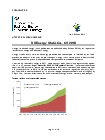
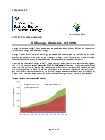
Energy Trends and Energy Prices publications are published today 28 June 2018 by the Department for Business, Energy and Industrial Strategy. The publications cover new data for the first quarter of 2018. Energy Trends covers statistics on energy production and consumption, in total and by fuel, and provides an analysis of the year on year changes. Energy Prices covers prices to domestic and industrial consumers, prices of oil products and comparisons of international fuel prices.


Link: Press release: UK energy statistics: statistical press release – June 2018
Source: Gov Press Releases

The Regulation of Registered Social Landlords (Wales) Act 2018 (Commencement and Transitional Provision) Order 2018 / Gorchymyn Deddf Rheoleiddio Landlordiaid Cymdeithasol Cofrestredig (Cymru) 2018 (Cychwyn a Darpariaeth Drosiannol) 2018

Link:

The Regulation of Registered Social Landlords (Wales) Act 2018 (Commencement and Transitional Provision) Order 2018 / Gorchymyn Deddf Rheoleiddio Landlordiaid Cymdeithasol Cofrestredig (Cymru) 2018 (Cychwyn a Darpariaeth Drosiannol) 2018

Source: Legislation .gov.uk

Press release: Teesside and Hartlepool families to benefit from coroner merger

  • government acts to improve services for grieving families
  • coroner services and information will be easier to access for all
  • changes will make sure those grieving are at heart of the system

Senior Coroner Claire Bailey has already overseen significant improvements in Teesside, drastically reducing waiting times for families finding out the cause of death of a loved one. The average time taken to complete an inquest at Teesside has been cut from circa 50 weeks in 2013 to circa 11 weeks in 2017. The national average time to complete an inquest is 21 weeks.

The merger of Teesside and Hartlepool coroner services will build on this work, ensuring local families benefit from a more efficient inquest process and greater accessibility to services right across the region. Claire Bailey, who has also been the acting Senior Coroner for Hartlepool, will be permanently appointed the position for the combined area. No courts or inquest venues will close as a result of the merger.

Justice Minister Edward Argar said:

We are reforming the coroner system to ensure those who are grieving do not face the additional stress of poor service and lengthy inquest delays.

As a result of this merger, bereaved families across Teesside and Hartlepool will now benefit from a higher standard of service during their time of need.

I look forward to seeing Claire drive through these improvements, while ensuring the needs of grieving people are at the heart of the system.

The government is committed to raising the standards of coroner services across England and Wales. The Ministry of Justice has carried out a number of reforms to improve coroner services, including the creation of a new national code of practice, and the appointment of the first ever Chief Coroner of England and Wales to oversee the system.

Teesside has already taken steps to improve performance, including by introducing a new website to improve access to services. However, this amalgamation will ensure best practice is shared across the region.

Notes to editors

  • The merger of the Teesside and Hartlepool coroner areas was first consulted on in 2015, following the retirement in April 2013 of the then Senior Coroner for Teesside, Michael Sheffield. Following the consultation, the MOJ, in agreement with the Chief Coroner, decided not to proceed until the selection of a Senior Coroner for the area had been agreed.
  • All relevant local authorities agree with the proposal to appoint Clare Bailey as Senior Coroner for the combined area.
  • A wide range of stakeholders have been consulted on this merger, including local MPs and councillors, coronial office holders including coroners in neighbouring coroner areas, coroner’s officers and administrative staff, police, hospital trusts, prisons, funeral directors and faith communities as well as the Chief Coroner.
  • Hartlepool had the lowest number of deaths in England and Wales in 2017 (246 deaths, and 12 inquests opened). Average time taken to complete an inquest at Hartlepool was 15 weeks in 2017.
  • The newly merged coroner area of Teesside and Hartlepool is due to come into force on 1 August.
  • MOJ has carried out considerable reforms to improve coroner services across England and Wales and increase consistency of practice between coroner areas. These include:
    • creation of a new national code of practice – setting out what service and standards bereaved people can expect from coroners
    • creation of a Chief Coroner of England and Wales to oversee the coroner system
    • requiring inquests to be completed within 6 months of the date on which the coroner is made aware of the death, unless there are good reasons not to
    • requiring coroners to notify those who are bereaved within a week of setting the date for the inquest
    • requiring coroners to notify those who are bereaved of the date of the inquest within a week of setting the date
    • providing greater access to documents and evidence, such as post-mortem reports, before the inquest takes place, to enable bereaved families to prepare for the hearing
    • permitting less invasive post-mortem examinations
    • speeding up the release of bodies after post-mortem examination, and requiring coroners to notify the deceased’s next of kin or personal representative if the body cannot be released within 28 days.
  • For more information contact the MOJ press office on 0203 334 2892.

Link: Press release: Teesside and Hartlepool families to benefit from coroner merger
Source: Gov Press Releases

Press release: CMA launches enforcement action against hotel booking sites

As part of its ongoing investigation, the Competition and Markets Authority (CMA) has identified widespread concerns, including:

  • Search results: how hotels are ranked, for example to what extent search results are influenced by factors that may not be relevant to the customer’s requirements, such as the amount of commission a hotel pays the site.
  • Pressure selling: whether claims about how many people are looking at the same room, how many rooms may be left, or how long a price is available, create a false impression of room availability or rush customers into making a booking decision.
  • Discount claims: whether the discount claims made on sites offer a fair comparison for customers. For example, the claim could be based on a higher price that was only available for a brief period or not relevant to the customer’s search criteria, such as comparing a higher weekend room rate with the weekday rate for which the customer has searched.
  • Hidden charges: the extent to which sites include all costs in the price they first show customers or whether people are later faced with unexpected fees, such as taxes or booking fees.

The CMA will be requiring the sites to take action to address its concerns, where they are believed to be breaking consumer protection law. It can either secure legally binding commitments from those involved to change their business practices or, if necessary, take them to court.

Andrea Coscelli, Chief Executive of the CMA, said:

“Booking sites can make it so much easier to choose your holiday, but only if people are able to trust them. Holidaymakers must feel sure they’re getting the deal they expected, whether that’s securing the discount promised or receiving reliable information about availability of rooms. It’s also important that no one feels pressured by misleading statements into making a booking.

“That’s why we’re now demanding that sites think again about how they’re presenting information to their customers and make sure they’re complying with the law. Our next step is to take any necessary action – including through the courts if needed – to ensure people get a fair deal.”

In addition to its enforcement activity, the CMA has sent warning letters to a range of sites, demanding they review their terms and practices to make sure they are fair and comply with consumer protection law.

It is also referring a number of concerns around online hotel booking sites’ price guarantees and other price promises to the Advertising Standards Authority (ASA). The CMA has asked the ASA to consider whether statements like ‘best price guarantee’ or ‘lowest price’ mislead customers and what conditions must be met for companies to make such claims.

The CMA continues to assess the evidence it has gathered on the practices of other online hotel booking sites and could launch further enforcement cases in due course.

Anyone wishing to provide further evidence on the issues being considered can do so on the online hotel booking case page.

Notes for editors

  1. The CMA is the UK’s primary competition and consumer authority. It is an independent non-ministerial government department with responsibility for carrying out investigations into mergers, markets and the regulated industries and enforcing competition and consumer law. For CMA updates, follow us on Twitter, Facebook and LinkedIn.
  2. The CMA launched its investigation into hotel booking sites on 27 October 2017.
  3. The key pieces of consumer protection legislation relevant to the CMA’s investigation are the Consumer Protection from Unfair Trading Regulations 2008 (CPRs) and Part 2 of the Consumer Rights Act 2015 (CRA). The CPRs contain a general prohibition against unfair commercial practices and specific prohibitions against misleading actions, misleading omissions and aggressive commercial practices. Part 2 of the CRA aims to protect consumers against unfair contract terms and notices, and requires contract terms to be fair and transparent.
  4. The CMA has not reached a final view on whether the terms and practices it is concerned about breach consumer protection law, and will listen to operators’ responses to its concerns. If necessary the CMA will take action through the courts to enforce that law under Part 8 of the Enterprise Act 2002. Ultimately, only a court can rule that a particular term or practice infringes the law.
  5. Media enquiries should be directed to press@cma.gov.uk or 020 3738 6191.

Link: Press release: CMA launches enforcement action against hotel booking sites
Source: Gov Press Releases

Press release: Tackling the threat to high-quality journalism in the UK

  • Independent panel calls for evidence on issues affecting press around the country
  • Total press industry revenues declined by more than half over the last ten years
  • The number of full-time journalists has fallen by over 25% since 2007
  • A quarter of all regional and local newspapers have closed in the past decade

An independent review into the sustainability of high-quality UK journalism has issued a call for evidence as new research highlights the continuing decline of the press market.

The research shows significant changes to technology and consumer behaviour are posing problems for high-quality journalism – both in the UK and globally.

Circulation and print advertising revenues have dropped by more than half over the last decade, from nearly £7 billion to just over £3 billion. Over the same time, the number of frontline print journalists has dropped by over 25% – from around 23,000 in 2007 to 17,000 in 2017.

These findings are highlighted in a report commissioned for the review, which was established by the Prime Minister earlier this year and is chaired by Dame Frances Cairncross.

Dame Frances Cairncross, Chair of the Review, said:

This review is not about preserving the status quo. We need to explore ways in which we can ensure that consumers in 10 years time have access to high-quality journalism which meets their needs, is delivered in the way they want, and supports democratic engagement.

This call for evidence enables all those with an interest to contribute their knowledge and views so we can build the evidence and make impactful recommendations to move forward.

Matt Hancock, DCMS Secretary of State, said:

Our fearless and independent press plays a vital role in informing citizens and is one of the foundations on which our democracy is built.

At a time of dramatic technological changes and with our institutions under threat from disinformation, we need this clear-eyed view of how high-quality journalism can continue to be effectively produced, distributed and consumed.

Local and regional newspapers have been particularly affected by revenue challenges due to the movement of local and classified advertising online. The research indicates that over 300 local and regional titles have closed since 2007 – raising the prospect of communities being left without local news provision.

The Cairncross review is investigating the overall state of the news media market, particularly the press industry, including threats to financial sustainability, the role and impact of digital search engines and social media platforms, the operation of the digital advertising supply chain, and how content and data flows are operated and managed.

The review panel, made up of experts from the fields of journalism, academia, advertising and technology, is seeking a greater understanding of the apparent decline by gathering evidence and views from both consumers and across the UK’s diverse news media industry.

It is inviting any interested organisation or individual to submit written evidence to inform its final report, which is due to be published in early 2019.

The call for evidence will close on Friday 7 September 2018.

ENDS

Notes to Editors

  • In January 2018, the Department for Digital, Culture, Media and Sport (DCMS) commissioned a piece of academic research to look specifically at the changing state of the press market, to examine new business models being deployed by news publishers, and to provide essential market insights and capture trends in media provision, distribution, and consumption. Following an open competition, Mediatique were awarded the contract for the research.
  • In addition to providing an all-in-one review of available public data – on newspaper readership, online engagement, revenues and profitability – Mediatique makes three original contributions to an understanding of the sector:
    • A robust estimate of the trends in circulation revenues, which are not tracked by any data provider; Mediatique estimates that, despite sharp rises in cover prices in recent years, offsetting some of the impact of declines in circulation, this revenue segment has reduced to £1.7bn in 2017, compared to £2.2bn in 2007
    • An updated estimate of the number of ‘front line journalists’ working as print journalists in the UK, which Mediatique puts at 17,000 today, compared to 23,000 10 years ago
    • A calculation of the contributions to editorial journalism of key providers in broadcasting, online and newspapers: despite severe revenue challenges, and lower profitability, the newspaper industry contributes 50% of total editorial journalism in the UK – more than online and broadcast news combined; in 2017, this amounted to an investment of £925m
  • Other findings from the Mediatique report include:
    • As of February 2018, there were 1,043 local and regional titles, as well as ten daily and nine Sunday UK-wide national newspapers.
    • Altogether, a total of 73.5m newspapers circulate in an average week – 31.4m are local or regional and the remaining 42.1m are national.
    • Total press advertising expenditure (excluding digital) has declined across the national and regional/local press by 70% in the last ten years – from £4.6bn in 2007 to an estimated £1.4bn in 2017.
    • The average daily circulation of national newspapers (weekday) fell from 11.2m in 2007 to 6.1m in 2017.
      Younger people in particular are much less likely to get their news from printed newspapers; the proportion of people aged 16-24 who read printed newspapers is lower than the rest of the population (14%). At the same time, people in the same age group are more likely to get their news from the internet – 63% compared with 48% among the overall population.
  • The Reuters Institute Digital News Report (June 2018) is the latest research into the state of the digital news landscape:
    • The use of Facebook as a source of news was down on last year as people prefer to discuss news through more private social media. Although accessing news through a ‘side door’ (i.e. not direct from news site) is still at 65%.
    • More people reported being prepared to pay for news (i.e. subscriptions/donations/membership), with a direct correlation being found between those aware of the value of high quality journalism (and the problems it is facing) and the willingness to subscribe.
    • Greater awareness of the problem of ‘fake news’; most people see this as a problem that publishers should solve, rather than seeing it as requiring Government action.
    • Research shows that eight of the 10 most shared UK websites on social media over the year to July 2017 were news sites, and that almost 50% of all engagements with UK websites on social media featured content sourced from UK news publishers.
      *For the purposes of the review, the press industry is defined as members of press self-regulators (i.e. IPSO/IMPRESS) or news publishers who have their own internal standards code and means of readers making complaints.
  • The call for evidence represents just one part of the review’s evidence gathering, and complements a series of regional visits currently underway. Visits to Glasgow and Cardiff have already been conducted, with further trips planned to ensure the review takes into account the diverse makeup of the UK’s press industry.
  • During these visits, the Chair and Panel will engage with journalists, publishers, academics, advertisers and many others who have a stake in the provision of high-quality journalism.

Link: Press release: Tackling the threat to high-quality journalism in the UK
Source: Gov Press Releases