Press release: UK aid helps vaccinate over 450,000 people to prevent the spread of deadly cholera in Yemen

The first ever phase of a cholera vaccination campaign will be completed in Yemen today (Tuesday 15 May), as International Development Secretary Penny Mordaunt demands full humanitarian access so that even more vulnerable people can receive the vaccinations they need as the rainy season begins.

The looming rains are expected to increase the risk of another life-threatening resurgence of the cholera in the coming weeks. Backed by UK aid and financed by Gavi, the vaccine alliance, doses of the vaccine administered over the last nine days have helped protect 455,000 people from the potentially fatal disease.

This phase aimed to vaccinate everyone over 12-months old in five districts around the city of Aden in the south of Yemen, following the world’s largest cholera outbreak last year, with more than one million suspected cases recorded in the conflict-ravaged country.

With vaccinations being blocked in the north of the country, the International Development Secretary today called for immediate and unfettered humanitarian access to be granted across the whole of Yemen.

International Development Secretary Penny Mordaunt said:

Tragically there were more than one million suspected cases of cholera in Yemen last year alone. With the rainy season now starting, there is a danger that the mass pain and suffering throughout the country could be made even worse by a widespread cholera outbreak.

The UK is at the forefront of the international response in Yemen with the first ever phase of a cholera vaccination campaign completed today, helping protect more than 450,000 men, women and children from this potentially fatal disease.

There are still millions of vulnerable people in Yemen whose lives are at risk because aid is being blocked. Vital medicine, fuel, water and sanitation cannot reach those in dire need. I urge all parties to the conflict to allow the next phase of the vaccination campaign to proceed and to enable full and unhindered access including in the north of the country.

UK aid is also helping to detect early signs of a cholera outbreak, increase awareness of how to prevent the spread of the diseases and improve access to sanitation and clean or chlorinated water.

Notes to editors

The first ever cholera vaccination campaign in Yemen has now taken place, with 455,000 doses of oral cholera vaccine taken from the Gavi-funded global stockpile being administered in the south of the country by the World Health Organisation, UNICEF and partners.

The UK is largest donor to Gavi, the vaccine alliance. We contributed 25% of the costs of this vaccination campaign, which has paid for 113,750 doses delivered in the last nine days.

The UK is the fourth largest donor to the humanitarian response in Yemen, providing at least £170 million in the financial year 2018/19.

As penholder for Yemen at the UN Security Council, the UK was responsible for the 15 March Presidential Statement on Yemen which included calls for all parties to the conflict to allow unhindered humanitarian and commercial access for food, fuel and medical supplies throughout the country and compliance with obligations under International Humanitarian Law to reduce the impact on civilians. We also called for the payment of public sector salaries to avoid the collapse of critical services.

General media queries

Follow the DFID Media office on Twitter – @DFID_Press

Link: Press release: UK aid helps vaccinate over 450,000 people to prevent the spread of deadly cholera in Yemen
Source: Gov Press Releases
Press release: Boaters warned to register your vessel or face court action

Boat owners are being urged to make sure their vessels are properly registered – or face paying thousands of pounds in penalties.

The call comes after 6 boaters were ordered to forfeit more than £7,200 between them – all for failing to register their craft for use on the River Nene.

It is a legal requirement for boat owners to register any vessel they keep, use or let for hire on Environment Agency waterways, and to clearly display a valid registration plate. None of the guilty 6 had done so.

Mark Bennett of Meadow View in Great Addington, Jim Brown of Station Road in Ringstead, David Campion of Oxford Street in Finedon, Andrew James MacGilliuray of Kestrel Lane in Wellingborough, Stewart Richardson of Ringstead Road in Ringstead, and Robert William Whiteside of Beloe Crescent in King’s Lynn have each been given 14 days to pay up.

Their cases were heard at Northampton Magistrates’ Court on Tuesday 1 May 2018. Mr Bennett was ordered to pay a total of £944.99, Mr Brown £1,393.29, Mr Campion £944.99, Mr MacGilliuray – who owned 3 of the unregistered vessels – had to pay £2655.95, Mr Richardson £503.98, and Mr Whiteside £843.98.

It brings the total amount of avoided registration charges that have been recovered by the Environment Agency this year to almost £120,000. The cash is reinvested into maintaining, improving and protecting waterways.

Nathan Arnold, Waterways Partnerships and Development Team Leader, said:

Our historic and precious waterways are an important part of our nation’s heritage and are enjoyed by hundreds of thousands of people every year,

Those who don’t contribute as they should are threatening the future of our waterways – and we won’t hesitate to take action against them.

As well as not contributing to the upkeep of waterways, unregistered boats can be unsafe, hazardous to other river users, and a pollution risk to the local environment and its wildlife.

The Environment Agency looks after 353 miles of navigable waterways in the Anglian network, which includes the Ancholme, Black Sluice, Glen, Welland, Nene, Great Ouse and Stour, as well as associated locks and navigation facilities like moorings, showers and toilets.

More information about boating and waterways, including registering vessels, is available from the Environment Agency. If you suspect a boat is illegal, please contact them on 03708 506 506 or email waterways.enforcementanglian@environment-agency.gov.uk

Link: Press release: Boaters warned to register your vessel or face court action
Source: Environment Agency

Press release: Unemployment rate lowest in over 40 years

Today’s figures also show the employment rate has remained at a record 75.6%, with 197,000 more people in work compared to October to December 2017.

And with the number of black, Asian and minority ethnic (BAME) people in work up 475,000 since 2015, the government is making rapid progress on its commitment to increase BAME employment by 20% by 2020.

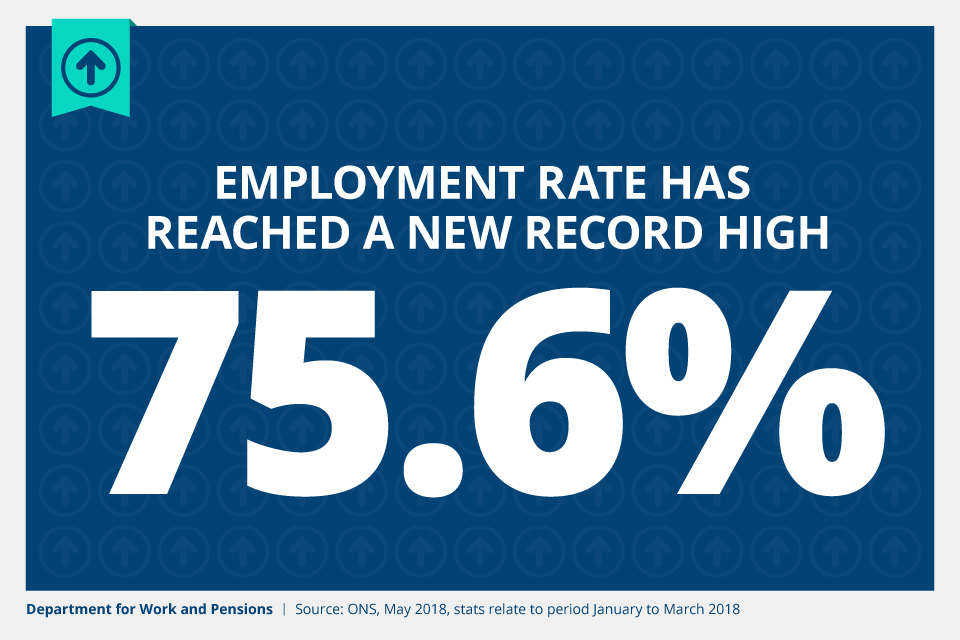
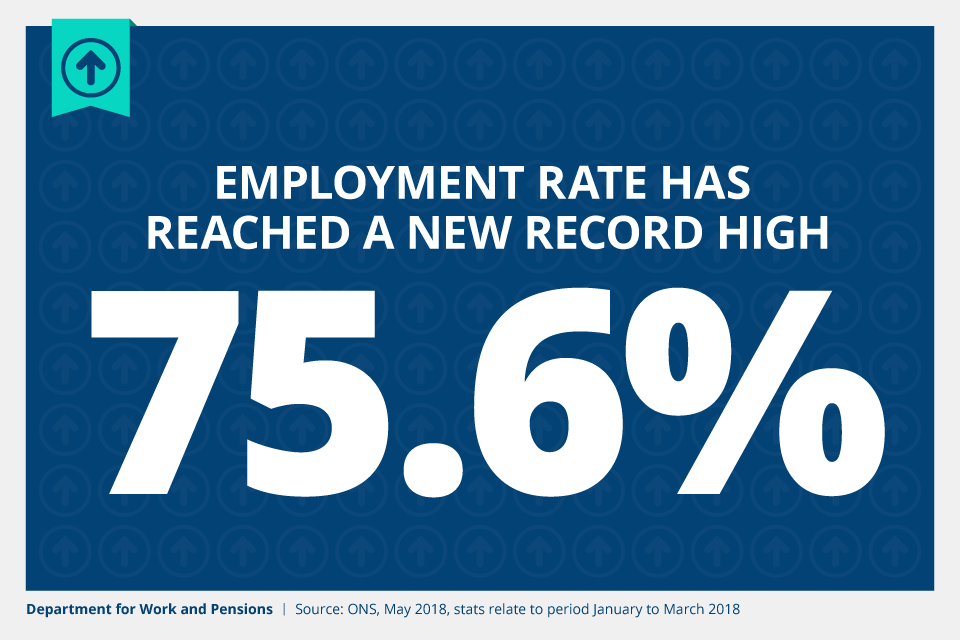
The employment rate has reached a new record high of 75.6%. Source: Office for National Statistics, May 2018, stats relate to period January to March 2018.

The Secretary of State for Work and Pensions, Esther McVey, said:

Since 2010 we have seen more than 3.2 million people move into work right across the UK. Youth unemployment has fallen by over 40% and the unemployment rate has not been lower since 1975.

Today’s figures once again cement that turnaround, with a new employment rate record of 75.6%, and on average over 1,000 people each and every day, since 2010, getting a job.

With wages growing faster than inflation and increases in the personal tax allowance, not only are more people bringing home a pay packet but they are keeping more of their hard earned money for themselves and their families.

Figures also show:

  • the BAME employment gap has closed to just 10.1 percentage points, a decrease of 1.3 percentage points since 2015 and the lowest the gap has been since the series began in 2001
  • the number of people in employment has increased by over 3.2 million since 2010
  • there are 806,000 vacancies in the economy at any one time
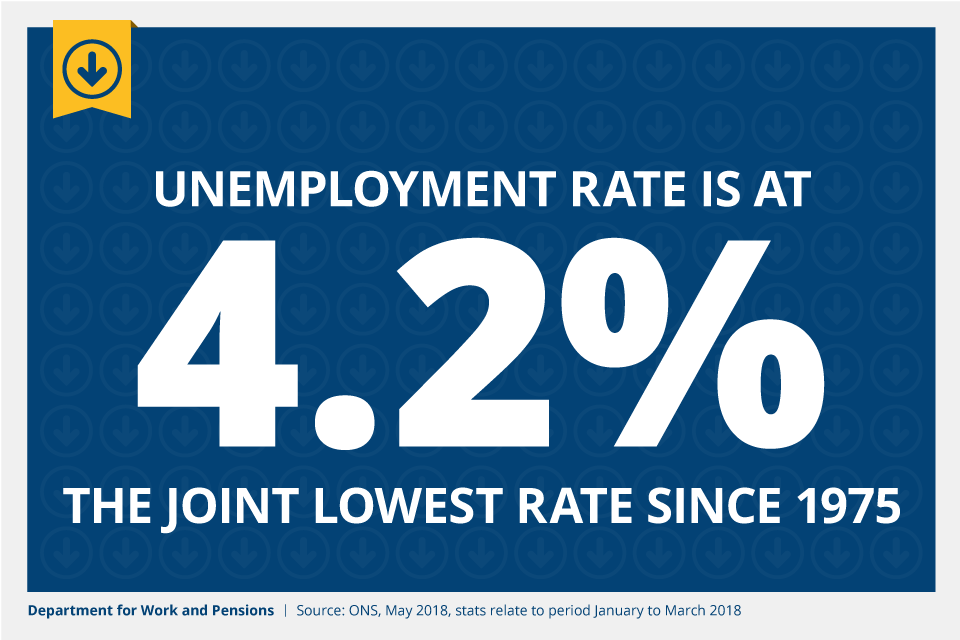
The unemployment rate is at 4.2% - the joint lowest rate since 1975. Source: Office for National Statistics, May 2018, stats relate to period January to March 2018.

This comes as we have reformed welfare to make work pay, backed businesses to take more people on, and built a stronger, fairer economy. But we want to help even more people benefit from a well-paid job. That’s why we are:

  • improving the welfare system with Universal Credit, which helps people move into work faster and to stay in work longer than under the old system
  • introducing a modern industrial strategy to help businesses create better, higher-paying jobs in every part of the UK
  • helping people stay in work longer with our Fuller Working Lives strategy, which supports employers to recruit, re-train and retain older workers
  • tackling inequalities in employment highlighted by the Race Disparity Audit, through targeted support in 20 areas around the country and £90 million announced by the Prime Minister to help young people

Also, the Department for Work and Pensions launched a new ‘Find a job’ service this week to support thousands of jobseekers into work. The site will continue to allow jobseekers to search for work 24 hours a day, 7 days a week, and will offer jobseekers and employers a simpler and more streamlined way to log in and access their information.

Separate figures out today showed that 870,000 people are now on Universal Credit as the rollout of the new benefit continues. Of these, 36% were in employment (320,000). Through Universal Credit, people are keeping more of their earnings as their Universal Credit payment gradually adjusts when their income climbs.

More information

Read the Labour Market Statistics – May 2017 from the Office for National Statistics.

Contact Press Office

Press Office

Caxton House

Tothill Street
London
SW1H 9NA

Follow DWP on:


Link: Press release: Unemployment rate lowest in over 40 years
Source: Gov Press Releases