Press release: More funding to boost services in village pubs and bring communities together

  • Government awards £70,000 to support Pub is The Hub to deliver additional village services
  • Call on pub companies to match government support and help village locals across the country

More than 30 rural communities are set to benefit from new or expanded village services from libraries, shops to post offices all delivered by their local pub, Community Pubs Minister Jake Berry announced today (13 September 2018).

The government has confirmed a further £70,000 of funding for ‘Pub is The Hub’ to support their work in encouraging rural pubs to widen their ‘offer’ beyond food and drink that not only helps pubs to thrive but also helps to bring communities together.

Community Pubs Minister Jake Berry MP said:

Our great British pubs are not only places for local people to get together over a pint, being at the heart of their communities they are perfectly placed to deliver valuable services, especially in rural areas.

From postal facilities to community playgrounds, Pub is The Hub provides fantastic support to licensees wishing to diversify, ensuring their pubs are both thriving and firmly rooted in their local communities.

Government funding since 2012 for Pub is The Hub now totals £390,000, including provision for its Community Services Fund to inspire and help local pub licensees understand what locals want for their pubs and deliver these.

This new funding is expected to deliver 36 projects which will help revamp local pubs with services ranging from village shops, libraries, and allotments, post offices to community cafes and cinemas. This will create an estimated 30 full time and 59 part-time/voluntary jobs; benefiting 31,400 local users.

Jake Berry also welcomed £30,000 of additional funding to ‘Pub is The Hub’ from Heineken UK and called on the major players in the pubs and drinks industry, to offer their support to help village locals up and down the country.

John Longden, Chief Executive of Pub is The Hub said:

The government’s support for the Community Services Fund has been essential to ensure that we can get much needed investment and support to just some of the thriving pubs and their community-minded licensees that want to go the extra mile to support their communities.

We are always grateful for the faith the government has shown in our initiative but even more so for the amazing small enterprises who take the plunge into diversification to support their neighbourhoods.

Case studies of pubs that have benefited from Pub is The Hub

Swan Inn, Carleton in Craven, North Yorkshire

The licensee at the Swan was keen to create a community space within the pub where villagers and visitors of all ages can enjoy hot drinks and snacks, find local information, access the internet and a printer and meet regularly. Through its Community Services Fund, Pub is The Hub was able to provide advice and funds towards equipment to help provide IT training, adult learning sessions including local history and ancestry as well as a café to host a weekly over 60’s coffee morning.

Saracen’s Head, Shirley, Derbyshire

This long established and highly successful pub/restaurant in the village of Shirley created an essential new service for the village and the surrounding area with a newly incorporated Deli filled with specialist foods including local fruit and vegetables and dairy items, together with home baked goods such as bread, cakes and pastries.

Further information

Pub is the Hub was set up in 2001 with the support of HRH the Prince of Wales, to help improve community services and activities in primarily rural areas.

The organisation is staffed mostly by volunteers and has worked with pub licensees, local authorities, local communities and industry partners to help hundreds of pubs across the country provide a wide range of services and facilities for their local communities.

The government has supported Pub is The Hub with £390,000 of funding since 2013.

For more information on Pub is The Hub and how to access support for your local visit www.pubisthehub.org.uk.

Office address and general enquiries

2 Marsham Street

London
SW1P 4DF

Media enquiries

Link: Press release: More funding to boost services in village pubs and bring communities together
Source: Gov Press Releases
Press release: Sir Alan Duncan statement on adoption of United National Security Council Resolution on Colombia

The Rt Hon Sir Alan Duncan MP, Minister of State for the Foreign and Commonwealth Office said:

Colombia has come a long way in the last year towards consolidating the peace process. This is clearly evident in the transition of the FARC to political party and the passing of the safest elections in decades. The approval of UN Security Council resolution 2435 demonstrates that Colombia has global support for its work to a safer, more stable and prosperous future for all citizens.

The UN Political Mission in Colombia has played a vital role in maintaining cooperation by all parties, encouraging them to work together to first end the violence and to go on building the peace. I welcome the UN Security Council’s response to this request, made on behalf of both the Colombian Government and the FARC, to extend the UN Political Missions presence.

The UK is privileged to have worked closely with Colombia and with partners in the UN Security Council to ensure continued international support to Colombia’s peace process, which continues to inspire others globally.

Further information

Media enquiries

For journalists

Link: Press release: Sir Alan Duncan statement on adoption of United National Security Council Resolution on Colombia
Source: Gov Press Releases

Press release: New data shows drop in bovine TB as further measures to fight disease unveiled

Reductions in new outbreaks of bovine TB have been recorded in Gloucestershire and Somerset following the completion of their licensed four-year badger culls, Farming Minister George Eustice has announced.

The data published today shows there has been a decline in TB incidence in the first two cull areas with the rate of new confirmed breakdowns now at about half the level they were before culling began. In the Gloucestershire cull area, TB incidence has fallen from 10.4% before culling started to 5.6% in year four of the cull, while in Somerset it has reduced from 24% to 12%.

The findings are in line with expectation based on the scientific evidence from the Randomised Badger Culling Trial which underpins the approach to tackling bovine TB – and demonstrate progress is being made in delivering the 25-year TB eradication strategy in England to rid our farmers of the impacts of this terrible disease.

In a further move to strengthen the government’s 25-year bTB eradication strategy, the Minister of State has also announced the opening of a new round of applications for Badger Edge Vaccination Scheme grants.

Licences have also been published for badger control in 10 new areas within the High Risk Area, covering parts of Devon, Cornwall, Somerset, Staffordshire and Gloucestershire, plus one additional licence for badger control in Cumbria to eradicate a pocket of infection in both cattle and badgers in the TB Low Risk Area. Along with six-monthly cattle testing, movement restrictions and good biosecurity on farms, this offers the best opportunity to deal quickly with this localised threat.

Farming Minister George Eustice said:

Today’s figures showing reductions in TB cases in Somerset and Gloucestershire are evidence that our strategy for dealing with this slow moving, insidious disease is delivering results.

Bovine TB remains one of the greatest animal health threats to the UK. There is no single measure that will provide an easy answer which is why we are committed to pursuing a wide range of interventions to protect the future of our dairy and beef industries and eradicate the disease within 20 years.

No one wants to be culling badgers forever so the progress reported today is encouraging.

The Badger Edge Vaccination Scheme, which was suspended for two years following a global vaccine shortage before resuming in 2017, is open for expressions of interest from today with grant funding of up to 50% of costs – worth £700,000 over four years – available to private groups wishing to carry out badger vaccination in the Edge Area.

The scheme, which funded three projects over the course of the past 12 months, aims to create a protected badger population between the High Risk and Low Risk Areas of England and prevent further spread of the disease. New projects would start in spring 2019.

TB data from the eight other cull areas that have held licences for two or three years is also published today. While it is too early to expect to see any drop in those areas, we would hope to see a similar pattern to Somerset and Gloucestershire in coming years. A full scientific paper will be published in due course.

England has the highest incidence of bovine TB in Europe and the disease costs taxpayers over £100million every year. In 2017 more than 33,000 cattle had to be slaughtered in England to control the disease, causing devastation and distress for farmers and rural communities.

Earlier this year the government announced a review of its 25 year Bovine TB strategy. The review, chaired by Sir Charles Godfray, is due to report to ministers at the end of the month.

Chief Vet Christine Middlemiss said:

Taking comprehensive action to prevent bovine TB infection of cattle from the reservoir of disease in local badger populations is an essential part of the government’s 25-year strategy to eradicate the disease in England.

Proactive badger control is currently the best available option. Supported by tighter cattle controls including in those areas seeing a reduction in cattle-badger-cattle infection, improved biosecurity and vaccination, the licensing of further areas is necessary to realise disease control benefits across England.

Five years into our 25-year bovine TB eradication strategy it is timely to reflect on the next steps and I look forward to Sir Charles Godfray and his team reporting to ministers later this month.

Read the licenses and authorisation letters.

Read the data on BT trends.

Link: Press release: New data shows drop in bovine TB as further measures to fight disease unveiled
Source: Gov Press Releases

Press release: Road schemes to help create jobs and homes in Yorkshire and North East

Communities in Yorkshire and the North East are set to benefit from three major road improvements which will help create hundreds of new jobs and homes

A better access from the A19 to the proposed new International Advanced Manufacturing Park and Nissan plant in Sunderland is among the upgrades which are worth around £82 million.

A second scheme in Sunderland will tackle a bottleneck at the A19 and A690 Doxford Park junction, unlocking the potential for 1,345 new homes.

The third upgrade will improve junction 47 of the A1(M) at Harrogate, helping to increase capacity, reduce queuing, improve journey times and create new jobs at the planned Flaxby Green Business Park.

Highways England, Regional Director, Operations, Yorkshire & North East, Richard Marshall, said

Our roads are vital for the country and its economic success; they connect businesses and communities and support employment and new homes. All of our improvements will ultimately ensure our roads continue to improve journeys and unlock the potential for new jobs and homes.

After the Government gave Highways England the green light to start construction, work on the major upgrade to improve access from the A19 at Testos to the proposed Manufacturing Park and Nissan plant, is due to start in the New Year.

At the Doxford Park junction the company will work with Sunderland City Council to increase capacity, significantly reducing journey times and congestion at peak hour, as well as paving the way for new homes in the future.

And in Harrogate, subject to finalising agreements with local developers, it plans to work with North Yorkshire County Council to improve junction 47 of the A1(M), helping to increase capacity, reduce queuing, improve journey times as well as supporting the planned business park.

The improvements in Sunderland and Harrogate, totalling £2 million, are being paid for as part of Highways England’s dedicated £100 million fund to help local growth and housing schemes get off the ground.

The award-winning fund has already provided over £77 million to communities across the country, improving junctions and creating access to commercial land and new homes.

This includes a £1 million boost to a scheme in Darlington, improving the A68 Rotary Way roundabout. This roundabout links Darlington with the A1M and has unlocked 1 million square feet of business land in Faverdale.

The completed scheme has created a new slip road on the A68 approaching Rotary Way roundabout from the motorway, a new link road from West Park onto Newton Lane, and the roundabouts at Cockerton have also been improved.

General enquiries

Members of the public should contact the Highways England customer contact centre on 0300 123 5000.

Media enquiries

Journalists should contact the Highways England press office on 0844 693 1448 and use the menu to speak to the most appropriate press officer.

Link: Press release: Road schemes to help create jobs and homes in Yorkshire and North East
Source: Gov Press Releases

Press release: A19 / A184 Testo’s Junction Alteration project granted development consent

The application for the A19/A184 Testo’s junction in Sunderland and associated alterations has been granted development consent by the Secretary of State for Transport.

Consent has been granted for replacement of the existing at-grade roundabout junction between the A184 and the A19 (Testo’s junction) with a grade separated junction. This involves raising the A19 carriageway above ground on embankments and bridge structures as required to carry it over the existing roundabout. The new raised section of the A19 will be slightly west of its existing alignment to accommodate a widened roundabout, whilst minimising the impact on an electricity sub-station to the east and retaining parts of the existing A19 southbound carriageway for use as new slip roads. Access to and from the A19 north of Testo’s Junction to Downhill Lane junction, which lies 1km to the south, would be via Testo’s roundabout and new parallel link roads connecting the two junctions.

The application was submitted to the Planning Inspectorate for consideration by Highways England on 14 July 2017 and accepted for examination on 10 August 2017. Following an examination during which the public, statutory consultees and interested parties were given the opportunity to give evidence to the Examining Authority, a recommendation was made to the Secretary of State for Transport on 21 June 2018.

The Planning Inspectorate is committed to giving local communities the opportunity to be involved in the examination of projects that may affect them. Local people, the local authorities and other interested parties were able to participate in the examination. The Examining Authority listened and gave full consideration to local views before making its recommendation.

The decision announced today supports the recommendation made by the Planning Inspectorate. It is the 71st NSIP application to be examined and decided, and the 21st transport project.

The Secretary of State’s decision and statement of reasons, the recommendation made by the Examining Authority to the Secretary of State and the evidence considered by the Examining Authority in reaching its recommendation is publicly available on the National Infrastructure Planning website.

  • Ends

Journalists wanting further information should contact the Planning
Inspectorate Press Office, on: 0303 444 5004 or 0303 444 5005 or email:
pressoffice@pins.gsi.gov.uk

  • Notes to editors:

The Planning Inspectorate, National Infrastructure Programme of Projects details the proposals which are anticipated to be submitted to the Planning Inspectorate as applications in the coming months. It can be viewed at https://infrastructure.planninginspectorate.gov.uk/

Link: Press release: A19 / A184 Testo’s Junction Alteration project granted development consent
Source: Gov Press Releases

Press release: Royal approval for Kielder Salmon centre

Kielder Salmon Centre rears and releases around 360,000 juvenile salmon into the River Tyne catchment each year.

It was built in 1978 to compensate for the building of Kielder Reservoir – the biggest man-made lake in Northern Europe – which cut off around 7% of the River Tyne catchment including some of the best spawning streams for salmon.

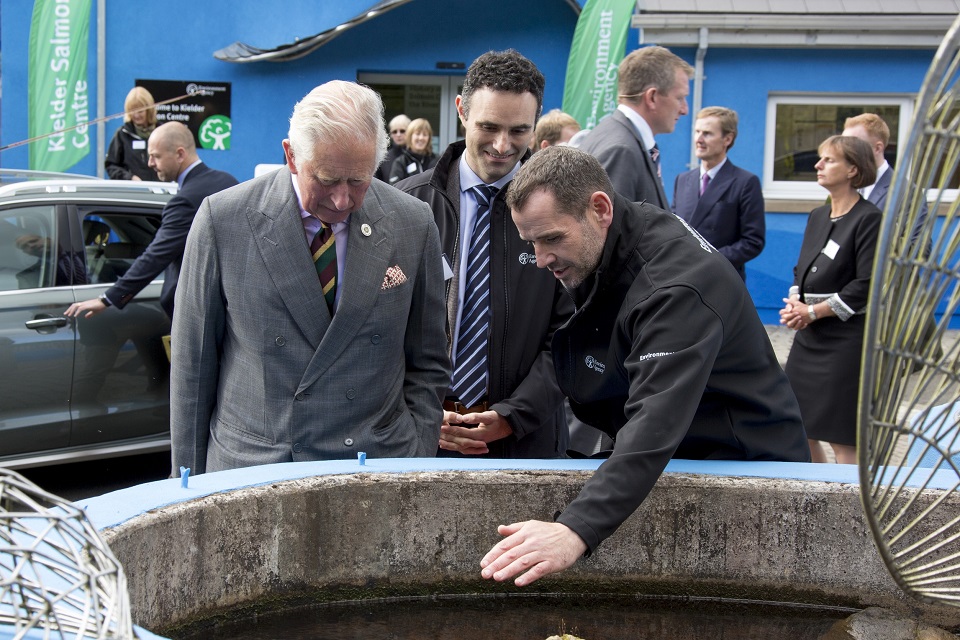
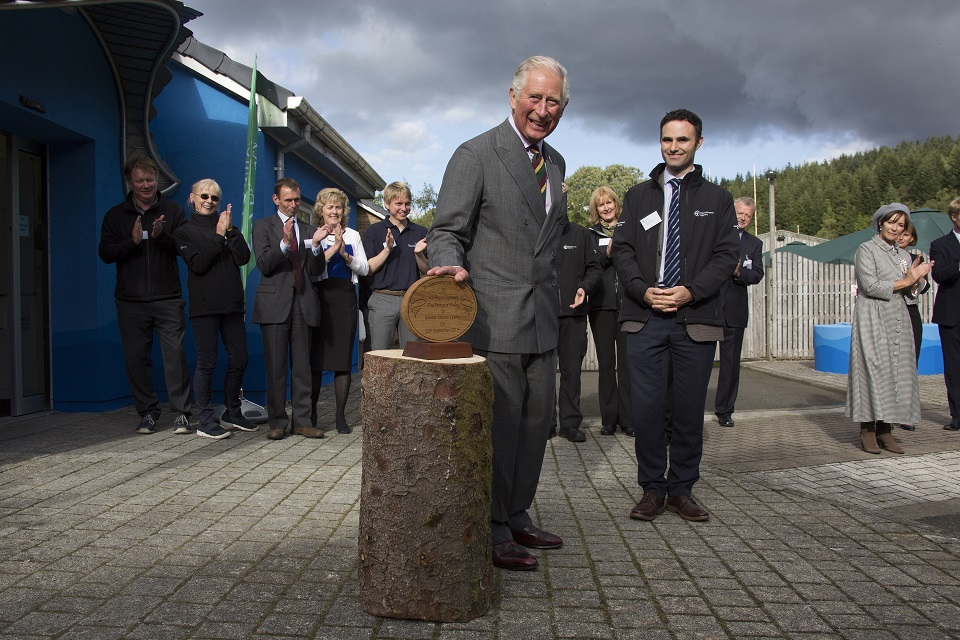
On Wednesday 12 September the Prince of Wales was given a tour of the facility, including the new £100,000 visitor centre which is due to open to the public later this month.

The three-month refurbishment has created a more interactive experience for visitors and allows them to get up close with the salmon and other species the centre aims to protect – including the critically endangered freshwater pearl mussel.

The new visitor centre includes:

  • a natural North East river environment aquarium showcasing salmon and other local river species
  • videos revealing the behind the scenes work at the centre to protect iconic species
  • a prehistoric salmon fossil dig
  • a quiz and brass rubbings to unveil interesting information about the salmon
  • new and improved outside spaces and pearl mussel breeding beds
  • a circular salmon walk around the local area
The Prince of Wales unveiling a plaque
The Prince of Wales unveils a plaque to commemorate his visit

The Environment Agency’s Richard Bond, who has been Manager of Kielder Salmon Centre since 1995, said:

We were absolutely delighted to be able to show the Prince of Wales around our conservation centre which aims to protect this incredible, iconic fish.

We also explained the innovative work we are doing to hand rear one of the UK’s most endangered species, the freshwater pearl mussel, which is absolutely vital to our river systems and in great decline.

He was interested to hear about the improvements to the River Tyne, which has gone from a heavily polluted industrial river to one of the best salmon rivers in the country thanks to improvements to water quality and conservation efforts from ourselves and our partners.

The new visitor centre has a wealth of information about the aquatic life of Northumbria and is a great way for people to understand the fascinating world that lies below the surface of the river.

The Prince of Wales sees the adult pearl mussels
The Prince of Wales is shown the adult pearl mussels housed at the salmon centre.


Link: Press release: Royal approval for Kielder Salmon centre
Source: Environment Agency

The Reserve Forces Act 1996 (Isle of Man) (Amendment) Regulations 2018

These Regulations apply to the Isle of Man, subject to modifications, the Reserve Forces (Call-out and Recall) (Financial Assistance) (Amendment) Regulations 2015 (S.I. 2015/460) (“the 2015 Regulations”). The 2015 Regulations amend the Reserve Forces (Call-out and Recall) (Financial Assistance) Regulations 2005 (S.I. 2005/859) (“the 2005 Regulations”). Regulation 2 applies the 2015 Regulations to the Isle of Man by amending the Reserve Forces Act 1996 (Isle of Man) Regulations 2010 (S.I. 2010/2643), which apply to the Isle of Man, subject to modifications, regulations made under the Reserve Forces Act 1996 (c.14).

Link: The Reserve Forces Act 1996 (Isle of Man) (Amendment) Regulations 2018
Source: Legislation .gov.uk