The Merchant Shipping (Prevention of Pollution from Noxious Liquid Substances in Bulk) Regulations 2018

These Regulations implement the revised version of Annex II of the International Convention for the Prevention of Pollution from Ships, 1973, as modified by the Protocol of 1978 (“the MARPOL Convention”). Annex II contains regulations for the Control of Pollution by Noxious Liquid Substances in Bulk. As a consequence of these Regulations, the Merchant Shipping (Dangerous or Noxious Liquid Substances in Bulk) Regulations 1996 (S.I. 1996/3010) and amending instruments (S.I. 1998/1153 and S.I. 2004/930) which implemented the previous version of Annex II, are revoked. Other consequential amendments and partial revocations are also made. Future amendments of provisions of the Convention and other instruments specified in these Regulations will be automatically incorporated into the Regulations by way of ambulatory reference (regulation 4).

Link: The Merchant Shipping (Prevention of Pollution from Noxious Liquid Substances in Bulk) Regulations 2018
Source: Legislation .gov.uk

Press release: Pupils help their schools prepare for flooding

Community Engagement Officer Taryn Al-Mashgari has helped youngsters develop flood plans and ‘grab bags’ so they are prepared in the event of a flood.

The series of themed weeks – which have so far involved 1,200 primary school children – kicked off at North Fawdon Primary School in Newcastle in January, before moving to South Tyneside ahead of the start of Monkton flood alleviation scheme.

Taryn works with the children in all year groups to help them understand different types of flooding and how it happens. They learn what to do before and during a flood, and learn what the flood warning symbols used by the Environment Agency mean.

They then record mock radio broadcasts about flooding in their community.

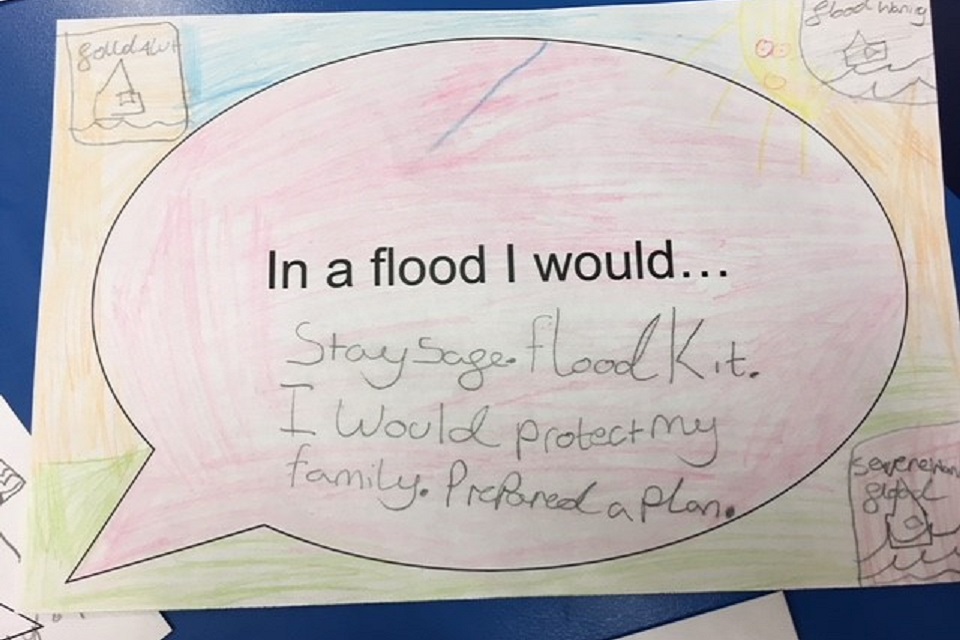
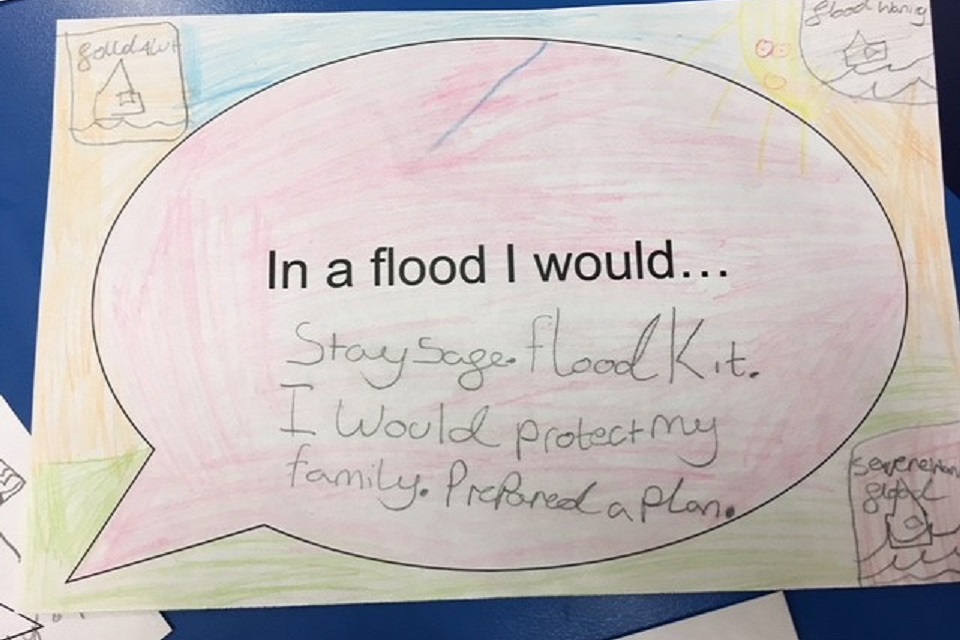
Image hsows content from one of the school events

Important to understand flooding

Each week ends with a community event attended by parents, Northumbrian Water and Northern Powergrid where children launch the flood plan they’ve created for their own school.

At schools in South Tyneside – St James’ RC Primary School and Hebburn Lakes Primary School – Monkton flood scheme project manager Tom Pitman, working for South Tyneside Council and the Environment Agency – and partners at the Tyne Rivers Trust attended to give parents an overview of the project. Taryn said:

It’s important that younger people understand what flooding is, how it happens and what the different organisations that deal with flooding do.

We also teach them how to prepare for and what to do during a flood in a series of interactive sessions. It leads to them being able to create a flood plan for their own school, and in turn their parents having a greater understanding.

We know it is absolutely devastating to be flooded and that’s why we work closely with our partners to develop schemes to reduce the risk of flooding – such as the project due to start at Monkton.

But we can never completely eliminate the risk and that’s why we work hard to educate people and our future generations about what they can do to keep themselves and their valuables safe.

Image shows one of the school events

Prepare, Act, Survive

Taryn will visit Toner Avenue Primary School in Hebburn before moving on to Washington with flood weeks at Springwell Village and Albany Village Primary Schools.

She has also developed a teaching pack which will be delivered by secondary schools across the region as part of Personal, Social, Health and Economic (PSHE) curriculum.

The Environment Agency is urging people to ‘Prepare, Act, Survive’ by visiting the Floods Destroy website and do three things to prepare for flooding.

  • check your postcode and find out if you are at risk of flooding
  • sign-up for free flood warnings if you are at risk
  • view and save the 3-point flood plan so you know how to ‘Prepare, Act, Survive’ in a flood


Link: Press release: Pupils help their schools prepare for flooding
Source: Environment Agency

Press release: First Universal Credit payment paid quicker

Everyone is now entitled to Universal Credit from the first day they claim, removing 7 days some had to wait.

This change was announced as part of a wider £1.5 billion package of improvements to Universal Credit in the Autumn Budget 2017.

Work and Pensions Secretary of State Esther McVey said:

It can be a worrying time looking for work and our priorities are to help people find employment quickly and to improve lives. Our package of support affords better help for people as soon as they make a claim to Universal Credit.

We will be removing the 7 waiting days, which means no one has to wait 6 weeks for their first Universal Credit payment and this will benefit the average household by around £160.

Advance payments

The comprehensive package also includes an increase in advance payments to 100% of the expected Universal Credit payment. This means anyone who needs help before their first Universal Credit payment can receive up to their full expected Universal Credit within 5 days, or on the same day if in urgent need. The repayment period has also been extended to a year

Housing Benefit

From April 2018, anyone in receipt of Housing Benefit who moves onto Universal Credit will continue to have their rent paid for 2 weeks during the wait for their first payment, and that payment is non recoverable.

Personalised support

Under Universal Credit, people get more personalised support that meets their individual needs and we are seeing jobseekers moving into work faster and staying in work longer than compared to the old system.

Contact Press Office

Press Office

Caxton House

Tothill Street
London
SW1H 9NA

Follow DWP on:

Link: Press release: First Universal Credit payment paid quicker
Source: Gov Press Releases

Press release: Have your say on new guidance for charities that are connected with non-charitable organisations

The Charity Commission has opened a consultation about new guidance to help charities manage their relationships with connected non-charitable organisations.

The new guidance is closely based on the core trustee duties as explained in the regulator’s existing guidance, and sets out principles for trustees to follow.

The Commission stresses that it is common for charities to have close connections with non-charities, for example trading subsidiaries or charities established by commercial businesses, and that this is not a concern in principle.

However, it says that trustees must manage these relationships properly in order to fulfil their legal duties and maintain public trust and confidence. It is vital that the public can easily distinguish between the charity and the connected non-charitable organisation, particularly where, for example, they share a very similar name.

The regulator says that serious problems can arise when charities’ relationships are not managed appropriately, and that a number of its case reports in recent years involve concerns about trustees’ handling of these matters.

It says it is keen to hear charities’ views on the guidance, especially those of charities that are closely connected to non-charitable organisations. It is also interested in feedback from other interested parties, such as charity legal advisers. It is organising round-tables to facilitate discussions about the guidance.

Sarah Atkinson, Director of Policy, Planning and Communications at the Charity Commission, says:

This guidance is designed to help charities benefit from appropriate connections with non-charitable organisations, while preserving and protecting what is special and unique about charity. We want to help trustees make decisions that promote their charity’s best interests, and that encourage public trust in charity more widely.

We know that charities want this guidance: currently advice is spread across several different Commission publications and this document pulls it all together in one place. We have also designed some practical aids to help trustees put the guidance into practice.

The guidance is in draft form, and we are keen to hear from as wide a range of charities and advisers as possible, to ensure the final guidance is as clear and helpful as possible.

The draft guidance stresses that trustees must, among other things:

  • actively manage the relationship in compliance with their legal duties and the law
  • preserve the charity’s separation and independence from the non-charitable organisation
  • manage the risks arising from the charity’s association and/or work with the non-charitable organisation
  • make decisions in accordance with their legal duties
  • identify and avoid conflicts of interests and loyalty in respect of the non-charitable organisation when making decisions
  • be accountable about the relationship, for example by complying with all relevant accounting and reporting requirements

The consultation about the draft guidance will close at 5pm on the 15 May 2018.

Ends

Notes to editors

  1. The Charity Commission is the independent regulator of charities in England and Wales. To find out more about our work, see the about us page on GOV.UK.

Press office

Link: Press release: Have your say on new guidance for charities that are connected with non-charitable organisations
Source: Gov Press Releases

Press release: Glasgow director banned for abuse of invoice finance facility scheme

Ryan Maginess (28) was the sole director of Camereye Contracts Limited, which had a registered office at Lochside Place, Edinburgh.

The disqualification followed an investigation by the Insolvency Service, and was ordered at Edinburgh Sheriff’s Court. The disqualification began on 11 January 2018.

The investigation found that the company had entered into an invoice finance facility with a bank and in contravention of the terms, Ryan Maginess submitted invoices for which the company had already been paid. In good faith, the bank made funds available to the company against the invoices submitted under the agreement.

Ryan Maginess withdrew funds totalling £105,500 from the facility and used the funds for his own benefit, including the purchase residential properties in his own name, leaving the bank with an irrecoverable loss.

From 2010, the company provided security personnel and CCTV facilities primarily to the construction industry. The company ceased trading on 15 October 2015 when it was placed into administration with an eventual deficiency to creditors of £109,767.

Commenting on the disqualification, Robert Clarke, Investigations Group Leader at the Insolvency Service, said:

Directors who put their own personal financial interests above those of customers and creditors, especially in such a blatant manner as this was done, damage the confidence of those who want to do business in the UK and cause significant damage to the health of the local economy.

This ten year ban given at Edinburgh Sheriff Court sends a clear message and should serve as a warning to other directors tempted to follow a similar course of action and help themselves first; you have a duty to your creditors and if you neglect this duty you could be investigated by the Insolvency Service and lose the privilege of limited liability trading.

Notes to editors

Ryan Maginess’s date of birth is November 1989, and his last known address was in Glasgow.

Ryan Maginess was appointed as a director of Camereye Contracts Limited (company number SC385894) from incorporation on 24 September 2010 and remained a director throughout the company’s trading.

On 21 December 2017, at Edinburgh Sheriff Court, a disqualification order was granted.

The order was pronounced by Sheriff Holligan at Edinburgh Sheriff Court on 21 December 2017. The Secretary of State was represented by Fiona Tosh of Burness Paul LLP, the defendant did not attend and was not represented.

Camereye Contracts Limited was incorporated on 24 September 2010. The company was placed into administration on 15 October 2015.

A disqualification order has the effect that without specific permission of a court, a person with a disqualification cannot:

  • act as a director of a company
  • take part, directly or indirectly, in the promotion, formation or management of a company or limited liability partnership
  • be a receiver of a company’s property

Persons subject to a disqualification order are bound by a range of other restrictions.

The Insolvency Service, an executive agency sponsored by the Department for Business, Energy and Industrial Strategy (BEIS), administers the insolvency regime, and aims to deliver and promote a range of investigation and enforcement activities both civil and criminal in nature, to support fair and open markets. We do this by effectively enforcing the statutory company and insolvency regimes, maintaining public confidence in those regimes and reducing the harm caused to victims of fraudulent activity and to the business community, including dealing with the disqualification of directors in corporate failures.

BEIS’ mission is to build a dynamic and competitive UK economy that works for all, in particular by creating the conditions for business success and promoting an open global economy. The Criminal Investigations and Prosecutions team contributes to this aim by taking action to deter fraud and to regulate the market. They investigate and prosecute a range of offences, primarily relating to personal or company insolvencies.

The agency also authorises and regulates the insolvency profession, assesses and pays statutory entitlement to redundancy payments when an employer cannot or will not pay employees, provides banking and investment services for bankruptcy and liquidation estate funds and advises ministers and other government departments on insolvency law and practice.

Further information about the work of the Insolvency Service, and how to complain about financial misconduct, is available.

Contact Press Office

Media enquiries for this press release – 020 7674 6910 or 020 7596 6187

Press Office

The Insolvency Service


4 Abbey Orchard Street
London
SW1P 2HT

This service is for journalists only. For any other queries, please contact the Insolvency Enquiry line on 0300 678 0015.

For all media enquiries outside normal working hours, please contact the Department for Business, Energy and Industrial Strategy Press Office on 020 7215 1000.

You can also follow the Insolvency Service on:

Link: Press release: Glasgow director banned for abuse of invoice finance facility scheme
Source: Gov Press Releases

Press release: One million employers enrol staff into a workplace pension

The new figures, released by The Pensions Regulator, show that over 600,000 employers have complied with their duties in the past year alone. The deadline is approaching for the remaining 150,000 employers, including new businesses set up since the government scheme was launched, to enrol their staff by June 2018.

Guy Opperman, Minister for Pensions and Financial Inclusion, said:

With one million employers – from the small sandwich shop owner to the large supermarket chain – now enrolling their staff into a workplace pension, we are creating a nation of responsible employers who are reassuring their workforce that with their support, they will have a secure retirement.

Clearly this would not have been possible without the hard work and continued support of employers across the UK. That is why we are committed to working closely with them to prepare for our recently announced proposals which will ensure even more people, including 18 to 21 year olds, lower earners and multiple job holders, can benefit from a workplace pension in the future.

Since automatic enrolment was launched in 2012, there have been ‘staging dates’ gradually bringing existing employers and their staff into workplace pensions, starting with the UK’s largest employers, and getting down to the smallest ones today.

Research recently published by the Department for Work and Pensions (DWP) highlighted how workplace pensions have become ‘the new normal’, revealing that small and micro employers – which represent 98% of all UK businesses – are finding automatic enrolment ‘necessary’, ‘sensible’ and ‘easier to implement than first expected’. In addition, 4 in 5 of today’s eligible workers (83%) now see saving through a workplace pension as the normal thing to do if you are in paid employment.

Currently, to be automatically enrolled into a workplace pension, you must be aged 22 to State Pension age and earn at least £10,000 per year. In return for employees contributing a minimum of 1% of their pay, employers will at least match it, with most savers also benefiting from tax relief on their contributions.

With contribution rates set to increase to 5% in April 2018 and 8% in April 2019, savers will see every penny going further as, thanks to compound interest, the earlier people save the more they will earn.

In December the government published its review of automatic enrolment, announcing a series of major policy proposals that will set millions of people – including younger people, lower earners and multiple job holders – on the path to a more financially secure retirement. The government will introduce these reforms in the mid-2020s, in partnership with employers, and learning from the contribution increases in April 2018 and April 2019. This will ensure that businesses and individuals have time to plan for the changes, and that we continue to build on the foundation already in place in an effective way.

The news coincides with a national government campaign which is encouraging people to ‘get to know your pension’.

More information

By later this year, it is expected that up to 10 million people will be newly saving or saving more through automatic enrolment, giving them a greater sense of economic security and peace of mind in retirement.

The latest figures show that there are a record 5.5 million private sector businesses across the UK. Additional figures show that workplace pension participation in the public and private sectors has increased from a low of 55% in 2012 to 78% in 2016. The most significant increases have been among the lowest earners, younger people (those aged 20 to 29) and women.

In 2016, the total amount saved annually in workplace pensions by eligible savers was £87.1 billion, a 10 year high (source: Automatic enrolment review 2017: Maintaining the momentum). It is estimated that the introduction of automatic enrolment will have increased pension contributions by around £20 billion a year by 2019/20.

Get to know your workplace pension by visiting www.workplacepensions.gov.uk.

Business owners need to take 3 simple steps to be ready for the workplace pension

  1. Choose a qualifying pension scheme that can be used for automatic enrolment. The Pensions Regulator offers a helpful directory and step by step guide about an employer’s automatic enrolment duties. One option is NEST – the workplace pension scheme set up by the government which can help new business owners fulfil their obligations, without set-up costs.
  2. New business owners should look to get their workforce engaged – the law requires you write to each worker to let them know how automatic enrolment applies; and it’s helpful to point out the positive benefits of pension saving for their future too. Many existing business owners have spoken publically about the motivational benefits of offering a workplace pension to their staff.
  3. Most importantly, no business owner wants to be caught by surprise costs they didn’t plan for. So take ownership of the automatic enrolment process now, which will help to avoid the possibility of costly fines for non-compliance, and put in place arrangements that work for you and your staff.

Contact Press Office

Press Office

Caxton House

Tothill Street
London
SW1H 9NA

Follow DWP on:

Link: Press release: One million employers enrol staff into a workplace pension
Source: Gov Press Releases

Press release: UK House Price Index for December 2017

The December data shows:

  • on average, house prices have risen by 0.4% since November 2017
  • an annual price rise of 5.2%, which takes the average property in the UK valued at £226,756

England

The data for England shows:

  • house prices have risen by 0.4% since November 2017
  • an annual price rise of 5% takes the average property value to £243,582

The regional data for England indicates that:

  • the South West experienced the greatest rise in average property price over the last 12 months, up by 7.5%
  • the North East experienced the greatest monthly price rise, up by 2.7%
  • London saw the lowest annual price rise, up by 2.5%
  • the South East saw the most significant monthly price fall, down by 0.5%

Price change by region for England

Region Average price December 2017 Annual change % since December 2016 Monthly change % since November 2017
East Midlands £185,694 6.3 0.6
East of England £290,341 5.2 0.2
London £484,173 2.5 0.8
North East £130,838 3.6 2.7
North West £158,370 5.9 0.2
South East £322,269 4.2 -0.5
South West £254,081 7.5 1.0
West Midlands £191,050 6.3 0.1
Yorkshire and the Humber £156,781 2.8 0.2

Repossession sales by volume for England

The lowest number of repossession sales in October 2017 was in the East of England.

Repossession sales October 2017
East Midlands 48
East of England 17
London 40
North East 96
North West 140
South East 52
South West 35
West Midlands 57
Yorkshire and the Humber 101
England 586

Average price by property type for England

Property type December 2017 December 2016 Difference %
Detached £364,919 £349,408 4.4
Semi-detached £226,034 £213,878 5.7
Terraced £196,410 £186,867 5.1
Flat/maisonette £230,408 £220,018 4.7
All £243,582 £231,922 5.0

Funding and buyer status for England

Transaction type Average price December 2017 Annual price change % since December 2016 Monthly price change % since November 2017
Cash £229,209 5.0 0.4
Mortgage £250,824 5.0 0.4
First-time buyer £204,597 4.8 0.3
Former owner occupier £276,183 5.2 0.4

Building status for England

Building status* Average price October 2017 Annual price change % since October 2016 Monthly price change % since September 2017
New build £321,335 14.1 2.1
Existing resold property £238,634 5.4 0.1

*Figures for the two most recent months are not being published because there are not enough new build transactions to give a meaningful result.

Sales volumes for England

The most up-to-date HM Land Registry sales figures available for England show:

  • the number of completed house sales in October 2017 fell by 10.2% to 63,603 compared with 70,825 in October 2016
Month Sales 2017 Sales 2016 Difference %
September 67,983 76,114 -10.7
October 63,603 70,825 -10.2

London

The data for London shows:

  • house prices have risen by 0.8% since November 2017
  • an annual price rise of 2.5% takes the average property value to £484,173

Average price by property type for London

Property type December 2017 December 2016 Difference %
Detached £896,260 £887,005 1.0
Semi-detached £579,622 £562,272 3.1
Terraced £497,236 £483,479 2.8
Flat/maisonette £429,543 £419,937 2.3
All £484,173 £472,374 2.5

Funding and buyer status for London

Transaction type Average price December 2017 Annual price change % since December 2016 Monthly price change % since November 2017
Cash £508,917 1.8 0.6
Mortgage £476,480 2.7 0.8
First-time buyer £423,129 2.2 0.6
Former owner occupier £546,842 2.8 1.0

Building status for London

Building status* Average price October 2017 Annual price change % since October 2016 Monthly price change % since September 2017
New build £538,497 11.4 2.2
Existing resold property £481,656 2.5 -0.4

*Figures for the two most recent months are not being published because there are not enough new build transactions to give a meaningful result.

Sales volumes for London

The most up-to-date HM Land Registry sales figures available for London show;

  • the number of completed house sales in October 2017 fell by 22.7% to 6,264 compared with 8,100 in October 2016
Month Sales 2017 Sales 2016 Difference %
September 6,991 8,275 -15.5
October 6,264 8,100 -22.7

Wales

The data for Wales shows:

  • house prices have risen by 1% since November 2017
  • an annual price rise of 5.4% takes the average property value to £154,398

Average price by property type for Wales

Property type December 2017 December 2016 Difference %
Detached £231,947 £221,813 4.6
Semi-detached £148,968 £140,572 6.0
Terraced £119,490 £113,104 5.6
Flat/maisonette £111,811 £105,614 5.9
All £154,398 £146,442 5.4

Funding and buyer status for Wales

Transaction type Average price December 2017 Annual price change % since December 2016 Monthly price change % since November 2017
Cash £150,562 5.4 1.0
Mortgage £156,678 5.5 1.0
First-time buyer £133,522 5.4 1.1
Former owner occupier £178,701 5.4 0.9

Building status for Wales

Building status* Average price October 2017 Annual price change % since October 2016 Monthly price change % since September 2017
New build £217,588 14.6 2.9
Existing resold property £151,322 5.0 1.1

*Figures for the two most recent months are not being published because there are not enough new build transactions to give a meaningful result.

Sales volumes for Wales

The most up-to-date HM Land Registry sales figures available for Wales show:

  • the number of completed house sales in October 2017 fell by 3.8% to 3,805 compared with 3,957 in October 2016
  • there were 64 repossession sales in October 2017
Month Sales 2017 Sales 2016 Difference %
September 3,933 4,054 -3.0
October 3,805 3,957 -3.8

Access the full UK HPI

UK house prices grew by 5.2% in the year to December 2017, up from 5.0% in the year to November 2017.

The UK Property Transaction Statistics (PDF, 829KB) for December 2017 showed that the number of seasonally adjusted transactions on residential properties with a value of £40,000 or greater has decreased by 0.1% in the year to December 2017. Between November 2017 and December 2017, transactions decreased by 3.9%.

Looking at English regions, the largest annual price growth was recorded in the South West at 7.5%, up from 6.1% in the previous month. It was followed by the East and West Midlands, both growing at 6.3%. At 2.5%, London showed the slowest annual growth of all UK regions, though this is up from 2.0% in the previous month. This is the 13th consecutive month where the annual growth in London has remained below the UK average.

See the economic statement.

Notes to editors

  1. The UK House Price Index (HPI) is currently published on the second or third Tuesday of each month with Northern Ireland figures updated quarterly. The January 2018 UK HPI will be published at 9.30am on 20 March 2018. See calendar of release dates.
  2. From April 2018, publication of these figures will move from Tuesday to Wednesday; the new release dates are available.
  3. We have made some changes to improve the accuracy of the UK HPI. We are not publishing average price and percentage change for new builds and existing resold property as done previously because there are not currently enough new build transactions to provide a reliable result. This means that in this month’s UK HPI reports, new builds and existing resold property are reported in line with the sales volumes currently available.
  4. The UK HPI revision period has been extended to 13 months, following a review of the revision policy. This ensures the data used is more comprehensive.
  5. Sales volume data is also available by property status (new build and existing property) and funding status (cash and mortgage) in our downloadable data tables. Transactions involving the creation of a new register, such as new builds, are more complex and require more time to process. Read revisions to the UK HPI data.
  6. Revision tables have been introduced for England and Wales within the downloadable data. Tables will be available in csv format. See about the UK HPI for more information.
  7. Data for the UK HPI is provided by HM Land Registry, Registers of Scotland, Land & Property Services/Northern Ireland Statistics and Research Agency and the Valuation Office Agency.
  8. The UK HPI is calculated by the Office for National Statistics (ONS) and Land & Property Services/Northern Ireland Statistics and Research Agency. It applies a hedonic regression model that uses the various sources of data on property price, in particular, HM Land Registry’s Price Paid Dataset, and attributes to produce estimates of the change in house prices each month. Find out more about the methodology used from the ONS and Northern Ireland Statistics & Research Agency.
  9. The UK Property Transaction statistics are taken from HM Revenue and Customs (HMRC) monthly estimates of the number of residential and non-residential property transactions in the UK and its constituent countries. The number of property transactions in the UK is highly seasonal, with more activity in the summer months and less in the winter. This regular annual pattern can sometimes mask the underlying movements and trends in the data series so HMRC also presents the UK aggregate transaction figures on a seasonally adjusted basis. Adjustments are made for both the time of year and the construction of the calendar, including corrections for the position of Easter and the number of trading days in a particular month.
  10. UK HPI seasonally adjusted series are calculated at regional and national levels only. See data tables.
  11. The first estimate for new build average price (April 2016 report) was based on a small sample which can cause volatility. A three-month moving average has been applied to the latest estimate to remove some of this volatility.
  12. Work has been taking place since 2014 to develop a single, official HPI that reflects the final transaction price for sales of residential property in the UK. Using the geometric mean, it covers purchases at market value for owner-occupation and buy-to-let, excluding those purchases not at market value (such as re-mortgages), where the ‘price’ represents a valuation.
  13. Information on residential property transactions for England and Wales, collected as part of the official registration process, is provided by HM Land Registry for properties that are sold for full market value.
  14. The HM Land Registry dataset contains the sale price of the property, the date when the sale was completed, full address details, the type of property (detached, semi-detached, terraced or flat), if it is a newly built property or an established residential building and a variable to indicate if the property has been purchased as a financed transaction (using a mortgage) or as a non-financed transaction (cash purchase).
  15. Repossession sales data is based on the number of transactions lodged with HM Land Registry by lenders exercising their power of sale.
  16. For England, this is shown as volumes of repossession sales recorded by Government Office Region. For Wales, there is a headline figure for the number of repossession sales recorded in Wales.
  17. The data can be downloaded as a .csv file. Repossession sales data prior to April 2016 is not available. Find out more information about repossession sales.
  18. Background tables of the raw and cleansed aggregated data, in Excel and csv formats, are also published monthly although Northern Ireland is on a quarterly basis. They are available for free use and re-use under the Open Government Licence.
  19. HM Land Registry’s mission is to guarantee and protect property rights in England and Wales.
  20. HM Land Registry is a government department created in 1862. It operates as an executive agency and a trading fund and its running costs are covered by the fees paid by the users of its services. Its ambition is to become the world’s leading land registry for speed, simplicity and an open approach to data.
  21. HM Land Registry safeguards land and property ownership worth in excess of £4 trillion, including around £1 trillion of mortgages. The Land Register contains more than 25 million titles showing evidence of ownership for some 85% of the land mass of England and Wales.
  22. For further information about HM Land Registry visit www.gov.uk/land-registry.
  23. Follow us on:

Contact

Senior Press Officer

Marion Shelley
Head Office

Trafalgar House
1 Bedford Park
Croydon
CR0 2AQ

Press Officer

Paula Dorman
Head Office

Trafalgar House

1 Bedford Park
Croydon
CR0 2AQ

Link: Press release: UK House Price Index for December 2017
Source: Gov Press Releases

Press release: New proposals to help vulnerable people benefit from cheaper energy

  • government takes further steps to tackle fuel poverty
  • government consulting on new powers to make it easier for consumers to be protected from unfair energy bills under the safeguard tariff
  • new data-sharing measures means vulnerable consumers would be protected from high energy bills automatically

The government has today (12 February 2018) launched a consultation asking for views on amending the Digital Economy Act to bring in data-sharing measures that could help bring down the bills of those most at risk of fuel poverty.

The consultation will explore the use of powers which would allow the sharing of information between public authorities and energy suppliers so that vulnerable consumers receiving certain benefits would automatically be protected by the safeguard tariff.

The energy regulator, Ofgem, introduced a safeguard tariff cap in April 2017 for 4 million consumers on prepayment meters. This month, it was extended to a further one million who receive the Warm Home Discount. Ofgem consulted on further eligibility for the safeguard tariff cap earlier this year and the powers proposed in this consultation will make identifying and protecting these vulnerable consumers easier while still protecting their data.

The move comes as the government prepares to introduce a Tariff Cap Bill which will put an end to rip-off standard variable tariffs.

Business and Energy Secretary Greg Clark said:

The effects of energy price rises are often felt most by those on the lowest incomes, as they are usually on the highest standard variable tariffs. These people are at risk of being plunged further into fuel poverty if they are left at the mercy of a broken energy market. Enabling energy suppliers to establish who should be on Ofgem’s safeguard tariff cap will help these vulnerable consumers.

The government is committed to tackling fuel poverty. We want to make it easier for those vulnerable consumers to bring their energy bills down. And it doesn’t stop there. We are working with Ofgem and other partners to ensure that switching is made easier and we’ll be introducing an energy price cap bill soon so that we can have an energy market that works for everyone.

The proposed amendments to the Digital Economy Act will allow suppliers to work with government to carefully identify those whose energy bills are high and potentially putting them in financial difficulty. These people can then be placed under Ofgem’s safeguard tariff cap, protecting them from high bills and unfair price rises.

We will shortly be introducing our Tariff Cap Bill which will put an end to rip-off standard tariffs. Our Bill, published in the autumn, has been undergoing pre-legislative scrutiny in order to build cross-party consensus. We expect a report from the BEIS Select Committee shortly so that we can begin the process of getting the Bill through the House in order to protect millions of consumers as soon as possible.

National Energy Action (NEA) Chief Executive Adam Scorer said:

Schemes to take people out of fuel poverty have been hamstrung by an inability to target support on those who need it most. Data matching is a necessary part of the answer and NEA welcomes this consultation as an important step to establishing a safe and effective way of bringing help with energy costs to those least able to afford a warm home.

Energy regulator Ofgem announced today its intention to trial its first ‘hassle free’ switching service as part of a package of reforms aimed at making it easier for people to switch as well as protecting those who don’t switch from being overcharged.

The industry body, Energy UK, has also launched a new Commission today as part of its drive to improve customer engagement with a particular focus on vulnerable customers.

Notes to editors

Suppliers would not be permitted to use the information they receive for any purpose other than those that are outlined in the Digital Economy Act. In addition to legislative controls and criminal penalties, a code of practice would be put in place alongside detailed contractual arrangements for the handling and protection of the data – see the recent government consultation on Digital Economy Act, part 5: data sharing codes and regulations

Ofgem recently consulted on expanding the eligibility criteria for the safeguard tariff

Link: Press release: New proposals to help vulnerable people benefit from cheaper energy
Source: Gov Press Releases