Press release: Deposit return scheme in fight against plastic

A deposit return scheme to increase recycling rates and slash the amount of waste polluting our land and seas will be introduced subject to consultation later this year, it was confirmed today.

UK consumers go through an estimated 13 billion plastic drinks bottles a year, but more than three billion are incinerated, sent to landfill or left to pollute our streets, countryside and marine environment.

To tackle this blight, the government has confirmed it will introduce a deposit return scheme in England for single use drinks containers (whether plastic, glass or metal), subject to consultation later this year. The consultation will look at the details of how such a scheme would work, alongside other measures to increase recycling rates. We hope to talk to the devolved administrations about the scope for working together on this important issue.

Similar schemes already operate in countries such as Denmark, Sweden and Germany. A deposit return scheme sees consumers pay an up-front deposit when they buy a drink, ranging from 8p in Sweden to 22p in Germany, which is redeemed on return of the empty drink container. Possible variants of a deposit return scheme include cash rewards for returning drinks containers without an upfront deposit.

This is often done through a network of ‘reverse vending machines’, where you insert your plastic or glass bottle or can and the machine returns your money. Once a bottle is returned, businesses are then responsible for making sure they are effectively recycled – a move that has led to a 97% recycling rate in Germany.

Environment Secretary Michael Gove said:

We can be in no doubt that plastic is wreaking havoc on our marine environment – killing dolphins, choking turtles and degrading our most precious habitats. It is absolutely vital we act now to tackle this threat and curb the millions of plastic bottles a day that go unrecycled.

We have already banned harmful microbeads and cut plastic bag use, and now we want to take action on plastic bottles to help clean up our oceans.

Following receipt of the Voluntary and Economics Incentives Working Group report on single use drinks containers, Defra is now developing plans for a deposit return scheme for consultation later this year.

Today’s announcement is the latest move in the government crackdown on plastic, following the plastic microbeads ban hailed as one of the world’s strongest bans and the 5p plastic bag charge – which has led to 9 billion fewer bags distributed. It sits alongside the 25 Year Environment Plan commitment to eliminate avoidable plastic waste.

The consultation will follow the recent call for evidence by HM Treasury on taxes and charges to reduce waste from single-use plastics, so that all relevant findings can be fed into the proposals.

Plastic bottles and drinks containers have a significant impact on the environment, with discarded food and drink containers making up at least a fifth of rubbish on beaches. There are over 150 million tonnes of plastic in the world’s oceans and every year one million birds and over 100,000 sea mammals die from eating and getting tangled in plastic waste.

Author Bill Bryson, a former president of Campaign to Protect Rural England, said:

Future generations will look back on this decision as a piece of supremely enlightened policymaking, and one that raises the prospect of the world’s most beautiful country becoming free from drinks container litter at last.

The consultation will take into account views from producers, suppliers and consumers to ensure that any system introduced works across the country. The consultation will sit alongside a package of wider reforms of the current packaging waste system, which will incentivise producers to take greater responsibility for the environmental impacts of their products and to increase the amount of packaging they recycle.

Today’s announcement comes ahead of the Commonwealth Heads of Government Meeting in April, where member states will gather in London and agree measures to protect our oceans.

Link: Press release: Deposit return scheme in fight against plastic
Source: Gov Press Releases

Press release: Countdown to high speed broadband for all begins

Ofcom now has up to 2 years to implement the scheme, meaning that by 2020, everyone in the UK will have a legal right to an affordable connection of at least 10 Mbps, from a designated provider, no matter where they live or work, up to a reasonable cost threshold.

Digital minister Margot James said:

In the 21st century, accessing the internet is a necessity not a luxury. We are building a Britain that is fit for the future, and we’re now putting high speed broadband on a similar footing as other essential services like water and phone lines.

The Government believes that only a regulatory USO offers sufficient certainty and the legal enforceability that is required to ensure high speed broadband access for the whole of the UK by 2020. 95% of the UK already has access to superfast broadband, and the USO will provide a “digital safety net” for those in the most remote and hardest to reach places.

The specification for the USO design includes:

  • A download speed of at least 10Mbps, with quality requirements for upload speeds, responsiveness of connections, and data cap; this could be delivered by a range of fixed line and wireless technologies
  • A per premises cost threshold of £3,400, enabling coverage to around 99.8% of premises. Consumers outside this threshold will be able to get a satellite connection, or would have the option to cover the excess themselves (in the same way the universal service right to a landline telephone works)
  • A requirement for demand aggregation, so that people within an area can combine their per premise cost thresholds, to ensure that as many people who want to get connected do get connected
  • For it to be funded by industry rather than public funding; and
  • Uniform pricing so that those connected under the USO do not have to pay more for similar services to consumers served commercially.

Although the USO minimum speed will initially be set at at least 10Mbps, this will be kept under review and we expect it to be increased over time. Ofcom advise that 10Mbps is the speed required for a typical household’s use of internet access to services such as web browsing, email and video services.

Government and Ofcom are now working to put in place a number of processes to implement the USO as quickly as possible. This includes the running of a process to designate the universal service provider(s) who will be required to offer the service, giving both small and large providers a chance to put their names forward for consideration. Ofcom will also be responsible for establishing an industry fund that will support delivery of connections made under the USO.

Following the creation of new powers when the Government passed the Digital Economy Act 2017, the Government consulted on the design of the USO. The detailed response to this consultation has also been published today.

Notes to Editors

  1. Ofcom’s Connected Nations 2017 report shows that the number of premises without 10Mbps broadband download and 1Mbps upload speeds is 1.1 million, or 4% of premises, compared with 1.6 million or 6% of premises in 2016
  2. The designated provider will be under statutory obligation to connect people up to the cost threshold, and to connect them if they are willing to pay excess costs above the threshold.

Link: Press release: Countdown to high speed broadband for all begins
Source: Gov Press Releases

Press release: Creative Industries Sector Deal launched

  • More than £150 million will be jointly invested by government and industry to help the country’s world-leading cultural and creative businesses thrive as part of landmark Sector Deal
  • Britain’s creative industries are worth £92 billion, employ two million people and are growing twice as fast as the rest of the economy
  • New Cultural Development Fund will see cities and towns have access to £20 million to invest in culture and creative industries
  • Plans to nurture and develop the next generation of creatives include industry-led careers programme and a new London Screen Academy

Britain’s world-leading creative industries are set to consolidate the country’s position as a global creative powerhouse, following a groundbreaking new Industrial Strategy deal agreed between Government and the Creative Industries Council (CIC) on behalf of the sector.

As part of a Creative Industries Sector Deal, to be announced today by the Digital and Culture Secretary Matt Hancock, Business Secretary Greg Clark and Co-Chair of the CIC, Nicola Mendelsohn, more than £150 million is being jointly invested by Government and industry to help cultural and creative businesses across Britain thrive.

A Cultural Development Fund will also be launched for cities and towns to bid for a share of £20 million to invest in creative and cultural initiatives. The power of culture and creative industries to boost economic growth is evident across the country. In Hull nearly 800 jobs have been created and almost £220 million invested in Hull’s tourism and cultural sectors since the city was named UK City of Culture 2017. And in Bristol creative hubs like the Bristol Temple Quarter are delivering thousands of jobs in design, media and music businesses.

The Sector Deal aims to double Britain’s share of the global creative immersive content market by 2025, which is expected to be worth over £30 billion by 2025. To seize on the opportunity of this expanding market, government is investing over £33 million in immersive technologies such as virtual reality video games, interactive art shows and augmented reality experiences in tourism.

Britain is already leading the way in developing immersive technologies. PWC has predicted that the UK’s virtual reality industry will grow at a faster rate than any other entertainment and media industry between 2016-2021, reaching £801 million in value, and that by 2021 there will be 16 million virtual reality headsets in use in the UK.

Improving the nations skills is at the heart of the Government’s modern Industrial Strategy and to ensure the industry has the skilled workers it needs to deliver this, up to £2 million will be made available to kickstart an industry-led skills package, including a creative careers programme which will reach at least 2,000 schools and 600,000 pupils in two years. A new London Screen Academy, with places for up to 1000 students, will also open in 2019.

Secretary of State for Digital, Culture, Media and Sport, Matt Hancock, said:

Britain’s creative industries are an economic and cultural powerhouse and this ambitious deal will make sure they continue to thrive as we build a Britain fit for the future.

Our creative industries will help develop the talent of the future, ensure people are rightly rewarded for their creative content and give our firms the support they need to compete on the global stage. Millions of people around the world enjoy our world-class artistic and cultural output and we want Britain to stay a frontrunner in these vibrant sectors.

Business Secretary Greg Clark said:

The Industrial Strategy is all about building on our existing strengths and seizing the opportunities of the future. Our creative industries have been, for centuries, world renowned and at the forefront of innovation. That’s why I was determined to place the creative industries at the heart of our Industrial Strategy.

To boost this innovation, we put the creative industries at the heart of our ambitious Industrial Strategy and this joint deal is a landmark moment for our relationship with this world-leading sector. By working together with universities and industry, and by investing £150 million, we will unlock growth across the UK.

The Deal is evidence of our continued commitment to our world leading creative sector, establishing a partnership that can build on the UK’s position and reputation as one the most creative places on earth.

Nicola Mendelsohn, Co-Chair of the Creative Industries Council, said:

This breakthrough deal represents a huge vote of confidence in our creative industries to continue to deliver the world class economic performance and workforce that the UK needs. We look forward to working together with Government to realise its full benefits and the potential of the creative industries in all parts of the UK.

Investment in Virtual and Augmented Reality

Creative businesses are constantly innovating, matching creativity with technology to develop exciting new products and new ways to engage growing audiences. To seize on the opportunity of this expanding market, immersive technologies such as virtual reality video games, interactive art shows and augmented reality experiences in tourism, will receive over £33 million of government funding.

Exceptional growth is forecast for the virtual reality and video game sectors in the next five years with UK consumer spending on video games set to reach £5 billion by 2021.

Government will also support the highly successful UK Games Fund with an additional £1.5 million over the next two years so that it can further boost young entrepreneurs and new product creation in the trailblazing games sector.

The UK’s video games industry is already established as the largest in Europe and the fifth largest globally, and this investment will drive growth further.

Flagship film studios expansion

Film studios across the country are increasing their capacity to keep up with demand for production space, including multi-million pound expansions at Pinewood and Warner Bros. Studios Leavesden, as well as significant new projects such as Pacifica Ventures’ £100 million investment in Barking and Dagenham and Liverpool’s Littlewoods Studios.

Over the last five years inward investment in Britain’s film and high-end TV industries has grown by more than 100 per cent to over £2 billion production expenditure a year, and with the right conditions that annual figure could double again by 2025.

The Sector Deal demonstrates business confidence and investment opportunities in the sector, is at an all-time high. Britain’s creative industries are worth £92 billion, employ two million people and are growing twice as fast as the rest of the economy. The sector includes music, fashion, design, arts, architecture, publishing, advertising, video games and crafts.

The deal contributes to the Industrial Strategy’s vision of good jobs, greater earning power for all, and prosperous communities across Britain. It aims to unlock future growth across Britain, create jobs and develop the cutting-edge technology of the future. The creative industries already export substantially more than their share of the economy and growth at home will also help power the sector to make further strides abroad.

The commitments include:

  • £72 million from the Industrial Strategy Challenge Fund with £39 million for the Arts and Humanities Research Council to support eight creative research and development partnerships across Britain and £33 million to invest in immersive technology products, services and experiences. This will support new uses of virtual reality in areas like video games, interactive art shows and augmented reality experiences in tourism that will capture the world’s attention and double Britain’s share of the global creative immersive content market by 2025.
  • £2 million to extend the ‘Get it Right’ campaign to tackle online piracy and educate consumers on the value of copyright and direct them to legitimate websites.
  • A new free school based in Islington with places for 1000 students (16+) from across the capital. The London Screen Academy’s curriculum will include UAL Creative Diploma and A-levels and is set to open in Sept 2019.
    Improved access to finance from the British Business Bank for high-growth creative businesses outside of London, with up to £4 million to be invested in a new programme of investment readiness support for creative businesses.
  • A new creative industries Trade and Investment Board, comprising industry and government, to replace the current Sector Advisory Group with the ambition of increasing creative industry exports by 50 per cent by 2023 and boosting the number of creative businesses exporting.
  • New action to crackdown on copyright infringement. A landmark code of practice brokered by government and industry in 2017 reduced the prominence of illegal sites returned in search results. A series of roundtables between rights holders and platforms will consider the need for and develop a similar approach in relation to the online advertising industry, social media, and online marketplaces.

John Kampfner, Chief Executive of Creative Industries Federation said:

The Creative Industries Sector Deal is a welcome first step, highlighting the significant contribution our sector makes to UK innovation, productivity, and growth. But government’s commitments cannot end here. We look forward to continued commitment in supporting the next generation of creatives which will ensure our creative industries remain world-leading. To this end, the Federation will be leading on a Creative Careers Campaign to showcase the richness and diversity of creative careers to young people, teachers, parents and carers across the UK. We look forward to working with government to equip the next generation for future work.

Geoff Taylor, Chief Executive BPI & BRIT Awards, said:

This Industrial Strategy deal demonstrates that Government is now taking a strategic approach towards the creative industries as a key driver of economic growth. There will be opportunities for the music sector in new funding for VR/AR content, the creative careers programme, the Cultural Development Fund and improved access to finance. But the key new elements for music are the commitment to resolve the Value Gap and to require online intermediaries to play a more active role in tackling copyright infringement, through the establishment of new roundtables leading to anti-piracy Codes of Practice for social media platforms, online advertising networks and online marketplaces.

It is also good news that Government has pledged £2m in additional funding for the Get it Right campaign, to encourage consumers to use genuine sites to discover and access content.

Link: Press release: Creative Industries Sector Deal launched
Source: Gov Press Releases

Press release: New funding announced today will keep the city of Salisbury and its businesses thriving

The government will make available £2.5m to support businesses, boost tourism and meet unexpected costs in recognition of the exceptional response and recovery effort in Salisbury.

The money has been agreed by the government’s Ministerial Recovery Group – set up to ensure a range of national government resources and support is offered to help Salisbury respond to the attack in the city. This includes looking at economic measures and what can be done to keep it a thriving and popular city centre and tourist destination.

A £1m package of government funding to support businesses and to boost tourism and visitors, includes:

  • £220,000 towards the immediate response to the incident for Wiltshire County Council;
  • £367,500 to provide immediate support to businesses impacted by the incident;
  • Up to £100,000 to the local Emergency Fund to support businesses impacted by the incident, as well as broader efforts to promote recovery and growth in Salisbury;
  • £200,000 package of tourism promotion, including using the GREAT campaign to promote the city and encourage visitor numbers;
  • Up to £100,000 to the local authority to help with public health costs associated with the incident.

David Lidington, the Chancellor for the Duchy of Lancaster and Minister for the Cabinet Office, said:

The people of Salisbury have shown great strength and resilience in the face of a cowardly and indiscriminate act.

The Government is committed to supporting this historic British city as it recovers and we will continue to do everything possible to help Salisbury moving forward.

The message is clear: the city is safe and its shops, restaurants and beautiful sites remain open for business.

Baroness Jane Scott, the Leader of Wiltshire Council, said:

This funding is crucial to help support Salisbury to recover and get back to business as usual. The focus now is supporting the city’s businesses; particularly those directly affected by the incident and to do all we can to encourage visitors and shoppers to visit the city.

We need to market and promote the city to ensure that national and international tour operators and visitors continue to choose Salisbury as a destination of choice.

In addition, the Home Office has agreed £1.6m in special grant payments for Wiltshire Police to meet the initial exceptional costs of the response – and further funding as the investigation continues.

The government remains committed to working alongside the local authority and emergency services to help the area meet any further exceptional costs arising from this incident – this will include meeting the cost of cleaning up contaminated sites.

We are continuing to work closely with the local NHS trust to make certain they have the expertise and funding needed to provide the care their community needs and we will continue to work through any requests for additional support for costs incurred.

The mental health needs of the local community may not be clear for some time but we are absolutely committed to ensure effective plans are in place and the community’s needs are met now and in the future.

Link: Press release: New funding announced today will keep the city of Salisbury and its businesses thriving
Source: Gov Press Releases

Press release: Minister for Europe meets Belarus counterpart

It is the first visit to the UK by a Belarus Foreign Minister since 1993.

The UK and Belarus have been developing our bilateral relationship since the lifting of EU restrictive measures in February 2016.

The ministers used the visit as an opportunity to discuss increasing trade between the UK and Belarus, share perspectives on regional political and security issues, and Sir Alan encouraged Belarus to undertake further political and economic reform, with an emphasis on human rights and democracy.

Minister for Europe Sir Alan Duncan said:

I was the first British Foreign Office Minister to visit Belarus since Belarus became an independent, sovereign state when I travelled to Minsk in September. Now Foreign Minister Makei has come to London for another historic visit – the first of a Foreign Minister of Belarus for nearly 25 years.

His visit provides a valuable opportunity to make progress on a range of issues from trade to reform to regional security. I am pleased to have discussed a number of issues with FM Makei, and I encouraged Belarus to take further steps to improve political freedoms, including human rights, and economic reform. Some progress has been made in these areas but I believe it is in Belarus’ long term interest to go further.

I also explained to FM Makei the UK’s grave concerns over the Salisbury incident and reminded him that Russia’s actions are of concern to all nations, including their friends and neighbours.

Further information

Media enquiries

For journalists

Link: Press release: Minister for Europe meets Belarus counterpart
Source: Gov Press Releases

Press release: More families helped to change their lives for the better

Local Government Minister Rishi Sunak has welcomed the progress made by the Troubled Families Programme over the past year to help families with multiple and complex problems improve their lives, to reform local services and to reduce pressure on the public purse.

The second Troubled Families annual report published today (27 March 2018) details how the programme is working with families as a whole to provide the stability and practical support they need to overcome complicated issues including ‘worklessness’, uncontrolled debt and truancy.

This programme of whole family working has achieved significant progress with:

  • more than 90,000 families meeting the improvement goals agreed with local services against each of the problems they need to overcome – up more than 48,000 on the previous year
  • almost 14,000 of families where progress has been achieved, 1 or more adult has succeeded in moving into continuous employment – an increase of over 4,800 since last year
  • reduced demand on children’s social care services; the programme’s focus on preventative services is starting to show positive results with families getting the type of help they most need, including reducing the number of cases that need to be escalated to children’s social care

Local Government Minister Rishi Sunak said:

This report details the hard work that’s been happening across the country over the past year to help families with a variety of challenging problems improve their lives, reduce their dependency on local services, and in doing so deliver better value for taxpayers.

Adults who were once far from the job market are now moving into work. Children are getting the right support they need and local leaders are encouraging and challenging all services working with children and their families to act early and offer whole family support, to stop their problems becoming worse.

Rather than responding to each problem, or single family member separately, assigned Troubled Families key workers champion working with the whole family. This means they receive support from coordinated services working together to identify and solve their problems as early as possible, rather than merely reacting to crises.

Since the current programme began in 2015, local authorities and their partners have worked with 289,809 eligible families. This compares with only 2,000 families who had received whole family support in England between January 2006 and March 2010.

In addition to working successfully with families struggling with a variety of chaotic issues in their lives, the report outlines how the programme is also driving real long-term change across local services including police, housing, social care and Jobcentres. Services and professionals are now better connected and working in partnership.

Rather than circling around families with multiple and separate assessments and appointments, local authorities are using the programme to work across organisational and cultural boundaries to achieve better lives for the families in need and produce savings for the public purse.

Following a review of the programme’s funding model, the annual report also sets out how a new payment structure will be piloted in 11 selected local authorities, with upfront payments made to help support families and accelerate change across local services. This new ‘Earned Autonomy’ model builds on the existing Payments by Results system in which local authorities are paid for each family who either achieves ‘significant and sustained progress’ or moves into continuous employment.

Case study

Staffordshire’s local Troubled Families Programme has driven service reform and reduced demand on children’s social care services. Since 2015, of the 891 families that have achieved continuous employment or significant and sustained progress through the Troubled Families Programme (up to 31 January 2018), 15 families – less than 2% – required further early help intervention and just 12 families – required any future children’s social care intervention

Further information

This is the second annual report of the current Troubled Families Programme and meets the Ministry of Housing, Communities and Local Government’s statutory duty to report annually on performance. See Supporting disadvantaged families: annual report of the Troubled Families Programme 2017 to 2018.

The current Troubled Families Programme was rolled out in England in April 2015 and replaced the first programme which had been in place since 2012. The programme will continue support for disadvantaged families with complex problems and will work with up to 400,000 families by 2020.

The annual report confirms that the programme continues to reach families with complex and multiple problems. In the year before starting the programme, troubled families had the following characteristics compared to the general population:

  • children were nearly 8 times more likely to be classified as a Child in Need
  • adults were 7 times more likely to have a caution or conviction
  • adults were 5 times more likely to be claiming benefits
  • children were nearly 3 times more likely to be persistently absent from school

In addition:

  • over two fifths of troubled families had a family member with a mental health issue
  • just under a quarter of troubled families had a family member affected by an incident of domestic abuse or violence

The 11 areas that will pilot the new Earned Autonomy funding model are: Barking and Dagenham, Brighton and Hove, Bristol, Camden, Cheshire West and Chester, Durham, Islington, Kent, Leeds, Liverpool and Staffordshire.

Office address and general enquiries

2 Marsham Street

London
SW1P 4DF

Media enquiries

Link: Press release: More families helped to change their lives for the better
Source: Gov Press Releases

Press release: Bristol nightclub stabbing sentence increased after Solicitor General’s appeal

A man with previous violent offence convictions has had his sentence increased after the Solicitor General, Robert Buckland QC MP, referred it for being too low.

On 20 August 2017 Vandross Williams, 25, entered the Jack of Diamonds club in Bristol city centre with a large knife. After an altercation with 2 acquaintances inside the club, the group moved to the road outside where Williams proceeded to repeatedly stab his victim, leaving him with life-threatening injuries.

Williams was originally sentenced to 9 years imprisonment at Bristol Crown Court. Today, after the Solicitor General’s reference, the Court of Appeal increased his sentence to 13 years in prison.

Commenting on the sentence increase, the Solicitor General said:

Williams has a history of violence and has now caused serious physical harm to a victim. His crime deserved a tougher punishment, and I am pleased the Court has now seen fit to increase his sentence.

Link: Press release: Bristol nightclub stabbing sentence increased after Solicitor General’s appeal
Source: Gov Press Releases

Press release: Sajid Javid responds to Inspector’s report into Northamptonshire County Council

Communities Secretary Sajid Javid has today (27 March 2018) announced action to ensure that Northamptonshire residents receive the high quality services they need and deserve.

Mr Javid said he was minded to send Commissioners in to Northamptonshire County Council to take direct control over the authority’s financial management and reporting processes.

He also invited the district and borough councils in the area to submit proposals on restructuring local government in the county to best meet the needs of the communities they serve.

This follows the publication of an independent report into the financial management of the local authority which found that failures at the council were not due to a lack of funding, but as a result of poor management, a lack of budgetary control and a culture which discouraged challenge.

The Communities Secretary reassured residents in Northamptonshire saying that their essential services will continue to be delivered and praised hardworking staff at the authority, emphasising that the report had not found them to be at fault in providing quality services.

Sajid Javid said:

The findings of the independent report were extremely serious and I am proposing decisive action to ensure that local people receive the high quality services they need and deserve.

Northamptonshire County Council has 10 days to respond before the Communities Secretary will make his final decision.

Northamptonshire and the borough councils will have 3 months to submit proposals.

Unlike other parts of the public sector, there is a legal requirement for all councils to set a balanced budget. Northamptonshire has taken additional steps to ensure its budget is balanced, and a balanced budget for 2018 to 2019 has recently been passed by its Full Council.

Office address and general enquiries

2 Marsham Street

London
SW1P 4DF

Media enquiries

Link: Press release: Sajid Javid responds to Inspector’s report into Northamptonshire County Council
Source: Gov Press Releases

Press release: Foreign Secretary: West takes a stand to halt reckless ambitions

Never before have so many countries come together to expel Russian diplomats. By last night, the total stood at more than 20 nations collectively deciding to remove more than 100 Kremlin officials. In the process these allies of Britain have consciously placed themselves at risk of retaliation.

Their principled stand in the aftermath of the use of a nerve agent in Salisbury on March 4 may well carry a price, perhaps in the form of some of their own diplomats being removed from Moscow, so I am deeply grateful to all the nations who have resolved to act. And I believe that yesterday’s events could become a turning point.

Do not underestimate the effect of these measures on Russia’s networks of espionage. When the Foreign Office evicted 23 undeclared intelligence officers from the Russian embassy in London, we eviscerated the Kremlin’s painstakingly assembled operation in Britain.

Yesterday’s action delivers a further blow from which Russian intelligence will need many years to recover. But I will resist any temptation to proclaim that the response was all about us. Our allies have responded because they share our view of the threat posed by the Kremlin to their values and security.

The use of a banned nerve agent on British soil falls into a wider pattern of President Putin’s reckless behaviour. In the past four years, the Kremlin has annexed Crimea, ignited the flames of conflict in the Donbas region of Ukraine, hacked the German Bundestag, interfered in elections across the world, sought to hide Assad’s use of poison gas and joined his onslaught against the Syrian people.

The common thread is Mr Putin’s willingness to defy the essential rules on which the safety of every country depends. Hence every responsible nation shares a vital interest in standing firm against him.

Our allies have not been deterred by Russia’s usual tactics for avoiding pressure. Sure enough, the Kremlin began pumping out a deluge of lies almost as soon as Sergei and Yulia Skripal had entered intensive care.

So far, my colleagues at the Foreign Office have identified 21 theories broadcast by the Russian state media, ranging from the sublime (Skripal overdosed because he was addicted to novichok) to the absurd (America did it to “destabilise the world”) to the offensive (The UK poisoned its own city to spoil the World Cup).

There was a time when this tactic of sowing doubt might have been effective, but no one is fooled any more. I believe yesterday was a moment when the cynicism of the propaganda machine was exposed for all to see. The western alliance took decisive action and Britain’s partners came together against the Kremlin’s reckless ambitions.

Originally published here

Link: Press release: Foreign Secretary: West takes a stand to halt reckless ambitions
Source: Gov Press Releases

Press release: A14 Cambridge to Huntingdon: archaeology shines light on 6,000 years of history

The sites have been uncovered by archaeologists working on Highways England’s £1.5bn scheme to upgrade the A14 between Cambridge to Huntingdon.

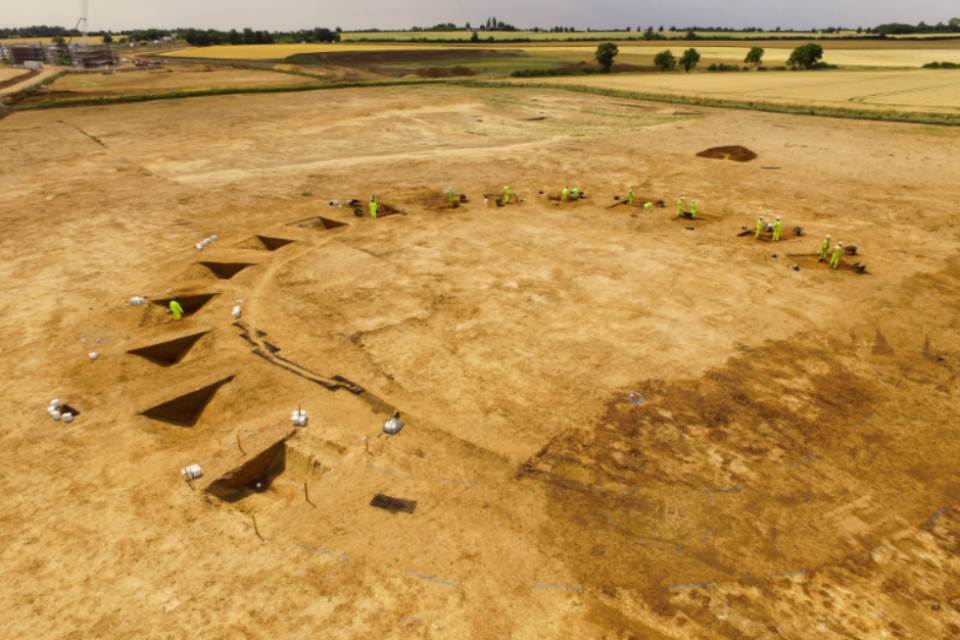
Image showing Neolithic henge monument being excavated on the A14 Cambridge to Huntingdon scheme
Neolithic henge monument being excavated on the A14 Cambridge to Huntingdon scheme

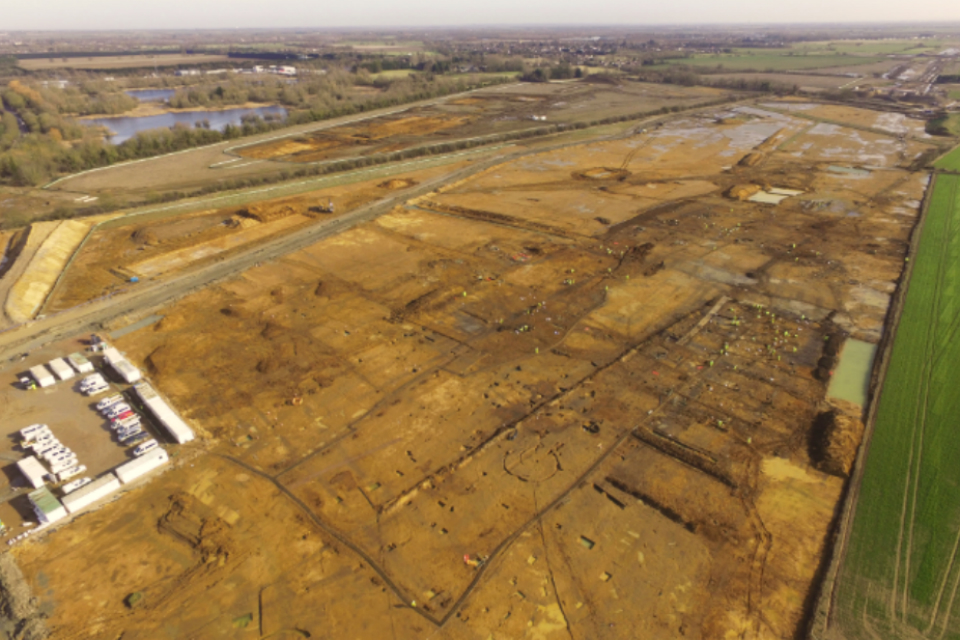
In total, around 350 hectares have been excavated – an area around half the size of Gibraltar – making it one of the biggest and most complex archaeological projects ever undertaken in the UK.

The finds mean experts now have a much better understanding of how the Cambridgeshire landscape was used over 6,000 years of occupation.

Dr Steve Sherlock, archaeology lead for the A14 Cambridge to Huntingdon project for Highways England, explains:

Highways England is delivering the biggest roads investment in a generation, and we are committed to conserving and where possible enhancing the historic environment.

In the context of a project like the A14 Cambridge to Huntingdon improvements, that means undertaking archaeological excavations to ensure we record any significant remains that lie along the 21-mile route. The archive of finds, samples and original records will be stored so that the data and knowledge is preserved for this and future generations.

We now have the evidence to rewrite both the prehistoric and historic records of the area for the last 6,000 years.

The approach to archaeology on the A14 underlines Highways England’s approach to protecting the country’s cultural heritage. Elsewhere, on the A1, work on another road upgrade recently uncovered new evidence pointing to Roman occupation in northern England earlier than previously thought.

Highways England is required by law to agree plans for how a scheme will deal with the effects it will have on its immediate environment, including local communities, wildlife and plants, and also any archaeological finds that may be found ahead of starting work on any new road or major upgrade.

On the A14 scheme, some 250 archaeologists led by archaeology experts MOLA Headland Infrastructure have dug more than 40 separate excavation areas, uncovering new information about how the landscape was used over 6,000 years and about the origins of the villages and towns along the A14 in Cambridgeshire today.

With most of the archaeological programme now being completed, finds so far date from the Neolithic, Bronze and Iron Ages, as well as Roman, Anglo-Saxon and Medieval periods. The sites uncovered include:

  • A Roman trade distribution centre which would have played a pivotal part in the region’s supply chain, and was linked to the surrounding farmsteads by trackways as well as the main Roman road between Cambridge and Godmanchester. The discovery of artefacts at the site relating to the Roman army indicates that this trade was controlled centrally.
  • The remains of 12 medieval buildings abandoned in the 12th century. Covering an area of 6 hectares, the entire layout of the village is discernible, with the earlier remains of up to 40 Anglo Saxon timber buildings and alleys winding between houses, workshops and agricultural buildings.
  • A massive Anglo-Saxon tribal territorial boundary with huge ditches, an imposing gated entrance and a beacon placed on top of a hill overlooking the region.
  • Three prehistoric henge monuments, which are likely to have been a place for ceremonial gatherings and perhaps had a territorial function. These impressive Neolithic monuments, measuring up to 50 metres in diameter, would have been very important places for our distant prehistoric ancestors. They retained their special significance over the millennia with evidence for later Anglo Saxon buildings at these sites.

Highways England has been working closely with Cambridgeshire County Council to ensure that areas of possible historical interest are investigated and preserved.

Cambridgeshire County Council’s senior archaeologist in the Historic Environment Team, Kasia Gdaniec, said:

The A14’s Archaeology Programme has exposed an astonishing array of remarkable new sites that reveal the previously unknown character of ancient settlement across the western Cambridgeshire clay plain.

No previous excavation had taken place in these areas, where only a few cropmarked sites indicated the presence of former settlements, but we now know that extensive, thriving long-lived villages were built during the Bronze Age, Iron Age, Roman and Saxon periods.

The valuable contribution of the A14’s excavation programme has also been to unlock major multi-period settlements and populate what had been an empty modern agricultural belt along the A1 west of Brampton with hundreds of people over time.

Earlier prehistoric Neolithic and Bronze Age ceremonial and burial monuments that are 5,500 and 4,000 years old, have also been investigated, but the new Roman pottery industry that has emerged from sites in the Brampton area and at the new Great Ouse bridge sets apart the host sites from others traditionally dug in the county.

The fast-paced archaeological excavations have been extremely challenging, especially during this relentlessly wet winter, but a very large, hardy team of British and international archaeologists successfully completed sites in advance of the road crews taking over to build the road structures.

There is still more to do, but we want to share the archaeologists’ excitement over what they are finding with the wider public and hope that they will enjoy the ongoing displays and interpretation that will be a legacy of this national infrastructure project.

Image showing the excavation of a Roman trade distribution centre on the A14 Cambridge to Huntingdon scheme
Excavating a Roman trade distribution centre on the A14 Cambridge to Huntingdon scheme

Over the coming months, there will be opportunities for people to see the A14 archaeology work in action, more information is available on the Mola Headland website.

Highways England is upgrading a 21-mile stretch of the A14 between Cambridge and Huntingdon to three lanes in each direction including a brand new 17-mile bypass south of Huntingdon, with four lanes in each direction between Bar Hill and Girton. The project, which includes 34 bridges and main structures, will add additional capacity, boost the local and national economy and cut up to 20 minutes off journeys.

For the latest information about the A14 Cambridge to Huntingdon improvement scheme, visit the scheme website.

General enquiries

Members of the public should contact the Highways England customer contact centre on 0300 123 5000.

Media enquiries

Journalists should contact the Highways England press office on 0844 693 1448 and use the menu to speak to the most appropriate press officer.


Link: Press release: A14 Cambridge to Huntingdon: archaeology shines light on 6,000 years of history
Source: Gov Press Releases