
Link: The Tees Valley Combined Authority (Adult Education Functions) Order 2018
Source: Legislation .gov.uk
The West Midlands Combined Authority (Adult Education Functions) Order 2018
Link: The West Midlands Combined Authority (Adult Education Functions) Order 2018
Source: Legislation .gov.uk
The Liverpool City Region Combined Authority (Adult Education Functions) Order 2018
Link: The Liverpool City Region Combined Authority (Adult Education Functions) Order 2018
Source: Legislation .gov.uk
The Cambridgeshire and Peterborough Combined Authority (Adult Education Functions) Order 2018
Link: The Cambridgeshire and Peterborough Combined Authority (Adult Education Functions) Order 2018
Source: Legislation .gov.uk
The West of England Combined Authority (Adult Education Functions) Order 2018
Link: The West of England Combined Authority (Adult Education Functions) Order 2018
Source: Legislation .gov.uk
The Greater Manchester Combined Authority (Adult Education Functions) Order 2018
Link: The Greater Manchester Combined Authority (Adult Education Functions) Order 2018
Source: Legislation .gov.uk
Press release: Beavers to return to Essex for the first time in 400 years
A pair of beavers will be heading to a new home in North Essex as part of a pioneering natural flood management scheme for East Anglia.
It is hoped the Eurasian Beavers will improve biodiversity and help to reduce local flood risk as part of a new approach to flood prevention at the historic Spains Hall Estate, just upstream of the picturesque village of Finchingfield.
The Environment Agency is working in partnership with Spains Hall Estate, the Essex & Suffolk Rivers Trust, Essex Wildlife Trust and others, with funding from partners including the Anglian Eastern Regional Flood and Coastal Committee (RFCC).
The whole story will be captured in a documentary series, due to be screened next year, overseen by renowned wildlife filmmaker Russell Savory for independent film company Copper Productions.
The beavers will have a territory covering 4 hectares, with plenty of trees to get their teeth stuck into and a boundary fence helping to keep them safe. Beavers have not been found in Essex for 400 years since they were hunted to extinction, although they have been reintroduced in small numbers in other parts of the country in recent years.
A second element of the project will involve man-made natural flood management measures being introduced on a separate strand of Finchingfield Brook at Spains Hall Estate. As well as helping to slow the flow after heavy rain, the scheme should also create wetland that will slowly release water in drier periods.
Spains Hall Estate owner Archie Ruggles-Brise said he was excited to welcome the beavers to the estate, home to his family for 250 years.
He said:
We have experienced first-hand the disruption caused by flooding in Finchingfield so we are excited to be able to contribute to this novel approach to reducing flood risk, an undeniable public good.
The added attraction of being able to pit nature against man to see who ‘does it better’ will be a rare chance to learn and adapt our approach.
We hope the project will also focus a spotlight on our little corner of rural North West Essex, a hidden gem normally only enjoyed by those in the know. We are keen to welcome more people to the area so they can see for themselves what they might be able to do back home.
The Environment Agency’s Matt Butcher said it was a “pioneering” project for East Anglia. He said:
Natural Flood Management can be a great way to reduce flood risk for communities where traditional flood defences are not appropriate. Introducing leaky dams along Finchingfield Brook should slow the flow and reduce flood peaks downstream whilst improving habitat in this fantastic landscape.
The beavers bring another exciting dimension, as we can assess how effective they are at creating amazing new wetlands and as flood engineers.
Essex County Councillor and RFCC member Simon Walsh said:
Natural Flood Management provides many opportunities to explore innovative solutions for local flood risk concerns. Working with nature, we can often achieve successful outcomes to better protect people and property from flooding, whilst at the same time improving the environment for wildlife.
Beavers are renowned for felling trees and building dams and to use them for natural flood management is really exiting, as not only are more properties protected from flood risk, but animals once lost to the British countryside are being re-introduced in lowland Britain.
Darren Tansley, river catchment co-ordinator for Essex Wildlife Trust, said:
Working with Government, other conservationists and a forward thinking landowner to reduce flood risk in Finchingfield is an ideal opportunity for Essex Wildlife Trust. But the partners that eclipse us all are surely the beavers; natural engineers of our freshwater environment that we hope will trigger an explosion of biodiversity in their wake.
Essex & Suffolk Rivers Trust chairman Andrew Davies said:
This project brings river improvement through Natural Flood Management, betters the river environment for many other species and by raising the profile of beavers, educates us all. It achieves many of our objectives as a Rivers Trust. It is a very exciting project for us to be involved with.
Notes to editors
Hunted to extinction
The Eurasian Beaver is a large semi-aquatic native mammal that was once widespread throughout Britain. They were hunted to extinction by the beginning of the 16th Century for their meat, fur and scent glands.
The species was reintroduced into parts of Scotland since 2001 and earlier this year a pair were released into the Forest of Dean in Gloucestershire, an event attended by Environment Secretary Michael Gove through a partnership with the Forestry Commission and Natural England.
Keystone species
Beavers are a ‘keystone species’ – playing an important role in wetland ecology by creating ecosystems that provide habitats for many other plant, insect and mammal species. Few other animals, aside from humans, have the ability to so drastically modify and shape their surrounding environment.
For this reason beavers are often referred to as “ecosystem engineers”. Beavers are well known for their ability to fell trees to dam shallow watercourses and create pools to make them feel safe.
The associated wetlands, interconnecting beaver canals, coppiced woodland, glades and deadwood provides rich and diverse habitat for an abundance of wildlife including plants, insects, amphibians, reptiles, birds and mammals.
For more details visit the project web page www.spainshallestate.co.uk/nfm_beavers
Contact
For Environment Agency East Anglia press office please contact (24 hours): 0800 917 9250
Link: Press release: Beavers to return to Essex for the first time in 400 years
Source: Environment Agency
Press release: AI company secures £29.5 million investment for UK expansion
The investment is set to offer a boost to the company who created 50 jobs in London following assistance from the Department for International Trade’s Global Entrepreneur Programme.
Engineer.ai’s ‘Builder’ is an AI-powered Software Assembly line which breaks projects into small re-usable features that can be customised with human interaction from around the world. In turn, this allows for the customisation of high-quality software packages in a low-cost, and time-effective manner.
DIT’s Global Entrepreneur Programme helps overseas companies set up in the UK with the offer of expert guidance and introductions to key investors within industry. Since its beginnings, the programme has generated over 5,000 jobs in the UK and raised over $1 billion of private investment for companies.
Engineer.ai’s founder, Sachin Dev Duggal will announce the investment from the Web Summit in Lisbon, where he will meet Margot James, the Minister for Digital and Creative Industries.
International Trade Secretary Dr Liam Fox MP said:
The UK is known across the globe for cutting edge innovation and our world-class tech companies. It is because of companies like Engineer.AI that last year the UK secured more tech venture capital investment than Germany, France, Spain and Ireland combined.
My international economic department is working hard to help firms go from startup to scale-up through initiatives like the Global Entrepreneur Programme which gives guidance to budding entrepreneurs around the world. The Programme has seen 900 entrepreneurs invest in the UK since 2005 – creating more than 5,000 high quality jobs and raising more than £1bn in venture capital.
Sachin Dev Duggal, Founder of Engineer.ai said:
We created Engineer.ai so that everyone can build an idea without learning to code. This investment round validates our approach of making bespoke software effortless. The capital comes at a time of rapid growth and will propel the platform into the mainstream, allowing Builder to open the door for entire categories of companies that could not consider it before.
Engineer.ai launched in June 2018 and before the end of 2020, is projected to pass the $100m revenue mark.
Minister for Digital Margot James MP said:
The UK is a haven for investment and Europe’s leading tech hub. It’s fantastic to see another one of our innovative digital firms raise the funding it needs to take a step to the next level.
We are working tirelessly to make the UK the best place in the world to start and grow a digital business.
Link: Press release: AI company secures £29.5 million investment for UK expansion
Source: Gov Press Releases
Lords launches independent bullying and harassment inquiry
Bullying investigation launched
Link: Lords launches independent bullying and harassment inquiry
Source: Parliamentary News
Press release: Works starts on reedbed to filter water at Devon beauty spot

The sustainable scheme is designed to capture and filter water runoff from the A38, nearby industrial sites and farmland before it enters the lake. The water can carry pollutants such as oil and metal residue into the lake and this has contributed to the poor water quality and reduced diversity of wildlife.
We’re joining forces with Stover Country Park and Devon County Council to deliver the project, which is also supported by Natural England.
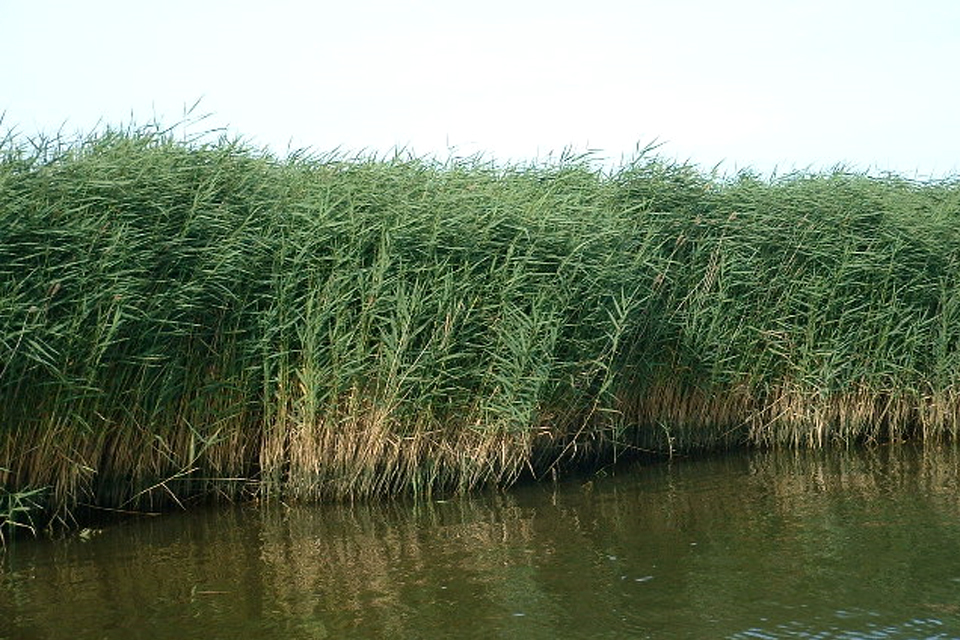
Around 3,800 square metres of reedbed will be planted upstream of the lake to act as a natural barrier and filter pollutants. It will also provide varied habitat for a range of wildlife. At the same time the park, which is designated a Local Nature Reserve and a Site of Special Scientific Interest (SSSI), will be improving sustainable drainage at the site.
Highways England Project Manager Darren Painter said:
We are delighted to be able to work with our partners on such a worthwhile environmental scheme. When completed, this work will make Stover Park more enjoyable for visitors as well as tackling pollution and providing valuable habitat for wildlife.
The twin reedbed system starts by providing a physical barrier to polluted water, then following absorption, microbes work to break down even more pollutants resulting in clearer water which will help the lake to regenerate and flourish.
It is hoped that by reducing pollution, white-water lilies, not seen at the lake since 2007, will once again cover the lake surface providing suitable habitat for a variety of dragonflies and damselflies. The reedbeds themselves will also support a range of birds, insects, reptiles, amphibians and mammals such as water rail, hairy dragonfly, grass snake, Daubentons bat and otter.
Rob Ballard, Ranger at Stover Country Park, said:
The construction of the reedbed system will help the regeneration of the lake, its water plants and waterfowl. The creation of this new habitat will enhance biodiversity, the landscape and improve the SSSI status. Visitors and school groups will be able to view the reed bed creation from a special interpretation viewing area.
Councillor Roger Croad, Devon County Council Cabinet Member with responsibility for Environmental Services, added:
The County Council is rightly proud of Stover Country Park. It’s an important habitat for wildlife and is extremely popular with visitors so we want to ensure it provides the best possible environment. This scheme will make a huge difference to the water quality of the lake at Stover which will benefit everyone.
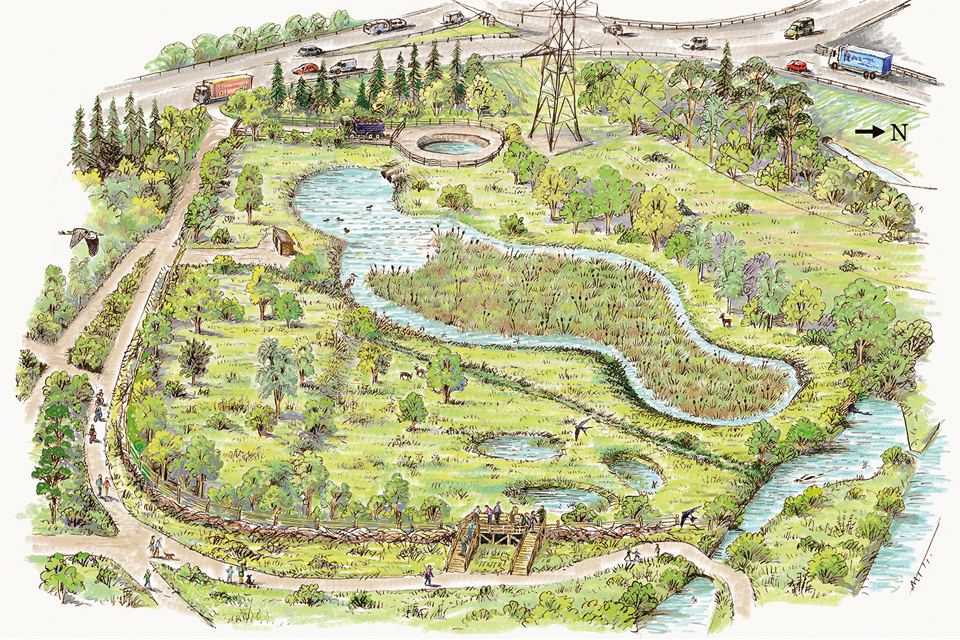
Work at the site will start in late November 2018 and is expected to continue for up to seven months. To create the reed bed 6,000 tonnes of soil will be removed, and four varieties of reed native to the area will be planted.
For most of the construction work it will be necessary to close the cycle path running through the park. Closures will be publicised in advance and posters showing a diversion route will be on display.
Some of the existing on road drainage will be modified to connect with the reed beds which will involve an expected eight nights of closures on the A38 or the roundabout slip roads.
We’re committed to a national Biodiversity Plan which is being supported by a £30 million national investment programme over the next five years.
The plan recognises road verges and associated land can be managed to provide areas of habitat, relatively free from human access, that may be scarce in the surrounding landscape.
These road verges can also be used to connect fragmented habitats in the wider landscape, enabling plant and animal populations to move and interact, and so become stronger and more resilient.
General enquiries
Members of the public should contact the Highways England customer contact centre on 0300 123 5000.
Media enquiries
Journalists should contact the Highways England press office on 0844 693 1448 and use the menu to speak to the most appropriate press officer.
Link: Press release: Works starts on reedbed to filter water at Devon beauty spot
Source: Gov Press Releases