Speech: What we talk about when we talk about green cities

‘What we talk about when we talk about green cities’

Emma Howard Boyd, Chair of the Environment Agency

Manchester Green Summit, 21 March 2018

In an article for the New Statesman in January, the editor of the Today Programme, Sarah Sands, wrote about the type of language that works in newspapers and words that work on the radio.

She shared an anecdote about working with Prince Harry, who guest edited the show over Christmas.

During an on air discussion about supermarkets and plastic, the Prince wanted the presenter to ask:

“Do we need to create a circular rather than a linear economy?”

An important question that I’m sure many people will want to discuss today.

But instead of asking that, the editor pressed the button and said to the presenter:

“Say, should there be more pressure from the government?”

This is an important lesson for those of us who care about green issues.

If we are to persuade people of our cause we should note that even Prince Harry can’t get the “circular economy” on the radio.

Of course – there are good reasons for using nerdy terms like “the circular economy”, “natural capital” and “climate resilience”.

But, the seemingly impossible scale of these issues is bigger than our day to day activities.
So, the words we use as shorthand, aren’t part of everyday language.

I want to thank the Mayor for inviting me to join you today.

Manchester is the perfect place to talk about these things.

As the cradle of the industrial revolution – and a place that has reinvented itself more than once – these huge global challenges are alive in your city.

In Manchester:

  • the circular economy is emptying your recycling bin;
  • natural capital is flowing into the Manchester Ship Canal;
  • And, climate resilience is walking through your sewers.

(I know this because I have walked in your sewers with the Environment Agency’s confined spaces team – who work to reduce flood risk from the rivers beneath Manchester’s streets.)

The challenges facing the world in the next century will be felt most by people living in cities.

The Committee on Climate Change has identified increased flooding as the biggest climate risk facing the UK.

And, in November 2017, Moody’s rating agency warned cities to address climate risk or face credit downgrades.
Climate change will bring heavier storms than the one you saw here on Boxing Day 2015.

We must ensure Manchester’s investments and ambitions are not undermined by the weather.

We need to stop force majeure from becoming run-of-the-mill.

So, what to do?

Well, the short answer is you need to attract enough industry and development to invest in resilient infrastructure, so that you can keep your power, water, communications and transport running smoothly in all conditions – while ensuring that you don’t lose the natural environment and culture that made people want to live in Manchester in the first place.

I said it was the short answer, not that it was an easy answer.

But, Manchester has faithfully reinvented itself before, so let’s roll our sleeves up and do it again.

There are many people who are here today to help – and as Chair of the Environment Agency, I want us to be your partner of choice in your ambition to become one of Europe’s leading green cities.

As an emergency responder, our first priority is your safety in severe weather.

Our broader role is to protect and enhance the environment while ensuring sustainable growth and development.

We’re working with Business in the Community to bring companies in Manchester together with local communities and the Greater Manchester Combined Authority to deliver sustainable drainage in schools and for the NHS.

For four years, we’ve been working in the GMCA – and its predecessors – allowing us to enhance the contribution of natural assets like clean air, water and green space while protecting major investments.

For instance, the £1 billion redevelopment of the old Royal Mail Depot near Piccadilly.

We are supporting GMCA’s involvement with the Rockefeller Foundation’s 100 Resilient Cities programme, helping Manchester prepare to meet the challenges of 21st century life.

Through your selection as the Government’s Urban Pioneer, we are exploring the potential for taking a natural capital approach to development decisions.

We are working to improve water quality in the city’s rivers and we have restocked the River Irwell with 10,000 course fish for local anglers.

Most of all, we are part of Manchester.

Our work, ably led by area director Lee Rawlinson, creates new jobs and local skills among colleagues and partners who are proud to call Manchester home.

The Government’s 25 Year Environment Plan puts natural capital at the heart of the industrial strategy.

It also says we will make sure “that all policies, programmes and investment decisions take into account the possible extent of climate change this century.”

We currently have 1659 kilometres of flood assets in Greater Manchester, including the recent £10 million Salford Flood Improvements Scheme, delivered with Salford City Council, which protects nearly 2,000 properties.

As well as protecting existing development, it enables over 90 hectares of regeneration in Lower Broughton and delivered 5.5 hectares of new wetland habitat, 10 hectares of wildflower meadow and 2.5 kilometres of new footpath and cycleway.

By giving people safe lanes to cycle on, we can also reduce emissions from the roads – helping everyone breathe cleaner air.

While looking at the potential for that scheme, we discovered 344 kilometres of Greater Manchester’s flood assets are within 10 metres of a cycle path.

So, I am announcing today that we will work with Chris Boardman, the walking and cycling commissioner, to make our flood assets part of the city’s cycle lanes.

This is a fantastic example of how to combine natural capital, with climate resilience, wildlife protection and the creation of green spaces.

But I realise that such projects usually require a lot of private sector investment to get off the ground.

We’re working on it.

I’ve got 25 years’ experience in the financial services industry and I’m a member of the government’s Green Finance Taskforce, which reports in to Claire Perry, who we just heard from, and the Treasury.

We’re pushing for the development of natural capital thinking in the UK to create more opportunities to generate revenue from projects that improve the natural environment.

Measuring the benefits of these will sharpen the business case for investment and help to unlock private finance for environmental projects, thereby supporting the resilience of UK infrastructure.

An understanding of natural capital will certainly help climate resilience, but how does the circular economy fit in?

At the end of 2017, Blue Planet 2 focussed minds on the impacts of plastic pollution.

That television programme – called “public service broadcasting at its finest” by the Prime Minister, has already made a difference to our lives, with the extension of the plastic bag charge.

But it seems tackling plastic pollution is a bit like spring cleaning: as soon as you start, you find more dirt.
Just last week, researchers from The University of Manchester told us they had found the highest levels of microplastics anywhere in the world in the River Tame, in Denton.

We’re working with the water industry and leading academics to investigate microplastics entering the environment.

This work will inform plans to tackle the pollution at the source, before it reaches local rivers.

In January, I was in Cornwall announcing £750,000 for a scheme to fight plastic washing up on beaches – a pilot scheme that we hope will inform further action around the country.

I am hopeful, but I don’t underestimate the challenge.

Councils are already feeling the Chinese government’s decision to ban imports of plastic waste, as this adds millions of tonnes of waste to our current systems.

Waste management businesses are the unsung heroes of the environmental movement.

Their work to ensure that the Right Waste goes to the Right Place, is an essential service.

Unfortunately, good waste businesses are too often undermined.

The economic impact of waste crime in England in 2015 was estimated to be at least £604 million – not to mention the incalculable misery and ill health it brings to people all over the country.

The Environment Agency stands with Greater Manchester police and authorities all over the country in our commitment to stamp out environmental crime.

In January, new powers were introduced for my colleagues to lock gates and block access to problem waste sites.
Last year, we were closing over 2 illegal waste sites every day and we will always push for prosecution.

For example, last year:

  • Barry Kilroe was sentenced in Manchester Crown Court to 15 months after breaching permit conditions at two waste sites that caught fire – closing the M60 motorway and the Manchester to Liverpool railway line.
  • David Shrigley (not the artist) was sentenced to 40 days for refusing to remove waste from a site in Cornwall that posed a serious fire risk and environmental harm.
  • Martin McDonagh ran away to Ireland to avoid 20 months for removing household waste in Plymouth and dumping it randomly out the back of a blue transit van. We’re pursuing him with a European arrest warrant.
  • Lee Hazel in Wiltshire was given a confiscation order of £1.97million, with an 8 year custodial sentence should he fail to pay, following the disposal of waste on a farm and the illegal importation and treatment of unpermitted waste.
  • And, on October 30, 6 former corporate officers of waste companies in Nottinghamshire got a mixture of immediate prison sentences, suspended prison sentences and community orders following illegal waste operations in the Midlands.

These are just a few examples of our action.

I am proud of my colleagues in the Environment Agency for their bravery in bringing these criminals to justice and I am pleased that following sentencing guidelines in 2014, courts began imposing higher fines for environmental offences.

However, for the damage these crimes do to the environment and to communities’ health and wellbeing; for their flagrant disregard for public safety; for the money taken out of pockets of responsible local businesses, and – in some cases – into the pockets of organised crime: I still don’t think the deterrent is strong enough.

Today, I am calling for higher fines and custodial sentences for waste criminals.

How we deal with the rising tide of waste is a global challenge, but no one should have to live next door to this disgusting criminality:

Not by the sea; not in the countryside; and not in Manchester.

Of course, I realise we won’t solve all of our waste problems with jail time.

Waste criminals are exploiting the weaknesses of a linear economy.

In this role, I’ve visited illegal waste sites, and I can tell you that packaging from even the most responsible businesses ends up there.

All companies need to consider their duty of care in fully understanding where their waste products go.
I look forward to hearing from Marks & Spencer’s Mike Barry – speaking next – about this area of their business.

Everyone should be challenging themselves to do more.

A circular economy is a useful target to aim for.

Ultimately, the circular economy, natural capital and climate resilience are simply useful pointers to a better way of organising ourselves.

And they apply in Manchester as much as anywhere else in the world.

If they sound complicated – that’s because life is pretty complicated.

Maybe we should take the advice of the American writer Nora Ephron who said:

“It will be a little messy, but embrace the mess. It will be complicated, but rejoice in the complications.”

As we try to understand these vast, complicated challenges today at the Green Summit, I want to leave you with one very simple thought:

The Environment Agency is here to help.

Thank you.

Link: Speech: What we talk about when we talk about green cities
Source: Environment Agency

Press release: MOD confirms the death of Corporal Jonathan Bayliss, Royal Air Force Aerobatic Team (The Red Arrows)

Corporal Bayliss was killed when the Hawk T1 aircraft he was flying in crashed at RAF Valley at approximately 1330hrs on Tuesday 20 March 2018.

A Police investigation and a full Service Inquiry into the crash has been initiated. It would be inappropriate to speculate on the causes of the incident at this time.

Sergeant Will Allen, a close colleague of Corporal Jon Bayliss and the leader of the Red Arrows’ group of travelling support engineers, known as the Circus, for 2018 said:

Jon had the ability to motivate and inspire a team and those around him – no matter the rank, role or person. He was so proud to have been chosen to join the Circus team for 2018 and, in being one of the small group of engineers whose job it was to fly in a Red Arrows jet, had fulfilled a schoolboy dream.

Jon had a big a presence on the Squadron and with his wide beaming smile, and dry humour, could lighten up any dull moment or lift spirits when needed. Both inside and outside of work, he was a generous, kind and caring man who could also always be relied upon.

Having worked with Jon both at the Red Arrows and elsewhere in the Royal Air Force, I know how tirelessly he approached each task and was, what many would describe, a genuine grafter.

Squadron Leader Richard Bland, Senior Engineering Officer of the Royal Air Force Aerobatic Team, the Red Arrows, said:

Everyone on the team has a great story about Jon and, without exception, he was known as a top bloke with an infectious smile, cheeky grin and possessing a dry sense of humour that had the ability to fill a room with laughter. At the same time, Jon was the ultimate professional and embodiment of excellence. As the leader of a team responsible for replenishing the jet’s dye systems last year, he led exceptionally well, looking after his team mates selflessly and was a true inspiration.

We have been touched by the messages of condolence received from the wider Air Force, from people who knew Jon across ranks and trades and it is clear people loved him. As a skilled leader, ambassador for the Royal Air Force and knowledgeable technician, Jon had all of the attributes and qualities that define the Red Arrows.

Wing Commander Andrew Keith, Officer Commanding, Royal Air Force Aerobatic Team, the Red Arrows said:

The thoughts of each and every member of the Red Arrows team are with Corporal Jonathan Bayliss’ family and friends. He was a dedicated, skilled and experienced Royal Air Force engineer who we will miss deeply. As a highly-trained technician, Corporal Bayliss made a huge contribution to ensuring the Red Arrows’ aircraft were able to carry out displays and flypasts to millions of people across the globe and I know how proud he was to be part of that team effort.

Corporal Bayliss was a popular colleague and someone whom others looked up to, being able to draw inspiration from his knowledge and strength of character. The Red Arrows family is a close one – the Squadron is a small team who live and work side-by-side and the overwhelming number of condolence messages, received from around the world, have been enormously comforting to us all and we are very grateful for that.

Air Vice-Marshal Warren James CBE, Air Officer Commanding (AOC) 22 Group – of which the Royal Air Force Aerobatic Team is part of – said:

Our heartfelt condolences go to Corporal Jonathan Bayliss’ partner and family at what is a terrible, tragic time. His death has understandably come as a great shock to his colleagues and fellow team mates at the Red Arrows. The incident is a reminder of the risk present with all types of flying but also of the hard work and commitment shared by both air and ground crews alike.

All of our thoughts are now with Corporal Bayliss’ family, friends and his colleagues as they try to come to terms with his loss and investigations take place into establishing what happened.

Defence Secretary Gavin Williamson said:

It is with deep sadness that I heard of the death of Corporal Jonathan Bayliss whilst flying with the Red Arrows on Anglesey. It’s clear from his colleagues that he was an incredibly skilled engineer and held in the highest regard as a teammate, a friend, and a shining example of what the British Armed Forces stand for. Our thoughts and prayers are with his family and loved ones at this terrible time.

Corporal Jonathan Bayliss, 41, was an Aircraft Technician (Mechanic) with the Royal Air Force Aerobatic Team.

He was born in Dartford, Kent and grew up in Hartley. He attended Axton Chase School in Longfield and studied at West Kent College before going on to complete a HND in engineering management at the University of Greenwich.

Before joining the Royal Air Force in 2001, he worked at Brands Hatch motor racing circuit.

Prior to becoming a member of the Red Arrows team in January 2016, Corporal Bayliss’ Royal Air Force career involved working on squadrons at RAF Coltishall and RAF Coningsby as well as on overseas deployments.

As a mechanical engineer with the Red Arrows, he had supported successful tours to the Far East, including China, as well as the Middle East and mainland Europe.

In 2017 he was a leader of the Red Arrows’ dye team, helping to replenish the jets’ famous smoke systems wherever they landed.

For 2018, he had been selected to be one of the Circus team – the small group of highly-trained engineers who travel with the aircraft and provide technical support to the Red Arrows when the aircraft operate away from their home base.

Bayliss 2
Corporal Jonathan Bayliss


Link: Press release: MOD confirms the death of Corporal Jonathan Bayliss, Royal Air Force Aerobatic Team (The Red Arrows)
Source: Gov Press Releases

Press release: Foreign Secretary announces 250 new diplomatic roles and ten new sovereign missions overseas

At least 250 new diplomatic roles will be created overseas in the coming two years as the Foreign and Commonwealth Office (FCO) invests in a major expansion of the UK’s diplomatic service, an uplift of almost 15% on the number of British diplomats overseas, the Foreign Secretary announced today.

Ten new sovereign missions, either Embassies or High Commissions, will also be opened over the next two years. This means that the UK will have more sovereign missions around the world than any other European nation.

As part of the Government’s Global Britain vision, this expansion of the UK’s global presence and increase in the number of diplomats underscore the Government’s commitment to strengthening relationships with old allies and forging new partnerships around the world as the UK leaves the EU.

Commenting on the expansion, the Foreign Secretary said:

I am determined that we will seize the opportunity of leaving the EU to become a more outward-looking country, which promotes free trade, projects our values and defends the international rules based system. That is the best way to serve our interests overseas and to protect the security and prosperity of people here at home.

The expansion of our overseas network with at least 250 more diplomats and 10 new overseas missions will enable us to do all this. It reflects the ambition of Global Britain and will make the UK’s overseas network of sovereign missions the largest of any European country.

As we leave the EU, we will have a bigger global footprint and we will use our buccaneering spirit to go out and secure the right outcomes for Britain.

Today’s announcement comes on the day that the UK opened a new diplomatic office in Chad’s capital, N’Djamena, which is the first UK mission in the country and will support the work of Foreign and Commonwealth Office and Department for International Development staff.

The additional roles overseas build on changes to the diplomatic service that we have already made to support the Government’s preparations for leaving the EU. These have included rebalancing the overseas network immediately following the referendum to create an additional fifty roles in the European network and boosting staff numbers by 150 in London and overseas, to support Brexit work as a result of additional Treasury funding of £14.5 million.

The uplift announced today will be funded through a further £15.1m for EU Exit preparations in 2018-19 already announced by the Treasury at the Spring statement this month and a proportion through a further £90m additional funding now agreed by the Treasury to support the Government’s Global Britain ambitions over the next two years.

Further information

Media enquiries

For journalists

Link: Press release: Foreign Secretary announces 250 new diplomatic roles and ten new sovereign missions overseas
Source: Gov Press Releases

Press release: Labour market statistics for Scotland

Commenting on today’s labour market statistics for Scotland, Scottish Secretary David Mundell said:

It is encouraging that Scotland’s unemployment rate has fallen over the year. However, the most recent quarterly snapshot shows an increase of people in Scotland out of work and I urge the Scottish Government to use its considerable powers to strengthen the economy and help create the right conditions for sustained long term employment.

Further information:

• Employment in Scotland decreased by 8,000 over the previous quarter (August-October 2017) and increased by 35,000 over the year to stand at 2,644,000.

• The Scottish employment rate decreased by 0.2 percentage points over the quarter to stand at 74.8%. The rate is below the UK average of 75.3%.

• Unemployment in Scotland increased by 5,000 over the quarter and is down 9,000 over the year. The level now stands at 118,000.

• At 4.3%, the Scots unemployment rate is now in line with that for the UK as a whole (also at 4.3%).

• Economic Activity levels marginally decreased by 4,000 over the quarter and now stands at 2,763,000. The Economic Activity rate is stable over the quarter (0.0 p.p. change) to stand at 78.1%.

Link: Press release: Labour market statistics for Scotland
Source: Gov Press Releases

The Financial Services and Markets Act 2000 (Carrying on Regulated Activities by Way of Business) (Amendment) Order 2018

This Order amends the Financial Services and Markets Act 2000 (Carrying on Regulated Activities by Way of Business) Order 2001 (S.I. 2001/1177) (the “By Way of Business Order”). The By Way of Business Order defines, in relation to certain specified activities, the circumstances in which a person carrying on one of those activities is, or is not, to be regarded as carrying on that activity by way of business for the purposes of section 22 of the Financial Services and Markets Act 2000 (c. 8).

Link: The Financial Services and Markets Act 2000 (Carrying on Regulated Activities by Way of Business) (Amendment) Order 2018
Source: Legislation .gov.uk

Press release: National Democracy Week Awards announced to mark suffrage centenary

The Minister for the Constitution, Chloe Smith, announced the awards in Parliament today, which will recognise national leaders in the area of democratic engagement.

National nominations will be divided into four categories:

  • Young Advocate of the Year Award
  • Diversity Champion of the Year Award
  • Changemaker of the Year Award
  • Collaboration of the Year Award

The Awards, held in the 100th year of the first women getting the right to vote, will highlight the work of national leaders in democratic engagement. Anyone may nominate any individual, organisation or group and nominations close on 27 May 2018.

Activities will be held over National Democracy Week and from today, organisations and members of the public will be able to upload their events to the website.

Minister for the Constitution, Chloe Smith MP, said:

The Democracy Awards will recognise outstanding achievements in democratic engagement and the Suffrage Centenary is a great opportunity to highlight the work so many people are doing in this area, often without reward.

I encourage you all to nominate someone who you believe deserves to be recognised for their work in championing or improving society’s relationship with democracy. I am looking forward to celebrating all of the people who are going above and beyond to promote one of our most cherished assets.

Chief Executive of YMCA England & Wales, Denise Hatton said:

Young people have a huge role to play in democracy and it is important that we get them involved as early as possible.

By being involved in events taking place across National Democracy Week, young people can get a taste of the democratic process which will give them the understanding they need to actively participate in society and engage in their local communities.

There are many young people across the country already in leadership roles, engaging and changing the world around them. National Democracy Week will bring together organisations who work all year round to support young people with civic engagement and will act as a focal point for other young people to get involved.

YMCA are proud to be supporting this week and will be running activities across the country, enabling young people to shape their communities and partake in society.

Link: Press release: National Democracy Week Awards announced to mark suffrage centenary
Source: Gov Press Releases

Press release: North East man fined for running illegal scrapyard

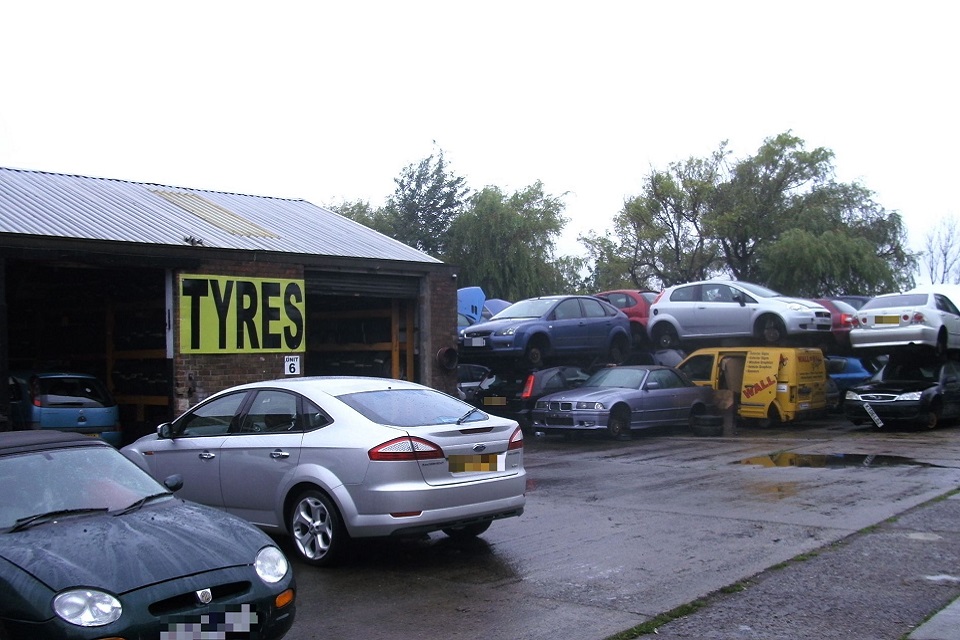
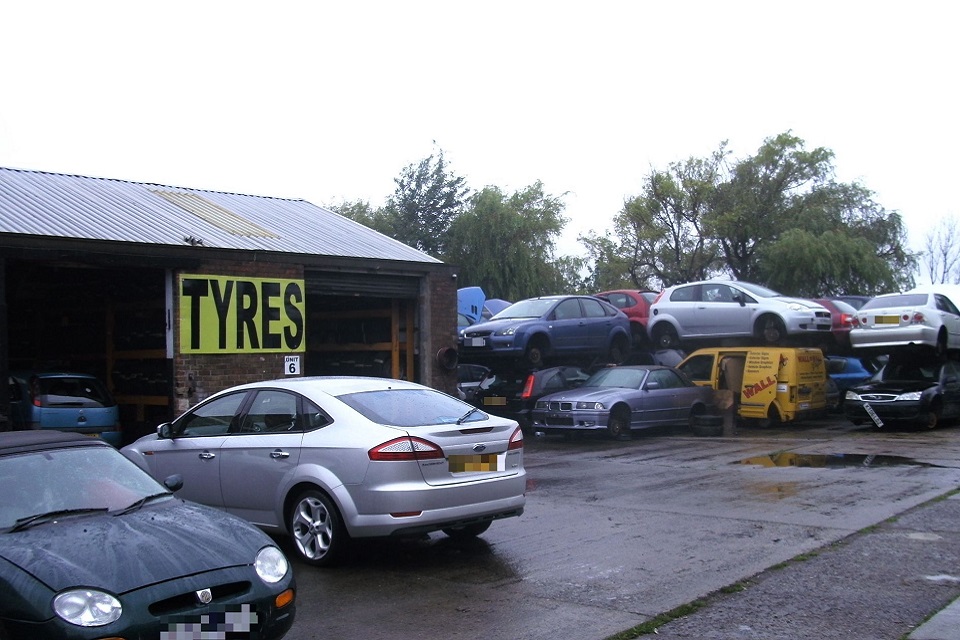
A man has been fined for running an illegal scrapyard in Teesside.

Anthony Hanley, 34, of Marton Burn Road in Middlesbrough, appeared at Teesside Magistrates’ Court on Tuesday 20 March where he pleaded guilty to two charges of operating a scrapyard without a permit.

He was fined £800, ordered to pay costs of £4,000 and a victim surcharge of £80.

Prosecuting on behalf of the Environment Agency, Simon Crowder told the court that Hanley is the owner of Cliffs Autos which deals with end of life vehicles.

To take end of life scrap vehicles on to a site, the operators need an environmental permit for disposal of vehicle waste to ensure no risk to the environment by preventing fluids from going into the ground or into drainage systems.

Illegal site

On 25 August 2016 Environment Agency officers attended the illegal site at King George Terrace in Middlesbrough where they saw a sign offering to buy vehicles ‘dead or alive’, leading them to believe Hanley wanted to buy scrap vehicles.

Officers noticed there was in excess of 30 end of life vehicles stored at the premises. The defendant was co-operative with officers and was told to clear the site within 28 days.

On 12 September the same year, officers returned to the site and saw the number of vehicles had now reduced, and a further visit in December saw the site had been cleared.

But on 7 April 2017, the two Environment Agency officers returned to the site to see it had resumed operation again, with in excess of 30 end of life vehicles present, with some leaking fluids on to the ground.

Image hsows scrap cars on site

Illegal sites ‘impact on the environment’

Rachael Caldwell, Enforcement Team Leader at the Environment Agency said:

Hanley was given the opportunity to clear the vehicles of waste but when we returned to check the site it was full again.

Environmental permits are needed for a reason – they ensure operators have the correct procedures and equipment in place to protect the environment.

Not only do illegal sites impact on the environment but they undermine legitimate businesses. Every day our officers are out on the ground identifying illegal waste sites and taking the necessary action.

To report an illegal waste site contact Crimestoppers anonymously on 0800 555 111.


Link: Press release: North East man fined for running illegal scrapyard
Source: Environment Agency

The Secretaries of State for Health and Social Care and for Housing, Communities and Local Government and Transfer of Functions (Commonhold Land) Order 2018

This Order in Council is made under sections 1 and 2 of the Ministers of the Crown Act 1975. It makes provision for, and in connection with, the transfer of functions from the Secretary of State for Health to the Secretary of State for Health and Social Care and from the Secretary of State for Communities and Local Government to the Secretary of State for Housing, Communities and Local Government. It also makes provision for the transfer of functions in relation to commonhold land.

Link: The Secretaries of State for Health and Social Care and for Housing, Communities and Local Government and Transfer of Functions (Commonhold Land) Order 2018
Source: Legislation .gov.uk