The United Nations (International Residual Mechanism for Criminal Tribunals) Order 2018

This Order enables the United Kingdom to cooperate with the International Residual Mechanism for Criminal Tribunals in the investigation and prosecution of persons accused of Mechanism crimes and the punishment of persons convicted of such crimes. The Mechanism was established by United Nations Security Council resolution 1966 (2010) to complete the tasks of the international criminal tribunals for the former Yugoslavia and Rwanda.

Link: The United Nations (International Residual Mechanism for Criminal Tribunals) Order 2018
Source: Legislation .gov.uk

The Commonwealth Heads of Government Meeting (Immunities and Privileges) Order 2018

This Order confers immunities and privileges upon the representatives of the sovereign Powers (other than the United Kingdom) at the Commonwealth Heads of Government Meeting, which is due to be held in London and Windsor in the United Kingdom beginning on 16th April 2018.

Link: The Commonwealth Heads of Government Meeting (Immunities and Privileges) Order 2018
Source: Legislation .gov.uk

The Naval, Military and Air Forces Etc. (Disablement and Death) Service Pensions (Amendment) Order 2018

This Order amends the Naval, Military and Air Forces Etc. (Disablement and Death) Service Pensions Order 2006 (“the principal Order”), which makes provision for pensions and other awards in respect of disablement or death due to service before 6th April 2005 in the naval, military and air forces. The principal Order contains the scheme which provides the pensions and other awards.

Link: The Naval, Military and Air Forces Etc. (Disablement and Death) Service Pensions (Amendment) Order 2018
Source: Legislation .gov.uk

The Merchant Shipping (International Load Line Convention) (Amendment) Regulations 2018

These Regulations implement the International Convention on Load Lines, 1966, as modified by the Protocol of 1988 relating to the Convention. The Regulations also implement all amendments to the Convention and Protocol as at the date of this statutory instrument. All future amendments to Annexes I, II and III to the Convention will be automatically incorporated into the Regulations by way of ambulatory reference (regulation 5). The Regulations apply the provisions of the Convention, with certain limited exceptions, to United Kingdom ships and to non-United Kingdom ships in United Kingdom waters meeting the size or weight criteria in the Convention, including ships from countries which are not parties to the Convention, and which are engaged on international voyages.

Link: The Merchant Shipping (International Load Line Convention) (Amendment) Regulations 2018
Source: Legislation .gov.uk

The Merchant Shipping (Prevention of Pollution from Noxious Liquid Substances in Bulk) Regulations 2018

These Regulations implement the revised version of Annex II of the International Convention for the Prevention of Pollution from Ships, 1973, as modified by the Protocol of 1978 (“the MARPOL Convention”). Annex II contains regulations for the Control of Pollution by Noxious Liquid Substances in Bulk. As a consequence of these Regulations, the Merchant Shipping (Dangerous or Noxious Liquid Substances in Bulk) Regulations 1996 (S.I. 1996/3010) and amending instruments (S.I. 1998/1153 and S.I. 2004/930) which implemented the previous version of Annex II, are revoked. Other consequential amendments and partial revocations are also made. Future amendments of provisions of the Convention and other instruments specified in these Regulations will be automatically incorporated into the Regulations by way of ambulatory reference (regulation 4).

Link: The Merchant Shipping (Prevention of Pollution from Noxious Liquid Substances in Bulk) Regulations 2018
Source: Legislation .gov.uk

Press release: Pupils help their schools prepare for flooding

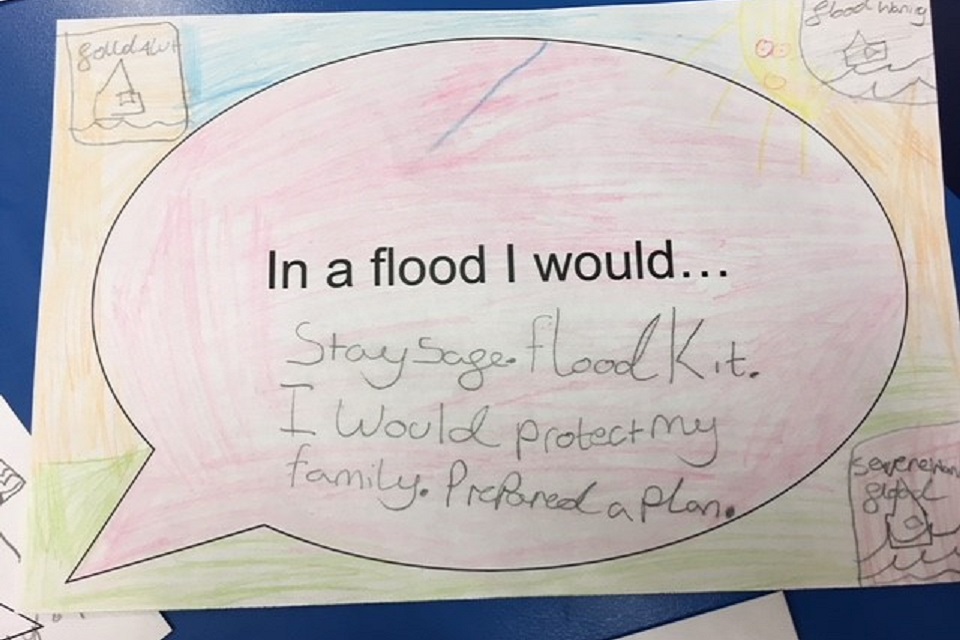
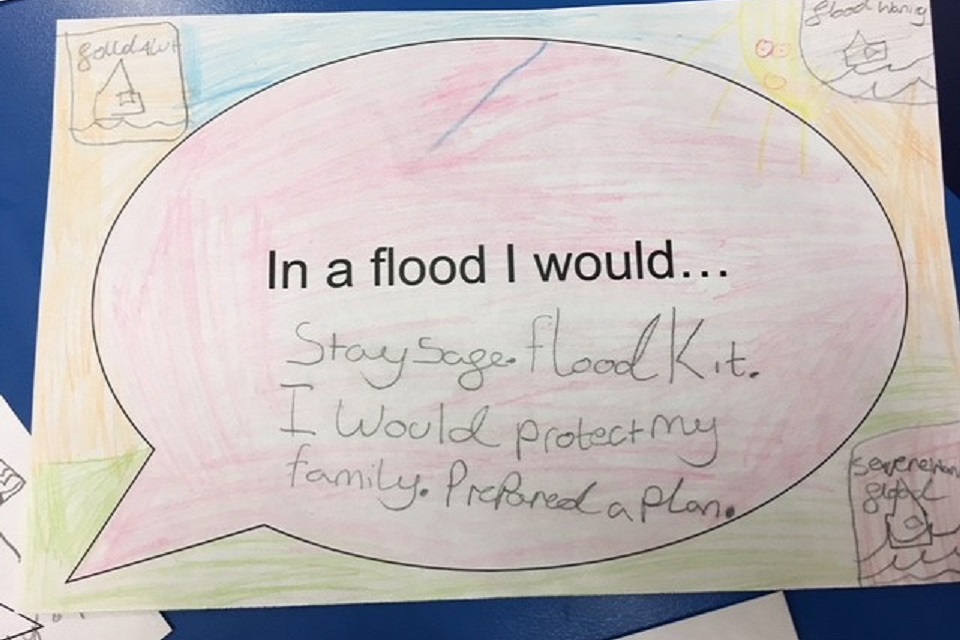
Community Engagement Officer Taryn Al-Mashgari has helped youngsters develop flood plans and ‘grab bags’ so they are prepared in the event of a flood.

The series of themed weeks – which have so far involved 1,200 primary school children – kicked off at North Fawdon Primary School in Newcastle in January, before moving to South Tyneside ahead of the start of Monkton flood alleviation scheme.

Taryn works with the children in all year groups to help them understand different types of flooding and how it happens. They learn what to do before and during a flood, and learn what the flood warning symbols used by the Environment Agency mean.

They then record mock radio broadcasts about flooding in their community.

Image hsows content from one of the school events

Important to understand flooding

Each week ends with a community event attended by parents, Northumbrian Water and Northern Powergrid where children launch the flood plan they’ve created for their own school.

At schools in South Tyneside – St James’ RC Primary School and Hebburn Lakes Primary School – Monkton flood scheme project manager Tom Pitman, working for South Tyneside Council and the Environment Agency – and partners at the Tyne Rivers Trust attended to give parents an overview of the project. Taryn said:

It’s important that younger people understand what flooding is, how it happens and what the different organisations that deal with flooding do.

We also teach them how to prepare for and what to do during a flood in a series of interactive sessions. It leads to them being able to create a flood plan for their own school, and in turn their parents having a greater understanding.

We know it is absolutely devastating to be flooded and that’s why we work closely with our partners to develop schemes to reduce the risk of flooding – such as the project due to start at Monkton.

But we can never completely eliminate the risk and that’s why we work hard to educate people and our future generations about what they can do to keep themselves and their valuables safe.

Image shows one of the school events

Prepare, Act, Survive

Taryn will visit Toner Avenue Primary School in Hebburn before moving on to Washington with flood weeks at Springwell Village and Albany Village Primary Schools.

She has also developed a teaching pack which will be delivered by secondary schools across the region as part of Personal, Social, Health and Economic (PSHE) curriculum.

The Environment Agency is urging people to ‘Prepare, Act, Survive’ by visiting the Floods Destroy website and do three things to prepare for flooding.

  • check your postcode and find out if you are at risk of flooding
  • sign-up for free flood warnings if you are at risk
  • view and save the 3-point flood plan so you know how to ‘Prepare, Act, Survive’ in a flood


Link: Press release: Pupils help their schools prepare for flooding
Source: Environment Agency

Publication: Letter dated 08/02/2018 from Lord Ashton of Hyde to Lord Marlesford regarding the impact of the Data Protection Bill on parish councils.

Data Protection Bill [HL]: Letter dated 08/02/2018 from Lord Ashton of Hyde to Lord Marlesford regarding the impact of the Data Protection Bill on parish councils.

Link: Publication: Letter dated 08/02/2018 from Lord Ashton of Hyde to Lord Marlesford regarding the impact of the Data Protection Bill on parish councils.
Source: Data Protection Bill

Press release: Video hearing pilot launched

The first hearings will take place this spring, and will enable people to have their tax appeal heard through a video hearing. This will save them the time and money spent travelling to court and waiting for their hearing – which can mean taking an entire day off work. It will also make it easier for people with health problems that can make it harder to attend a physical court building.

By testing and evaluating the pilot, HMCTS will explore how video hearings might be used to improve access to justice and help cases progress faster.

Video technology is already used in criminal courts to allow some victims and witnesses to give evidence without having to come face to face with the accused – examples include a 97 year old victim of an aggravated burglary, and a witness to a gang murder who was not comfortable giving evidence in court. This pilot is taking this concept a step further – with all attendees, including the judge, participating in the hearing via video technology. Making use of technology to hold video hearings for technical parts of cases that mainly involve legal professionals and judges could save court time and help cases to progress faster. Technology is used in a variety of ways in courts and the various ways in which video links are used in proceedings are kept under regular internal review by HMCTS.

Justice Minister Lucy Frazer, said:

We are spending £1 billion on transforming and modernising the justice system. Video hearings have the potential to improve access to justice and speed up cases.

This pilot will provide important information – together with an increasing body of evidence from other countries – to drive innovation to make the wider system quicker, smarter, and much more user-friendly.

HMCTS are writing to potential participants this week to invite them to take part in the pilot. The video hearings will take place over the internet, with each participant logging in from a location of their choice, using a webcam and, for the purposes of the pilot, the judge located in the court room.

HMCTS are working closely with the judiciary to ensure the majesty of a physical courtroom will be upheld. The choice to use this new type of hearing would always be made by the Judge in the case. It will be possible for private online conversations to be had before the hearing, and the format and process of the hearing will be the same as in a usual court room.

The move is part of the Government’s £1 billion investment to modernise the court service, making it swifter, simpler, and easier to access for everyone. HMCTS is exploring how justice can best be served in the digital age.

Other examples of the Government’s court reforms which are making access to justice easier for everyone include:

  • Launching the first divorce application services online at four sites – making the process easier to understand for divorce applicants and helping to progress applications.
  • A new paperless system, in operation at Lavender Hill Magistrates’ Court, which means thousands of offenders caught dodging fares or using fraudulent tickets can now be punished more swiftly and effectively.
  • A new service which allows people to submit their tax appeals online – drastically cutting the number of applications being returned as incomplete or inaccurate.

Link: Press release: Video hearing pilot launched
Source: Gov Press Releases

Press release: Government on track to hit target of 2,500 new prison officers ahead of schedule

Almost 2,000 prison officers have been recruited since the launch of a campaign to bring in 2,500 additional officers by the end of this year, new figures released by Justice Secretary David Gauke have revealed today (15 February 2018).

And a further 1,582 new recruitsghave been offered roles and are booked onto Prison Officer Training (POELT) courses, meaning the Government is on target to recruit the 2,500 officers nine months ahead of schedule.

Figures released today show there was a net increase of 1,970 officers from October 2016 to December last year, up from 17,955 to 19,925. The boost in staffing numbers will help deliver our new Offender Management in Custody model which will provide prisoners with a keyworker to support them in custody.

The recruitment efforts form part of a wider drive to ensure that all prisons are fully staffed so that they can deliver safe and decent regimes. Prison officer recruitment will continue over the coming months and new recruits, alongside existing staff, are being given improved Suicide and Self Harm (SASH) prevention training, with 14,300 staff members having now received it.

Justice Secretary David Gauke said:

I want to commend our hard-working prison officers who do a vital job in protecting the public every day, often in very challenging, difficult and dangerous circumstances. These figures show we are on target to recruit 2,500 additional prison officers.

I am determined to tackle the issues in our prisons head on and I am committed to getting the basics right so we can focus on making them safe and decent places to support rehabilitation. Staffing is the golden thread that links the solutions we need to put in place to drive improvement, so I am delighted our recruitment efforts are working.

Today’s announcement shows that the government’s nationwide drive to recruit the best talent from around the country into the prison service – regardless of age or background – is working.

Governors are being given greater flexibility over their local recruitment and encouraged to engage with new schemes and initiatives to attract the best and most committed talent.

By having more staff on the ground, staff will be better supported to do the job they came into the prison service to do, and spend more time reforming offenders.

Notes to editors

Since publication of the White Paper:

  • we are making a substantial investment in marketing and targeted recruitment to generate even more interest in these valuable roles
  • we have increased our POELT training capacity by more than 75% for this year and next

Starting pay for a National based Prison officer ranges from £20,751 to £23,052 for a 37 to 41 hour week and this increases to a maximum range of £23,122 to £25,685 for the same hours.

Find out more about Her Majesty’s Prison and Probation Careers

Link: Press release: Government on track to hit target of 2,500 new prison officers ahead of schedule
Source: Gov Press Releases