Press release: Cooperation the key to tackling pennywort

The Environment Agency has called on Thames river users to keep working together to control floating pennywort. More than 63 tonnes of the invasive water plant has been removed from the Thames over the winter and spring but there is still more to do.

Because of the efforts of the Environment Agency and some local groups, where there were large rafts of the plant in some areas, there are now only a few small traces of regrowth. The Environment Agency continues to monitor and remove new growth of this very invasive and destructive plant. However, the summer is the peak season for floating pennywort growth which can have detrimental impacts on watercourses. Large blooms of the plant affect the oxygen content of rivers, reduce biodiversity, can damage important habitats and potentially increase flood risk.

As part of the annual maintenance programme, the Environment Agency has been managing floating pennywort for several years in locations such as the River Wey and the Foudry Brook. But more help and support is needed from the public and river users if we are to succeed in controlling the spread of this destructive plant.

Daryl Buck, from the Environment Agency, said:

We actively monitor more than 200km of the River Thames. Our aim is to eradicate floating pennywort from the main River Thames completely, but we can only achieve this with the continued cooperation of key members of the community.

Early intervention is the most efficient way to keep on top of this damaging plant as it can grow up to 20cm per day! We are urging riverside owners to keep an eye on their watercourse and report any new growth to us. We also would like to hear from river users such as anglers, boaters and canoeists who may come across the plant when out and about enjoying the river.

One success story so far has been the work undertaken earlier this year in the Abbey River near Chertsey. Floating pennywort established itself last season in the popular watercourse, causing all kinds of issues for river users like anglers and kayakers as well as landowners.

Ian Penny, secretary of a local angling club, said:

This non-native plant is very aggressive and plays havoc for fish and plant life. The Environment Agency did an absolutely fantastic job of totally removing the floating pennywort from over a mile stretch of the river. Everyone who enjoys the river has a responsibility to help the situation by reporting any new sightings via www.planttracker.org.uk.

Richard Atkinson, Policy Officer for British Canoeing, said:

British Canoeing takes its environmental responsibility very seriously and wants all water users to have fun and enjoy the natural environment. Non-native invasive species like pennywort have a significant impact on biodiversity, the environment and paddling.

We will be encouraging our members to report any sightings via the app and by reinforcing the importance of the check, clean, dry procedure after paddling.

People can visit www.planttracker.org.uk or download the Plant Tracker app co-developed by the Environment Agency to enable river users to record sightings of floating pennywort to help concentrate removal efforts where they are most needed.

Floating pennywort was introduced into the UK as an ornamental plant. For more information pond owners are encouraged to go to the plantwise campaign at http://www.nonnativespecies.org/beplantwise/pondowner/index.cfm

Ends

Notes to Editors

Photographs available on request

Floating pennywort is an aggressive invasive non-native species of plant, introduced to this country as an ornamental aquatic plant. It tends to favour slower moving watercourses. It is now widespread in southern and eastern England, including parts of the River Thames and it’s backwaters between Reading and Kingston and the River Wey.
The Environment Agency is under no obligation to remove floating pennywort, however we do have discretion to remove it under our statutory powers. Riparian owners are also not obliged to remove it, unless it can be shown that they planted it, though if it is on their land they do have a duty to take reasonable action to ensure it does not cause damage to neighbouring properties.
What you can do to help
Please continue to help us. If you see floating pennywort in the river Thames or its tributaries please report its location by:

• Emailing us: enquiries_THM@environment-agency.gov.uk

Not sure if it is floating pennywort?

• Look at the plant tracker website or download the app at www.planttracker.org.uk
• You can also report sightings using the plant tracker app.
Are you a boater?
• Don’t pass though through clumps of the plant. It can break off and spread downstream or carry it upstream.
• Visually check your craft regularly and, if safe to do so, remove any visible weed, placing it well away from any river or other water body.

All media enquiries: 0800 141 2743. Or e-mail us at southeastpressoffice1@environment-agency.gov.uk
Follow us on Twitter at @EnvAgencySE

Link: Press release: Cooperation the key to tackling pennywort
Source: Environment Agency
Rail Passenger (Compensation)

A Bill to make provision for a single compensation scheme for passengers across train operators; to require train operators to pay automatic compensation to season ticket holders and certain other passengers where certain standards of service are not met; to allow train operators to recover compensation paid to passengers from Network Rail in certain circumstances; to establish a body to administer rail compensation; and for connected purposes.

Link: Rail Passenger (Compensation)
Source: Public Bills

Press release: Recall – SAM XT Extremity Tourniquet

First responders and people who participate in outdoor activities, such as mountaineering and hiking, should check if they have a SAM XT Extremity Tourniquet and return it to their distributor for a new one.

A problem in the sewing operations has been identified which could cause the seam holding the buckle to the belt to fail when used on a patient to stop blood flow. Although not widely used in the UK, tourniquets are used for critical, emergency situations, and so it’s important people are aware if they own an affected product.

Only a small number of lots are being recalled. This product has been sold worldwide since March 2017. No other types of tourniquets are affected.

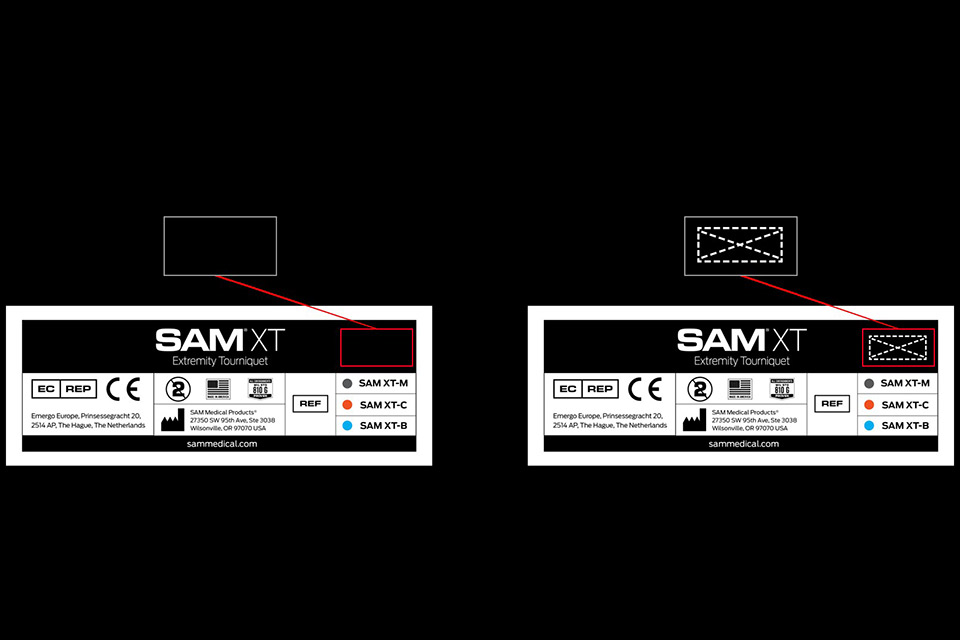
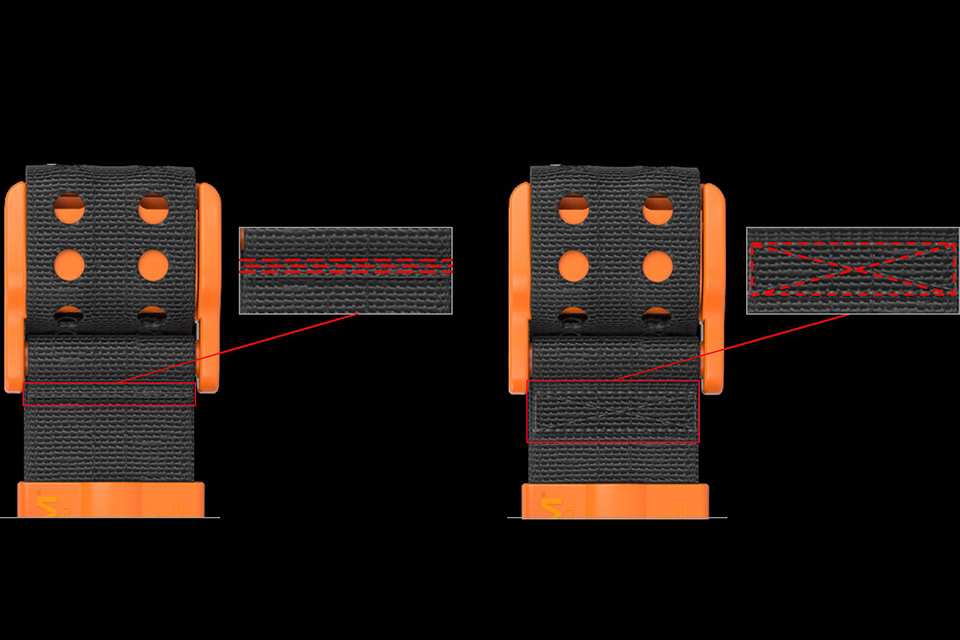
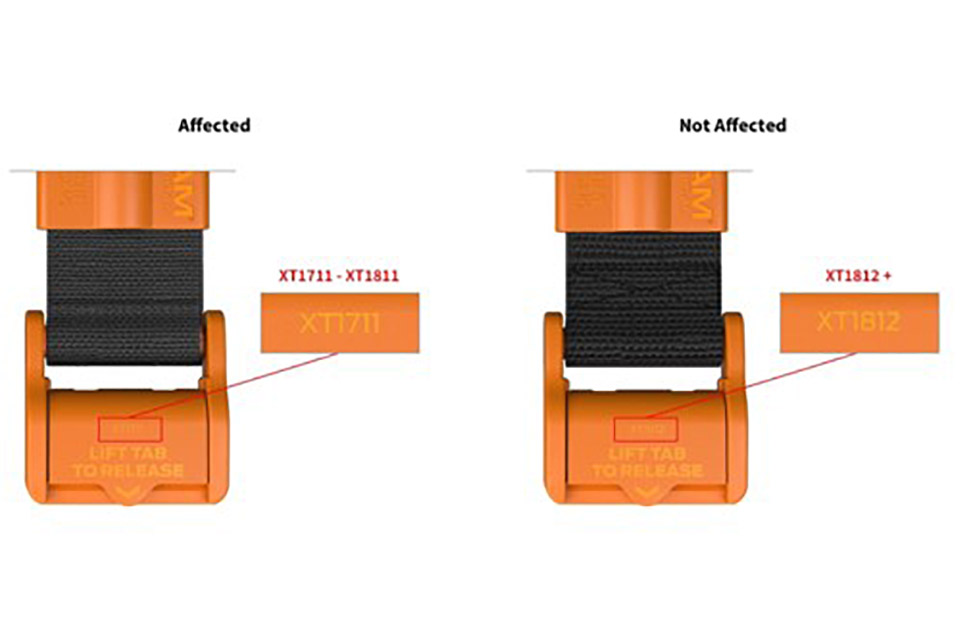
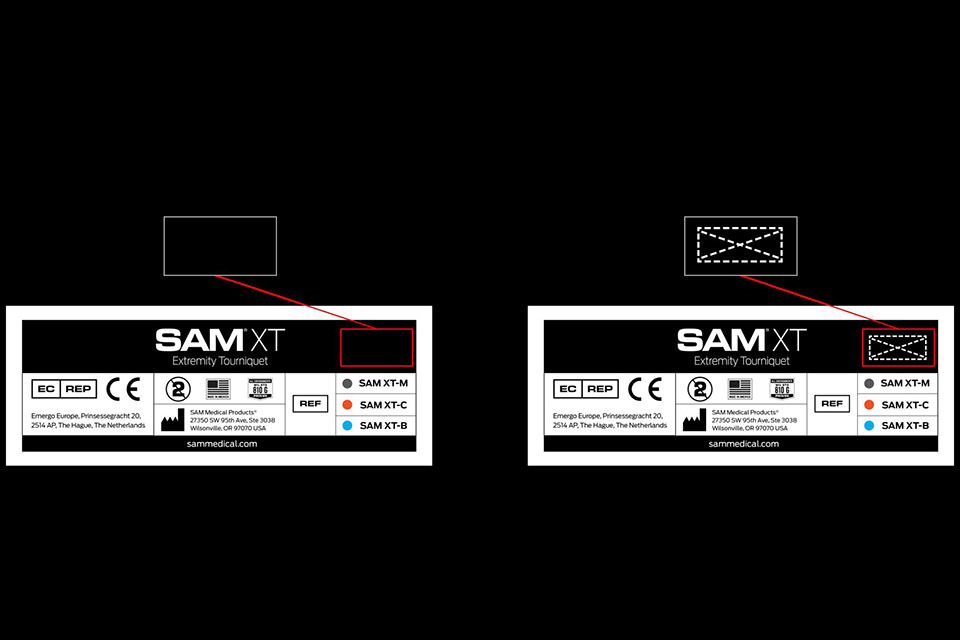
The SAM XT devices affected by the recall can be identified by:

  • The absence of a “Box X Stitch” on the Instructions For Use (IFU)
Identification marks
  • The absence of a “Box X Stitch” on the device
Identification marks
  • Any Lot Number with XT1812 or higher
Identification marks

John Wilkinson, the Medicines and Healthcare products Regulatory Agency’s (MHRA) Director of Medical Devices, said:

Check if you have the listed tourniquet and if you do so, please separate the device from your pack and take them back to where you bought them from.

Our highest priority is making sure medical devices are safe. This is why we are supporting the company to carry out this recall and why we want people to check their inventory.

As with any medical device, we strongly encourage anyone to report any suspected manufacturing faults to us via our Yellow Card Scheme.

Notes to Editor

  1. MHRA is responsible for regulating all medicines and medical devices in the UK. All our work is underpinned by robust and fact-based judgments to ensure that the benefits justify any risks. MHRA is a centre of the Medicines and Healthcare products Regulatory Agency which also includes the National Institute for Biological Standards and Control (NIBSC) and the Clinical Practice Research Datalink (CPRD). The Agency is an executive agency of the Department of Health. www.mhra.gov.uk
  2. Link to Yellow Card Scheme
  3. Medical Device Alert
  4. SAM Medical company website recall

Media enquiries

News centre
MHRA

10 South Colonnade
London
E14 4PU

Office hours are Monday to Friday, 8:30am to 5pm. For real-time updates including the latest press releases and news statements, see our Twitter channel at https://www.twitter.com/mhrapress


Link: Press release: Recall – SAM XT Extremity Tourniquet
Source: Gov Press Releases

Press release: CMA demands pricing action from energy company

The Competition and Markets Authority (CMA) has today issued legal directions to Daligas, a London-based company that provides energy to small businesses (SMEs) and domestic customers.

A previous CMA Order had required all energy companies supplying Microbusinesses to provide an online tool so SMEs can access accurate energy quotes to compare with other firms, and potentially switch to a better deal. More than 20 energy firms that offer energy to SMEs are already complying with the Order, issued as part of the CMA’s investigation into the energy market.

The CMA has issued the directions after Daligas failed to respond to several reminders to meet this requirement.

By failing to provide this information, Daligas is also in breach of one of Ofgem’s licensing conditions.

Andrea Gomes da Silva, Executive Director of Markets and Mergers at the CMA said:

Small businesses are vitally important to the UK economy. As a result of the CMA’s investigation into the energy sector, these companies have a right to be given accurate pricing information so they can compare their energy deal with other suppliers and potentially switch to a better offer.

By not allowing companies to access this information in a timely way, Daligas is breaching its legal obligations, which is why we have issued these formal directions.

The company must now comply within the next month, or we will take it to court. We also want to remind other companies that we can and will take action if they fail to comply with CMA orders.

Anthony Pygram, director of conduct and enforcement at Ofgem, said:

Providing an online tool to create a quote for small businesses customers ensures they have the correct information they need to be able to compare suppliers and choose the right one for them.

We have written to Daligas to remind them of their licence obligations and our expectation that they will comply with the CMA’s Directions.

When a supplier does not comply with their licence obligations, Ofgem has the powers by statute to impose financial penalties and for suppliers to accept commitments or undertakings relating to future conduct or arrangements.

Notes to editors

  1. The CMA is the UK’s primary competition and consumer authority. It is an independent non-ministerial government department with responsibility for carrying out investigations into mergers, markets and the regulated industries and enforcing competition and consumer law. For CMA updates, follow us on Twitter, Facebook and LinkedIn.
  2. Daligas is in breach of the Energy Market Investigation (Microbusinesses) Order 2016. This order provides measures to increase price transparency for microbusiness customers and make it easier for them to switch supplier.
  3. All information on the CMA’s energy investigation is available on the case page. The Microbusiness Order was published in December 2016.
  4. Directions are a formal enforcement instrument used to ensure that an Enterprise Act 2002 remedy imposed by the CMA, in this case the Order, is complied with fully. The firm has one month to comply with the direction, as failure to do so may lead to action before courts.
  5. Directions have been used before to ensure compliance with a market remedy. A list of directions can be found on the CMA’s website.
  6. Media enquiries should be directed to press@cma.gov.uk or 020 3738 6460.

Link: Press release: CMA demands pricing action from energy company
Source: Gov Press Releases

Press release: Change of Her Majesty’s Ambassador to the Democratic People’s Republic of Korea in December 2018

Mr Colin Crooks LVO has been appointed Her Majesty’s Ambassador to the Democratic People’s Republic of Korea in succession to Mr Alastair Morgan. Mr Crooks will take up his appointment in December 2018.

CURRICULUM VITAE

Full name: Colin James Crooks

Married to: Young-kee Crooks

Children: Two

2015 to present Beijing, Minister Counsellor
2011 to 2015 EU Delegation Jakarta, Deputy Head of Mission, later Chargé d’Affaires (on loan to European External Action Service)
2009 to 2011 FCO, Deputy Head, South East Asia Department
2008 FCO, Senior Policy Adviser on North Korea
2008 Pyongyang, Chargé d’Affaires
2008 On loan to Cabinet Office – Stabilisation Adviser
2006 to 2008 FCO, Deputy Programme Director, Corporate Services
2002 to 2006 Washington, First Secretary
2000 to 2002 FCO, Principal Speechwriter to the Foreign Secretary
1999 to 2000 FCO, Head of Section, European Union Directorate
1995 to 1999 Seoul, Second Secretary, later First Secretary
1993 to 1995 Language Training (Korean)
1992 to 1993 FCO, Desk Officer, Latin America Department
1992 Joined FCO

Further information

Media enquiries

For journalists

Link: Press release: Change of Her Majesty’s Ambassador to the Democratic People’s Republic of Korea in December 2018
Source: Gov Press Releases

Press release: Ticket bots ban comes into force

Ticket touts are now banned from using automated software to buy more tickets for events than they are allowed, only to sell them on at inflated prices.

New legislation that comes into force today means that that anyone caught breaking the law will face an unlimited fine.

Bots being used to buy up tickets have become an all too familiar problem for consumers as they try in vain to see their favourite musicians, sports stars or shows.

But, thanks to new legislation and regulatory changes the tide is now turning against the touts. Artists including Ed Sheeran, Arctic Monkeys, Pixies, The Charlatans and Iron Maiden are among those who have already put in place new measures to give real fans the chance to buy tickets from those who can no longer attend a show and clamping down on unfair practices.

Digital and the Creative Industries Minister Margot James said:

Fans deserve the chance to see their favourite artists at a fair price. Too often they have been priced out of the market due to unscrupulous touts buying up huge batches of tickets and selling them on at ridiculous prices.

From today I am pleased to say that we have successfully banned the bots. We are giving the power back to consumers to help to make 2018 a great year for Britain’s booming events scene.

FanFair Alliance campaign manager Adam Webb said:

Taking action against touts who bulk-harvest tickets is another important step towards cleaning up the so-called secondary market. Alongside strong and swift enforcement of consumer legislation through agencies like National Trading Standards and the Competition & Markets Authority, there is clear potential to root out the bad actors and to allow a new breed of fair, transparent, and law-abiding ticket resale services to flourish.

Chief Executive of the Music Managers’ Forum Annabella Coldrick said:

The new changes to the law including banning bots will help increase the chances of tickets getting into the hands of fans. The entire market is now shifting with the increasing ability to enforce artists terms and conditions and provide face-value resale options which are fan-friendly. These changes have the potential to have a global impact and the US is now looking to UK consumer law to help clean up it’s own ticketing market.

Jonathan Brown, Chief Executive of the Society of Ticket Agents and Retailers (STAR) said:

Ticket limits are set by event organisers and ticketing companies to enable fairer distribution of tickets. STAR, the industry body representing over ninety percent of UK live entertainment ticketing, therefore welcomes these new regulations which are are an important step in helping ensure that more tickets get into the hands of customers at the right prices.

Link: Press release: Ticket bots ban comes into force
Source: Gov Press Releases

Press release: Environment Agency confirms Blue Green Algae in three locations across the Lake District

Following hot, dry, weather across Cumbria, the Environment Agency has confirmed reports of Blue Green Algae in three locations across the Lake District.

Ullswater, Coniston and Killington Lake have all tested positive for potentially toxic Blue Green Algae which can have a negative effect on the appearance, quality and use of the water.

Throughout the summer months, the Environment Agency test water samples and confirm if Blue Green Algae has been found. They then inform landowners of the blooms, so they can take the necessary steps to warn the public of any potential dangers. This could may be the local authority, or a private landowner.

Jim Ratcliffe from the Environment Agency says:

As always, if people see any environmental impacts due to dry weather, such as fish in distress, or Blue Green Algae, please report it to the Environment Agency incident line on 0800 80 70 60 open 24/7, so we can investigate and take appropriate action to protect people and the environment.

If our sampling confirms Blue Green Algae is present in a lake or river, we inform the landowner, and they are encouraged to take the necessary steps to inform users of the water, by way of posters, notices or other means.

The Environment Agency continues to work with water companies, businesses and farmers across the country to provide advice, helping to balance the needs of water users and minimise impacts on the environment of any dry weather.

Water bodies affected by Blue Green Algae, or Algal Blooms may be green, blue-green or greenish brown and can produce musty, earthy or grassy odours. Blooms can also cause foaming on the shoreline, which can sometimes be confused with sewage pollution. During a bloom, the water also becomes less clear, blocking sunlight and stopping plants in the water from growing.

Blue Green Algae naturally occurs in inland waters, estuaries and the sea. Blooms can form when their numbers become excessive. Once algal numbers are high, the bloom is likely to persist throughout the season, declining only on the onset of winter conditions.

Bloom and scum forming blue-green algae can produce toxins. Toxin producing blooms are called Harmful Algal Blooms. These toxins can be harmful to wild animals, farm livestock and domestic pets. In humans, they have been known to cause rashes after skin contact and illnesses if swallowed. Not all blue-green algae blooms and scums are toxic, but you can’t tell just by looking at them, so it’s best to assume they are.

For further information visit www.gov.uk/government/publications/algal-blooms-advice-for-the-public-and-landowners/algal-blooms-advice-for-the-public-and-landowners.

Water is a precious resource and it is always helpful, in terms of future supplies and protecting the environment, for everyone to follow advice on saving water from their water company and use water wisely– especially during a period of dry weather.

Advice on what to look out for, and the effects of blue-green algae, can be found at www.lakedistrict.gov.uk/caringfor/policies/algae.

Link: Press release: Environment Agency confirms Blue Green Algae in three locations across the Lake District
Source: Environment Agency