Press release: Digital and Culture Secretary urges businesses and charities to prepare for stronger data protection laws

  • Data out today shows fewer than half of businesses and charities are aware of new data laws
  • Awareness in construction and manufacturing sectors particularly low
  • Organisations should follow ICO guidance as well as improve their cyber security

Fewer than half of all businesses and charities are aware of new data protection laws four months before they come into force, according to new research released today.

Businesses in the finance and insurance sectors have the highest awareness of the changes to be brought in through the EU’s General Data Protection Regulation (GDPR) , which is to be implemented in UK law via the Data Protection Bill in May 2018, as part of plans to help the UK prepare for a successful Brexit.

Businesses in the construction industry have the lowest awareness, with only one in four aware of the incoming regulation. Awareness is higher among businesses that report their senior managers consider cyber security is a fairly high or a very high priority, with two in five aware of the GDPR.

The survey finds more than a quarter of businesses and charities who had heard of the regulation made changes to their operations ahead of the new laws coming into force.

Among those making changes, just under half of businesses, and just over one third of charities, made changes to cyber security practices, including creating or improving cyber security procedures, hiring new staff and installing or updating anti-virus software.

Speaking from Davos, where he is banging the drum for the UK’s world-leading tech sector and reaffirming the nation’s commitment to artificial intelligence [AI], Secretary of State for Digital, Culture, Media and Sport Matt Hancock said:

We are strengthening the UK’s data protection laws to make them fit for the digital age by giving people more control over their own data.

And as these figures show many organisations still need to act to make sure the personal data they hold is secure and they are prepared for our Data Protection Bill.

There is a wealth of free help and guidance available from the Information Commissioner’s Office and the National Cyber Security Centre, and I encourage all those affected to take it up.

The UK tops the list in Europe for global tech investors, with its tech firms attracting more venture capital funding than any other European country in 2017. In December it was named by Oxford Insights as the best prepared country in the world for AI implementation.

While in Davos, Mr Hancock will talk up the nation’s innovators in speeches covering policymaking for the Fourth Industrial Revolution and Generation AI.

On the day new statistics on data preparedness are released, Mr Hancock makes clear the Government’s Data Protection Bill will provide people with the confidence their data will be managed securely and safely while also supporting those innovative businesses to maximise the potential benefits of increasing use of data in the digital economy.

The Bill will give Information Commissioner’s Office (ICO) more power to defend consumer interests and issue higher fines, of up to £17 million or 4 per cent of global turnover, for the most serious data breaches.

Organisations which hold and process personal data are urged to prepare and follow the guidance and sector FAQS freely available from the ICO. Its dedicated advice line for small organisations has received more than 8000 calls since it opened in November 2017, and the Guide to the GDPR has had over one million views. The regulator also has a GDPR checklist, and 12 steps to take now to prepare for GDPR.

There is still time to prepare and many organisations will already be compliant with the new rules. Businesses already complying with the existing Data Protection Act are well on the way to being ready for GDPR.

There will be no regulatory ‘grace’ period, but the ICO is a fair and proportionate regulator. Those who self-report, who engage with the ICO to resolve issues and demonstrate effective accountability, can expect this to be taken into account when the ICO considers taking action.

Information Commissioner Elizabeth Denham said:

Data protection law reforms put consumers and citizens first.

People will have greater control over how their data is used and organisations will have to be transparent and account for their actions.

This is a step change in the law; businesses, public bodies and charities need to take steps now to ensure they are ready.

Organisations that thrive under the new rules will be those that commit to the spirit of data protection and embed it in their policies, processes and people.

The GDPR offers a real opportunity to present themselves on the basis of how they respect the privacy of individuals, and over time this can play more of a role in consumer choice. Enhanced customer trust and more competitive advantage are just two of the benefits of getting it right.

Our website is packed with information to help your organisation to get prepared for May 2018.

Businesses are recommended to follow free guidance on protecting themselves from online attacks published by National Cyber Security Centre (NCSC), such as the Cyber Essentials advice and the Small Business Guide.

Notes to editors

  • GDPR will require organisations to have appropriate measures in place to protect personal data. This could include:
  • Documenting what data the organisation holds.
  • Reviewing privacy notices.
  • Updating procedures around individual’s rights. For example, how an organisation would delete personal data if asked.
  • Planning how to handle subject access requests.
  • Reviewing how consent to process data is gained.
  • Considering children, and whether age verification or parental consent is required.
  • Having procedures in place to detect, report and investigate data breaches.
  • Assigning a data protection officer.
  • In the wake of recent high-profile data breaches, businesses and charities are being urged to update their cyber security protections. Cyber security measures businesses and charities can take up to help protect their data include:
  • Using strong passwords and always downloading software updates
  • Adopting the Cyber Essentials scheme to protect against the most common threats
  • Following cyber security guidance available from the National Cyber Security Centre.
  • The data was gathered as part of the DCMS Cyber Security Breaches Survey. This is an annual study examining the scale and impact of cyber incidents on businesses and charities, including how they manage and respond to such incidents. The full 2018 survey will be published in the Spring.
  • The survey covers 1,500 businesses and 500 charities and underpins the DCMS’s work delivering parts of the Government’s five-year £1.9 billion National Cyber Security Strategy.
  • For more info call DCMS Press Office on 020 7211 2210.

Link: Press release: Digital and Culture Secretary urges businesses and charities to prepare for stronger data protection laws
Source: Gov Press Releases
Press release: Government sets out £24 million for Greater Manchester following 2017 terror attack

Recognising the exceptional response required by the city as a result of this cowardly act, the Prime Minister has today reaffirmed that the government will provide financial support for key services and first responders, including a new £4.1 million commitment for all NHS acute costs and the North West Ambulance Service, and over £2 million for mental health support.

The total package includes:

  • Over £9 million for policing
  • Over £1 million to support the important work of the We Love Manchester Emergency Fund, in partnership with the British Red Cross
  • £451,000 for social care costs
  • £2.6 million for a mental health hub – in addition to £53,800 for psychological support
  • An £80,000 hardship fund for small businesses affected by the attack
  • Full coroner and inquest costs

While this funding is focussed on covering the costs faced by emergency services and Greater Manchester City Council, £250,000 has also been provided to Marketing Manchester through the Discover England Fund to support them as they continue to promote the city and region.

The Prime Minister, Theresa May, said:

Following last year’s terrible attack the strength and resilience of Manchester captured the nation – and nowhere was this more apparent than at the One Love Concert and city vigils where people joined together not only in grief, but to demonstrate to terrorists that they will never win.

We were clear immediately following the attack, just as we are now, that the government will do everything it can to respond to the needs of victims of terror.

That is why we have ensured that resources will be available to support victims as they continue to rebuild their lives, and to meet the costs placed on Manchester’s emergency services, City Council and health and social care providers in dealing with this tragic and exceptional event.

Officials in the Cabinet Office-led taskforce and across departments will continue to work with the Greater Manchester Authority as these funds are delivered to ensure Manchester remains a vibrant, resilient city.

Today’s funding announcement will ensure all exceptional costs met by Manchester as a result of the attack are covered, alongside support for victims of the attack.

Further requests for central government to cover the locally commissioned Lord Kerslake Review, transport costs – which are a commercial matter for insurers – and additional tourism promotion have not been met.

Link: Press release: Government sets out £24 million for Greater Manchester following 2017 terror attack
Source: Gov Press Releases

Press release: Housing funding boost to make more homes accessible for elderly and disabled people across England

More elderly and disabled residents will be able to make adaptations to their homes so they can live independently and safely thanks to an extra £42 million of government funding confirmed by Housing and Homelessness Minister Heather Wheeler today (24 January 2018).

The funding for local housing authorities can be used to make a range of adaptations to a disabled or elderly person’s home. Some of these changes are low cost but can make a big difference to the person’s quality of life such as grab rails which can be installed for as little as £30 but can prevent a serious fall. Other changes include:

  • ramps and stair lifts to ensure they can access all parts of their homes safely
  • widening of doors to help those who are wheelchair bound to move freely around their home
  • level access showers and raised toilets so that people can continue to live independently and with dignity in their home
  • accessible gardens so they can continue to enjoy the simple pleasures of their garden
  • home extensions which can include the construction of downstairs bedrooms and bathrooms to ensure that disabled or elderly people do not have to risk moving between floors

Minister for Housing and Homelessness Heather Wheeler said:

The government is committed to helping older and disabled people live independently and safely and this extra funding will ensure more people are getting the help they need.

Even a small adaptation to a home can make a big difference and help ensure people can stay in their home and do not have to struggle with the stairs or in simply taking a bath or shower.

The £42 million boost in funding was announced as part of the Autumn Budget and will be additional funding for the Disabled Facilities Grant (DFG). The £42 million will be in addition to the £431 million the government has already pledged to the DFG for the 2017 to 2018 financial year.

The councils who have been allocated the largest share of the extra funding are:

  • Birmingham (£1,007,785)
  • Manchester (£675,147)
  • Leeds (£649,541)
  • Liverpool (£590,796)
  • Cornwall (£527,533)

Further information

The DFG is a capital grant paid from the Ministry of Housing, Communities and Local Government to local authorities in England to adapt older and disabled people’s homes to help them to live independently and safely. Adaptations can include ramps, stair lifts and suitable heating systems.

Eligibility is subject to a means test. There is an upper limit of £30,000 per eligible applicant although children aged 17 years and under are not means tested. The average grant is around £6,500.

Picture courtesy of Peoplecreations.

Office address and general enquiries

2 Marsham Street

London
SW1P 4DF

Media enquiries

Link: Press release: Housing funding boost to make more homes accessible for elderly and disabled people across England
Source: Gov Press Releases

Press release: Foreign Secretary statement on Benghazi bombing

Foreign Secretary Boris Johnson said:

The United Kingdom strongly condemns the horrific bombings in Benghazi yesterday evening, which killed at least 34 people and injured over 40 others including women and children.

Our thoughts are with the victims, their families and the people of Benghazi at this time.

Direct or indiscriminate attacks against civilians are prohibited under international humanitarian law and constitute war crimes. The United Kingdom will continue our efforts with our international partners to pursue action against those who are complicit in such horrific attacks.

Security in Benghazi is key to Libya’s overall stability, and we urge all Libyans to reject violence. The latest attack underscores the urgent need to break the political deadlock and bring peace to Libya. It is vital for all parties to engage in good faith with UN-led political process.

Further information

Media enquiries

For journalists

Link: Press release: Foreign Secretary statement on Benghazi bombing
Source: Gov Press Releases

Press release: UK aid supports world’s first mobile app to help the poorest people with disabilities into work

UK aid is behind the world’s first mobile phone app to identify innovative ways to help people with disabilities in the world’s poorest countries to get jobs and contribute to their society.

Speaking at a Humanity and Inclusion event, International Development Secretary Penny Mordaunt will set out how data, technology and collaboration are vital to making sure people with disabilities are consistently included in, and benefit from, the opportunities that are available to everyone in society.

The UK’s Department for International Development (DFID) and Humanity and Inclusion are collaborating to prototype a mobile phone app that will help employers in developing countries share information on how to adapt tools, including cutting-edge prosthetics, and working environments, to make sure that workplaces are accessible for employees and entrepreneurs with disabilities.

For example, in Cambodia, farmers are using low-cost prosthetic legs made for unstable terrain, such as swampy fields. The app will share this adaptation with other farmers with similar disabilities in developing countries so they can adapt their own prosthetics and continue to work.

In her speech Ms Mordaunt will also announce that the UK government’s first Global Disability Summit will be held at the Olympic Park in London on 24 July 2018. The Summit will be co-hosted with the Government of Kenya, building on the existing strong ties through the Commonwealth. Inclusion is also a key theme of this year’s Commonwealth Heads of Government Meeting in London.

International Development Secretary Penny Mordaunt said:

People with disabilities suffer appalling and entrenched stigma and discrimination, and in many parts of the world they simply don’t count.

This cannot continue – which is why I have put disability at the heart of UK aid to make those invisible visible.

DFID is using new technology and building on innovative collaborations like our work with Humanity and Inclusion to help people with disabilities in the world’s poorest countries get jobs and contribute to their society and economy. Alongside this, we have issued a call for the world to step up and tackle this inequality.

We must all work together to create a healthier, more inclusive and prosperous world – this is in all our interests.

For too long many people with disabilities in the world’s poorest countries have not been able to fulfil their potential due to stigma or a lack of practical support.

Ms Mordaunt met the World Bank earlier this month to call on them to scale up their work on disability and development, and pushed for data collection to make the invisible visible. The Bank is expected to announce high level commitments on disability at the Global Disability Summit in London this year.

The Summit will bring the private sector, technology companies, international governments and charities together to secure ambitious commitments which will deliver a significant and tangible difference to the lives of millions of people with disabilities around the world.

The Summit will be held at the Olympic Park in London, home to the Global Disability Innovation Hub which finds innovative ways to unlock the potential of people with disabilities, to grow global prosperity.

UK aid has already been supporting innovative technology to transform the lives of people with disabilities by collaborating with tech pioneer, D-Rev, which is supported by DFID’s Amplify Programme. This project is developing low-cost, high performance prosthetic knee joints for amputees in developing countries.

General media queries

Follow the DFID Media office on Twitter – @DFID_Press

Link: Press release: UK aid supports world’s first mobile app to help the poorest people with disabilities into work
Source: Gov Press Releases

The Merchant Shipping (Safety Rules and Standards for Passenger Ships) (Miscellaneous Amendments) Regulations 2018

These Regulations implement Commission Directive 2016/844/EU (OJ L 141, 28.5.2016, p.51) (“the Commission Directive”), which amends Directive 2009/45/EC (OJ L 163, 25.6.2009, p.1) (“the 2009 Directive”) on safety rules and standards for passenger ships. The Commission Directive makes several technical amendments to Annex I of the 2009 Directive.

Link: The Merchant Shipping (Safety Rules and Standards for Passenger Ships) (Miscellaneous Amendments) Regulations 2018
Source: Legislation .gov.uk

Press release: North east rivers get fish stocks boost

The Environment Agency has released more than 40,000 young fish into north east rivers during last year to give stocks a boost.

The fish – chub, dace, roach, bream, barbel, tench, grayling, crucian carp and rudd – are just some that were released right across the region during 2017.

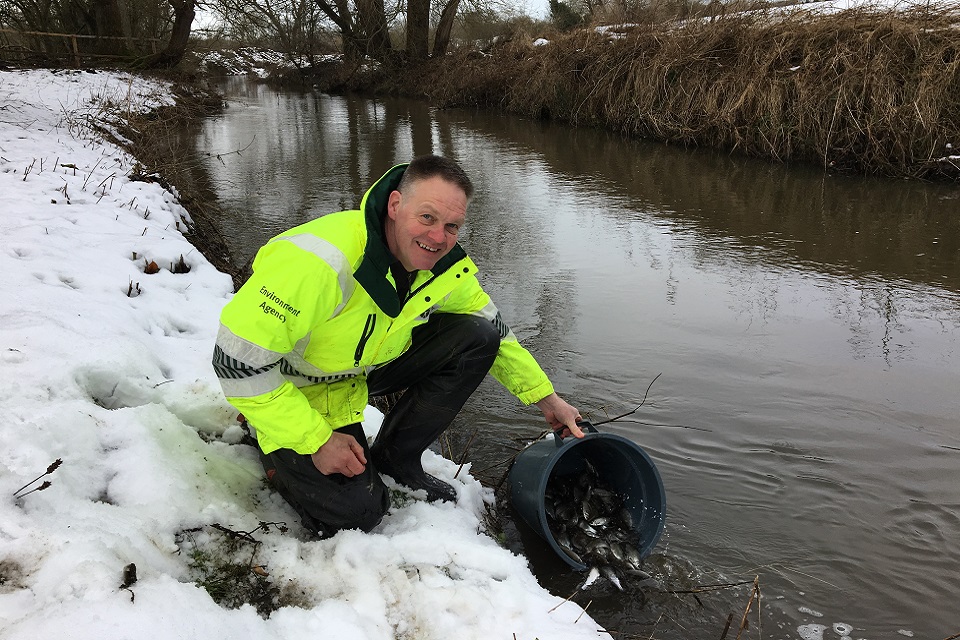
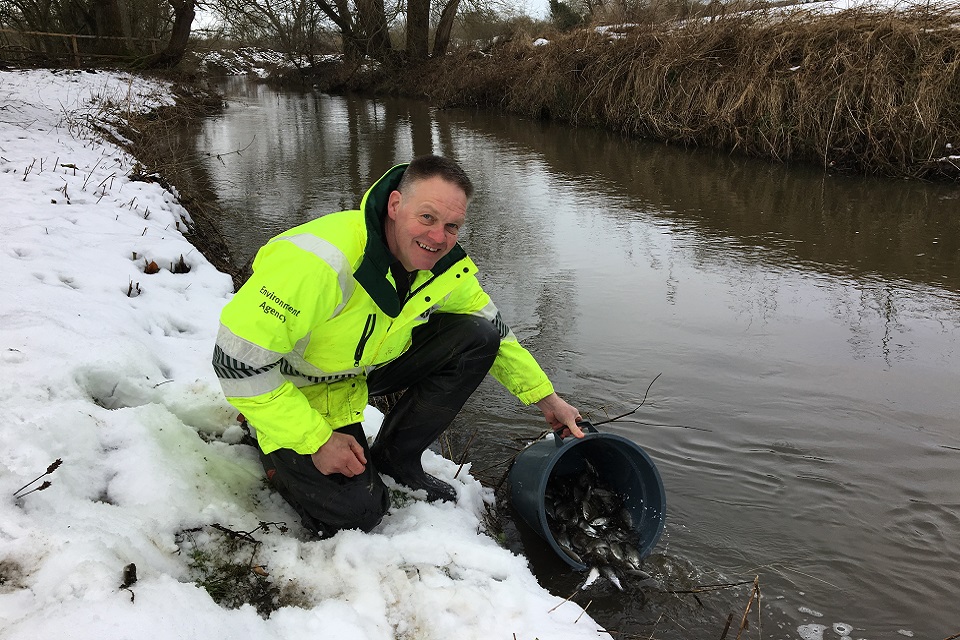
And on Monday (22 January), the Environment Agency’s north east fisheries team started off the new year by releasing 4,000 chub and 5,000 roach into the River Skerne at Darlington.

All the fish were reared at the Environment Agency’s fish farm near Calverton, Nottinghamshire, using funding from rod licence sales.

Last year fish were released into rivers such as the Tees, Wear, Skerne, Gaunless, Browney, Blyth, Pont, Clow Beck and Langley Beck as well as Stillwater fisheries.

The work is part of the Environment Agency’s ongoing plan to develop and restore rivers and fisheries in the region, targeting those which have previously been affected by pollution or where barriers affect fish passage.

Image shows Paul Frear releasing fish into the river

Paul Frear, Fisheries Officers for the Environment Agency in the north east, said:

Restocking is one of many things we do together with our partners to develop fisheries, including reducing the impact of pollution, improving habitats and removing barriers to fish migration.

The Environment Agency releases fish into our waterways annually. Fisheries officers target fish stocking activity using data from national fish surveys to identify where there are problems with poor breeding and survival. Paul added:

By releasing fish into the rivers it helps the process of natural recovery and development. We’re pleased to be able to provide these young fish as part of our commitment to rod licence paying anglers. Restoration and the creation of new fisheries for all people to enjoy is a very important aspect of our work.

Many of our industrialised rivers have improved dramatically in water quality in the last 30 years and targeted and appropriate restocking has helped the restoration of natural fish stocks and viable fisheries.

Angling is a great way to keep healthy and enjoy the natural environment. All rod licence income is used to fund work to protect and improve fish stocks and fisheries.

Image shows close up of a fish

Fishing is free for children under 16, although those aged between 12 and 16 still need a junior licence. For anyone over 16, a full annual licence costs from just £30, with some short term and concessionary licences also available. You can buy your rod licence online at the gov.uk website


Link: Press release: North east rivers get fish stocks boost
Source: Environment Agency