Press release: Statement on OSCE report on Russian presidential election

An FCO spokesperson said:

The OSCE/ODIHR election observation mission to the Russian Presidential elections has now issued their initial report.

The report makes clear that restrictions on fundamental freedoms, in particular freedom of expression and assembly, including the detention of activists, resulted in a lack of genuine competition in the election. The Russian Central Election Commission also placed restrictions on candidate registration, and President Putin benefited from dominating coverage in the state media.

We continue to call on the Russian Government to comply with its international commitments in the Council of Europe and OSCE to ensure respect for human rights and fundamental freedoms, including freedom of expression.

Further information

Media enquiries

For journalists

Link: Press release: Statement on OSCE report on Russian presidential election
Source: Gov Press Releases

Press release: UK joins world-leading research programme to help develop medicines of the future

  • UK signs agreement to work with other countries to create new medical treatments using a powerful laser
  • super-strength laser acts like a microscope to help understand deadly viruses
  • the UK joins existing member countries including, France, Germany, Italy and Switzerland

The UK will be at the forefront of the fight against life-threatening diseases after confirming that it has signed the European X-Ray Free-Electron Laser (XFEL) convention in Berlin, Germany today (19 March). The XFEL programme uses a super-strength laser to help understand life-threatening viruses.

The UK’s membership of XFEL reinforces the government’s modern Industrial Strategy, and through the Ageing Society Grand Challenge, the government is committed to harnessing the power of innovation to create the treatments of the future and maintain our position of being a world-leader in science, research and innovation.

The XFEL, one of the most powerful X-ray machines ever built, acts like a huge microscope, using intensely bright and short duration X-ray flashes which will enable scientists to map the atomic details of viruses. The laser also allows scientists to look in greater detail to the composition of cells, take 3D images of atoms and molecules and study processes such as those occurring deep inside planets.

Science Minister Sam Gyimah said:

The incredible XFEL will help us better understand life threatening diseases by using one of the world’s most powerful X-ray machines. Working with our international partners, the super-strength laser will help develop new medical treatments and therapies, potentially saving thousands of lives across the world.

Through our modern Industrial Strategy we are investing an extra £4.7 billion into research and development. I am determined that we continue to secure our position as being a world-leader in science, research and innovation and I can’t wait to see the results that come from our participation in this extraordinary project.

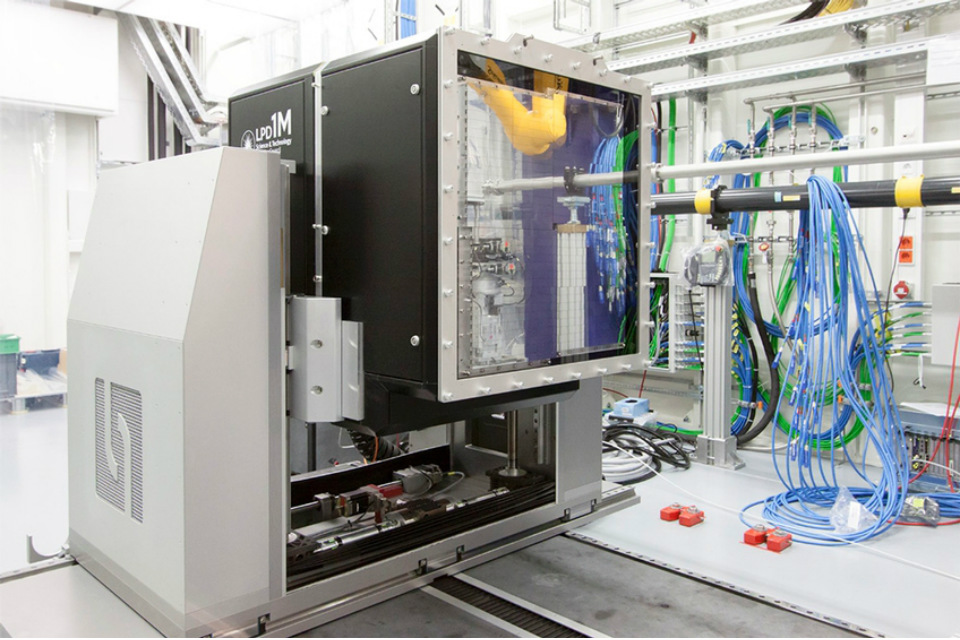
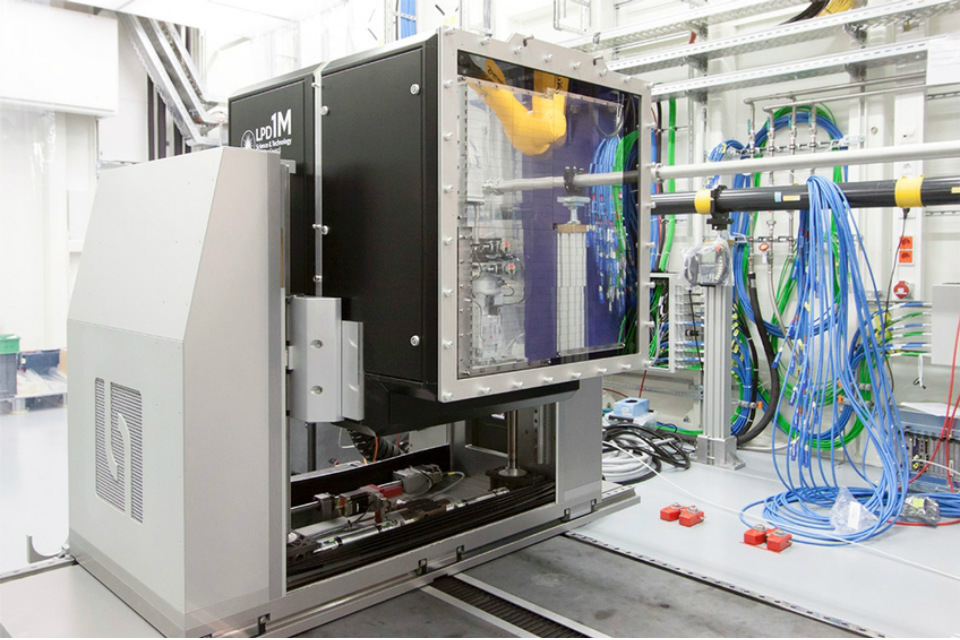
The advanced camera for XFEL, called the Large Pixel Detector (LPD).
STFC designed and built LPD detector. Credit: European XFEL

British engineers from the Science and Technology Facilities Council (STFC) have already built the advanced camera for XFEL, called the Large Pixel Detector (LPD). The camera operates at a frame rate of 4.5MHz – 4.5 million pictures per second.

The UK has been involved with XFEL since 2008, contributing £30 million towards the construction of the facility, and every following year we will contribute £2.5 million towards operations costs.

STFC have also contributed a number of UK researchers who are currently working at the facility. The UK has also developed a training facility at the Diamond Light Source on the Harwell campus in Oxfordshire for British scientists. The UK XFEL life sciences hub will enable users to fully prepare for their experiments with XFELs.


Link: Press release: UK joins world-leading research programme to help develop medicines of the future
Source: Gov Press Releases

Press release: Government commits to further support for neighbourhood planning

More communities across England will be able to get free access to expert advice and guidance to help make their neighbourhood vision a reality, Housing Minister Dominic Raab announced today (19 March 2018).

A £23 million fund – being delivered by Locality and Groundwork – will help local groups to develop a neighbourhood plan. These plans give local people a say in the development of their area, including where homes, schools and businesses should be built, how they should look and what infrastructure is needed to support them.

Community groups will be able to access a range of free help including financial support and latest planning expertise from trained professionals, to guide them through the process of preparing a neighbourhood plan.

Housing and Planning Minister Dominic Raab said:

Neighbourhood plans are a powerful tool to help communities shape their local area, making sure the right homes are built in the right places.

It’s vital that communities have the right support and advice available to help deliver a plan that meets their own ambitious aspirations. That’s why I’m making £23 million available that will help more groups to do this.

Over 2,300 communities across England have started the process of neighbourhood planning, with 530 plans approved in local referendums.

Previous government support has helped around 7 out of 10 of these communities progress their plans, with 365 neighbourhood plans finalised using support provided by the government.

The maximum grant available has also been increased by £2,000 to £17,000, helping communities to access more resources to develop a plan for their area.

Community groups can find our more information about how to apply for funding via a new website at www.neighbourhoodplanning.org. Applications to bid for funding will open on 3 April 2018.

Further notes

Locality and Groundwork UK were appointed to oversee the fund following a full and transparent procurement process.

Locality will use its expertise, skills and track record advising on development to help communities to reach the full potential of their neighbourhood plan from start to finish.

Their dedicated website will provide clear information on neighbourhood planning and signpost to highly qualified specialists from a range of organisations, including design and engineering professionals at AECOM and the Royal Institute of Chartered Surveyors.

Groundwork UK has been appointed to administer application process for grant funding, ensuring finance is available for groups to cover the costs associated with producing a successful neighbourhood plan.

Office address and general enquiries

2 Marsham Street

London
SW1P 4DF

Media enquiries

Link: Press release: Government commits to further support for neighbourhood planning
Source: Gov Press Releases

Press release: Video offers virtual journey through Lower Thames Crossing

Drivers can experience what their journey through Britain’s second longest road tunnel will be like once it opens in 2027 following the release of a video by Highways England today (Monday 19 March).

In the new video, Highways England takes drivers on a journey through the two mile long crossing, which will feature two tunnels taking a three lane road under the River Thames between Gravesham, Kent and Thurrock, Essex.

The video also illustrates how the 13 mile route, that will include the tunnel, will link drivers to the M25, the A2 and the A13, including the new junctions and link roads being built as part of the £4.4 – £6.2 billion project.

The animation shows the tunnelled section, the three junctions north of the River Thames and a map of the full alignment of the proposed route. It has been published to provide an early impression of what the road and tunnel could look like once completed in 2027.

LTC video.

Highways England has also released drawings showing the vertical alignment of the route, which demonstrates where the route is above and below existing ground levels.

Highways England plans to carry out a statutory consultation later this year. The consultation will enable stakeholders and communities to shape the proposed design of the route ahead of a development consent order application for permission from the Secretary of State for Transport to build the Lower Thames Crossing.

Work is continuing on the design ahead of the statutory consultation and the video released today represents the design of the route at the time of production. There have been changes to the route and these and future changes will be reflected in further materials, which will be published in the run up to and during the Lower Thames Crossing statutory consultation.

Highways England Project Director Tim Jones said:

The video fly-through of the Lower Thames Crossing will give people a better understanding of how the proposed road and tunnel could look once built. We are continuing to develop the design based on feedback from stakeholders and local communities so that we put forward a route which maximises the positive opportunities the Lower Thames Crossing could bring, while minimising impacts on communities and the environment. This video does not represent the final design, and we will continue to share our thinking and designs as we approach statutory consultation later this year.

Tim Jones will be speaking to businesses, stakeholders and partners on the Lower Thames Crossing later this week when he presents at the Southend Business Partnership on Thursday to provide an update on this once-in-a-generation project.

Highways England will be responsible for delivering the crossing, which will increase capacity for crossing the Thames east of London by 70 per cent, easing pressure on the existing Dartford Crossing – currently the only road crossing of the river east of the capital.

The new crossing will be linked to the road network by a new road north of the river, which will join the M25 between junctions 29 and 30, and a new road south of the river which, will join the A2 east of Gravesend.

The Lower Thames Crossing will deliver an £8 billion economic stimulus, and create some 6,000 jobs. The crossing will enable sustainable local development and regional growth leading to a stronger economy and will open opportunities for investment in housing. It will allow businesses to grow, creating more jobs, apprenticeships and training, while also connecting local communities to jobs, leisure and retail.

Around 55 million journeys are made each year on the Dartford Crossing, six million more than it was designed for, and it suffers from closures due to incidents almost daily.

General enquiries

Members of the public should contact the Highways England customer contact centre on 0300 123 5000.

Media enquiries

Journalists should contact the Highways England press office on 0844 693 1448 and use the menu to speak to the most appropriate press officer.

Link: Press release: Video offers virtual journey through Lower Thames Crossing
Source: Gov Press Releases

Press release: David Davis’ statement: EU-UK Article 50 negotiations Brussels, Monday 19 March 2018

Thank you Michel, both for your words and for your kind words about our team.

In December we reached an important milestone by achieving agreement on the first phase of negotiations.

And today, we’ve taken another significant step by reaching agreement on the next phase.

Which I am confident will be welcomed by the European Council when it meets later this week.

Our teams have worked hard and at pace to secure the terms of a time-limited implementation period that gives the certainty demanded by businesses and citizens across the European Union and United Kingdom.

And at this point I’d like to join Michel in commending both our negotiating teams for their skill, their commitment and from time to time their ability to go without sleep.

In my speech in Teesport in January, I set out a framework for delivering a bridge to the future.

One that sees the UK formally leave the European Union on the 29th of March. Which gives everyone time they need to prepare for the future, by ensuring our access to each other’s markets continues on current terms.

The deal we’ve reached today does just that.

As Michel outlined we’ve taken a decisive step by translating much of December’s Joint Report into the legal text of the Withdrawal Agreement.

In only a few weeks we have managed to finalise the chapters on the financial settlement and citizens’ rights — delivering on our commitment to provide certainty to citizens.

So let me take each point in turn, starting with the implementation period.

Throughout this process, one message has been clear from businesses in the United Kingdom and across the European Union — that they need to be able to plan for the future with confidence.

Businesses need not delay investment decisions, or rush through contingency plans based on guesses about the future deal.

Instead they now have certainty about the terms that will apply immediately after our withdrawal.

Meaning that they can continue to operate and invest with confidence, as the design of our future partnership with the European Union becomes clear.

And this is true across the whole United Kingdom family — because the territorial scope of the Withdrawal Agreement makes clear it includes Gibraltar.

We continue with our positive dialogue with the Spanish on how we improve cooperation in the future.

Platform for the future

The implementation period is not only about providing certainty in the short term. It’s also about beginning life outside the European Union, serving as a platform on which we build our future relationship.

Which is why, as Michel said, the United Kingdom will be able to step out, sign and ratify new trade deals with old friends — and new allies — around the globe for the first time in more than 40 years

These will come into force when the implementation period is over.

Providing new opportunities for businesses across the United Kingdom and seizing one of Brexit’s greatest opportunities.

International agreements

And during this period, we have agreed those international agreements which arise from our European Union membership continue to apply as now.

This provides further certainty for businesses, who can be confident there will be no disruption to their existing trade relationship as we leave the European Union

Safeguards

To ensure our agreement is faithfully and fully implemented we are establishing a Joint Committee made up of representatives from the United Kingdom and the European Union.

This committee will provide a way to resolve concerns as they arise.

And will be underpinned by a clear commitment from both sides to act in good faith.

One of the key objectives I set out in my Teesport speech was that the United Kingdom would be able to make its voice heard during this period and ensure our interests are protected.

This delivers on that objective.

Fisheries

We’ve also agreed specific safeguards when it comes to annual fishing negotiations.

These arrangements will only apply for the negotiations in 2019, since we will still be a Member State for those that take place at the end of this year.

Through 2020 we will be negotiating fishing opportunities as an independent coastal state, deciding who can access our waters and on what terms.

For the year where it is relevant, we have agreed the European Union will have to consult us ahead of the negotiations.

And the United Kingdom’s share of the total catch cannot be changed, protecting the interests of the United Kingdom fishing community.

Foreign policy and defence collaboration

The final way in which the implementation period serves as a platform for the future is in foreign and defence policy.

As recent events demonstrate, close cooperation with our allies is central to standing up for a rules-based international order.

So when it comes to foreign policy and defence collaboration, we have set out a plan for an ambitious partnership.

One that goes beyond the relationship the European Union has with any other third country.

And I know this desire is shared by our European Union partners.

The deal we have reached today envisages us moving to that partnership at the soonest possible moment.

And in the intervening period, our valued cooperation will continue.

However, as is the case today there may be occasions when our vital national policy means we cannot agree with European Union decision.

In those cases the United Kingdom could choose not to apply it.

Wider progress on the Withdrawal Agreement

Securing an implementation period, with these key flexibilities, is a major achievement.

And if it was all we had achieved since December I’d be proud of my team.

But in addition we have made rapid progress across the wider Withdrawal Agreement — reaching agreement on much of the legal text, and locking down entire chapters on citizens’ rights and the financial settlement.

Most importantly this means that, just as we’re giving certainty to businesses, we’re also providing the same for citizens.

And in doing so we’ve reached agreement on the package that should apply to those who arrive during the implementation period itself.

A few weeks ago, we proposed a pathway to settlement for EU citizens, which was welcomed by Member States.

Today we have delivered on the spirit of this offer, and also made it reciprocal, using the December deal as the basis.

In doing so, we have made sure the voluntary reference mechanism we agreed in December will start when we leave in March 2019 for any challenges relating to applications for settled status.

The reference mechanism relating to other rights, such as social security, which are only relevant after the implementation period, will begin in December 2020.

Northern Ireland and Ireland

Of course, there are areas where there is more to do before we can finalise the agreement as a whole — one of which is Northern Ireland.

Make no mistake — both the United Kingdom and the European Union are committed to the Joint Report in its entirety.

And in keeping with that commitment, we agree on the need to include legal text detailing the ‘backstop’ solution for the border between Northern Ireland and Ireland in the Withdrawal Agreement that is acceptable to both sides.

But it remains our intention to achieve a partnership that is so close as to not require specific measures in relation to Northern Ireland, and therefore we will engage in detail on all the scenarios set out in the Joint Report.

We have also reached consensus on the full set of issues which need to be addressed in any solution in order to avoid a hard border, which is why, last week, we set out a work programme to tackle them.

There are also some elements of the draft protocol — such as the Common Travel Area — on which we agree.

So while there is as yet no agreement on the right operational approach, we know what we need to do — and we’re going to get on with it.

Conclusion

In December, we set out a shared ambition to reach agreement on the implementation period as soon as possible.

Today we have achieved that ambition, thanks to the hard work and late nights of both our dedicated teams.

Now, alongside progressing the outstanding issues in the Withdrawal Agreement, our attention must turn to the future.

In Munich and at Mansion House, the Prime Minister set out a powerful vision. One which will ensure our economic and security cooperation reflects our unique starting point and our shared history.

My job and that of my team is to deliver on that vision — and in doing so, we must seize the moment and carry forward the momentum of the past few weeks.

The deal we have struck today, on top of that agreed in December, should give us confidence that a good deal for the United Kingdom and the European Union is closer than ever before.

Link: Press release: David Davis’ statement: EU-UK Article 50 negotiations Brussels, Monday 19 March 2018
Source: Gov Press Releases

Press release: Images offer glimpse of major upgrade on the A46 in Coventry

As part of the government’s £15.2bn road investment strategy, Highways England is developing a scheme to improve the junctions along the A46 which includes the Binley and Walsgrave junctions.

The project is taking a phased approach to the upgrade, and will progress with Binley junction (also known as the TGI Island) first, as it currently suffers from heavy congestion making journey times unreliable for drivers as well as for local traffic.

image showing A46 in Coventry upgrade

The road is a strategic link between the East and West Midlands, connecting Coventry and Warwickshire to the motorway network.

Following the public consultation in 2017, Highways England has continued to develop the design taking into account comments and issues raised during the consultation. This included looking at what can be put in place to minimise the impact on the environment and local communities.

The plans for the Binley junction will see the A46 dual carriageway become a flyover that will separate local traffic from using the A46. This will mean that trunk road traffic will not need to pass through the roundabout and will benefit from shorter journey times. It will also be easier for local traffic to navigate the roundabout as there will be less traffic using it.

image showing A46 in Coventry upgrade

The design will also include improvements to the existing footways and cycle paths.

The preferred route includes a number of changes from the previous design that was presented in February 2017.

Changes include:

  • taking on board customer feedback, the design has changed so that more of the A46 will now be raised on a bridge structure, removing part of the visual “wall” effect
  • the previous proposal included a new roundabout; the existing roundabout will remain in the new design
  • the combined cycle and footway around the junction will be extended and improved. Additional lighting will be provided under the flyover to make it safer for pedestrians and cyclists

Highways England project manager, Steve Wrenn, said:

We carefully considered all feedback. This process has been detailed and time consuming, but this has been necessary to ensure we develop the best design possible to take forward as our preferred route.

Once complete, this scheme will relieve congestion for those travelling through Coventry on the A46.

Construction will begin in spring 2020 and is expected to be completed by spring 2022.

For a copy of the preferred route announcement leaflet and more information about the scheme, visit the website.

Alternatively email ww.highways.gov.uk/A46coventryjunctions or call the Highways England Customer Contact Centre on 0300 123 5000.

General enquiries

Members of the public should contact the Highways England customer contact centre on 0300 123 5000.

Media enquiries

Journalists should contact the Highways England press office on 0844 693 1448 and use the menu to speak to the most appropriate press officer.


Link: Press release: Images offer glimpse of major upgrade on the A46 in Coventry
Source: Gov Press Releases

Press release: Humane trapping standards: Consultation starts

The Government has today (19 March) launched a public consultation on the introduction of new and improved international humane trapping standards.

Views are being sought on the implementation proposals for the Agreement on International Humane Trapping Standards and to gather information on the supply, use and marking of traps to better inform impact assessment.

These measures will ensure gamekeepers, country estates and pest control companies are trapping certain species of animals in a humane fashion. Depending on the responses to the consultation, Government wants to implement the new standards on 1 January 2019.

Environment Minister Thérèse Coffey said:

We are committed to supporting a strong rural economy and upholding countryside traditions and we want to do this in a way that respects wildlife and the environment.

I would therefore encourage people with an interest in this area to contribute their views.

Today’s consultation is asking for views from the gamekeeping sector, trap retailers, manufacturers and importers, pest control companies, country estates/farms, and importers of products derived from trapped animals.

People can respond using the Citizen Space survey.

The Government will respond to the consultation shortly after the six-week consultation ends.

Link: Press release: Humane trapping standards: Consultation starts
Source: Gov Press Releases

Press release: British High Commission celebrates the Commonwealth

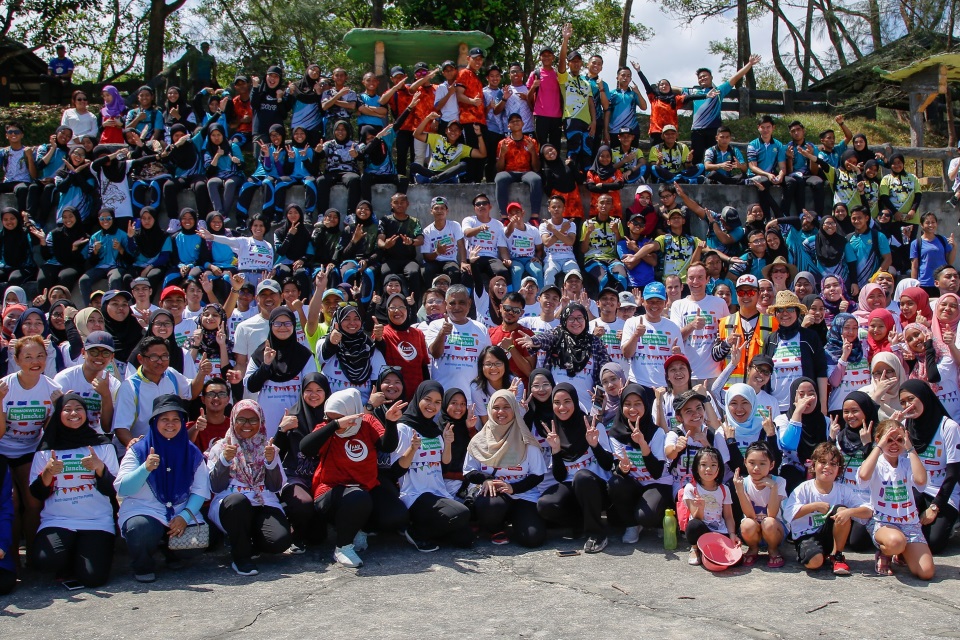
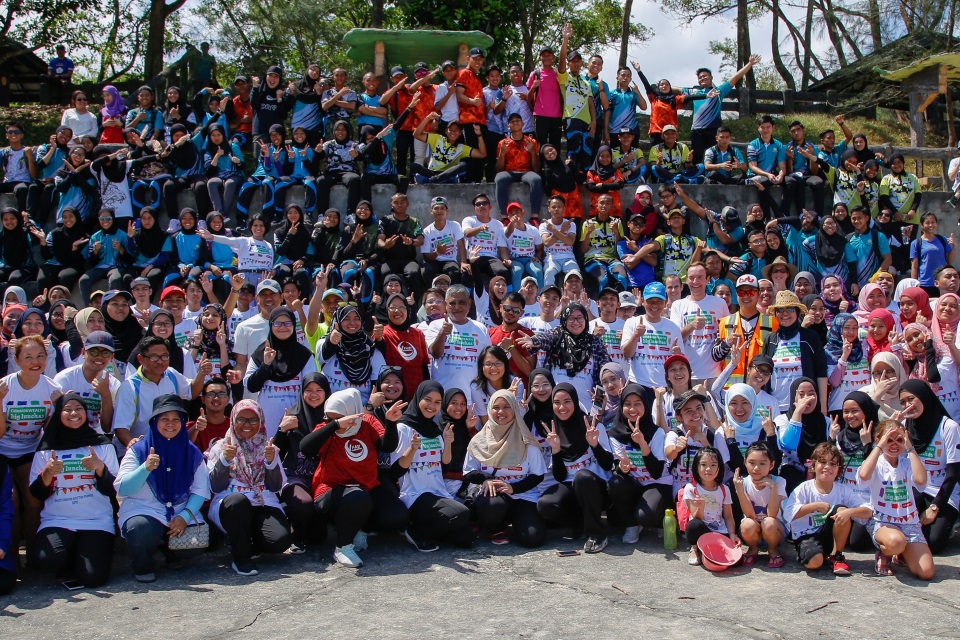
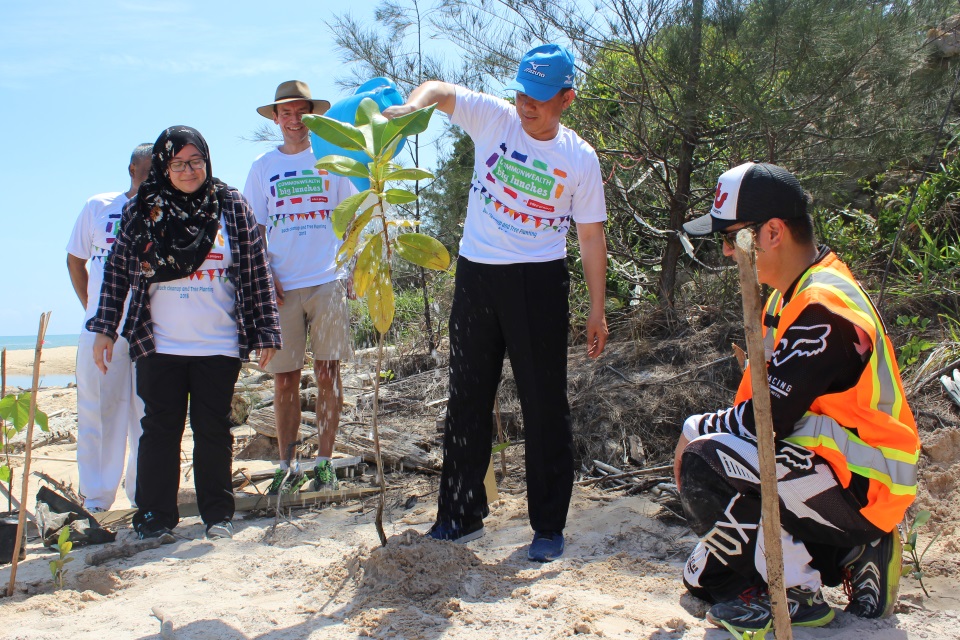
The British High Commission in partnership with local NGOs Green Brunei, Beach Bunch and Hand4Hand organised a beach cleanup and tree planting followed by a Commonwealth Big Lunch with over 200 volunteers to celebrate the Commonwealth, community and build connections.

All the volunteers at the Commonwealth Big Lunch: Beach Cleanup and Tree Planting

The Commonwealth Big Lunch: Beach Cleanup and Tree Planting took place at Berakas Beach, the Berakas Forest Reserve and was supported by the Ministry of Culture, Youth and Sports, Forestry Department, Department of Environment, Parks and Recreation, Brunei Shell Petroleum, International School Brunei and Standard Chartered Bank. This location is also one of the forest areas which Brunei has dedicated as part of The Queen’s Commonwealth Canopy.

The Guest of Honour at the event was the Minister of Culture, Youth and Sports, Yang Berhormat Major General (Rtd) Dato Paduka Haji Aminuddin Ihsan bin Pehin Orang Kaya Saiful Mulok Dato Seri Paduka Haji Abidin. Also in attendance was the Bangladeshi High Commissioner to Brunei; officials from the Ministry of Culture, Youth and Sports; members of the National Service Programme and representatives from International School Brunei.

British High Commissioner to Brunei, His Excellency Richard Lindsay, said:

We are delighted to organise the Commonwealth Big Lunch in Brunei.

The point of the Big Lunch is to celebrate our joint membership of the Commonwealth over a shared meal.

It is wonderful that we were able to combine with these excellent Bruneian organisations to clean litter from the beach and plant new trees within Berakas Forest Reserve, one of the areas Brunei has dedicated to the Queen’s Commonwealth Canopy.

The great turnout we had today is a sign of youth engagement across the Commonwealth to ensure that we work together to achieve a more sustainable future.

This will be a focus for discussion at the Commonwealth Heads of Government Meeting in London this April and the UK looks forward to welcoming His Majesty at this important event.

I am really grateful to the hard work of our partners and supporters, and all the volunteers who participated this morning.

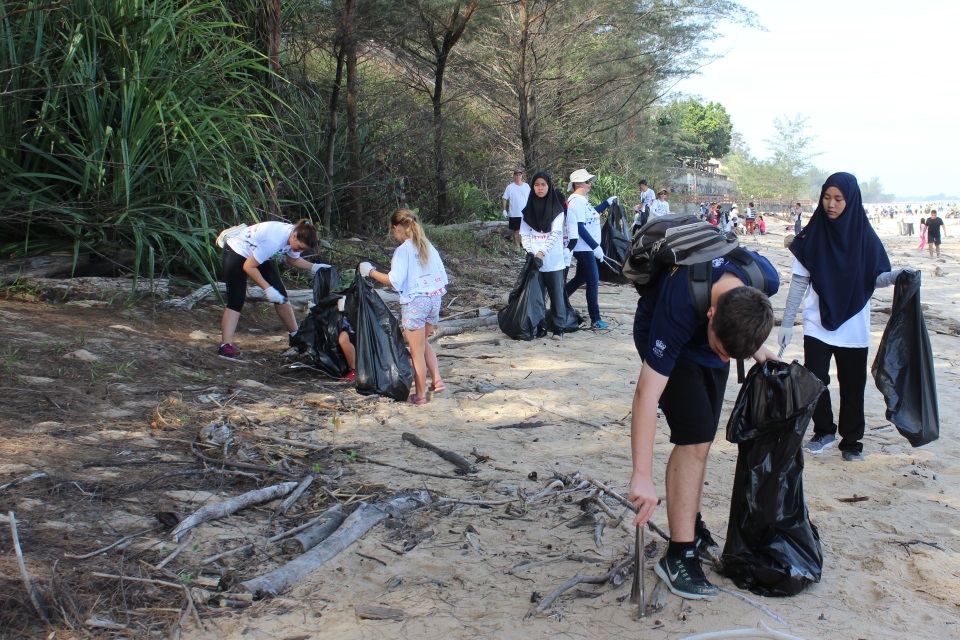
Volunteers picking up rubbish on Berakas Beach

The beach cleanup was organised by Beach Bunch. Assistance was provided by The Brunei Four Wheel Drive Association to collect and transport the collected rubbish along the beach. Among the 53 Commonwealth nations, 46 are ocean states and 24 are small island developing states that are reliant on strong ‘blue’ sectors, such as tourism, fisheries and shipping. The world’s oceans are essential to life on our planet: they provide humanity’s largest source of protein, capture around a quarter of our carbon emissions and provide a livelihood for hundreds of millions of people across the world.

But the health of the world’s oceans is under threat: each year, around 12 million tonnes of plastic is dumped in the ocean, which can have devastating consequences for marine life. Without urgent action to reduce vulnerability and increase resilience, the impacts of climate change could push an additional 100 million people across the world into poverty by 2030. This is particularly relevant for the Commonwealth as 39 of 53 members are small or other vulnerable states. Each year across the Commonwealth, natural disasters affect 28 million people and cause economic losses of almost $8bn.

At the Commonwealth Heads of Government Meeting, the sustainable development of the world’s oceans will be discussed and there will be a push for action to reduce plastic waste, underlining the Commonwealth’s on-going commitment to tackling climate change, protecting the environment and increasing the resilience of its members.

The Minister of Culture, Youth and Sports watering a sapling he had planted on Berakas Beach

The tree planting was organised by Green Brunei in partnership with International School Brunei’s One Million Trees Project, sponsored by Standard Chartered Bank. First launched back in 2006 The Million Trees project aims to support tree planting and forest conservation projects across Borneo and beyond, but especially in the areas defined as The Heart of Borneo, with the specific focus on Brunei. 400 saplings were planted by 100 volunteers with the support of Forestry Department. So far, the project has replanted over 300,000 trees in the Heart of Borneo area. The project aims to plant 500,000 trees in Brunei by 2020 and one million trees in Borneo by 2025.

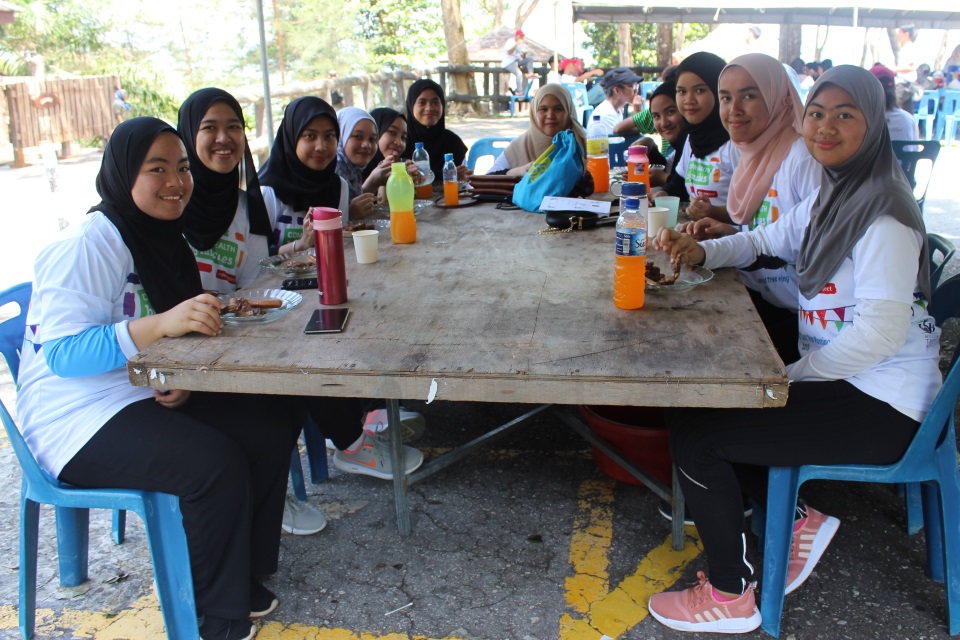
Volunteers enjoying the Commonwealth Big Lunch after the beach cleanup and tree planting

The Commonwealth Big Lunch was organised by Hand4Hand, whose founder, Iqbal Damit, was recently awarded the Commonwealth Points of Light Award, and was generously sponsored by Brunei Shell Petroleum. Reusable, eco-friendly water bottles were sponsored by Cuckoo International (b) Sdn Bhd. The gathering in Berakas Forest Reserve with over 200 volunteers is one of many Commonwealth Big Lunches happening across the 53 Commonwealth nations from 12 March – Commonwealth Day – until Sunday 22 April.

Launched by the Eden Project in partnership with the UK Government, thousands of people from across the Commonwealth are coming together to celebrate, discover and share their Commonwealth links, stories and experiences with one another over a shared meal.

Lunches are being held ahead of and during the Commonwealth Heads of Government Meeting 2018. Unfolding over five days, leaders and foreign ministers from up to 53 countries and over 2,000 delegates will gather in London and Windsor, UK, from 16 – 20 April to discuss and agree how to work together to address shared global challenges.

Further information

Photos from the event can be found on our UKinBrunei Flickr.


Link: Press release: British High Commission celebrates the Commonwealth
Source: Gov Press Releases

Press release: Delivering for Wales: Alun Cairns marks two years as Secretary of State for Wales

Two years ago today (19 March), Secretary of State for Wales Alun Cairns took his seat at the Cabinet table in Westminster and outlined his ambitions to create a nation which is more ambitious, confident and more outward looking than ever before.

The Welsh Secretary has overseen a number of key achievements for Wales since March 2016, including:

Abolition of the Severn Tolls

Following the return of the Severn Crossings to public ownership on 8 January 2018, the tolls were reduced for all drivers ahead of their complete abolition by the end of the year. This sends a direct message to businesses, commuters and tourists alike that we are committed to strengthening the links between England and Wales

The Great Western Powerhouse and the Severn Growth Summit

Over 300 guests from both sides of the Severn estuary attended the inaugural Severn Growth Summit at the Celtic Manor Resort to explore how links between the South Wales and South West England economies can be strengthened following the announcement of the abolition of the Severn Tolls later this year.

State of the art trains for south Wales

The new fleet of Intercity Express Trains to be introduced on the Great Western Main lines from London will significantly enhance the travel experience of passengers in South Wales.

Wales Act 2017

The Wales Bill received Royal Assent in January 2017, setting in stone a strong package of powers for Assembly members with stability and accountability at its heart.

Fiscal Framework

A new fiscal framework setting out how the Welsh Government will be funded following the devolution of some taxes represents a significant milestone for Wales. The deal provides secure long-term funding for the Welsh Government and gives Cardiff Bay greater visibility when looking at spending decisions.

City and Growth Deals

The Welsh Secretary is overseeing the delivery of the £1.2bn deal for the Cardiff Capital Region – UKG £500m contribution to the deal with provide an investment fund for the region and support electrification of the Valleys Lines railways. He was also a key driver for the Swansea Bay City Region which will deliver almost £1.3bn of investment to the region. The UK Government has also started formal negotiations on a North Wales Growth Deal and are open to proposals for a Mid Wales Growth Deal.

Broadband

The UK Government’s £69million investment in delivering superfast broadband across Wales has seen Wales experience a rapid increase in access from 29.4% of homes and businesses in 2010 to 94.2% by December 2017.

Welsh language

Alun Cairns became the first MP in history to make a speech in the Welsh Language in a House of Commons debate after the UK Government brought forward a motion February last year enabling MPs to speak in Welsh in Westminster debates.

Business support

The Government’s modern Industrial Strategy has been designed to build on Wales’ strengths in fields such as aerospace, technology and life sciences. The Secretary of State is putting Wales’ best foot forward to maximise the benefits for Wales from the initiatives and grand challenges it presents.

Export support

Over 80 companies joined the Welsh Secretary in Cardiff at the inaugural Wales Business Export Summit in 2017. The event connected firms starting out on exporting journeys with the expertise and support of the UK Government.

Speaking of his two years in office, Secretary of State for Wales Alun Cairns said:

Over the last two years I have had the privilege of experiencing the very best of this country – connecting with every corner of Wales, its culture, its history and its people.

The goals we have achieved for Wales over this time take us one step closer to achieving this Government’s mission to build a country that works for everyone.

But there is still work to be done. As we prepare to live through one of the most important moments in our country’s history, I will not waste a second in getting on with the job. I will provide the leadership to make sure that Wales is in the strongest possible position to prosper when we leave the European Union, to cultivate an economy that’s fit for the future, and deliver a stronger and fairer society for everyone.

Link: Press release: Delivering for Wales: Alun Cairns marks two years as Secretary of State for Wales
Source: Gov Press Releases

Press release: Government announces major programme to tackle inequalities in youth unemployment

Prime Minister Theresa May has announced the launch of an innovative new programme to address ethnic disparities in youth unemployment and to help disadvantaged young people get into work.

The announcement comes after Theresa May’s challenge to society to ‘explain or change’ disparities in how people from different backgrounds are treated, following the publication of the Race Disparity Audit – the government’s ground-breaking audit of public services, from central government to local communities, launched last October.

The £90 million youth programme, designed jointly by the Big Lottery Fund, DCMS, DfE and DWP, will be shaped by evidence from the Race Disparity Audit, which highlighted the differences in outcomes facing young people from different backgrounds in different parts of England.

It will offer young people the chance to work directly with educators and youth and community organisations – who will consider how their skills can benefit their local communities and businesses.

Young people will feed into the programme’s design, working with educators, youth and community organisations and businesses to demonstrate how their skills and talents can benefit their local economies.

Today’s announcement marks the start of an engagement phase which will see the government and the Big Lottery Fund running a series of workshops with young people from across the country to gather evidence about the unique challenges they face in making the transition from education to employment.

The Prime Minister also today announces the Race Disparity Audit Advisory Group, chaired by Simon Woolley. The Advisory Group will challenge, steer and support government departments to develop interventions to tackle disparities found in the Audit – and will drive civil society, businesses and local government to take action.

Figures from the Ethnicity Facts and Figures website show that young people from ethnic minorities between the ages of 16 and 24 are almost twice as likely to be unemployed (23%) as their white peers (12%) – despite having similar qualifications.

Later today, the Prime Minister will visit a Birmingham-based youth employment charity, which has helped thousands of young people to find work since 2010. The charity runs programmes helping unemployed 16 to 24 year-olds develop key skills in team work, leadership, communication and discipline – providing them with the necessary skills to gain qualifications and work experience so they can move into sustainable employment or further training.

On the visit, Theresa May will speak to young people about the barriers they have experienced in finding work, and will also meet young people who have successfully completed training and gone into full-time employment.

Prime Minister Theresa May said:

Youth unemployment blights communities and wastes talent and potential – and too many young people from deprived and ethnic minority backgrounds face barriers preventing them from entering the world of work.

Evidence from the Race Disparity Audit clearly shows that while the educational attainment gap between people of different backgrounds has narrowed over time, this has not been reflected in getting jobs.

Talent, ability and hard work should be the only factors affecting a young person’s ability to get on in life – not their background or ethnicity.

The launch of this ambitious programme, which has young people at its heart and draws on their direct experiences, will help to address the barriers holding many young lives back, and will support young people furthest from the labour market into employment, so they can achieve their full potential.

Dawn Austwick, Chief Executive of the Big Lottery Fund, said:

Young people who are facing multiple barriers to employment are the best placed to tell us what needs to change for them.

They will be at the heart of the process to shape solutions and create a dormant accounts youth programme that works for them by working with employers, educators, youth and community organisations.

Simon Woolley, Chair of the Race Disparity Advisory Group and Director of Operation Black Vote, said:

This intervention is driven by the Prime Minister’s leadership with support from NGOs. Our role is to find out where and how we can make the biggest impact on a range of issues including youth unemployment and the ethnic disparities within it.

Link: Press release: Government announces major programme to tackle inequalities in youth unemployment
Source: Gov Press Releases