
Press release: New overdraft alerts as CMA banking rules come into force

In a rule change required by the Competition and Markets Authority (CMA) as part of its Retail Banking Investigation, banks must now set up an alert system which will help their customers avoid unnecessary charges.

During its investigation, the CMA found that banks receive around £1.2 billion a year from unarranged overdraft charges. This new overdraft measure, combined with the CMA’s recent order to require banks to publicly announce their maximum monthly charges, could create significant savings for many bank customers.

A number of banks already have alert systems in place, but the new rules require all banks to send these alerts – through texts or a mobile banking app – and to implement other measures, such as a grace period in which people can transfer money into their account to avoid being charged.

The system will apply to new customers from today and will roll out to all existing bank customers over the coming month.

Adam Land, Senior Director at the CMA, said:

People will now be told when they are about to slip into overdraft, which could help them avoid potentially costly charges. And the changes we are requiring from today make it easier for small firms to switch to another bank for their current account or to obtain a loan.

These new rules, which are a result of our recent retail banking investigation, are part of a wider package that will help people to get the most out of their banks and force them to work harder for their customers’ money.
The overdraft alert system is one of 4 new measures that are being implemented today to improve the service people receive and make it easier to switch between different banks.

At the moment, only 3% of personal and 4% of business customers switch to a different bank in any year, even though personal customers in Great Britain could typically save £92 per year by switching. Small firms, which benefit from 3 of the new measures being introduced, could realise savings of around £80 a year on average.

Opening Business Current Accounts

In its investigation, the CMA found each bank is asking for different information from businesses applying to open current accounts. This has encouraged many small businesses to use their existing Personal Current Account (PCA) provider for their business account and has discouraged them from switching between banks. The CMA is therefore insisting that Business Current Account (BCA) opening procedures are standardised, so all banks will now ask for the same information from applicants.

Loan price and eligibility tool

Small and medium sized businesses will also now find it easier to take out a business loan thanks to a new loan price and eligibility tool to be launched by four banks: RBS Group, Lloyds Banking Group, HSBC Group and Barclays. This tool will help SMEs to understand the costs of taking out a loan and find the best deal for them.

Transaction history

Banks will now also have to provide personal and business customers who are closing their account with five years of transaction history, free of charge, unless they choose to opt out. This move aims to encourage switching, as the CMA has found that the fear of losing your transaction history can be a reason people don’t switch. It also means people will have easy access to their financial records for things like mortgage applications.

Notes for Editors

  1. In its final report on the retail banking market, published in 2016, the CMA announced a package of reforms to make banks work harder for their customers and help people take control of their banking using innovative new services. For more information, visit the retail banking investigation case page.
  2. The overdraft alert, which will be sent by text message or via a mobile banking app, applies to all banks with more than 150,000 active current accounts. RBS has indicated that, on occasion, alerts may be provided up to a day late to a limited number of its customers up until September 2018. In the event that the alert is sent late, the CMA has required the bank to either prevent a fee being charged or reimburse customers for any fee that is charged within this period.
  3. The FCA has found that signing up to text alerts alongside using mobile banking reduced monthly unarranged overdraft charges by 24% on average (around £11 per year for each customer). The regulator has been undertaking its own analysis into overdraft charges and is due to present its conclusions and any potential remedies later this year.
  4. The provision of transaction history remedy applies to all PCA providers with more than 150,000 active PCAs and all BCA providers with more than 20,000 active BCAs. Banks can decide whether to provide customers their transaction history in paper or electronic format. Clydesdale Bank indicated it would not be able to provide this service on the 2 February 2018 and the CMA therefore issued Directions to ensure it would be fully compliant from the 2 March 2018.
  5. The Business Current Account procedure requires all BCA providers with more than 20,000 active BCAs to adopt a Standard Information Set, which is the standard information required by banks when deciding whether to approve an application to open a BCA. The banks have worked with UK Finance to develop and agree the Standard Information Set, which will be made available on the UK Finance website.
  6. The new loan price and eligibility tools cover all unsecured loans and standard tariff unsecured overdrafts up to £25,000. They complement the CMA’s requirement – from August 2017 – for all providers to SMEs of unsecured loans and standard tariff unsecured overdrafts to publish the cost of these products, showing a representative annual percentage rate (APR) for loans and effective annual rate (EAR) for overdrafts.
  7. Media queries should be sent to: press@cma.gsi.gov.uk or journalists can call 020 3738 6191.

Link: Press release: New overdraft alerts as CMA banking rules come into force
Source: Gov Press Releases
Press release: The Earl and Countess of Wessex met Sri Lankan volunteers making a difference in their communities

Their Royal Highnesses spent time with those honoured by the Commonwealth Points of Light award, the Queen’s Young Leaders Programme and the Commonwealth Young Person of the Year Award.

In conjunction with the UK hosting the Commonwealth Heads of Government Meeting (CHOGM) in London this April under the theme ‘a Common Future for All’, Her Majesty The Queen, as Head of the Commonwealth, is recognising individuals from across the 52 members of the Commonwealth who have made a difference in their communities and beyond.

Kushil Gunasekera was named the 3rd Commonwealth Point of Light in honour of his exceptional voluntary service through the Foundation of Goodness. The Earl and Countess heard of his selfless work providing rural communities across Sri Lanka with access to education and training.

CHOGM 2018 will recognise the importance of building a revitalised Commonwealth that delivers for the citizens of all member states. With 60% of the Commonwealth’s population under 30, it is particularly important that the Commonwealth addresses the challenges faced by young people and answers their ambitions for a better life.

In line with this ambition, The Queen’s Young Leaders Programme celebrates exceptional young people from across the Commonwealth. Thejitha Edirisinghe, Senel Wanniarachchi, Rakitha Malewana and Bhagya Wijayawardane (four of the six young Sri Lankans who have been recognised in this way) spoke to the Royal Couple of what they have done to make a lasting difference in their communities.

Krystle Reid, Commonwealth Young Person of the Year, explained how her work has helped disabled young people secure employment and become self-sufficient.

Link: Press release: The Earl and Countess of Wessex met Sri Lankan volunteers making a difference in their communities
Source: Gov Press Releases

Press release: PM announces new UK-China creative and cultural collaboration

As China’s economy diversifies, and as the country moves from a heavily industrialised to a knowledge-based, innovation-driven economy, there are ambitions for culture and creative industries to reach 5% of China’s national GDP by 2020.

The UK is seen as a strong partner for China to achieve its ambitions in this sector, with creative industries the UK’s fastest-growing sector, and a major employer of 1 in every 11 in the workforce.

The V&A has recently opened a new gallery in Shenzhen, and the Terracotta Army will arrive in Liverpool for a new major eight-month exhibition next week. It is the first time in more than a decade that the warriors have come to the UK, and the exhibition includes items never previously shown outside of China.

From Shakespeare to Sherlock, from fashion to football, UK soft power is already highly influential in China. In a 2016 British Council survey, 82% of Chinese respondents found the UK attractive – more than any other G20 country.

The Prime Minister’s visit will build on this strong foundation and create new opportunities for British businesses in the creative and cultural sector.

The Prime Minister will announce a new agreement between DCMS and China’s State Administration of Cultural Heritage for a three-year programme of activity to develop UK-China cooperation in the field of cultural heritage.

The UK has world-leading expertise in heritage preservation, and this new agreement will create significant opportunities for British businesses.
The Prime Minister will also welcome a string of commercial deals in the creative sector, with a potential worth of almost £300 million, including:

  • plans for a Serpentine Pavilion in Beijing to open in May 2018, modelled on the Serpentine Gallery in Kensington Palace Gardens. It will be the first Pavilion co-commissioned and built by the Serpentine outside the UK
  • the announcement that ITV Studios Global Entertainment has agreed a deal with Chinese company Bilibili for the latest series of international hit Poldark, sold in to over 150 countries globally, and all four series of Mr Selfridge, the story behind the founder of London’s famous department store
  • the announcement that Zycon Media (UK) and DeZerlin Media (China) have reached an agreement to co-produce 10 animated feature films for the global market, each with a subsequent animated television series. The combined deal will employ hundreds of artists, technicians, and performers over the next 8 years
  • the announcement that UK company Silvergate Media and Chinese company CCTV Animation will jointly produce the fifth season of the award-winning British children’s animation Octonauts. The new British-Chinese co-production will be broadcast globally, including by the BBC in the UK and by CCTV in China. A further two seasons are planned
  • the announcement that Merlin Entertainments Plc will develop two new Merlin brands to China – a Dungeon in Shanghai, and a Little BIG City attraction in Beijing, as well as further investment planned for 2019 in Beijing with the opening of China’s third LEGOLAND Discovery Center
  • confirmation that the Eden Project International and China Jinmao Holdings Limited will create an iconic tourism and education centre in the city of Qingdao, focussed on the theme of water. The project is due to open in 2020. The Eden project is also announcing that it will undertake pre-planning and early feasibility consultancy work for a project in Jizhou (near the city of Tianjin) in a former limestone mine with the ultimate aim of regenerating the landscape and surrounding area. Together these projects are expected to generate 130 jobs in the UK

The Prime Minister said:

Both the UK and China have rich and distinctive cultures of which we are rightly proud. Today’s agreements mean we will work even more closely together, collaborating on film festivals, theme parks, architecture, history and much more.

These deals underline the strength of the UK’s creative industries and will generate hundreds of millions of pounds of investment, creating opportunities across the UK.

By sharing our history and culture we will also deepen the strong ties between our two peoples.

Matt Hancock, Secretary of State for Digital, Culture, Media and Sport, said:

We are in a golden era for UK-China relations. Our cultural collaboration is yielding fantastic results for British businesses, and the expertise of our creative industries is helping China to realise its own ambitions.

Our creative industries are fundamental to how Britain is seen across the world and this growing cultural partnership with China will help boost trade, jobs and investment.

Link: Press release: PM announces new UK-China creative and cultural collaboration
Source: Gov Press Releases

Press release: Penny Mordaunt: The UK is tackling the ‘global learning crisis’ to empower the next generation

At a time when half the world’s children leave primary school unable to read or write, International Development Secretary Penny Mordaunt will announce today (Friday 2 February) that the UK is stepping up its work to tackle this “terrible waste of potential” as she attends a global education conference jointly hosted by France’s President Macron and Senegal’s President Sall.

Over the next decade a billion more young people will enter the job market across the world – but 387 million children globally are set to leave school without the basic skills needed to get on in life because teachers aren’t well-prepared for their roles, and struggle to access the support or resources they need.

In Dakar, Ms Mordaunt will announce the UK’s commitment to the Global Partnership for Education (GPE) – and will set out how it is conditional on countries’ governments reforming their own education systems.

By encouraging radical improvements to education systems, the UK is supporting young people to get good jobs, and contribute to the future stability and prosperity of developing countries, so they can become our partners of the future. It’s also reducing the risk young people are forced to turn to crime or to search for a better life outside their own country – which directly impacts the UK.

The UK’s support for GPE over the next three years will work mostly across Sub-Saharan Africa and south Asia to:

  • keep 880,000 children in school each year for three years – over half of whom will be in fragile or conflict affected states;
  • train 170,000 teachers;
  • build 2400 new classrooms; and
  • distribute more than 20 million new textbooks.

This follows the UK-France Summit last month, when Prime Minister Theresa May and President Macron named 2018 the Global Year of Learning. This year-long partnership will see the UK and France working together, calling on donor countries and partners to step up to tackle the ‘global learning crisis’.

International Development Secretary Penny Mordaunt said:

It’s a terrible waste of potential that half the world’s children leave primary school unable to read or write because the quality of teaching is so poor.

We need an education revolution, but to succeed in tackling this global learning crisis, we will not just need to be open-hearted – we need to be hard-headed too.

The UK will lead the way by supporting countries’ governments to fundamentally overhaul their education systems to make sure they can ultimately step up and provide a good education for their own people.

All children deserve a decent education to make the most of their talents and to help lift themselves and their countries out of poverty – building a more prosperous and more stable future for us all.

Ms Mordaunt will say that the UK is focused on helping developing countries drive up standards in their education systems and ultimately take responsibility for investing in their own people, rather than depend on aid.

Although huge progress has been made in recent years improving access to education with 89% of children now in school, many teachers aren’t properly equipped to teach basic knowledge and vital skills.

UK aid has led the way, supporting 11.3 million of the world’s poorest children in primary and lower-secondary school between 2011 and 2015.

Under the Secretary of State’s new commitment to education, the UK’s Department for International Development (DFID) is:

  • working in partnership with countries to build inclusive education systems that will get children learning, so that governments can ultimately be responsible for providing education for their own people;
  • sharing its world-class expertise and developing new technologies like mobile registration to make sure teachers are properly trained and motivated to provide a quality education to their students; and
  • bringing education to the hardest-to-reach children, so that marginalised girls, those with disabilities and children affected by conflict are not left behind.

As set out by Prime Minister Theresa May and President Macron at the UK-France Summit, the UK is increasing its partnership with the French tackling serious threats and maximising opportunities in the Sahel region of Africa.

During her visit the Secretary of State will visit a school and a family planning clinic in Dakar, to see how the UK is helping Senegal serve its rapidly growing population, and stimulate economic growth which is creating jobs and future prosperity across the country.

Notes to Editors

  • The International Development Secretary will today pledge £225 million to the Global Partnership for Education. This represents an almost 50% increase compared to our current annual contribution and maintains the UK’s position as the one of the largest country donors to the fund. As previously, we will cap our final contribution at 15% of the total replenishment amount.
  • One third of DFID’s pledge will be conditional on GPE reorganising to focus on key improvements – such as making sure education systems are making better plans for teaching provision, improving methods for testing students’ progress, and making more grants conditional on countries raising teaching standards.
  • As DFID’s multilateral reform agenda sets out, it is crucial that organisations such as GPE are accountable for achieving a real impact in the countries where they work.
  • The Secretary of State’s new commitment to tackling the global learning crisis is set out in DFID’s 2018 Education policy, published today (Friday, 2 February) on gov.uk .
  • Teaching quality is the single biggest factor in getting children learning – but in many African countries, the majority of primary teachers do not have the minimum levels of literacy or the teaching skills they need to teach their classes.
  • As a result, globally, 56% (387 million) of children are not on track to read well or do basic maths by the end of primary school. In low income countries, almost 90 percent of children will not learn even basic skills in literacy and numeracy.
  • 69 million teachers will need to be recruited by 2030 – that’s more than the current entire population of the UK. It’s vital to make sure these teachers are properly trained and equipped to provide a quality education.
  • Huge inequalities persist in global education – 63 million girls aren’t in school, children with disabilities struggle to access any useful education, and children affected by conflict and crises all too often miss vital schooling.
  • DFID is acknowledged as a global leader on education. Between 2012–2015, the UK spent an annual average of £966 million per year on education. Between 2015-2017 DFID supported 7.1 million children to gain a decent education. This included at least 3.3 million girls.

Example

Revolutionising Ghana’s education system

The Government of Ghana is working with GPE and DFID to drive up quality of education in the poorest rural communities, including improving teacher quality and attendance. Over the past two decades, Ghana has seen dramatic increases in school enrolment and in the quality of basic education as well as in getting more children into school.

Thanks to extra teacher training through T-TEL (Transforming Teacher Education and Learning), Irene has massively improved her method of teaching, delivers engaging lessons and is an inspiration to her students. She also makes sure girls and boys participate equally in all her lessons. She’s now sharing these methods with other teachers at her school and carries out regular evaluation and training.

Because of improvements in Ghana’s education system, Ruhainatu is getting the quality education she needs to achieve her ambition of being a nurse, so that she can return to help her community which was once devastated by cholera.

  • Irene’s story (T-TEL): https://www.youtube.com/watch?v=22At-HUFx1E
  • Ruhainatu’s story: https://www.youtube.com/watch?v=qBA3X7NQDNM&list=PLANYXGuWdpB9DXouinft6jsmxr_wqvghe&index=13
  • GPE in Ghana: https://www.youtube.com/watch?v=X39v_sFNETo
  • GPE Images: https://www.flickr.com/photos/gpforeducation/sets/72157633304867054

General media queries

Follow the DFID Media office on Twitter – @DFID_Press

]

Link: Press release: Penny Mordaunt: The UK is tackling the ‘global learning crisis’ to empower the next generation
Source: Gov Press Releases

Press release: Jail term increased for robbers who targeted elderly

A gang of robbers who targeted elderly people will spend longer behind bars after Solicitor General Robert Buckland QC MP referred their original sentences to the Court of Appeal as unduly lenient.

Between the 1st and 4th May 2017, the gang of 5, led by Gerald McCann, 23, committed a series of robberies against elderly victims, specifically targeting them because of their vulnerability. The men used force against the victims upon entering the houses. In one case, an 80 year old man was struck on the head with a metal coffee pot. Valuable items of jewellery and money were taken from the properties.

McCann, who was 22 at the time, was convicted of robbery and possession of a prohibited article at Leeds Crown Court last November. He was jailed for 8 years and 4 months. The Court of Appeal agreed the sentence was too low and increased it to 10 years and 4 months.

The rest of the gang were sentenced to time in a young offenders’ institute. The second offender, who was 18 at the time, received 6 years and 9 months. His sentence has been increased to 7 years 8 months.
The third offender, who was 17 at the time, received 5 years and 4 months, his sentence has been increased to 6 years 6 months.

The forth offender, who was 15 at the time, received 4 years, his sentence has been increased to 5 years.
The fifth offender who was also 15, received 4 years and 4 months, his sentence has been increased to 5 years 3 months.

Speaking after the hearing, the Solicitor General said:

“This group of young men purposely set out to target vulnerable and elderly people. Many lives have been affected by their actions, and some of the victims no longer feel safe in their own homes. The Court’s decision to increase these sentences show that crimes of this nature will not be tolerated.”

Link: Press release: Jail term increased for robbers who targeted elderly
Source: Gov Press Releases

Press release: New government backed advisory panel commits to help eradicate rough sleeping

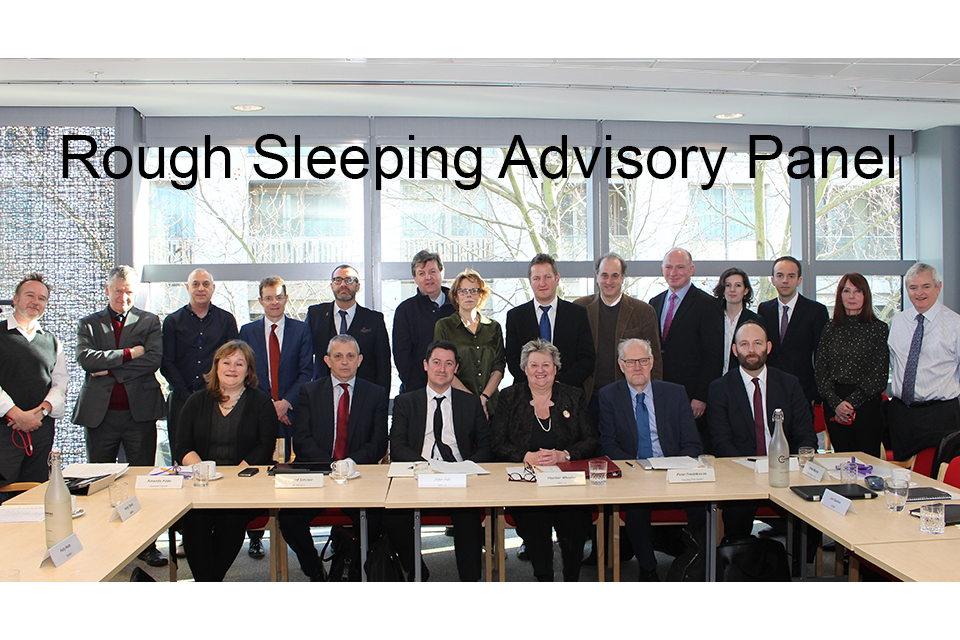
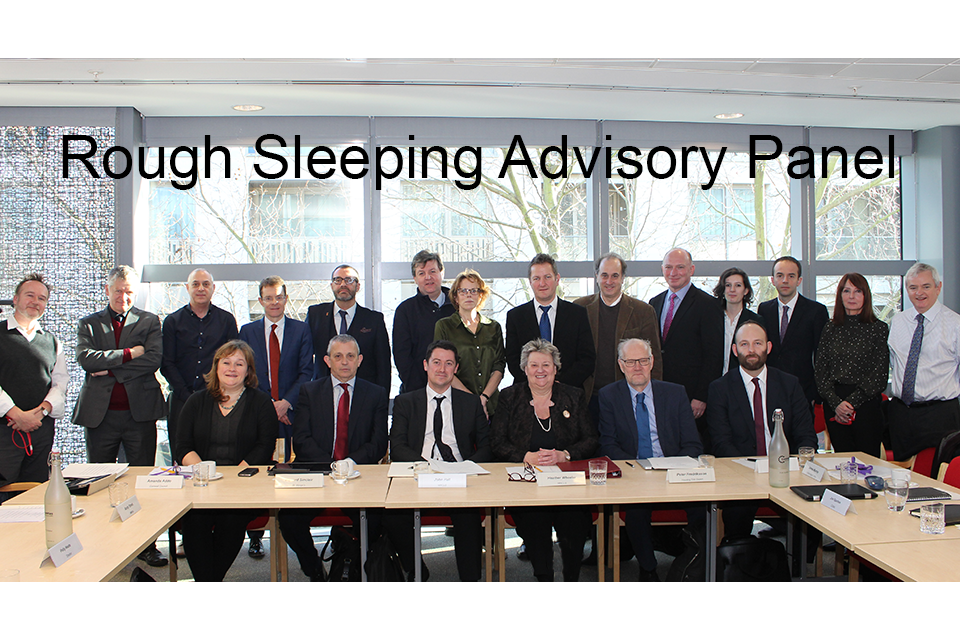
Leading experts from homelessness charities and local government met for the first time today as part of the government’s new rough sleeping advisory panel and committed to work together to help eliminate rough sleeping within a decade.

The new panel chaired by Homelessness Minister Heather Wheeler will help develop the national rough sleeping strategy to halve rough sleeping over the course of the Parliament and eliminate it altogether by 2027.

Made up of experts, charities and local government, the panel will draw on their considerable experience and individual successes to support the upcoming Ministerial Taskforce. This will bring together ministers from key departments to provide a cross-government approach to preventing rough sleeping and homelessness.

The panel members agreed key priority areas including what works best in terms of prevention such as housing-led approaches and the most effective ways of intervening with someone already experiencing rough sleeping.

Following the first panel meeting, Heather Wheeler said:

We cannot accept rough sleeping as a stubborn problem that will always be with us.

That’s why we are providing over £1 billion of funding, supporting those who are homeless and rough sleeping and bringing in the most ambitious legislation in decades that will mean people get the support they need earlier.

Tackling homelessness is complex, but no one should ever have to sleep rough.

The new panel is clear we need to act swiftly to realise our shared determination to help the most vulnerable in society and eliminate rough sleeping for good.

The panel will meet monthly and will report back to the Taskforce in the summer with a series of recommendations.

Among the key themes the panel will pursue are:

  • Prevention activity to stop people from rough sleeping in the first place.
  • Programmes and interventions to target both the drivers of rough sleeping and support vulnerable people at risk of rough sleeping.
  • Recovery and long-term support to help people maintain sustainable tenancies.
  • The role of wider society, business, the voluntary sector and the general public to tackle street culture.
  • Better data and clearer accountability to ensure the right structures are in place at the local and national level.

Government action to date on tackling homelessness and rough sleeping

  • As part of the £1 billion,of funding we are providing £315 million to local authorities for their work on homelessness, and an additional £402 million in Flexible Homelessness Support Grant funding, which local authorities can use to work more strategically to prevent and tackle homelessness pressures in their areas.
  • Government has also provided funding for the ‘No Second Night Out’ approach which identifies new rough sleepers and helps them off the streets immediately. Ministry of Housing, Communities and Local Government (MHCLG) has funded its national roll-out through the £20 million Homelessness Transition Fund and most local authorities have committed to the programme.
  • Announced £28 million for 3 Housing First pilots in Manchester, Liverpool and the West Midlands. The pilots will support long-term rough sleepers off the streets and help them to end their homelessness. Individuals will be provided with stable, affordable accommodation and intensive wrap-around support. This will to help them recover from complex health issues, for example substance abuse and mental health difficulties and sustain their tenancies.
  • Government is investing £9 billion to build more social housing, including council homes. This government is committed to fixing the broken housing market and our Housing White Paper sets out measures to do just that.
Rough Sleeping Advisory Panel

Members of the Rough Sleeping Advisory Panel

Chair

  • Heather Wheeler, Minister for Housing and Homelessness, Ministry of Housing, Communities and Local Government

Homelessness sector

  • Jon Sparkes, CEO Crisis
  • Polly Neate, CEO Shelter
  • Jeremy Swain, CEO Thames Reach
  • Howard Sinclair, CEO St Mungos
  • Jean Templeton, CEO St Basil’s
  • Rick Henderson, CEO Homeless Link

Mayors

  • Andy Street, Conservative Mayor for West Midlands
  • Andy Burnham, Labour Mayor for Greater Manchester Combined Authority
  • James Murray, London Deputy Mayor for London Housing and Residential Development

Local government and Housing Federation

  • David Orr, CEO National Housing Federation
  • Mark Lloyd, CEO Local Government Association
  • Mark Meehan, Director of Housing for Croydon and Chair of the London Council Housing Needs group
  • Gillian Douglas, Bristol City Council
  • Cathy Hadfield, Cornwall Council

International expert

  • Peter Fredriksson, advisor on Housing First to the Finnish Government

Sector experts

  • Lord John Bird, founder of the Big Issue
  • Brooks Newmark, previous Minister for Civil Society

Background

Terms of reference

The government aims to halve rough sleeping over the course of the Parliament and eliminate it altogether by 2027.

The Minister for Housing and Homelessness, Heather Wheeler, will chair the Rough Sleeping Advisory Panel which will support government to produce a national rough sleeping strategy. The strategy will take action to reduce rough sleeping now, and ensure the structures are in place to eliminate rough sleeping by 2027.

Over the coming months the Advisory Panel will:

  • meet with the Minister for Housing and Homelessness on a regular basis to advise on how we can reduce the numbers sleeping rough
  • support the senior Ministerial Rough Sleeping and Homelessness Reduction Taskforce
  • support the rough sleeping team in MHCLG to develop and test policy options
  • test approaches, share feedback, best practice and studies from across the sector to inform policy development

Rough Sleeping is a chronic issue and the Advisory Panel will consider a wide range of interventions to ensure we take action now. The Panel will also look at how the government can embed integrated systems in the long term to ensure that no one has to sleep rough. The review will take into account the experiences and successes of previous interventions, and highlight good practice.

The following lines of inquiry will be pursued:

  • Prevention activity to stop people from rough sleeping in the first place.
  • Programmes and interventions to target both the drivers of rough sleeping and support vulnerable people at risk of rough sleeping.
  • Recovery and long-term support to help people maintain sustainable tenancies.
  • The role of wider society, business, the voluntary sector and the general public to tackle street culture.
  • Better data and clearer accountability to ensure the right structures are in place at the local and national level.

Office address and general enquiries

2 Marsham Street

London
SW1P 4DF

Media enquiries


Link: Press release: New government backed advisory panel commits to help eradicate rough sleeping
Source: Gov Press Releases

Press release: Brighton woman imprisoned for laundering £1.4m as part of family fake sex drug operation

A woman has been sentenced today following a long running investigation into the sale of counterfeit and unlicensed drugs which convicted 12 individuals in 2015. The defendant received a prison sentence of 2 years and 3 months.

The medicines, which were sold predominantly over the internet, have an estimated value of £11 million with a suggested annual turnover in excess of £3 million.

She facilitated payments for the purchase of unlicensed erectile dysfunction medicines and claims that she received 10% of the ‘earnings’ laundered through her account but was unaware that the money was for the unlicensed medicine, Kamagra.

Samples of the products were found to contain potent, active medicinal ingredients with potential serious side effects and are classified as prescription only. Supply without medical supervision is dangerous as the contents of unlicensed medicines are unknown and untested.

Alastair Jeffrey, MHRA Head of Enforcement said:

Selling medicines outside of the regulated supply chain is a serious criminal offence. If you buy medicines online, you are potentially trusting a criminal to look after your health”.

Always seek professional help and visit your GP if you are ill. These criminals are motivated by greed and have no concern about your welfare.

MHRA is currently running the #FakeMeds campaign to warn people against buying potentially dangerous or useless unlicensed medicines sold by illegal online suppliers.

Visit www.gov.uk/fakemeds for tips on buying medicines safely online and how to avoid unscrupulous sites.

Link: Press release: Brighton woman imprisoned for laundering £1.4m as part of family fake sex drug operation
Source: Gov Press Releases

Press release: JD.com commits £2 billion to bring UK products to Chinese consumers

From luxury British couture and tea, to chocolate, beauty products, home appliances and other items, UK products have gained popularity in China in recent years. To meet this growing demand,JD.com, China’s largest retailer, has announced plans to sell £2 billion of UK goods to Chinese consumers in the next 2-3 years.

The agreement signed today between JD.com and the British Government’s Department of International Trade (DIT), is focused on making it easier for British companies to access the China market via JD.

“Many British brands recognise the huge potential of China’s enormous e-commerce market” said Richard Burn, Director-General of DIT China. “JD truly understands what Chinese consumers want and has the resources to help British brands ensure success in the region. We’re looking forward to working with JD to bring more British brands to China in the future.”

Prime Minister Theresa May, who is on her first official state visit to China since becoming Prime Minister, met with JD Chairman and CEO Richard Liu at the Residence of the British Ambassador to China. Among the topics Liu and May discussed were JD’s plans to help more UK brands reach JD’s 266 million customers.

The number of UK brands on JD.com has doubled over the last two years, with sales in 2017 growing 100% year-on-year. World famous brands Dyson, Clark’s, Johnnie Walker and Lipton are among the brands that have been popular with JD consumers. Over the past three years, Dyson sales on JD have increased by over 60 times.

In order to push even greater sales of British goods, JD will launch special campaigns for seasonal products and undertake other activities to give brands more opportunities to reach Chinese consumers. JD will kick off with a 24-hour “Celebrate Britain” sales promotion for UK products this April to introduce the “Best of Britain” to Chinese customers.

Link: Press release: JD.com commits £2 billion to bring UK products to Chinese consumers
Source: Gov Press Releases

Press release: PM meeting with President Xi: 1 February 2018

A Downing Street spokesperson said:

Prime Minister Theresa May today met with President Xi during her three-day official visit to China.

President Xi said that, step by step, China and the UK had elevated our relationship and he looked forward to further building on its success. The President quoted William Shakespeare, stating that: ‘What’s past is prologue.’

The PM said that, once Britain leaves the EU, we will be free to strike our own trade deals and pointed to the joint trade and investment review which will now take place as the first step towards delivering ambitious future trade arrangements.

President Xi said China’s markets would be further opened to the UK, including in sectors such as beef, dairy and other agricultural goods.

The PM and the President said the UK and China would hold further discussions on how best they can cooperate on the Belt and Road initiative, which offers significant opportunities to deliver further prosperity and sustainable development across Asia and the wider world. The PM and President spoke of the importance of international standards and transparency to ensure the initiative’s success.

The PM said it had so far been a very successful trip for the business delegation which had accompanied her to China, with deals worth at least £9bn expected to be signed.

The President and the PM discussed their shared commitment to protecting the environment, including their support for the Paris climate change agreement and determination to tackle the ivory and illegal wildlife trades.

The PM said the world had a collective responsibility to tackle plastic pollution on behalf of future generations. She pointed to the work which was being done in China to remove plastic particles from the Yangtzse river to stop them from flowing into the ocean.

The two leaders discussed North Korea and their shared determination to bring to an end DPRK’s illegal nuclear activity, agreeing denuclearisation was the objective.

They discussed Hong Kong, and reiterated the importance of and their commitment to “One Country, Two Systems”.

As permanent members of the United Nations Security Council, they also discussed the importance of the Rules-Based International System.

The PM and President agreed the importance of having frank conversations in areas where the two countries do not see eye to eye, and looked forward to further deepening their ties in the ‘golden era’, including in areas such as culture and education.

Link: Press release: PM meeting with President Xi: 1 February 2018
Source: Gov Press Releases

Press release: On-time Self Assessment returns break the record again

HM Revenue and Customs (HMRC) has once again surpassed its record of completed tax returns with a huge 10.7 million customers submitting theirs before the 31 January 2018 deadline.

Proving increasingly popular with its handy tips and helpful advice, the department’s online service was used by 9.9 million customers – meaning more than 92.5% of total returns were completed online.

There were 758,707 people who completed their return on the last day before the deadline and the most popular hour for customers to hit submit was from 4pm to 5pm on 31 January with 60,596 returns received (1,010 per minute, 17 per second).

Thousands of customers avoided any penalties at the last minute as 30,348 customers completed their returns from 11pm to 11:59pm yesterday.

HMRC handled 195,260 calls over the course of the day but waiting times were kept at just 3 minutes and 6 seconds, meaning that hundreds of thousands of customers got the extra support they needed to meet the deadline.

Angela MacDonald, Director General for Customer Services, thanked customers for meeting the deadline and said:

It’s really fantastic to see that each year, more and more Self Assessment customers are getting ahead of the game and submitting their tax return before the 31 January deadline. But we’re not complacent, we want the number missing the deadline to be zero, and we’ll continue to adapt the process to make it easier and simpler for all our customers until every return is in on time and without avoidable errors.

If you’re one of the small number that missed the deadline, please submit your return now to avoid further penalties. We really don’t want penalties, we just want tax returns.

For anyone who still has not submitted their return, help and advice is available on GOV.UK or from the Self Assessment helpline on 0300 200 3310 (open 8am to 8pm, Monday to Friday, and 8am to 4pm on Saturday).

Background

Self Assessment summary:

  • 11,433,349 Self Assessment returns were due
  • 10,687,761 returns were received by midnight on 31 January (93.5% of total issued)
  • Around 745,588 Self Assessment returns are still outstanding
  • 9,916,430 returns were filed online (92.8%)
  • 771,331 returns were filed on paper (7.22%)
  • more than 4,852,744 returns were received online in January 2018 (44.8% of total received)
  • 1,290,948 returns were received on 30 and 31 January (26.6 % of total returns received in January)
  • busiest hour: 4pm to 5pm on 31 January – 60,596 returns received (1,010 per minute; 17 per second)
  • 389,849 payments transactions were handled on 31 January

Penalties

The penalties for late tax returns are:

  • an initial £100 fixed penalty, which applies even if there is no tax to pay, or if the tax due is paid on time
  • after 3 months, additional daily penalties of £10 per day, up to a maximum of £900
  • after 6 months, a further penalty of 5% of the tax due or £300, whichever is greater
  • after 12 months, another 5% or £300 charge, whichever is greater

There are also additional penalties for paying late of 5% of the tax unpaid at 30 days, 6 months and 12 months.

Media contacts

Press enquiries only, please contact:

  • Patrick O’Brien: phone 03000 585 024, or email: Patrick.o’brien@hmrc.gsi.gov.uk
  • Thomas Channon: phone 03000 585 020, or email: Thomas.channon@hmrc.gsi.gov.uk
  • out of hours: phone 07860 359544
  • follow HMRC Press Office on Twitter @HMRCpressoffice

Link: Press release: On-time Self Assessment returns break the record again
Source: Gov Press Releases