Press release: UK Minister for Africa Harriett Baldwin visits Zimbabwe

UK Minister for Africa Harriett Baldwin arrived in Harare on 1 February. This is the second UK Ministerial visit to Zimbabwe since President Mnangagwa was sworn in in November 2017 and Minister Baldwin’s first visit since her appointment.

Minister Baldwin wants to learn more about Zimbabwe and better understand the context and the challenges and opportunities it is facing as it emerges from 37 years of rule by former president Robert Mugabe. The Minister will hold meetings with business representatives, politicians, human rights groups, NGOs and other members of civil society.

She will also see some of the important development work supported by the UK, including visiting a school for children with disabilities. She will see how the UK is increasing its work on reaching the most marginalised children with education, including those with disabilities, in the run up to the UK-hosted Disability Summit.

Minister Baldwin said:

The past few months have seen momentous change in Zimbabwe and it is a privilege to visit at such a pivotal time.

I am looking forward to meeting a wide range of Zimbabweans and hearing from them about the huge potential their country holds and the challenges that must be faced ahead of elections later this year.

The UK has a longstanding relationship with Zimbabwe and we are committed to working with the government of Zimbabwe for a bright, prosperous and hopeful future for all Zimbabweans.

Notes for editors

Minister Harriett Baldwin is the UK’s Minister for Africa for the Foreign and Commonwealth Office and the Department for International Development.

Follow us on Twitter and Facebook.

Link: Press release: UK Minister for Africa Harriett Baldwin visits Zimbabwe
Source: Gov Press Releases

Press release: Call for more retailers to become Disability Confident

The Minister for Disabled People, Health and Work, Sarah Newton, is encouraging more retailers to realise the benefits of employing disabled people as the government launches a new campaign to get retailers to sign up to its trail-blazing Disability Confident scheme.

According to the latest official statistics, around 123,000 vacancies exist in the retail and wholesale sector.

With the government’s ambition to see a million more disabled people in work by 2027, the retail and wholesale sector offers huge potential for disabled people.

Minister for Disabled People, Health and Work, Sarah Newton, said:

Disabled people can bring a wealth of talent and different perspectives to an organisation, and I want to encourage more retailers to make sure they’re not missing out on this huge untapped pool of talent.

Becoming Disability Confident sends a clear message to both colleagues and customers that retailers take inclusion seriously and value diversity.

We’ve made progress, but I want more retailers to sign up to improve equality of opportunity in this thriving sector and give more disabled people the chance of a fulfilling career.

The retail and wholesale sector is one of the largest in the UK, employing over 5 million people.

The spending power of the 11 million disabled people in the UK and their households – ‘the purple pound’ – is almost £250 billion.

The campaign will be spear-headed by retail sector leaders, including:

  • the British Retail Consortium
  • Sainsbury’s
  • John Lewis
  • Marks and Spencer
  • Post Office

Helen Dickinson OBE, Chief Executive of the British Retail Consortium said:

The retail industry wants to be a diversity and inclusion leader in order to harness the talents of the whole labour market. Disability Confident is an incredibly useful scheme that provides practical support to enable retailers to recruit and retain colleagues with disabilities.

As a Disability Confident employer ourselves, along with some of our members, we look forward to working with the government to drive awareness of the scheme and increase the number of Disability Confident employers from across the retail industry.

Employers like Sainsbury’s are helping to lead the way, acting as a champion for the Disability Confident scheme within the retail industry.

Tim Fallowfield, Sainsbury’s Corporate Services Director, said:

As one of the UK’s leading retailers, we are committed to knowing our customers better than anyone else and a vital part of being able to achieve this is by having a truly diverse colleague base, reflective of the UK population.

Through our involvement in the Disability Confident Business Leader’s Group, we’re able to share our experiences and advice with other retailers with the aim to encourage them to have confidence in employing people with a disability, providing these colleagues with the opportunity to realise their potential.

We are very proud to have achieved the status of Disability Confident Leader, which recognises our hard work in this area, and hope to see a growing number of retailers sign up to the scheme.

About Disability Confident

The Disability Confident scheme, launched in November 2016, provides employers with the skills, examples and confidence they need to recruit, retain and develop disabled employees.

The scheme was developed with employers, disability charities, and disabled people.

Contact Press Office

Press Office

Caxton House

Tothill Street
London
SW1H 9NA

Follow DWP on:

Link: Press release: Call for more retailers to become Disability Confident
Source: Gov Press Releases

Press release: 45,000 households move off benefit cap and into work

Since its introduction in April 2013, 170,000 households have had their Housing Benefit capped. Of these, 107,000 are no longer capped, with 45,000 households having moved into work.

The latest Office for National Statistics employment statistics also show that the employment rate is at a joint record high of 75.3%, with a record 32.2 million people in work.

There are now a record 810,000 job vacancies at any one time, a rise of 17,000 since last quarter and 60,000 a year ago. There are 340,000 more job vacancies than in 2010.

Work and Pensions Secretary of State Esther McVey said:

Our priority is to have a fair welfare system that promotes work, while caring for those who cannot – and that is why we brought in the benefit cap.

I’ve seen for myself how long-term unemployment can blight families for generations. Behind these figures are real people who have moved into jobs and are improving their lives for themselves and their children.

The benefit cap incentivises work, including part-time work, as anyone eligible for Working Tax Credit (or the equivalent under Universal Credit) is exempt.

Households where someone receives Disability Living Allowance, Personal Independence Payment, or the support component of Employment and Support Allowance and those claiming Carer’s Allowance or Guardian’s Allowance are also exempt from the cap.

More information

The figures above relate to the number of households who have had their Housing Benefit capped.

The benefit cap statistics released on 1 February 2018 also include – for the first time – a limited set of experimental statistics on the number of households who have had their Universal Credit capped.

Press Office

Caxton House

Tothill Street
London
SW1H 9NA

Follow DWP on:

Link: Press release: 45,000 households move off benefit cap and into work
Source: Gov Press Releases

Press release: Chemicals disposal investigation: findings published

Sellafield Ltd has today published the findings of an internal investigation into the disposal of potentially hazardous chemicals at our site last year.

In October 2017, a chemicals inventory check in our Analytical Services building identified potentially hazardous chemicals requiring safe disposal.

In line with industry best practice, we requested the assistance of the Army’s Explosive Ordnance Disposal (EOD) team to assist with these disposals.

The EOD disposed of the identified chemicals, along with other potentially hazardous chemicals subsequently identified, using the recognised safest method: controlled detonation on the Sellafield site.

Following the safe conclusion of these operations, we initiated an internal investigation to understand the root causes and recommend steps to improve our future handling of these substances.

The investigation has now concluded. It found the following:

There were 2 root causes:

  1. Our approach to conventional (non-radiological) safety is not always tailored to the risks and hazards of individual facilities
  2. Priority was not given to the disposal of redundant chemicals. This was because they were out of the conscious awareness of the majority of people within Analytical Services

Additional findings:

  • All of the redundant chemicals involved were on our chemical inventory but there was a lack of recognition of the risk associated with their degradation
  • A strong nuclear safety culture resulted in the risk being identified by employees

The investigation proposed recommendations:

  1. A site-wide review of potentially hazardous chemicals identified as requiring non-immediate action following last year’s inventory check. This will clarify who is responsible and will develop and implement a new approach for future chemical disposal.
  2. An external benchmarking exercise to understand best practice for the management of complex chemical inventories.
  3. A review of existing contracts to ensure specialist chemical advice and ongoing support is in place.
  4. A new system for the oversight and control of chemical inventories.

Steve Bostock, Sellafield Ltd chief operating officer, said:

The Sellafield site is home to some of the oldest and most complex risks and hazards anywhere in the world.

It is our responsibility to make sure these hazards are managed in a way that protects our workforce, the local community and the environment.

We take this responsibility very seriously, which is why I initiated an investigation into last year’s chemicals disposal event at the earliest opportunity.

I’m confident we now have a full understanding of the circumstances and an improved approach to the management of chemicals, which will also inform our approach to other potential hazards on our site.

Chemical disposals investigation report

This file may not be suitable for users of assistive technology.
Request an accessible format.

If you use assistive technology (such as a screen reader) and need a
version of this document in a more accessible format, please email info@sellafieldsites.com.
Please tell us what format you need. It will help us if you say what assistive technology you use.

For more information, please contact:

Matt Legg: +44 (0) 19467 83566 matt.legg@sellafieldsites.com

Ruth Hutchison: +44 (0)19467 86227 ruth.hutchison@sellafieldsites.com


Link: Press release: Chemicals disposal investigation: findings published
Source: Gov Press Releases

Press release: David Lidington in Wales and Scotland for talks on business and Brexit

The Chancellor of the Duchy of Lancaster David Lidington MP will visit Wales and Scotland this week, where he will meet with business leaders and politicians to discuss the economy and the UK’s preparations for leaving the EU.

Mr Lidington will attend roundtable discussions with different sectors of business in Cardiff (Thursday, February 1st) and Edinburgh (Friday, February 2nd). The newly appointed Minister will also hold bilateral discussions on the EU Withdrawal Bill with both the Welsh First Minister and the Scottish Deputy First Minister on Thursday.

Speaking ahead of the visits to Cardiff and Edinburgh, David Lidington said:

I am very much looking forward to visiting Scotland and Wales. The UK Government is committed to building a Britain where our strong economy benefits all parts of the UK.

I know that businesses in Wales are excited by the opportunities that come from our plans to remove the tolls from the Severn Bridge. Our investment in broadband and UK City Deals are making a real difference in Wales and Scotland. I want to hear from businesses in Cardiff and Edinburgh about what else we can do to help drive economic growth.

I am also looking forward to continuing my discussions with Carwyn Jones and John Swinney on how we can make progress with the EU Withdrawal Bill in our face-to-face talks today. We need to work together to find an agreed way forward.

In Cardiff, David Lidington will co-host, with the Secretary of State for Wales Alun Cairns MP, a meeting of the regular Expert Panel group of representatives of the businesses, agriculture, fisheries and third sector in Wales that advises on the arrangements for leaving the EU.

The Secretary of State for Wales has established the group to work with him to deliver a smooth and orderly exit from the EU in Wales.

Speaking ahead of the meeting, Secretary of State for Wales Alun Cairns said:

The UK Government is resolute in its commitment to delivering an EU exit that works for every part of the country, and to taking every opportunity along the way to further strengthen our precious union.

We have ensured that the Welsh Government and every sector in Wales have been fully and constructively engaged with the Brexit process, so we can together deliver the best possible deal for the people of Wales.

Scottish Secretary David Mundell said:

I look forward to meeting the Scottish Government later today. The return of powers from the EU will lead to a significant increase in the decision-making powers of Holyrood. We have made good progress in our discussions with the Scottish Government on common frameworks and will continue those discussions today. We want to agree an amendment to the EU (Withdrawal) Bill which we can then bring forward in the Lords.

The Minister will also chair a roundtable of Scottish business representatives in Edinburgh on Friday morning.

ENDS

Link: Press release: David Lidington in Wales and Scotland for talks on business and Brexit
Source: Gov Press Releases

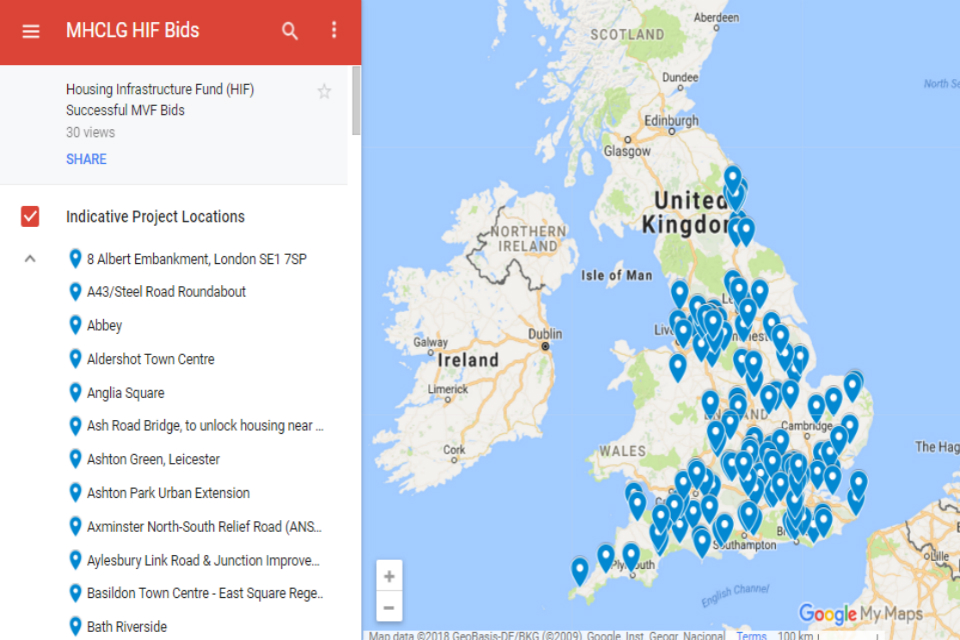
Press release: £866 million investment to help unlock potential 200,000 new homes

Up to 200,000 new homes are set to get off the ground as government confirms £866 million investment in local housing projects today (1 February 2018).

Housing Secretary Sajid Javid and Chancellor Philip Hammond announced that 133 council-led projects across the country will receive funding to support local work that will make housing developments viable and get much-needed homes built quicker.

With the government committed to building 300,000 homes a year by the mid-2020s, this first wave of funding from the £5 billion Housing Infrastructure Fund is part of a comprehensive programme to fix the broken housing market.

This latest investment and will fund key local infrastructure projects including new roads, cycle paths, flood defences and land remediation work, all essential ahead of building the homes.

Without this financial support these projects would struggle to go ahead or take years for work to begin, delaying the homes these communities need. Together with the government’s Industrial Strategy, it will provide high-quality infrastructure to support economic growth.

Chancellor of the Exchequer, Philip Hammond, said:

Today marks the first step of the multi-billion pound investment we announced at the Budget to help build the homes our country needs.

This fund finances vital infrastructure such as roads, schools and bridges, which will kick-start housing development in some of Britain’s highest-demand areas.

This support will help us meet our ambitious plan of building 300,000 new homes each year and ensure we have enough housing in areas which need it most.

Housing Secretary Sajid Javid said:

Our priority is building the homes this country desperately needs.

This first wave of investment totalling £866 million will help get up to 200,000 homes off the ground, making a huge difference to communities across the country.

This is just one of the many ways this government is taking action to get Britain building homes again.

Projects from County Durham to Cornwall will receive funding including:

  • £10 million for highway infrastructure to unlock further development at the Ashton Green housing site in Leicester, helping to unlock 3,300 homes
  • £10 million for construction of a bypass in Botley, Hampshire, a critical strategic road infrastructure project that will help unlock the delivery of 1,000 new homes
  • £3.6 million for drainage works, new roads and footpaths at the Manor Cluster, south-east Sheffield to help unlock more than 400 homes by 2025
  • £6.5 million to help build a new primary school as part of the Ilfracombe Southern Extension in North Devon. This will help unlock 750 new homes.

The £5 billion Housing Infrastructure Fund is a government capital grant programme to help unlock new homes in areas with the greatest housing demand. Funding is awarded to local authorities on a highly competitive basis.

The fund is divided into 2 streams:

  • A Marginal Viability Fund – available to all single and lower tier local authorities in England – to provide a piece of infrastructure funding to get additional sites allocated or existing sites unblocked quickly. Bids can be up to £10 million.
  • A Forward Fund – available to the uppermost tier of local authorities in England – for a small number of strategic and high-impact infrastructure projects. Bids can be up to £250 million.

The government will be progressing Forward Funding projects to go through to co-development in the coming weeks, with final funding announced from Autumn 2018. Today’s announcement forms part of the government’s Industrial Strategy which sets out a long term plan to boost the productivity and earning power of people throughout the UK.

The Strategy sets out how we are building a Britain fit for the future – how we will help businesses create better, higher-paying jobs in every part of the UK with investment in skills, industries and infrastructure.

Further information

The government together with Homes England assessed each bid for their strategic ambition, benefits costs ratio and their deliverability.

We will work with the local authorities over the coming months to progress schemes through detailed funding clarification.

See details of all bids:

Successful Marginal Viability Fund projects

This file may not be suitable for users of assistive technology.
Request an accessible format.

If you use assistive technology (such as a screen reader) and need a
version of this document in a more accessible format, please email alternativeformats@communities.gsi.gov.uk.
Please tell us what format you need. It will help us if you say what assistive technology you use.

Office address and general enquiries

2 Marsham Street

London
SW1P 4DF

Media enquiries


Link: Press release: £866 million investment to help unlock potential 200,000 new homes
Source: Gov Press Releases

Press release: Gambling sector told to raise its game after CMA action

As part of a major overhaul of how the gambling industry operates online, three leading operators – Ladbrokes, William Hill, and PT Entertainment – have formally committed to change the way they offer bonus promotions to ensure players can always access and release their own money.

These landmark changes must now be adopted across the sector. Firms not doing so will face regulatory action from the Gambling Commission. The Competition and Markets Authority (CMA) and the Gambling Commission have been working in collaboration to improve conditions for players gambling online.

The changes come in response to an investigation by the CMA to make sure the sector was not breaking consumer protection law, and mean players can be sure they can withdraw their own money when they play as part of a bonus promotion.

The firms involved have also agreed to be more upfront and clear in the terms and conditions of their bonus promotions. In particular, the changes mean:

  • Players won’t be required to play multiple times before they can withdraw their own money
  • Gambling firms must ensure that any restrictions on gameplay are made clear to players, and cannot rely on vague terms to confiscate players’ money
  • Gambling firms must not oblige players to take part in publicity

The promotions under particular scrutiny are designed to attract players onto casino-like gaming websites by offering bonus funds when players put in their own money.
The CMA found that certain terms in these promotions were likely to be ‘unfair’, in breach of consumer protection law, and could mislead consumers. There was particular concern people could be made to play for longer than they had bargained for before being able to withdraw their own money.

These problems were found to be common across the £4.7 billion online gambling sector and in October 2016 the CMA launched an investigation, in collaboration with the Gambling Commission, to tackle the shared concern around transparency and fairness.

The Gambling Commission has made clear that firms across the whole sector must promptly adopt similar changes to address the concerns identified.

George Lusty, Project Director, said:

Gambling always carries a risk, but players should never face unfair restrictions that prevent them from getting at their money. Firms mustn’t stack the odds against players, by putting unfair obstacles in their way, or making it difficult for them to stop gambling when they want to.

The CMA is here to make sure businesses’ terms and practices are fair for their customers. We welcome the commitment from these leading firms to address the problems our investigation uncovered, by making important changes to their terms and conditions.

We now expect others to follow, and look forward to the Gambling Commission’s continued work to make sure all operators in this sector play fair with their customers’ money.

Gambling Commission Executive Director, Sarah Gardner, said:

We back the action taken by the CMA today. Gambling firms must treat their customers fairly and not attach unreasonable terms and conditions to their promotions and offers.

We expect all Gambling Commission licensed businesses to immediately review the promotions and sign up deals they offer customers and take whatever steps they need to take, to the same timescales agreed by the three operators, to ensure they comply.

Operators should be very aware that we will continue to work closely with the CMA to ensure customers are getting a fair deal across the gambling industry.

Further enforcement activity by the CMA in the sector is ongoing. The CMA will continue to look at obstacles facing customers trying to withdraw their money after gambling online – whether as part of a promotion or not.

This includes considering terms that force players to withdraw prize money in small instalments over a long period of time, and terms which allow firms to confiscate funds if they haven’t been played with for a few months.

Notes for editors

  1. The key pieces of consumer protection legislation relevant to the CMA’s investigation are the Consumer Protection from Unfair Trading Regulations 2008 (CPRs) and Part 2 of the Consumer Rights Act 2015 (CRA). The CPRs prohibit certain unfair commercial practices – in particular misleading acts or omissions, but also behaviour that is contrary to the requirements of professional diligence. Amongst other things, the CRA prohibits unfair contract terms in consumer contracts and requires that terms be transparent.
  2. The CMA opened an investigation into the gambling sector’s compliance with consumer protection law in October 2016 after hearing about a range of concerns that suggested some operators were not treating their customers fairly. This investigation heard from over 1,000 customers with concerns about a large number of different gambling firms, required companies to answer questions about how they operate, closely examined the advertising and terms on a range of websites, and asked companies to give it demonstrations of the consumer journey and consumer play on their sites.
  3. This investigation led to CMA announcing in June 2017 that it had opened cases against a number of operators and a new line of enquiry to look further into obstacles that people face when they try to withdraw their money after depositing funds and gaming or betting online (whether as part of a promotion or not).
  4. The CMA is the UK’s primary competition and consumer authority. It is an independent non-ministerial government department with responsibility for carrying out investigations into mergers, markets and the regulated industries and enforcing competition and consumer law. For CMA updates, follow us on Twitter @CMAgovuk, Facebook, Flickr and LinkedIn.
  5. As a result of these cases, three operators have provided undertakings to the CMA. They are Ladbrokes Betting & Gaming Limited, trading as Ladbrokes (“Ladbrokes”), WHG (International) Ltd, trading as William Hill (“William Hill”), and PT Entertainment Services Limited, trading as titanbet.co.uk and winner.co.uk (“PT Entertainment”).
  6. The provision of these formal commitments (‘undertakings’) by the three operators is not an admission of a breach of the law. Nor does the CMA’s view amount to a binding ruling – ultimately only a court can rule that a particular term or practice infringes the law.
  7. The CMA acknowledges the co-operation and positive engagement of these operators throughout the investigation, and welcomes their constructive approach.
  8. The Gambling Commission regulates gambling in Great Britain in partnership with licensing authorities. It also regulates the National Lottery. Its regulations are aimed at ensuring gambling is crime-free, fair and open and children and other vulnerable people are protected. It advises central and local government on the impact of gambling and its regulation. It holds operators to account; it ensures operators meet licensing standards and takes action against those that don’t. It ensures that National Lottery returns to good causes are maximised.
  9. The Gambling Commission reports that in 2016 the online gambling sector was worth £4.7 billion (Gross Gambling Yield) and accounted for 34% of all gambling. It also reports that there are over 28 million active accounts for licensed facilities in Great Britain and that nearly 9 million people had gambled online in the 4 weeks up to 31 March 2017.
  10. The CMA has produced a ‘60-second summary’ to help all gambling operators review their practices and ensure their terms and conditions are in line with consumer protection law. It has also produced ‘advice for gamblers’ and a short video guide for consumers.
  11. If you are a member of the public with a query please email general.enquiries@cma.gsi.gov.uk or call 02037376000.
  12. Media enquiries to the CMA should be directed to press@cma.gsi.gov.uk or 020 3738 6798. Media enquiries to the Gambling Commission should be directed to Nikita Jan njan@gamblingcommission.gov.uk or 0121 230 6700.

Link: Press release: Gambling sector told to raise its game after CMA action
Source: Gov Press Releases

Press release: PM announces new UK-China action to end the illegal wildlife trade

Proposals to outlaw the sale of ivory have attracted more than 70,000 replies – one of the largest responses in the history of Defra.

Officials are still analysing the replies but said it was clear that the ‘overwhelming majority’ support a ban. The government will set out its detailed response shortly.

As part of a global government effort to crack down on the wildlife trade, Prime Minister Theresa May has announced a joint UK-China effort to strengthen international cooperation.

Ahead of the London 2018 Illegal Wildlife Trade Conference, the two countries will pledge to share our expertise in this area with countries in the southern African region.

Border Force officers will share their expertise in identifying smuggled ivory with counterparts worldwide to stop wildlife trafficking.

The UK military also trains an elite force of anti-poachers in African countries.

This week, an enforcement workshop facilitated by UK and Chinese experts is being held in Johannesburg to share best practice on tackling the international illegal wildlife trade.

In October 2017, the Environment Secretary launched a public consultation on proposals to ban sales of ivory in the UK.

The proposals would help protect elephants and help combat poaching by removing opportunities for criminals to trade illegally-poached ivory.

The environment and working together to tackle the wildlife trade are being discussed by the UK and
China during a three-day visit by Mrs May.

Yesterday, the Prime Minister visited the Yangtze River in Wuhan, where she was briefed by local experts on Wuhan’s efforts to reduce pollution in the river and in the city’s lakes, including from micro plastic pollution.

The Prime Minister heard how improvements in water quality are helping to protect and restore the population of Yangtze River finless porpoises, including through a project led by the Zoological Society of London working in conjunction with local marine biologists.

Speaking in China, the Prime Minister said:

My visit to China is about our two countries working together on some of the most significant challenges of our time. And during my visit I have seen first-hand the way UK expertise is supporting Chinese efforts to protect wildlife and improve the quality of life of its citizens.

I am proud of the agreement that the UK and China have made to boost our co-operation in the fight against the illegal ivory trade.

We have committed to using all the levers at our disposal to lobby for other countries to implement domestic bans and stamp out this abhorrent practice.

The government will work both at home and overseas to tackle poaching and the illegal ivory trade.

In October 2018, the UK will host a fourth international conference on the illegal wildlife, bringing global leaders to London to tackle the strategic challenges of the trade.

This follows the groundbreaking London 2014 conference on the illegal wildlife trade, and subsequent conferences in Botswana and Vietnam.

Link: Press release: PM announces new UK-China action to end the illegal wildlife trade
Source: Gov Press Releases

Press release: New figures show larger proportion of strokes in the middle aged

Public Health England (PHE) today launches the Act FAST stroke campaign which urges the public to call 999 if they notice even one of the signs of a stroke in themselves, or in others:

  • Face – has their face fallen on one side? Can they smile?
  • Arms – can they raise both their arms and keep them there?
  • Speech – is their speech slurred?
  • Time – to call 999

In England, one in six people will have a stroke in their lifetime, and new statistics released by PHE show that 57,000 people had their first-time stroke in 2016. It is estimated that around 30% of people who have a stroke will go on to experience another stroke.

Stroke is the third most common cause of premature death, and a leading cause of disability in the UK. There are around 32,000 stroke-related deaths in England each year. Deaths related to stroke have declined by 49% in the past 15 years. This has been accredited to a combination of better prevention, earlier treatment and more advanced treatment. Getting an NHS Health Check, for those aged 40 to 74 years, can identify early if you are at risk of a stroke.

While the majority (59%) of strokes occur in the older generation, PHE’s figures also found that over a third (38%) of first time strokes happen in middle-aged adults (between the ages of 40 to 69). More first-time strokes are now occurring at an earlier age compared to a decade ago. The average age for males having a stroke fell from 71 to 68 years and for females, 75 to 73 years between 2007 and 2016.

Awareness is crucial, so the campaign reaches out to people of all ages to highlight the risk of stroke and reiterates the signs and how vital it is that people call 999 and get to hospital as soon as possible. Around 1.9 million nerve cells in the brain are lost every minute that a stroke is left untreated, which can result in slurred speech and paralysis. If left untreated, a stroke can result in permanent disability or death.

The Stroke Association’s latest State of the Nation report reveals that in the UK almost two thirds (65%) of stroke survivors leave hospital with a disability. Around three quarters of stroke survivors have arm or leg weakness, around 60% have visual problems and around a half have difficulty swallowing and loss of bladder control. Communication is also affected in around a third of stroke survivors.

Professor Julia Verne, Public Health England Director, said:

Stroke is still one of the leading causes of death in England. While it’s often associated with older people, the latest research shows that people are having strokes at a younger age. Everyone needs to be aware of the signs.

Calling 999 as soon as you see even one of the symptoms develop – in the face, arms and speech – is essential. Speedy treatment will help prevent deaths and disability.

Tony Rudd, National Clinical Director for Stroke with NHS England and stroke physician at Guy’s and St Thomas’ NHS Foundation Trust, comments:

Thanks to improved NHS care, stroke survival is now at record high levels. Urgent treatment for strokes is essential, so friends and family can play a key part in making sure their loved ones receive care as quickly as possible.

Every minute counts and knowing when to call 999 – if you see any one of the signs of stroke – will make a significant difference to someone’s recovery and rehabilitation.

Steve Brine MP, Parliamentary Under Secretary of State for Public Health and Primary Care, said:

Strokes still claim thousands of lives each year, so the message of this Act FAST campaign remains as relevant as ever. The faster you act, the greater the chance of a good recovery. That’s why I’m urging everybody, and we must remember stroke can hit at any age, to familiarise themselves with the signs of a stroke and be ready to act fast.

Martin Flaherty OBE, Managing Director of the Association of Ambulance Chief Executives said:

We fully support Public Health England’s Act FAST stroke campaign. This is an important message and we urge people to call 999 immediately if they notice the signs or symptoms of a stroke in themselves or in others. Even if it is not a stroke, it is likely to be something that needs medical advice and attention, so calling the ambulance service is the right thing to do.

Juliet Bouverie, CEO of the Stroke Association, said:

As the UK’s leading stroke charity, we have said time and again that stroke devastates lives in an instant. Almost two thirds of stroke survivors leave hospital with a disability, but it doesn’t have to be this way. The faster you seek and receive emergency specialist treatment for stroke, the better your chances of making a good recovery. Knowing the signs of stroke and being able to Act FAST could save a life – your life.

The FAST (face, arms, speech, time) acronym has featured in the advertising for a number of years and is a simple test to help people identify the most common signs of a stroke.

Background

  1. The Act FAST campaign videos and pictures can be found on Dropbox.
  2. Interview opportunities with PHE, healthcare professionals and case studies are available upon request
  3. The Act FAST campaign will run nationally from 1 February. The campaign includes advertising on TV, press, radio, bus interior posters and digital, supporting PR and a social media drive. Some activity will specifically target black and minority ethnic audiences because African, African-Caribbean and South Asian communities have a higher incidence of stroke. Twitter: @ActFAST999, Facebook: www.facebook.com/ActFAST999
  4. A stroke is a brain attack that happens when the blood supply to the brain is cut off, caused by a clot or bleeding in the brain. A mini stroke is also known as a transient ischaemic attack (TIA). It is caused by a temporary disruption in the blood supply to part of the brain.
  5. The Stroke Association is a charity that believes in life after stroke and together we can conquer stroke. It works directly with stroke survivors and their families and carers, with health and social care professionals and with scientists and researchers. They campaign to improve stroke care and support people to make the best recovery they can. They fund research to develop new treatments and ways of preventing stroke. The Stroke Helpline (0303 303 3100) provides information and support on stroke.
  6. The One You campaign is a nationwide programme that supports adults in making simple changes that can have a huge influence on their health. Changes that could help prevent diseases such as type 2 diabetes, cancer and heart disease and reduce risk of suffering a stroke or living with dementia, disability and frailty in later life
  7. People aged over-30 are being encouraged to take Public Health England’s online ‘Heart Age Test’ to find out their ‘heart age’ which will show their potential risk of having a heart attack or stroke and gives them the opportunity to take action. To calculate someone’s heart age, they will need to share some lifestyle information, including weight, height and smoking habits. They will then be able to see how their real age compares to their heart age and find out how many years they can expect to live without developing cardiovascular disease
  8. Adults aged 40 to 74 are eligible for a free NHS Health Check which is designed to spot early signs of stroke, kidney disease, heart disease, type 2 diabetes or dementia. As we get older, we have a higher risk of developing one of these conditions. An NHS Health Check helps find ways to lower this risk. Those in the age group can expect to receive a letter from your GP or local authority inviting you for a free NHS Health Check every 5 years.
  9. Additional symptoms of stroke and mini stroke can include sudden:
  • loss of vision or blurred vision in one or both eyes
  • weakness or numbness on one side of the body
  • memory loss or confusion
  • dizziness, unsteadiness or a sudden fall, especially with any of the other symptoms

Celebrity campaign supporters

Celebrity supporters of this campaign include Shelley King, Gloria Hunniford, Marcus Birdman and Alastair Stewart. Quotes from the celebrities are included below and interviews are available upon request.

Shelley King, actress who plays Yazmeen Nazir on Coronation Street and supporter of the Stroke Association, said:

Both my mother and grandmother have been affected by a stroke so it’s something incredibly close to my heart and I want to do anything I can to encourage people to be aware of the signs of a stroke and to act quickly if you notice them, either in yourself or in other people around you. Back in the 90s when my mother had a stroke, there was very little awareness – many people wouldn’t have spotted the signs or known what to do, delaying action that could have saved lives. But today, with campaigns like Act FAST, we can be empowered to do more. A stroke can strike at any time – it might be someone just walking down the street who needs your help – so it’s crucial that all of us take notice of the FAST acronym and know to call 999 immediately if we see any single one of the signs.

Gloria Hunniford, television and radio presenter and supporter of the Stroke Association, said:

I know first-hand the importance of recognising signs of stroke and acting fast, having had to do so for my husband, Stephen. I was about to head out of our home to work, when Stephen stumbled into the house from the garden saying his left arm felt like cotton wool. My dad had suffered a series of strokes, so recognising the warning bells, I knew I had to act fast. Not many of us realise how quickly the clock is ticking for someone who is suffering stroke – thankfully Stephen got to the hospital in time to receive clot-busting treatment within the crucial 3-hour time window. Whether it’s just one symptom or more, and no matter how subtle, it’s absolutely essential to call 999 at the first signs of a stroke. I dread to think what could have happened if Stephen was too late – his outlook could have been much worse. Fortunately, he fully recovered.

Alastair Stewart OBE, journalist and newscaster and supporter of the Stroke Association, said:

My father had a stroke and it was devastating for my family. He was my hero and to see him struggling with disabilities afterwards was heart-breaking. I’d encourage everyone to familiarise themselves with the Act FAST acronym so they can act quickly when they see a stroke happening and hopefully avoid someone experiencing the same difficulties as my father.

Markus Birdman, stand-up comedian and supporter of the Stroke Association, said:

I considered myself to be fit and healthy, so when I was 40 and had a stroke it was a shock. I woke up one morning and found it really hard to see; I had absolutely no idea what was going on. You never think it’s going to happen to you, especially not when you’re young, but strokes can happen at any age so it’s important that people know the signs to look out of so they can act quickly. The faster you act, the less damage that is done and the better the person’s chance of a good recovery.”

Public Health England exists to protect and improve the nation’s health and wellbeing, and reduce health inequalities. It does this through world-class science, knowledge and intelligence, advocacy, partnerships and the delivery of specialist public health services. PHE is an operationally autonomous executive agency of the Department of Health. Twitter: @PHE_uk, Facebook: www.facebook.com/PublicHealthEngland.

freuds

Public Health England Press Office

Link: Press release: New figures show larger proportion of strokes in the middle aged
Source: Gov Press Releases

Press release: Share your views on plans for the A417 Missing Link

On 15 February 2018 Highways England will launch a consultation on options to upgrade a three-mile stretch of the A417 near Birdlip in Gloucestershire.

Known locally as the ‘missing link’, this stretch of single carriageway road between the Brockworth bypass and Cowley roundabout restricts the flow of traffic on a key route which is otherwise dual carriageway. Upgrading this section to dual carriageway will help unlock Gloucestershire’s potential for growth and secure opportunities for housing and jobs, as well as improving life in local communities.

The A417 passes through the Cotswolds Area of Outstanding Natural Beauty and so any solution will be designed sensitively to meet the special character of the landscape, environment and history.

The improvement is being made possible by the Government’s £15bn investment in motorways and major A roads and will be delivered by Highways England.

Project manager Mike Goddard said:

Our plans will deliver reliable journey times between the Thames Valley and West Midlands, offer a safer journey for drivers and protect the special character of the landscape.

Upgrading this route has been a key focus for the community and we would encourage as many people as possible to share their views on the different options to help us shape the best possible outcome.

Highways England is holding a public consultation between 15 February 2018 and 29 March 2018. Once the consultation officially launches, full details of the options for consideration and feedback forms will be available online via the scheme website, along with dates and venues public information exhibitions.

General enquiries

Members of the public should contact the Highways England customer contact centre on 0300 123 5000.

Media enquiries

Journalists should contact the Highways England press office on 0844 693 1448 and use the menu to speak to the most appropriate press officer.

Link: Press release: Share your views on plans for the A417 Missing Link
Source: Gov Press Releases