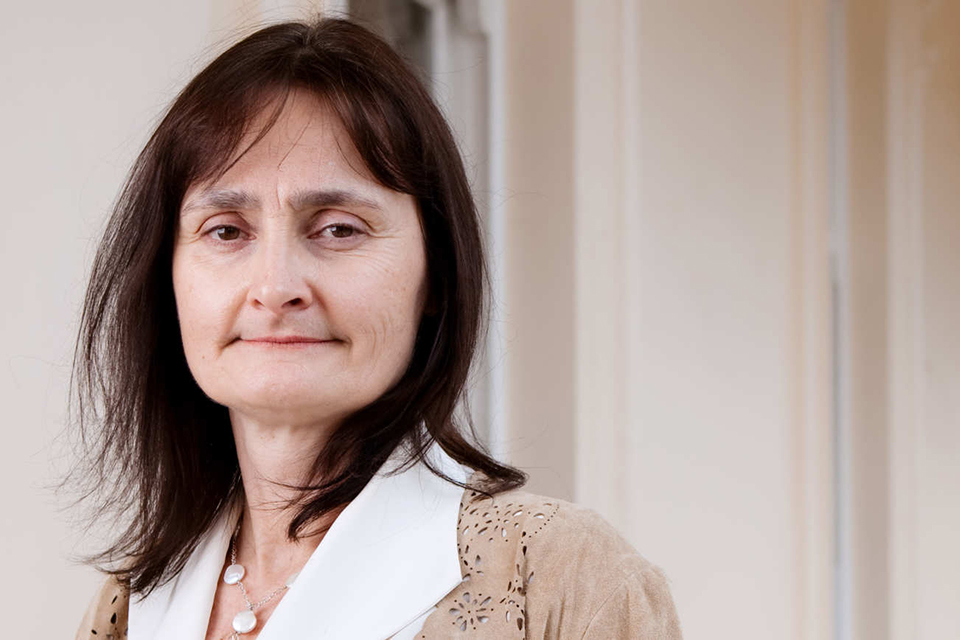
Press release: Welsh Secretary Alun Cairns’ New Year message for 2018.

Each New Year provides us with the opportunity to reflect on our achievements over the 12 months, and look forward to the year that stretches before us.

2017 was the year that Wales once again shone in the global spotlight and underlined its credentials as a first class host of major sporting events when Cardiff hosted the UEFA Champions League final. The biggest sporting event in the world that year was beamed to 200 countries and up to 170,000 fans from all over the world flocked to the city and left with a clear and positive message about everything Wales has to offer.

There is little doubt that 2017 was also the year that launched the UK into a seminal moment in our political and constitutional history.

We began the year by writing a new chapter in Welsh devolution as the Wales Bill received Royal Assent. In March we triggered Article 50, putting the decision taken by the British people to leave the European Union into action. And we ended the year by reaching an agreement on the first phase of negotiations which will take us through to discussions on trade and security in 2018.

It was the year that the UK Government also underpinned its ambition to re-balance the Welsh economy and grow the private sector with major investment in infrastructure.

The decision to reduce the Severn Tolls before abolishing them altogether, the introduction of state of the art trains on the Great Western Mainline and funding for superfast broadband, are all essential steps towards delivering long-term, balanced economic growth.

We have also continued to demonstrate that this Government is firmly on the side of business. The Government’s modern Industrial Strategy has been designed to build on Wales’ strengths in fields such as aerospace, technology and life sciences and I want to ensure that we are putting our best foot forward to maximise the benefits for Wales from the initiatives and grand challenges it presents.

And of course, the UK Government has set out the way forward for a comprehensive and ambitious series of City Deals for Cardiff and Swansea, is progressing with a growth deal for North Wales and is opening discussions on a growth deal for the Mid Wales region.

These deals are about creating a network of regional economic powerhouses capable of forging mutually beneficial connections and linkages.

This is why our announcement to abolish the Severn tolls is so important – my number one aim when I became Secretary of State – sending a direct message to businesses, commuters and tourists alike that we are committed to strengthening the links between England and Wales.

And in order to build on this, one of my first tasks in the New Year will be to host a Summit on 22nd January at the Celtic Manor to bring together local partners from across the South West of England and the South Wales to explore how we can further strengthen the links between the two economies.

So if 2017 was the year of progress for Wales and the United Kingdom, 2018 will be the year where we must have the vision and the courage to seize the opportunities these moment present.

This is also the challenge that we lay down to the Welsh Government when firmer foundations for devolution in Wales come into force on 1 April next year. The new reserved powers model of devolution in Wales will make clear what is devolved, and the responsibility of the National Assembly for Wales, and what is reserved – and the responsibility of Parliament. This will put more decisions into the hands of Welsh Ministers, giving them important new levers to grow the Welsh economy and to deliver better public services across Wales.

As the voice of the UK Government in Wales, and the voice of Wales in Westminster my department will continue to closely with departments across Whitehall to ensure companies and investors see Wales as an outward-looking, ambitious trading partner. That was the message I gave to business leaders on my recent trips to Japan and Qatar, where I spoke to a number of investors – both existing and potential – about what Wales has to offer post EU exit. And it will be the message we will carry forward into 2018.

The UK Government will not be found wanting in energy, enterprise or enthusiasm when it comes to delivering for Wales. In 2018, we will continue to manage our economy carefully, to build a country that works for everyone and an economy that is fit for the future.

This is how we will preserve, protect and progress our prosperity.

On behalf of my ministerial colleagues, I wish you all a very healthy, happy and prosperous 2018.

Link: Press release: Welsh Secretary Alun Cairns’ New Year message for 2018.
Source: Gov Press Releases

Press release: Fresh UK aid for humanitarian crises in 2018, as International Development Secretary warns it could be even “bleaker” than 2017

International Development Secretary Penny Mordaunt today announced a new package of support for humanitarian crises in the coming year, after UK aid delivered life-saving support to millions of people around the world and averted two famines in 2017.

In early 2017 the United Nations warned that the world was facing its worst humanitarian crisis since 1945. Ms Mordaunt says today that 2018 could be even worse with ongoing famines and conflicts in Yemen, South Sudan and Burma.

The new UK aid package will give a £21 million boost to the United Nations’ Central Emergency Response Fund (CERF) so agencies can respond even more quickly to under-funded emergencies around the world in 2018.

It will help to provide critical health services to 20 million people, plus clean water and sanitation to 13 million people and food to 9 million people.

The UK package is part of a wider international relief effort. Globally, the United Nations estimates that in 2018 some 136 million people in 25 countries will be in need of humanitarian assistance.

The UK is ready to deliver life-saving aid to those that need it most.

During 2017, UK aid has helped prevented famines in Nigeria and Somalia, as well as alleviating untold suffering in South Sudan and Yemen. We achieved this by providing:

  • 1.8 million people in Yemen with food, 300,000 with safe water and 250,000 with medical treatment
  • 1.6 million people in Somalia with food, 1.1 million with safe water and 700,000 with medical treatment
  • 1 million people in northeast Nigeria with food assistance and 500,000 with safe water
  • 500,000 people in South Sudan with food, 300,000 with safe water and 100,000 with medical treatment

In addition, this year UK aid delivered 827 tonnes of supplies in response to hurricanes Irma and Maria in the Caribbean. It also provided emergency shelter to 130,000 people affected by the Rohingya crisis and medical support for more than 1 million people in Syria.

International Development Secretary Penny Mordaunt said:

While 2017 was a year of harrowing humanitarian crises, the truth is 2018 could be even bleaker.

When we see suffering, we instinctively want to help. Britons are big-hearted, open-minded and far-sighted – qualities that define a great nation.

This year, through UK aid and further public donations, we helped avert famines in Nigeria and Somalia, gave emergency help to the survivors of the Caribbean hurricanes and provided a vital life-line to people suffering from conflict in Syria and Yemen.

Britain is giving life saving aid, but also hope, to millions of people around the world. In the challenges 2018 brings Britain will continue to be at the forefront of the global humanitarian response.

Ms Mordaunt also announced ¬ongoing support for people driven from their homes as a result of the conflict in Syria, which is in its seventh year. The UK aid package will give money directly to Syrian refugees living in Lebanon, so they can decide how best to look after their families.

The programme, delivered by the UN’s World Food Programme (WFP), will help stamp out child labour by providing more than 10,0000 families with an allowance so that they can buy essential food, shelter, household supplies and medical assistance.

Notes to Editors

  1. Today’s announcement will provide an additional £21m support for the Central Emergency Response Fund (CERF) so that it can respond to under-funded emergencies even more quickly. This funding is in addition to the UK’s core funding allocation of £55m to CERF in 2017.

  2. CERF provides an efficient and effective way to provide additional resources rapidly in response to humanitarian crises. It has recently saved lives in Syria, responded to famine in East Africa and supported people suffering violence from Boko Haram.

  3. Lebanon is host to more refugees relative to its own population than any other country. It currently hosts around 1.5 million Syrians, as well as 300,000 Palestinians.

General media queries

Follow the DFID Media office on Twitter – @DFID_Press

Link: Press release: Fresh UK aid for humanitarian crises in 2018, as International Development Secretary warns it could be even “bleaker” than 2017
Source: Gov Press Releases

Press release: Yorkshire court worker awarded OBE

David Greensmith, Justices’ Clerk for North and West Yorkshire, has been given the honour after 30 years working for Her Majesty’s Courts and Tribunal Service.

As a Justice’s Clerk, he is primarily responsible for ensuring that 700 magistrates across the region receive timely legal advice, managing a team of advisers who work across the two counties’ eight courthouses.

David spoke of his delight on receiving the award:

I’m honoured to receive this OBE. My 30 years serving as a Justice Clerk has brought with it a number of unexpected opportunities both at home in Yorkshire, the North West and further afield.

The variety of legal work has meant that no day is ever the same and I’ve particularly enjoyed seeing so many individuals develop and flourish in their professional and magisterial careers.

Mr Greensmith’s varied career has taken him to a number of exotic destinations, leading successful programmes developing the court systems of Serbia, Croatia and the Falkland Islands, as well as helping to launch a judicial efficiency project in Serbia.

Closer to home, he previously sat as President of the Justices’ Clerks Society and has contributed to a number of national programmes, working to increase efficiency and modernise the court system.

Courts and Justice Minister Dominic Raab said:

Throughout his time working for HMCTS, David has made a tremendous contribution to the administration of justice, using his knowledge and experience to implement real change in the court system of the UK and internationally.

I congratulate him for the honour he has earned through his hard work and commitment.

Mr Greensmith has also been honoured for his services to the UK Scouting movement.

Link: Press release: Yorkshire court worker awarded OBE
Source: Gov Press Releases

Press release: £60 million boost to UK children’s television

The Government’s response to the consultation on the Contestable Fund, sets out proposals for up to £60 million to be made available for content creators to receive up to 50 per cent of the production and distribution costs of original TV shows.

The fund is still in development, but would be available for content broadcast on commercial Public Service Broadcasters (PSBs), as well as for other free and widely available channels and on-demand platforms, and potentially also online.

Over the past decade the output of children’s television from PSBs in the UK has been in decline, with spending falling by £55m. This investment will aim to help reverse that trend and is the first of its kind to specifically focus on children’s television.

The pilot is also aimed at stimulating greater variety in a market where the BBC is often the dominant buyer and broadcaster of children’s content. In 2016, the BBC accounted for 87% of all first run UK originated children’s programming by PSBs.

The pilot is intended to complement other measures taken by government in this area, including the introduction of a children’s TV tax break and new powers given to Ofcom.

Culture Secretary Karen Bradley said:

High quality children’s television is not only entertaining but plays a vital role in stimulating learning and giving young people a greater understanding of the world around them.

This significant investment will give our world-renowned television production sector the boost it needs to create innovative content for a wider audience that would otherwise not be made.

Anna Home OBE, Chair of the Children’s Media Foundation said:

The Children’s Media Foundation welcomes the confirmation that the new Contestable Content Fund will focus on the children’s audience. It’s a much-needed stimulus for the UK’s children’s media makers and we hope it will bring new and exciting content for children of all ages that could not otherwise have been commissioned.

John McVay, Chief Executive of PACT said:

Pact has long campaigned for increased investment in original children’s content to incentivise new entrants to the market. This along with the introduction of the PSB criteria through the Digital Economy Act, will encourage the commercial PSBs back to the table and foster new talent.

The cash will be distributed over three years as part of a pilot starting in 2019. Programmes from new and diverse backgrounds, and those made in the nations and regions, will be a particular focus.

The funding for the pilot has been made available as a result of unspent funds from the previous licence fee settlement.

The BFI has been provisionally appointed as administrator for the fund, and will work with government on its final design, including whether the fund should include other genres in its scope.

Notes to Editors

  • A detailed policy paper will be published in 2018 setting out how the fund will work, with the first awards distributed from the beginning of 2019/20.
  • In the BBC Charter White Paper (May 2016), the government committed to establish a pilot contestable fund for public service broadcasting content. The consultation on the pilot contestable fund closed in February 2017. The government has today publishing its initial response to the consultation: Public Service Broadcasting Contestable Fund: Pilot Phase.
  • The UK’s public service broadcasters are the BBC, ITV 1, Channel 4, Channel 5 and S4C.
  • PACT is the trade association representing the commercial interests of UK independent television, film, digital, children’s and animation media companies.
  • The government gave Ofcom powers, through the Digital Economy Act 2017, to introduce children’s content quotas on commercial public service broadcasters should it see fit. Ofcom launched a review of children’s content in November 2017: Children’s Content Review. Ofcom intends to publish its findings, alongside any proposed regulatory measures, in summer 2018.
  • The government extended the tax relief for animation and high-end TV programmes to UK children’s programmes in 2014.
  • Ofcom’s PSB Annual Research Report 2017

Link: Press release: £60 million boost to UK children’s television
Source: Gov Press Releases

Press release: Britain’s first astronaut and Professor of Space Physics receive New Year’s honours

The New Year’s Honours list recognises the achievements of a wide range of extraordinary people across the country. Helen Sharman is appointed a Companion of the Order of St Michael and St George (CMG) for services to science and technology educational outreach, while Michele Dougherty is awarded a CBE for services to UK Physical Science Research.

Science Minister Jo Johnson said:

“The UK is a global leader in science and research because of the achievements of extraordinary people.

“When the Cassini spacecraft plunged into Saturn in September with the world watching, it carried an instrument built in the UK by a team led by Michele Dougherty. As the UK’s first astronaut, Helen Sharman is already an inspirational figure and has dedicated much of her life to inspiring the next generation through education and outreach. I’m delighted to congratulate them both.”

Since becoming Britain’s first astronaut in 1991, and the first woman to visit the Mir space station, Helen Sharman, a member of the Association of Space Explorers, has carried out a huge number of outreach activities to inspire young people. She has supported educational charities and is the patron of Spacelink Learning Foundation and the President of the Institute of Science and Technology.

Helen, who was awarded an OBE for her pioneering work in 1993, works full-time at the Department of Chemistry, Imperial College London. During Tim Peake’s Principia mission she supported the UK Space Agency’s education and outreach activities with public appearances, media appearances and events with schools.

Michele Dougherty, a Professor of Space Physics at Imperial College London, is recognised by the UK Science Council as one of the top 100 UK scientists for her work on planetary physics and for her role in encouraging young women into science. She is distinguished for her scientific leadership role on the Cassini-Huygens space science mission, which explored Saturn and its moons.

Portrait of Michele Dougherty.
Michele Dougherty. Credit: Imperial College London.

She has contributed significantly to the work of the UK Space Agency, by chairing its Science Programme Advisory Committee from 2014 to 2016. In 2017 Michele became only the fifth woman to receive the Royal Astronomical Society’s Gold Medal, its highest honour, for her contribution to the national and international space physics community.

Graham Turnock, Chief Executive of the UK Space Agency, said:

“I would like to congratulate Helen and Michele on behalf of everyone at the UK Space Agency.

“They have made huge contributions to the space community and provided inspiration for thousands of young people across the country.”

Read more about New Year’s Honours 2018.


Link: Press release: Britain’s first astronaut and Professor of Space Physics receive New Year’s honours
Source: Gov Press Releases

Press release: The New Year’s Honours list 2018

The list covers every nation in the UK. In Kirkwall, Orkney, Margaret Jamieson receives a BEM (British Empire Medal) for her support of local community projects through the Blue Door charity shop. In Falmouth, Cornwall, Geoffrey Evans receives an MBE for his wide-ranging contribution to the community, including over 40 years’ service as a local councillor.

The list includes people who have given their lifetimes to supporting others. Among a wealth of people who have given sustained service to others, two recipients stand out for the length of their contribution. Both are 101 years old: Lt Col. Mordaunt Cohen receives an MBE for his services to Second World War education and Helena Jones receives a BEM for her services to young people and the community in Brecon, Powys. At 18 years old, Lucia Mee is the youngest person on the list. She receives a BEM for services to promoting public awareness about organ donation.

Awards include a knighthood for author Michael Morpurgo, a damehood for businesswoman Vivian Hunt, a knighthood for musician Richard Starkey aka Ringo Starr, a knighthood for singer-songwriter Barry Gibb, a damehood for dancer Darcey Bussell, a damehood for Cathy Warwick, outgoing Chief Executive of the Royal College of Midwives, a damehood for microscopist Professor Pratibha Gai, a damehood for theatre producer Rosemary Squire, a CMG for former astronaut Helen Sharman, a CBE for author Jilly Cooper, a CBE for Head of Women’s Cricket Clare Connor, a CBE for DeepMind founder Demis Hassabis, a CBE for actor Hugh Laurie, a CBE for ex-British Vogue editor Alexandra Shulman, an OBE for PR consultant Lynne Franks, an OBE for England’s Women’s Cricket Team captain Heather Knight, an MBE for hip hop artist Richard Cowie aka Wiley, and an MBE for Paralympian athlete Stefanie Reid.

Following the centenary year of the Order of the British Empire and the Order of the Companions of Honour, this honours list continues to demonstrate the breadth of service given by people from all backgrounds and ethnicities.

In total 1,123 people have received an award:

  • 981 candidates have been selected at BEM, MBE and OBE level: 318 at BEM, 452 at MBE and 211 at OBE
  • 70% of the recipients are people who have undertaken outstanding work in their communities either in a voluntary or paid capacity
  • 551 women are recognised in the List, representing 49% of the total
  • 9.2% of the successful candidates come from a BAME background
  • 5% of the successful candidates consider themselves to have a disability (under the Equality Act 2010)

The centenary year of the Order of the Companions of Honour

2017 has marked the centenary of the Order of the Companion of Honour (CH). Following nine appointments in the Birthday Honours List 2017, the independent committees have now recommended author and historian Lady Antonia Fraser and broadcaster Melvyn, Lord Bragg of Wigton to join the Order. Together with historian and Warder of St. Antony’s College Oxford, Margaret Mcmillan, who is recognised with a CH on the Diplomatic Service and Overseas List, the Order now has its full 65 members for the first time since its institution in 1917.

Women

At the highest levels (CBE and above), awards include a damehood for Rosemary Squire, co-founder of the Ambassador Theatre Group, one of the UK’s foremost theatre producers as well as making a wider voluntary contribution to promotion of the Arts. A CBE goes to Chairman of the Black Cultural Archives, Dawn Hill for her pivotal contribution to recording and celebrating Black history and heritage in the UK. There is an OBE for PR consultant Lynne Franks, whose professional expertise has been put to use promoting causes including social responsibility, women in business and tackling violence against women.

Philanthropy

Philanthropy recommendations include a CBE for Jane Hamlyn, Chairman of the Paul Hamlyn Foundation, which gives grants to help people overcome disadvantage. An OBE goes to Richard Mintz, who has supported a range of causes over the last 50 years. And at MBE, Rosemary Cadbury is recognised for her philanthropic support of a wide variety of community and charitable activities in the West Midlands.

Local communities

In total, 70% of awards in the New Year Honours List will go to people who have undertaken outstanding work in or for their local community, following the Prime Minister’s strategic steer that she would like more honours to go to people contributing to society and their communities. Awards include:

  • an OBE for Aina Khan, for the protection of women and children in unregistered marriages
  • an MBE for community volunteer Afrasiab Anwar, for services to building community cohesion in Burnley, Lancashire
  • an MBE for Susan Coates, who took her first leadership role in the Girlguides aged 18 and who has now spent five decades supporting girls and young women across south west England
  • an MBE for Sara Fitzsimmons, who co-founded and now directs SiMBA (Simpsons Memory Box Appeal) to support bereaved families at the Simpsons Maternity Ward at the Royal Infirmary in Edinburgh
  • a BEM for Thomas Allen, whose support of the community in Donemana, Co. Tyrone has been widespread and unstinting over 50 years
  • a BEM for Alyson Williams, Child and Youth Officer at Swansea Community Farm, who also participates in restorative justice programmes to reduce youth reoffending
  • a BEM for Henry Arnold, tailor to the Royal Navy and Royal Marines who in his spare time volunteers to support the Royal Marines Cadet Corps in Plymouth
  • a BEM for Scott Watkin from Ryde, Isle of Wight, who teaches people with learning disabilities about eye care
  • a BEM goes to Christine Pratt, who has been Director of Blurton Community Hub in Stoke-on-Trent since 2010, working to create a stronger and safer community for residents

The Prime Minister provided a strategic steer to the Main Honours Committee that the honours system should support children and young people to achieve their potential, enhance life opportunities, remove barriers to success and work to tackle discrimination. Among the awards that reflect these priorities are:

  • a knighthood for Alan Wood, lately Corporate Director of Children and Young People’s Services at Hackney Council
  • a CBE for Nick Whitfield, Chief Executive of Achieving for Children who has acted as Children Services Commissioner in Sunderland and Reading
  • an OBE for David Canning, a teacher who is Northern Ireland Coordinator of Project Children, a cross-community project which has facilitated 23,000 young people from opposing sides of the community developing team building skills
  • an OBE for Naomi Marek, Chief Executive of Sky Badger, whose innovative work has provided online support to over 695,000 families who have children with disabilities or special educational needs
  • an OBE for John Shallcross, whose voluntary service over 30 years to fundraise for youth clubs in disadvantaged areas has benefited young people across north east England
  • an OBE for Bartholomew Smith, who founded the Amber Foundation to support young homeless and unemployed people
  • an MBE for Tunji Akintokun, founder and co-director of Your Future, Your Ambition which aims to inspire children and young adults from ethnically diverse backgrounds to study science, technology, enterprise and maths (STEM) subjects

Education

Around 11% of honours are for work in education. The Education Committee has recommended a damehood for Vice-Chancellor of the University of Liverpool, Professor Janet Beer and a knighthood for Timothy Melville-Ross, Chairman of the Higher Education Funding Council for England. Other senior awards in education include a CBE for Vice-Chancellor of the University of Winchester Joy Carter, a CBE for Principal of Gateshead College Judith Doyle, and a CBE for Pro-Vice-Chancellor of Queen’s University Belfast, Professor Richard English. An MBE goes to Paul Berman, Chair of Trustees at Wargrave House School in Merseyside, which supports development of life skills in children on the autistic spectrum.

Health

Health sector recipients make up 10% of all honours. There is a rich breadth of vocations recognised. There is a Knight Grand Cross for medical scientist Sir Keith Peters; a damehood for Chief Executive of the University Hospitals of Morecambe Bay NHS Foundation Trust, Jackie Daniel, a damehood for the outgoing President of the Royal College of Surgeons, Clare Marx and a damehood of the outgoing Chief Executive of the Devon Success Regime and Sustainability and Transformation Plan, Angela Pedder. A CBE goes to Chair of the Welsh Ambulance Services NHS Trust Michael Giannasi and an MBE to Neelam Farzana, who in 2007 set up The Listening Service to address a gap in provision of mental health support for the BAME community.

Industry and the economy

Industry and the economy make up 11% of this honours list. The Economy Committee recommended a damehood for Scottish businesswoman Susan Rice and a knighthood for Northern Irish businessman and founder of WrightBus William Wright. A CBE goes to Chief Executive of the Wesley Clover Corporation in South Wales, Professor Simon Gibson and to Timothy Rix, Managing Director of family-run Hull-based J R Rix and Sons Ltd.

A number of entrepreneurs and those supporting entrepreneurship are also recognised, including a knighthood for tech investor and philanthropist Ken Olisa and a CBE for co-founder of The Lakes Distillery Nigel Mills. An MBE is awarded to Elizabeth Tappenden, founder of In to Biz Ltd., which supports small business start-ups on the Isle of Wight through training programmes. In the technology sector, awards include a CBE for President of techUK Jacqueline de Rojas and a CBE for Dana Tobak, Chief Executive Officer of Hyperoptic.

Married couple Chrissie Rucker, founder of The White Company, and Nicholas Wheeler, founder of Charles Tyrwhitt Shirts, receive OBEs for their respective services to retail.

Science and technology

Science and technology recipients make up 3% of the List. There is a knighthood for volcanologist Professor Robert Sparks, a knighthood for psephologist Professor John Curtice, a CBE for Deputy Director of the Cancer Research UK Manchester Institute, Professor Caroline Dive, a CBE for statistical epidemiologist Christl Donnelly, and an OBE for Suranga Chandratillake, General Partner at Balderton Capital.

Sport

Awards for sport make up 4% of the total recipients. A number of awards celebrate the success of women’s cricket. There is a CBE for Director of Women’s Cricket Clare Connor, an OBE for the Captain of the World Cup winning England Cricket Team, Heather Knight, an OBE for Head Coach Mark Robinson, an MBE for World Cup 2017 Player of the Tournament Tammy Beaumont and an MBE for World Cup 2017 Player of the Final Anya Shrubsole. Elsewhere there is an OBE for Sarah Lewis, Secretary General of the International Ski Federation. Sue Anstiss, founding director of the Women’s Sport Trust and co-founder of the Women’s Sport Trust charity, receives an MBE for her support of women’s and grassroots sport. Awards for grassroots sport include a BEM for David Woodward, whose voluntary service to youth sport includes being the driving force in establishing a youth hockey coaching network in Rotherham and Sheffield.

The arts, music and dance

In the arts, there is a CBE for co-founder and Director of the Hay Literary Festival, Peter Florence and an OBE for Hay Festival Chair, Revel Guest Albert. In music there is a CBE for President of the Royal College of Music, Professor Jonathan Freeman-Attwood, an OBE for Sarah Alexander, Chief Executive of the National Youth Orchestra and an OBE for singer-songwriter Marc Almond. There are CBEs for actresses Julia McKenzie and Susan Hampshire, as well as for playwright Peter Nichols. An MBE goes to Lucille Briance, founder of the London Children’s Ballet.

And there are awards to recognise the success of Hull City of Culture 2017, including a CBE for Chief Executive and Director Martin Green and OBEs to Chair Rosie Millard and Executive Director Francesca Heygi.

Law and order

In Law and order, the awards include a knighthood to Craig Mackey, Deputy Commission of the Metropolitan Police Service and an OBE to Jackie Hewitt-Main, CEO of The Cascade Foundation, which supports prisoners with learning needs to develop the skills they need for their future lives. A BEM is awarded to Violet Atkinson, who volunteers with Northumbria Police to educate young people about road safety and the consequences of dangerous driving.

Parliamentary

The Parliamentary and Political Service Committee has recommended a damehood for Cheryl Gillan, MP for Chesham and Amersham, and a CBE for Jo Swinson, MP for East Dunbartonshire. An OBE goes to Ealing Councillor Ranjit Dheer.

Finally, there is an MBE recommended for Deborah Brownson, who has spent the last ten years raising awareness about autism. She wrote the innovative book ‘He’s not Naughty! A Children’s Guide to Autism’ which has helped children, families, schools, medical professionals and businesses all over the world.

The honours system continues to recognise those doing extraordinary things to support their community and reinforce civic life across the UK. It is built on/relies on nominations put forward by members of the public and we urge everybody to nominate the person in their lives that they think deserves an honour. We continue to see inspirational action by people up and down the country – and not least in response to significant events such as the Grenfell Tower fire, or recent terrorist attacks.

Read the full New Year’s Honours list and find out more about how to nominate someone for an award.

Link: Press release: The New Year’s Honours list 2018
Source: Gov Press Releases

Press release: New Year Honour for Dstl Scientist

Dr Cerys Rees, of the Defence Science and Technology Laboratory (Dstl), has been made an Officer of the Most Excellent Order of the British Empire (OBE), in Her Majesty The Queen’s New Year’s Honours 2018.

Dr Rees receives her OBE in recognition of her success in establishing a world-class facility for the analysis and identification of chemical and biological weapons for the defence and security of the UK. Leading the development and delivery of this unique operational science and technology capability, Dr Rees has ensured accurate evidence has been provided in this area to the highest levels of Government.

Results of Dr Rees’s work have had a significant influence on diplomatic engagement by the UK Government in its negotiations, most recently in Syria.

She said:

I’m thrilled to receive the award and see it very much as recognition not only for me, but for all the work by the Dstl team to combat the use and development of chemical and biological weapons.

It is an honour in every sense and I’m delighted to receive the award. My family often wonder what I do when I’m called away for work, and this is a chance for them to be part of things.

Dr Rees is a Dstl Fellow – a leading technical expert – for Chemical and Biological Analysis and Attribution, with responsibility for the delivery of Dstl’s research and operational capability in this area in support of defence and security stakeholders in the UK.

A Dstl CBR Senior Scientific Advisor (SSA), Dr Rees is trained to provide CB tactical and strategic level advice to UK police and military in support of operations.

Simon Earwicker, Head of the Chemistry, Biology and Radiological Sciences Division at Dstl, said:

Cerys has contributed so much to the international efforts to combat the use of chemical weapons. She’s worked tirelessly behind the scenes to build the expertise and it is because of her commitment and foresight that we can now respond so rapidly. She’s provided strong personal leadership at the heart of our work in this area, and her award is richly deserved.

Prior to taking up her current role in 2014 as a Fellow, and having worked in this area since 2004, Dr Rees worked in a number of roles including research in microbial hazard assessment and the development of novel medical countermeasures (1999-2004).
She is a Member of the Chartered Society of Forensic Sciences and attended Cefn Hengoed School, Swansea, the University of Surrey and the University of Sheffield.

Link: Press release: New Year Honour for Dstl Scientist
Source: Gov Press Releases

Press release: Border Force seize 22 tonnes of tobacco at Hull docks

The seizure happened on Monday 18 December when officers searched an HGV lorry that had arrived at the port from Rotterdam.

Officers discovered 33 pallets of large cardboard boxes, which were found to contain unprocessed tobacco. The shipment had been misdeclared as paper.

Simon Render, Border Force Senior Officer, said:

This is a significant seizure. By stopping the shipment our officers have starved those responsible of the proceeds of their criminality.

The black market cheats honest traders and it is effectively stealing from the public purse. People tempted by cheap cigarettes and tobacco should think again.

Border Force officers use high-tech search equipment to combat immigration crime and detect banned and restricted goods that smugglers attempt to bring into the country.

They use an array of search techniques, which in addition to sniffer dogs includes carbon dioxide detectors, heartbeat monitors and scanners – as well as visual searches – to find illegal drugs, firearms and tobacco which would otherwise end up causing harm to local people, businesses and communities.

Anyone with information about activity they suspect may be linked to smuggling can call our hotline on 0800 59 5000.

Link: Press release: Border Force seize 22 tonnes of tobacco at Hull docks
Source: Gov Press Releases

Press release: Poisons from cigarettes reach major body organs in seconds

Public Health England (PHE) releases a new TV advert highlighting the dangers of tar in cigarettes, as England’s 7 million smokers are urged to make a quit attempt with help from Smokefree this New Year. The latest campaign shows how poisons from tar in cigarettes enter the bloodstream, spreading around the body within seconds and causing damage to major organs.

To help explain the ongoing internal harm being caused, a group of 7 lifelong smokers – including TV presenter and entrepreneur Hilary Devey – declare their intention to quit in January after seeing the results of a lab demonstration. The test results show how their smoking has led to elevated levels of cadmium (a metal used in batteries), cancer-causing nitrosamines and carbon monoxide in their blood. These toxic substances are amongst over 4,000 chemicals released into the body with each cigarette smoked, including more than 70 known cancer-causing compounds.

Elevated levels of these substances were seen in the participants’ blood and can lead to an increased risk of major damage to the body.

Exposure to cadmium for a long period of time is associated with an increased risk of damage to the kidneys and bones and may lead to lung cancer. Research has shown that if you regularly smoke 20 or more cigarettes a day, you are twice as likely to develop kidney cancer compared with a non-smoker.

Tobacco-specific nitrosamines (TSNAs) are potent chemical compounds, many of which are carcinogenic (cancer-causing). They can cause DNA damage, cell death and are associated with cancers of the pancreas, mouth, respiratory and digestive tracts.

Carbon monoxide decreases the ability of the blood to carry oxygen and consequently puts a strain on the heart. Carbon monoxide is also associated with an increased risk of blood clots and coronary heart disease.

In the new film that supports the TV advert, Dr Dawn Harper, GP from Gloucester, explains the results of the tests to the smokers and how the quality of their blood would start to improve when they quit – ridding them of harmful poisons which cause major damage to the body. Dr Harper advises the smokers that there are many ways to quit, including free proven support from NHS Smokefree. People can choose what works best for them: face-to-face help, stop smoking aids, a quitting app, email, social media, and SMS support.

Professor John Newton, Director of Health Improvement at Public Health England says:

Smoking is a deadly habit. Each year it kills 79,000 people in England and for every death, another 20 smokers have a smoking-related disease. That means one person is admitted to hospital every minute of every day due to smoking.

Our new TV ad shows how every cigarette sends a flood of poisonous chemicals through the bloodstream in seconds. People know that tar damages the lungs, but it’s less well understood that the poisons also reach the other major organs in the body. We are urging every smoker to take advantage of the free Smokefree support and quit for good this New Year.

Dr Dawn Harper, GP and medical journalist says:

I see the damaging effects of smoking in my surgery almost every day. Tar from cigarettes causes damage to major organs, the bones and increases your risk of a range of cancers and diseases. But, the good news is that no matter how long you’ve smoked, quitting can reduce your chances of developing cancer, heart and lung disease and other serious smoking related illnesses. Some of the benefits are almost immediate, with improved energy and breathing within a matter of days.

I know how difficult it is to stop but the important thing is to commit to trying again, no matter how many times you might have tried and failed in the past – it’s never too late.

Hilary Devey, TV presenter, entrepreneur and lifelong smoker says:

I’ve smoked at least 20-a-day for over 40 years. Like many, I’ve been hooked on cigarettes and ignoring the damage – even though I know the harm I’m doing, I’ve found it extremely difficult to quit for good. Even a stroke 3 years ago only led me to stop temporarily.

Seeing the high levels of poisonous chemicals in my blood from these tests really hit home how dangerous continuing to smoke is – and for that reason, I’m done!

I’m absolutely determined to try again this New Year and I hope other smokers across the country will join me making full use of all the free help available at Smokefree – this time next year we could be celebrating one year smoke-free and feeling the benefits.

Smokefree provides motivation, information and support for smokers who want to stop. Just search ‘Smokefree’ for free support and advice to help you quit smoking.

Background

  1. To find out more about the range of free support and tools available to help people quit smoking, please search ‘NHS Smokefree’ online.
  2. Download all Smokefree films and images.
  3. Carbon Monoxide, one of the toxic substances identified at elevated levels in the lab demonstration, is not contained in tar but is one of the most harmful elements in tobacco smoke.
  4. PHE exists to protect and improve the nation’s health and wellbeing, and reduce health inequalities. We do this through world-leading science, knowledge and intelligence, advocacy, partnerships and providing specialist public health services. We are an executive agency of the Department of Health, and are a distinct organisation with operational autonomy to advise and support government, local authorities and the NHS in a professionally independent manner. Follow us on Twitter: @PHE_uk and Facebook: www.facebook.com/PublicHealthEngland.

freuds

Link: Press release: Poisons from cigarettes reach major body organs in seconds
Source: Gov Press Releases

Press release: Government report highlights English cathedrals’ community spirit

A new report commending England’s 42 Anglican cathedrals for their continued importance as places of worship, their wider community work and their commitment to promoting local economic growth has been published today (29 December 2017) by the Department for Communities and Local Government.

The report, “Cathedrals and their communities”, is the culmination of a year long tour which saw the Minister for Faith, Lord Bourne visit all of England’s 42 Anglican cathedrals to better understand their continued importance both to local communities and wider society.

The report highlights cathedrals as diverse churches that are not only important sacred centres of worship but also places of valued social support and community and interfaith engagement. This includes:

  • the interfaith projects delivered by Chelmsford and Norwich Cathedrals which build on the shared interests of different faith communities
  • the unifying response of Manchester and Southwark Cathedrals in the wake of the terrorist attacks in both cities
  • Carlisle, Durham and Hereford Cathedrals’ support for Syrian refugees, including providing vital English language lessons
  • the extensive work undertaken by many cathedrals across the country together with local authorities to help rough sleepers
  • cathedrals, such as Blackburn and Bradford, driving regeneration in town and city centres through collaborating with local authorities, developers and the local community
  • the continuing efforts of cathedrals including Chester, Chichester, Lichfield and Liverpool to attract visitors through well-thought out themed events such as arts festivals and Christmas markets
  • the dedication of cathedral staff across the country in preserving the architectural splendour and heritage of their buildings

Minister for Faith Lord Bourne said:

There is no better time to remind ourselves of the strong role cathedrals play in our national life than at Christmas, as worshippers gather in naves across the country to celebrate the birth of Jesus Christ.

This year-long tour has given me a real understanding of how the innovation and vibrancy displayed by cathedral staff and their congregations is ensuring that these important churches continue to play a crucial role at the heart of local communities now and for centuries to come.

The report highlights a number of great examples cathedral staff working hard at preserving our local cultural heritage, engaging with a diverse range of communities while continuing their spiritual duties. I look forward to hearing about further successes in the future.

The Very Reverend Adrian Dorber, Chairman of the Association of English Cathedrals, said:

Lord Bourne’s report is a really helpful endorsement of all that our English cathedrals are trying to be and do. We want to continue as places of welcome and be able to offer spiritual hospitality and friendship to all. We’re grateful to the Government for taking the time and trouble to conduct such a thorough programme of visits and investigation and for finding out what we do and what our ambitions for the future are. I hope the report will be widely read.

Our cathedrals and churches are crucial to the present and future of local communities and the government is committed to helping them open up further to community, cultural and heritage use, to safeguard their position at the beating heart of our towns and cities.

Further information

The government set up the First World War Centenary Cathedral Repairs Fund 2016 to 2018 to provide cathedrals across England with funds for essential repairs, from heating systems to stained glass windows.

The English Churches and Cathedrals Sustainability Review, set up in 2016 in collaboration with the Church of England, will consider how best to ensure that England’s 16,000 cathedrals and churches remain at the centre of civic life while also ensuring that these unique and historical buildings are sustainably maintained and funded.

There were 9.4 million visitors to cathedrals in 2015; a further 1 million people visited Westminster Abbey.
75% of the UK’s churches and cathedrals are listed. Two thirds of church buildings and 75% of grade I listed churches are in rural areas where only 20% of the population lives.

See where Lord Bourne has visited using #CathedralTour. A list of cathedrals in the order the Minister visited them is as follows:

2016

  • Bradford – 27 October
  • Ely – 4 November
  • Southwark – 8 November
  • Portsmouth, Chichester – 25 November
  • Leicester – 8 December
  • St Albans – 16 December
  • Chelmsford – 20 December
  • Salisbury and Winchester – 23 December

2017

  • Peterborough – 20 January
  • Carlisle, Newcastle and Durham – 16 to 17 March
  • Gloucester and Hereford– 31 March
  • Guildford – 10 April
  • Manchester – 29 May
  • Norwich and Bury St Edmunds – 29 June
  • Lincoln, Southwell and Derby – 7 July
  • Lichfield, Coventry and Birmingham – 13 July
  • St Paul’s – 20 July
  • Worcester and Oxford – 21 July
  • Liverpool, Chester and Blackburn – 27 to 28 July
  • Bristol, Wells, Exeter and Truro – 8 September
  • Ripon, York, Wakefield and Sheffield – 14 to 15 September
  • Rochester and Canterbury – 22 September

Office address and general enquiries

2 Marsham Street

London

SW1P 4DF

Media enquiries

Link: Press release: Government report highlights English cathedrals’ community spirit
Source: Gov Press Releases