Press release: Britain’s first astronaut and Professor of Space Physics receive New Year’s honours

The New Year’s Honours list recognises the achievements of a wide range of extraordinary people across the country. Helen Sharman is appointed a Companion of the Order of St Michael and St George (CMG) for services to science and technology educational outreach, while Michele Dougherty is awarded a CBE for services to UK Physical Science Research.

Science Minister Jo Johnson said:

“The UK is a global leader in science and research because of the achievements of extraordinary people.

“When the Cassini spacecraft plunged into Saturn in September with the world watching, it carried an instrument built in the UK by a team led by Michele Dougherty. As the UK’s first astronaut, Helen Sharman is already an inspirational figure and has dedicated much of her life to inspiring the next generation through education and outreach. I’m delighted to congratulate them both.”

Since becoming Britain’s first astronaut in 1991, and the first woman to visit the Mir space station, Helen Sharman, a member of the Association of Space Explorers, has carried out a huge number of outreach activities to inspire young people. She has supported educational charities and is the patron of Spacelink Learning Foundation and the President of the Institute of Science and Technology.

Helen, who was awarded an OBE for her pioneering work in 1993, works full-time at the Department of Chemistry, Imperial College London. During Tim Peake’s Principia mission she supported the UK Space Agency’s education and outreach activities with public appearances, media appearances and events with schools.

Michele Dougherty, a Professor of Space Physics at Imperial College London, is recognised by the UK Science Council as one of the top 100 UK scientists for her work on planetary physics and for her role in encouraging young women into science. She is distinguished for her scientific leadership role on the Cassini-Huygens space science mission, which explored Saturn and its moons.

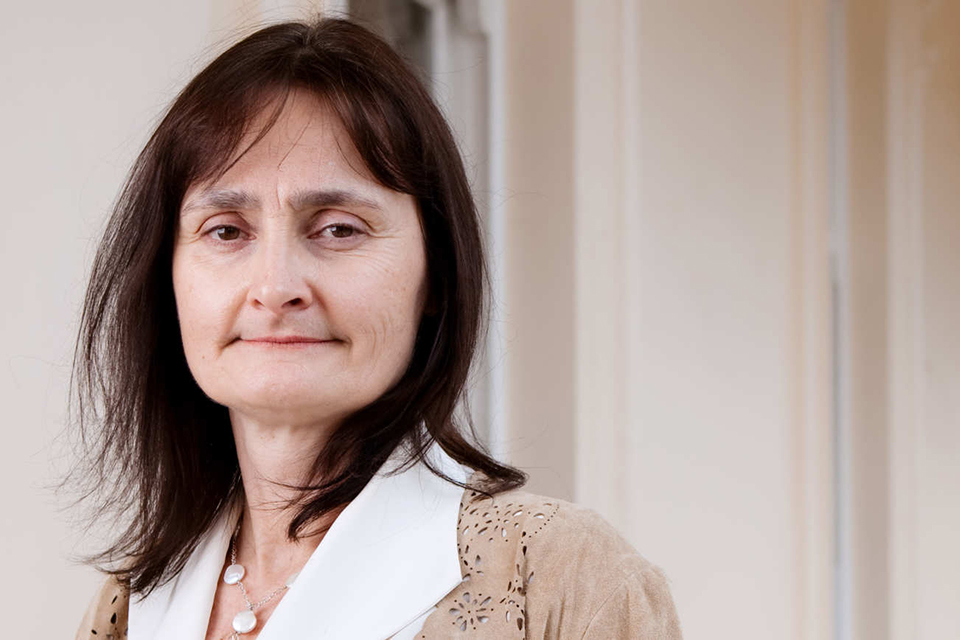
Portrait of Michele Dougherty.
Michele Dougherty. Credit: Imperial College London.

She has contributed significantly to the work of the UK Space Agency, by chairing its Science Programme Advisory Committee from 2014 to 2016. In 2017 Michele became only the fifth woman to receive the Royal Astronomical Society’s Gold Medal, its highest honour, for her contribution to the national and international space physics community.

Graham Turnock, Chief Executive of the UK Space Agency, said:

“I would like to congratulate Helen and Michele on behalf of everyone at the UK Space Agency.

“They have made huge contributions to the space community and provided inspiration for thousands of young people across the country.”

Read more about New Year’s Honours 2018.


Link: Press release: Britain’s first astronaut and Professor of Space Physics receive New Year’s honours
Source: Gov Press Releases

Press release: New Year Honour for Dstl Scientist

Dr Cerys Rees, of the Defence Science and Technology Laboratory (Dstl), has been made an Officer of the Most Excellent Order of the British Empire (OBE), in Her Majesty The Queen’s New Year’s Honours 2018.

Dr Rees receives her OBE in recognition of her success in establishing a world-class facility for the analysis and identification of chemical and biological weapons for the defence and security of the UK. Leading the development and delivery of this unique operational science and technology capability, Dr Rees has ensured accurate evidence has been provided in this area to the highest levels of Government.

Results of Dr Rees’s work have had a significant influence on diplomatic engagement by the UK Government in its negotiations, most recently in Syria.

She said:

I’m thrilled to receive the award and see it very much as recognition not only for me, but for all the work by the Dstl team to combat the use and development of chemical and biological weapons.

It is an honour in every sense and I’m delighted to receive the award. My family often wonder what I do when I’m called away for work, and this is a chance for them to be part of things.

Dr Rees is a Dstl Fellow – a leading technical expert – for Chemical and Biological Analysis and Attribution, with responsibility for the delivery of Dstl’s research and operational capability in this area in support of defence and security stakeholders in the UK.

A Dstl CBR Senior Scientific Advisor (SSA), Dr Rees is trained to provide CB tactical and strategic level advice to UK police and military in support of operations.

Simon Earwicker, Head of the Chemistry, Biology and Radiological Sciences Division at Dstl, said:

Cerys has contributed so much to the international efforts to combat the use of chemical weapons. She’s worked tirelessly behind the scenes to build the expertise and it is because of her commitment and foresight that we can now respond so rapidly. She’s provided strong personal leadership at the heart of our work in this area, and her award is richly deserved.

Prior to taking up her current role in 2014 as a Fellow, and having worked in this area since 2004, Dr Rees worked in a number of roles including research in microbial hazard assessment and the development of novel medical countermeasures (1999-2004).
She is a Member of the Chartered Society of Forensic Sciences and attended Cefn Hengoed School, Swansea, the University of Surrey and the University of Sheffield.

Link: Press release: New Year Honour for Dstl Scientist
Source: Gov Press Releases

Press release: Border Force seize 22 tonnes of tobacco at Hull docks

The seizure happened on Monday 18 December when officers searched an HGV lorry that had arrived at the port from Rotterdam.

Officers discovered 33 pallets of large cardboard boxes, which were found to contain unprocessed tobacco. The shipment had been misdeclared as paper.

Simon Render, Border Force Senior Officer, said:

This is a significant seizure. By stopping the shipment our officers have starved those responsible of the proceeds of their criminality.

The black market cheats honest traders and it is effectively stealing from the public purse. People tempted by cheap cigarettes and tobacco should think again.

Border Force officers use high-tech search equipment to combat immigration crime and detect banned and restricted goods that smugglers attempt to bring into the country.

They use an array of search techniques, which in addition to sniffer dogs includes carbon dioxide detectors, heartbeat monitors and scanners – as well as visual searches – to find illegal drugs, firearms and tobacco which would otherwise end up causing harm to local people, businesses and communities.

Anyone with information about activity they suspect may be linked to smuggling can call our hotline on 0800 59 5000.

Link: Press release: Border Force seize 22 tonnes of tobacco at Hull docks
Source: Gov Press Releases

Press release: Poisons from cigarettes reach major body organs in seconds

Public Health England (PHE) releases a new TV advert highlighting the dangers of tar in cigarettes, as England’s 7 million smokers are urged to make a quit attempt with help from Smokefree this New Year. The latest campaign shows how poisons from tar in cigarettes enter the bloodstream, spreading around the body within seconds and causing damage to major organs.

To help explain the ongoing internal harm being caused, a group of 7 lifelong smokers – including TV presenter and entrepreneur Hilary Devey – declare their intention to quit in January after seeing the results of a lab demonstration. The test results show how their smoking has led to elevated levels of cadmium (a metal used in batteries), cancer-causing nitrosamines and carbon monoxide in their blood. These toxic substances are amongst over 4,000 chemicals released into the body with each cigarette smoked, including more than 70 known cancer-causing compounds.

Elevated levels of these substances were seen in the participants’ blood and can lead to an increased risk of major damage to the body.

Exposure to cadmium for a long period of time is associated with an increased risk of damage to the kidneys and bones and may lead to lung cancer. Research has shown that if you regularly smoke 20 or more cigarettes a day, you are twice as likely to develop kidney cancer compared with a non-smoker.

Tobacco-specific nitrosamines (TSNAs) are potent chemical compounds, many of which are carcinogenic (cancer-causing). They can cause DNA damage, cell death and are associated with cancers of the pancreas, mouth, respiratory and digestive tracts.

Carbon monoxide decreases the ability of the blood to carry oxygen and consequently puts a strain on the heart. Carbon monoxide is also associated with an increased risk of blood clots and coronary heart disease.

In the new film that supports the TV advert, Dr Dawn Harper, GP from Gloucester, explains the results of the tests to the smokers and how the quality of their blood would start to improve when they quit – ridding them of harmful poisons which cause major damage to the body. Dr Harper advises the smokers that there are many ways to quit, including free proven support from NHS Smokefree. People can choose what works best for them: face-to-face help, stop smoking aids, a quitting app, email, social media, and SMS support.

Professor John Newton, Director of Health Improvement at Public Health England says:

Smoking is a deadly habit. Each year it kills 79,000 people in England and for every death, another 20 smokers have a smoking-related disease. That means one person is admitted to hospital every minute of every day due to smoking.

Our new TV ad shows how every cigarette sends a flood of poisonous chemicals through the bloodstream in seconds. People know that tar damages the lungs, but it’s less well understood that the poisons also reach the other major organs in the body. We are urging every smoker to take advantage of the free Smokefree support and quit for good this New Year.

Dr Dawn Harper, GP and medical journalist says:

I see the damaging effects of smoking in my surgery almost every day. Tar from cigarettes causes damage to major organs, the bones and increases your risk of a range of cancers and diseases. But, the good news is that no matter how long you’ve smoked, quitting can reduce your chances of developing cancer, heart and lung disease and other serious smoking related illnesses. Some of the benefits are almost immediate, with improved energy and breathing within a matter of days.

I know how difficult it is to stop but the important thing is to commit to trying again, no matter how many times you might have tried and failed in the past – it’s never too late.

Hilary Devey, TV presenter, entrepreneur and lifelong smoker says:

I’ve smoked at least 20-a-day for over 40 years. Like many, I’ve been hooked on cigarettes and ignoring the damage – even though I know the harm I’m doing, I’ve found it extremely difficult to quit for good. Even a stroke 3 years ago only led me to stop temporarily.

Seeing the high levels of poisonous chemicals in my blood from these tests really hit home how dangerous continuing to smoke is – and for that reason, I’m done!

I’m absolutely determined to try again this New Year and I hope other smokers across the country will join me making full use of all the free help available at Smokefree – this time next year we could be celebrating one year smoke-free and feeling the benefits.

Smokefree provides motivation, information and support for smokers who want to stop. Just search ‘Smokefree’ for free support and advice to help you quit smoking.

Background

  1. To find out more about the range of free support and tools available to help people quit smoking, please search ‘NHS Smokefree’ online.
  2. Download all Smokefree films and images.
  3. Carbon Monoxide, one of the toxic substances identified at elevated levels in the lab demonstration, is not contained in tar but is one of the most harmful elements in tobacco smoke.
  4. PHE exists to protect and improve the nation’s health and wellbeing, and reduce health inequalities. We do this through world-leading science, knowledge and intelligence, advocacy, partnerships and providing specialist public health services. We are an executive agency of the Department of Health, and are a distinct organisation with operational autonomy to advise and support government, local authorities and the NHS in a professionally independent manner. Follow us on Twitter: @PHE_uk and Facebook: www.facebook.com/PublicHealthEngland.

freuds

Link: Press release: Poisons from cigarettes reach major body organs in seconds
Source: Gov Press Releases

Press release: Government report highlights English cathedrals’ community spirit

A new report commending England’s 42 Anglican cathedrals for their continued importance as places of worship, their wider community work and their commitment to promoting local economic growth has been published today (29 December 2017) by the Department for Communities and Local Government.

The report, “Cathedrals and their communities”, is the culmination of a year long tour which saw the Minister for Faith, Lord Bourne visit all of England’s 42 Anglican cathedrals to better understand their continued importance both to local communities and wider society.

The report highlights cathedrals as diverse churches that are not only important sacred centres of worship but also places of valued social support and community and interfaith engagement. This includes:

  • the interfaith projects delivered by Chelmsford and Norwich Cathedrals which build on the shared interests of different faith communities
  • the unifying response of Manchester and Southwark Cathedrals in the wake of the terrorist attacks in both cities
  • Carlisle, Durham and Hereford Cathedrals’ support for Syrian refugees, including providing vital English language lessons
  • the extensive work undertaken by many cathedrals across the country together with local authorities to help rough sleepers
  • cathedrals, such as Blackburn and Bradford, driving regeneration in town and city centres through collaborating with local authorities, developers and the local community
  • the continuing efforts of cathedrals including Chester, Chichester, Lichfield and Liverpool to attract visitors through well-thought out themed events such as arts festivals and Christmas markets
  • the dedication of cathedral staff across the country in preserving the architectural splendour and heritage of their buildings

Minister for Faith Lord Bourne said:

There is no better time to remind ourselves of the strong role cathedrals play in our national life than at Christmas, as worshippers gather in naves across the country to celebrate the birth of Jesus Christ.

This year-long tour has given me a real understanding of how the innovation and vibrancy displayed by cathedral staff and their congregations is ensuring that these important churches continue to play a crucial role at the heart of local communities now and for centuries to come.

The report highlights a number of great examples cathedral staff working hard at preserving our local cultural heritage, engaging with a diverse range of communities while continuing their spiritual duties. I look forward to hearing about further successes in the future.

The Very Reverend Adrian Dorber, Chairman of the Association of English Cathedrals, said:

Lord Bourne’s report is a really helpful endorsement of all that our English cathedrals are trying to be and do. We want to continue as places of welcome and be able to offer spiritual hospitality and friendship to all. We’re grateful to the Government for taking the time and trouble to conduct such a thorough programme of visits and investigation and for finding out what we do and what our ambitions for the future are. I hope the report will be widely read.

Our cathedrals and churches are crucial to the present and future of local communities and the government is committed to helping them open up further to community, cultural and heritage use, to safeguard their position at the beating heart of our towns and cities.

Further information

The government set up the First World War Centenary Cathedral Repairs Fund 2016 to 2018 to provide cathedrals across England with funds for essential repairs, from heating systems to stained glass windows.

The English Churches and Cathedrals Sustainability Review, set up in 2016 in collaboration with the Church of England, will consider how best to ensure that England’s 16,000 cathedrals and churches remain at the centre of civic life while also ensuring that these unique and historical buildings are sustainably maintained and funded.

There were 9.4 million visitors to cathedrals in 2015; a further 1 million people visited Westminster Abbey.
75% of the UK’s churches and cathedrals are listed. Two thirds of church buildings and 75% of grade I listed churches are in rural areas where only 20% of the population lives.

See where Lord Bourne has visited using #CathedralTour. A list of cathedrals in the order the Minister visited them is as follows:

2016

  • Bradford – 27 October
  • Ely – 4 November
  • Southwark – 8 November
  • Portsmouth, Chichester – 25 November
  • Leicester – 8 December
  • St Albans – 16 December
  • Chelmsford – 20 December
  • Salisbury and Winchester – 23 December

2017

  • Peterborough – 20 January
  • Carlisle, Newcastle and Durham – 16 to 17 March
  • Gloucester and Hereford– 31 March
  • Guildford – 10 April
  • Manchester – 29 May
  • Norwich and Bury St Edmunds – 29 June
  • Lincoln, Southwell and Derby – 7 July
  • Lichfield, Coventry and Birmingham – 13 July
  • St Paul’s – 20 July
  • Worcester and Oxford – 21 July
  • Liverpool, Chester and Blackburn – 27 to 28 July
  • Bristol, Wells, Exeter and Truro – 8 September
  • Ripon, York, Wakefield and Sheffield – 14 to 15 September
  • Rochester and Canterbury – 22 September

Office address and general enquiries

2 Marsham Street

London

SW1P 4DF

Media enquiries

Link: Press release: Government report highlights English cathedrals’ community spirit
Source: Gov Press Releases

Press release: Sajid Javid acts to help businesses affected by unfair ‘staircase tax’

Communities Secretary Sajid Javid has today (29 December 2017) published draft legislation to reverse the impact of a ‘staircase tax’ which has unfairly affected up to a thousand businesses.

A recent Supreme Court judgment saw hundreds of businesses that operate in adjoining units or rooms, but are accessed from a common corridor or staircase, receiving separate rate bills for each unit.

The ruling also resulted in some businesses facing higher rate bills, with some paying more due to the loss of small business rate relief.

The action Sajid Javid is taking today will mean these firms can choose to have their rates recalculated under the old single bill system and any savings due will be backdated.

Communities Secretary Sajid Javid said:

The ‘staircase tax’ is an unfair rates hike for businesses. For years these businesses in adjoining units or rooms received one rates bill, but this ruling meant they now faced multiple bills for operating in an office linked by a communal lift or stairs.

I am ending this by giving those businesses affected the option of getting their rates bills recalculated and any savings due backdated.

Further information

The publication of draft legislation follows a decision in the Supreme Court (Woolway v Mazars) which brought about a change the practice of the Valuation Office Agency (VOA) in assessing rateable values for businesses.

Following this ruling, businesses who occupied more than one property in a shared building received a separate rates bill for each unit. This was widely known as the ‘staircase tax’ and meant businesses in adjoining units who had previously received one rates bill, were now being subject to several bills. Some businesses were paying more overall due to the loss of small business rate relief – a discount applied to the bills of certain businesses with a lower rateable value.

This ruling overturned an established and widely understood practice where businesses occupying two adjoining floors or two rooms separated by a wall only received a single bill.

Subject to Parliamentary approval of the Bill, those businesses who have been directly impacted by the Supreme Court judgement can ask the VOA to recalculate valuations based on previous practice. It can then have its bill recalculated if it chooses, and backdated. This includes those firms who lost small business rate relief.

The department will now consult with stakeholders and experts, with a view to introducing the Bill shortly. See the consultation document.

Office address and general enquiries

2 Marsham Street

London

SW1P 4DF

Media enquiries

Link: Press release: Sajid Javid acts to help businesses affected by unfair ‘staircase tax’
Source: Gov Press Releases

Press release: UK aid helps clear lethal landmines in war-torn countries following generosity of British public

In response to the unprecedented generosity of the UK public in supporting the most successful Christmas landmine-clearing appeal ever, International Development Secretary Penny Mordaunt has today (29 December) announced that Britain will extend its demining work to save lives in emergencies in Angola, Iraq, Lebanon, Sudan, Syria and Yemen.

Through the support announced today, the UK will work in Angola to eradicate the scourge of landmines, through both UK aid programmes and the UK Government matching pound for pound public donations to the Mines Advisory Group’s (MAG) appeal. Angola was where Princess Diana once walked through a landmine littered field to raise awareness of the devastating impact they have on innocent lives.

At an event this year with HRH Prince Harry, DFID made a £100 million commitment to demining to make 15 million square metres of land safe again and Ms Mordaunt is today announcing the war ravaged countries that will benefit from this support. As part of the UK’s ongoing commitment, 15,000 community visits will also educate people about the risks of landmines – a paramount and essential lifeline to safeguard entire communities from being maimed or killed.

The MAG’s ‘Walk Without Fear’ appeal on Radio 4 was the station’s most successful ever radio appeal. Money donated by the generous UK public to the demining cause has been matched by the UK government, doubling the total amount raised to allow even more lives to be saved.

International Development Secretary Penny Mordaunt said:

Landmines have left a shameful legacy of suffering across the world, and the British public can be proud of their contribution to eradicating this hidden, indiscriminate killer.

These barbaric weapons of war kill innocent people years after a conflict has ended, and have left so many devastated families mourning the loss of loved ones. The thousands that do survive have been left maimed and seriously disabled forever, unable to work, unable to feed their families and suffering from a lifetime of debilitating pain.

Twenty years after Princess Diana’s call for action resonated in every corner of the world, Britain is at the forefront in saving thousands of lives and ensuring that future generations will now have the chance to live without fear of being killed by a weapon from the past.

MAG’s appeal raised a total of over £200,000, which will be doubled by UK aid to over £400,000. This will clear 120,000m² of land from landmines, allowing people to live without fear in their own communities.

Notes to Editors

  • The money raised by MAG in its appeal, and the public donations matched by the UK Government are in addition to the £100 million commitment over three years made by DFID in April 2017. This £100m commitment comprises:‎
    • £12.6 million in the current financial year as an extension to the pre-existing contract of the Global Mine Action Programme, which is delivered by the Halo Trust, MAG and Norwegian People’s Aid in Burma, Cambodia, South Sudan, Somalia, Zimbabwe, Laos, Sri Lanka and Vietnam.‎
    • £20 million for Afghanistan in financial years 2018/19 and 2019/20.‎
    • £15.4 million for the Middle East including Syria, Iraq, Lebanon and Yemen in financial years 2018/19 and 2019/20.‎
    • The remainder will be for demining programmes in financial years 2018/19 and 2019/20 in Angola, South Sudan, Sudan, Zimbabwe, Somalia, Burma, Cambodia, Laos and Vietnam.
  • This year alone Global Mine Action Programme has ensured that more than 140,000,000 square meters of land have been released. Mine risk education programmes have reached more than 426,000 people this year, including near 360,000 women and children.
  • DFID will be continuing its programming in Asia and Africa including Afghanistan, Burma, Cambodia, Laos, Vietnam, Zimbabwe, Somalia and South Sudan.
  • In January 2018, DFID will invite organisations to bid for work in Angola, South Sudan, Lebanon, Zimbabwe, Somalia, Burma, Cambodia, Laos and Vietnam.
  • In Afghanistan the UK has supported demining activities, through the HALO Trust in Herat (Western Afghanistan), Baghlan, Balkh and Samangan (Northern Afghanistan) since 2008, through two five year phases with a total of £20.5 million. This support to the HALO Trust in Afghanistan will end in March 2018. Through UK aid:
    • 193,650 families have benefited from cleared lands in Herat, Baghlan, Balkh and Samangan
    • 2,900 hectares have been unblocked for development purposes (agriculture, grazing, residential and road access)‎
    • 96% of households surveyed reported increased income as a result of mine clearance
    • 43 communities have been cleared of all known mine/UXO hazards
    • 380 direct and 660 indirect jobs have created in all target provinces
    • Over 39,147,860 square metres of accessible minefields have been cleared in target provinces
    • Over 45,609,000 square metres of remaining area of battlefield with unexploded ordnance and ammunition are cleared in target provinces.

ENDS

General media queries

Follow the DFID Media office on Twitter – @DFID_Press

Link: Press release: UK aid helps clear lethal landmines in war-torn countries following generosity of British public
Source: Gov Press Releases

Press release: Further 9 terror-related offences added to Unduly Lenient Sentence scheme

Changes to the Unduly Lenient Sentence (ULS) scheme mean that people found guilty of crimes such as tipping off terrorists about an investigation, or flouting terror prevention court orders, could see their sentences increased if victims or the public think the punishment is too light.

The plans announced today (29 December 2017) follow an extension in July which added 19 terror offences to the scheme, with Ministers acting to ensure sentences reflect the devastating impact terrorism has on victims and communities.

Justice Minister Dominic Raab said:

We keep counter-terrorism powers under constant review. These changes will strengthen our ability to punish and deter those who tip off individuals involved in terrorism, and reinforce the conditions imposed by the authorities on individuals subject to monitoring, supervision or control.

The scheme gives anyone the power to ask the Attorney General to review a sentence, who can then decide to refer a case to the Court of Appeal for reconsideration.

In 2016, a record 141 criminals had their sentences increased, helping victims and their families get justice. This is a small proportion of the 80,000 Crown Court cases heard each year, where in the clear majority the judiciary get it right, but the ULS scheme is there to allow adjustment of those sentences where an increase is warranted.

The new crimes announced today include instances where a person learns of terrorist activity through their trade, profession or employment, and fails to report this information to the police. For example, an accountant discovering a client may be funding terror. They also include offences related to breaching orders imposed to protect the public from terrorism, for instance someone suspected of involvement in terrorist activity overseas, who returns to the UK, in breach of travel restrictions.

The decision to add 9 further terror offences builds on a manifesto pledge to widen the scheme. Next month will see the first case referred to the Court of Appeal by the Attorney General, made possible through the expansion in July.

Attorney General Jeremy Wright QC said:

The Unduly Lenient Sentencing Scheme added over 400 years of imprisonment to criminal sentences last year.

While in the vast majority of cases sentencing judges get it right, the ULS scheme gives anyone the ability to challenge sentences within the scheme they think are too low and I’m pleased that more offences will now be included.

Notes to editors

  • The ULS allows the Attorney General (AG) to review sentences given by the Crown Court in England and Wales.
  • The AG has 28 days to consider the sentence and make a decision whether to refer. If the AG decides to refer the case to the Court of Appeal to review the sentence, the court can decide whether the sentence should stay the same, or if it is unreasonably low, can increase it.
  • In July, 19 terror offences were added to scheme, including encouraging terrorism and sharing terrorist propaganda.
  • The scheme will now be extended to a further nine terror related offences. The new crimes involve failing to disclose information about offences relating to terrorist property, breaching terrorism-related orders, and offences to dangerous articles and making threats. In total, 27 people have been convicted for all of these offences since 2010.
  • The changes will come into force on 29 January 2018.

Table of new offences in scope

Offence Description Max penalty (yrs)
Terrorism Act 2000 s19 Failure to disclose information on ‘terrorist property’- knowledge of which gained through their trade, profession or employment 5
Terrorism Act 2000 s21A Failure to disclose information on ‘terrorist property’- knowledge of which gained through work in the ‘regulated sector’ (e.g. financial business) 5
Terrorism Act 2000 s21D Tipping off a terrorist from information obtained in the regulated sector 2
Terrorism Act 2000 s39 Tipping off any person of a terrorist investigation 5
Counter-Terrorism Act 2008 s54 Failure to comply with notification 5
Terrorism Prevention and Investigation Measures Act 2011 s23 Failure to comply with a Terrorism Prevention and Investigation Measure (TPIM) 5
Counter-Terrorism and Security Act 2015 s10 Contravening a Temporary Exclusion Order (TEO) or not complying with restriction after return to the UK 5
Aviation Security Act 1982 s4 Offences related certain dangerous articles 7
Anti-Terrorism, Crime and Security Act 2001 s114 Hoaxes involving noxious substances 7

Link: Press release: Further 9 terror-related offences added to Unduly Lenient Sentence scheme
Source: Gov Press Releases

Press release: Foreign Secretary statement on bombing in Kabul

Foreign Secretary Boris Johnson said:

I am appalled by this despicable attack on a cultural centre in Kabul which has claimed so many innocent lives, and my heartfelt condolences go out to the victims and their families.

We remain determined in our resolve to help the Afghan people overcome terror and we are committed to supporting the Afghan Government in seeking a brighter future for its people.

Initial reports suggest that Daesh in Afghanistan have claimed responsibility. The disregard for humanity shown today bears all the hallmarks of their hateful ideology which must be countered wherever it is found. This is what the brave men and women of Afghanistan are committed to doing, with the help and support of their regional and international partners, the UK included.

ENDS

Media enquiries

For journalists

Link: Press release: Foreign Secretary statement on bombing in Kabul
Source: Gov Press Releases